
Practice counting Math Worksheets for Ages 7-8
6 filtered results
Difficulty Level
Grade
Age
-
From - To
Subject
Activity
Standards
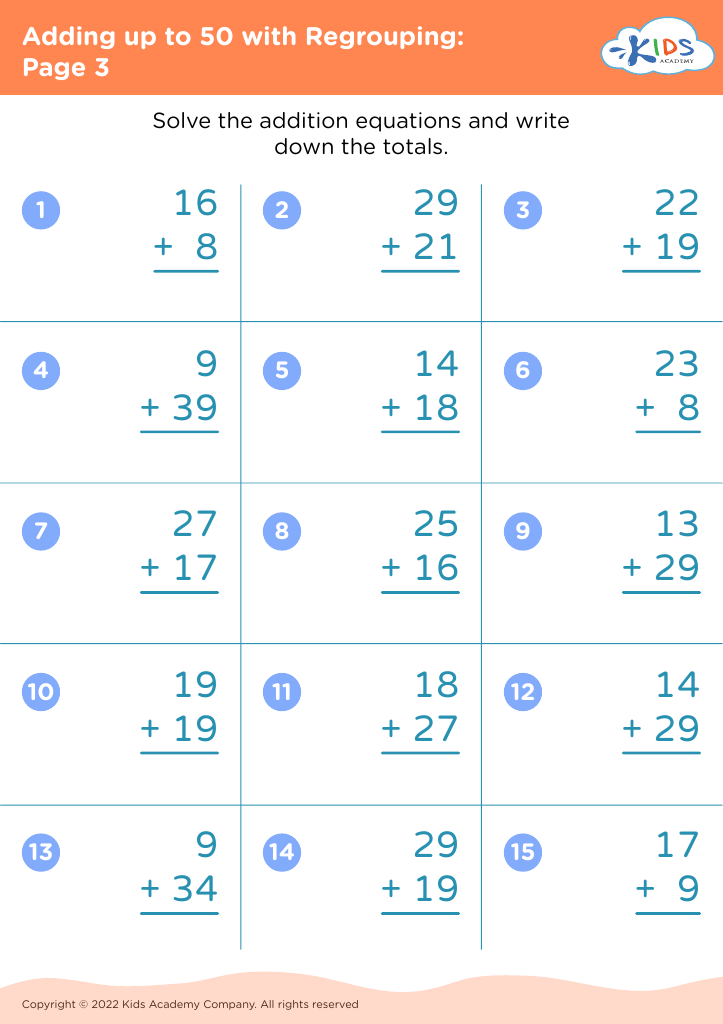
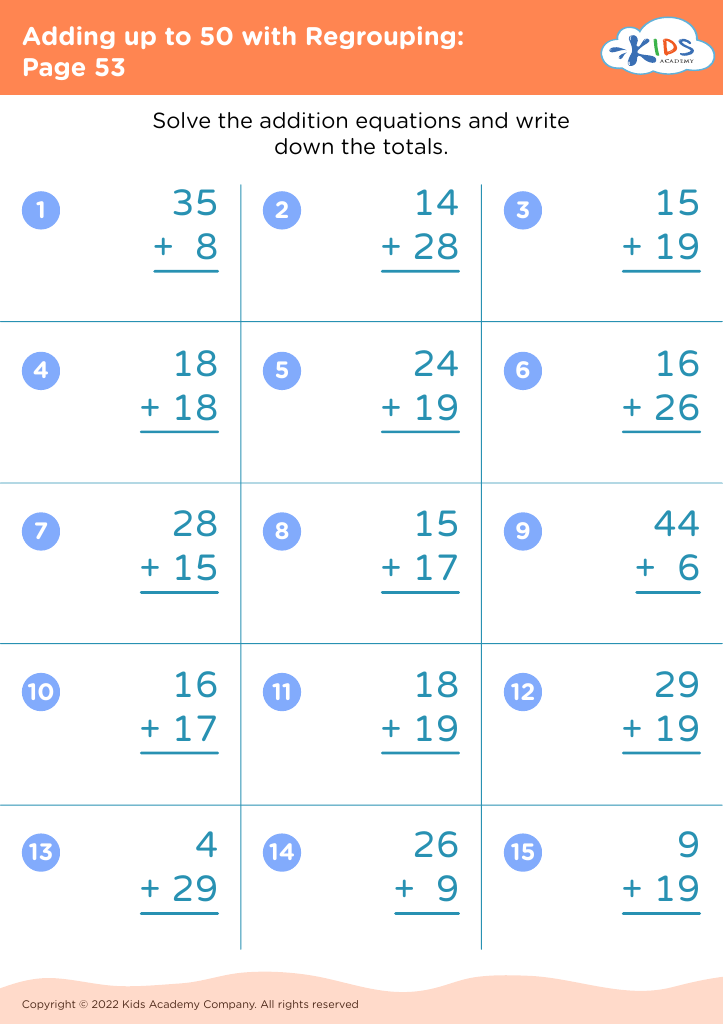
Discover engaging Practice Counting Math Worksheets for ages 7-8 on Kids Academy! Our worksheets are designed to enhance your child's counting skills while making learning fun. Featuring vibrant illustrations and interactive exercises, young learners will practice counting objects, numbers, and patterns in a playful way. Tailored to support various learning styles, these worksheets promote critical thinking and number recognition. Perfect for home or classroom use, they help strengthen foundational math skills essential for future success. Dive into our curated collection of worksheets and watch your child develop confidence in their counting abilities while enjoying the process! Start practicing today!
Favorites
With answer key
Interactive
Join Kids Academy for Free
Who is primarily going to use this learning content?







Practice counting math for ages 7-8 is crucial for several reasons that parents and teachers should consider. First, counting serves as the foundation for all mathematical concepts. At this age, children begin to understand the relationships between numbers, which is vital for grasping more complex topics such as addition, subtraction, and eventually multiplication and division.
Engaging in counting activities enhances children’s cognitive skills by improving their problem-solving abilities and critical thinking. It also strengthens their long-term memory as they learn to recall counts and number sequences.
Moreover, counting practice supports the development of fine motor skills through activities like using manipulatives, drawing, or writing numbers. Additionally, incorporating real-life counting situations, such as counting objects during shopping or measuring ingredients for cooking, makes math relatable and fun.
Finally, regular counting practice builds confidence in young learners as they master basic skills. A strong mathematical foundation can foster a positive attitude towards future math learning and reduce math anxiety, setting students on a path for academic success. By prioritizing and engaging students in counting practice, parents and teachers affirm their role in nurturing confident and competent mathematicians.








