Practicing Arithmetic Skills Math Worksheets for Ages 7-8
3 filtered results
-
From - To
Our "Practicing Arithmetic Skills Math Worksheets for Ages 7-8" are designed to enhance your child’s math abilities through engaging and comprehensive exercises. These worksheets cover essential skills, such as addition, subtraction, multiplication, and division, tailored to meet the learning needs of young learners. Each worksheet offers fun, creative problems that not only challenge children but also boost their confidence in math. Perfect for both classroom and home use, these printable materials are a valuable resource for reinforcing basic arithmetic concepts, ensuring your child builds a strong foundation in math. Transform their learning experience with our expertly crafted tools.
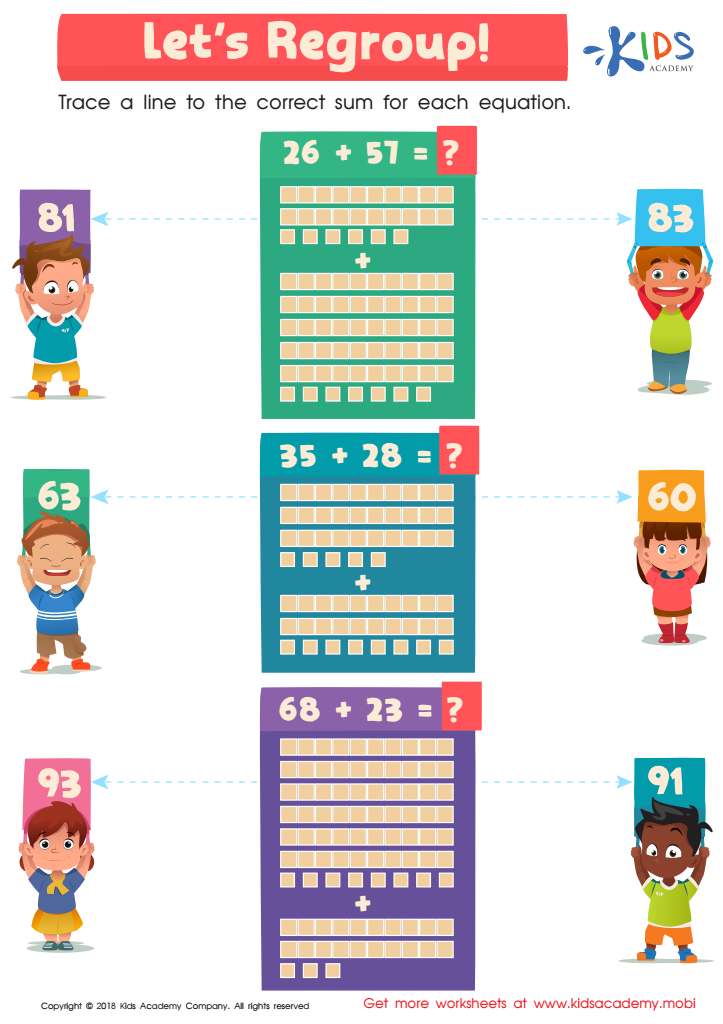
Let's Regroup Worksheet
 Assign to My Students
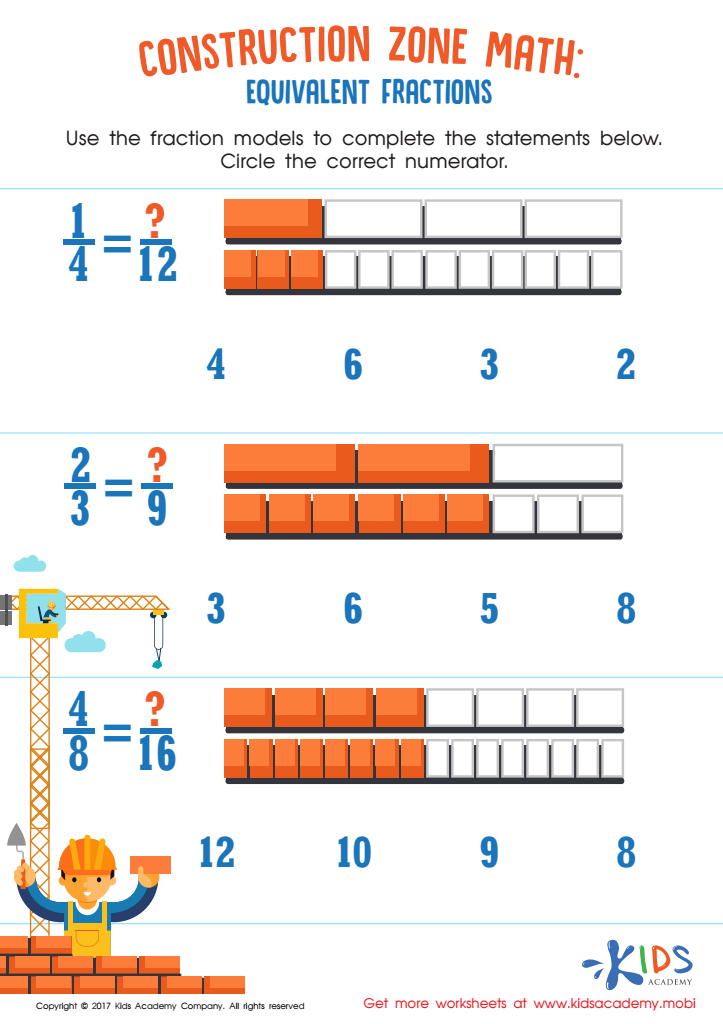
Equivalent Fractions Worksheet
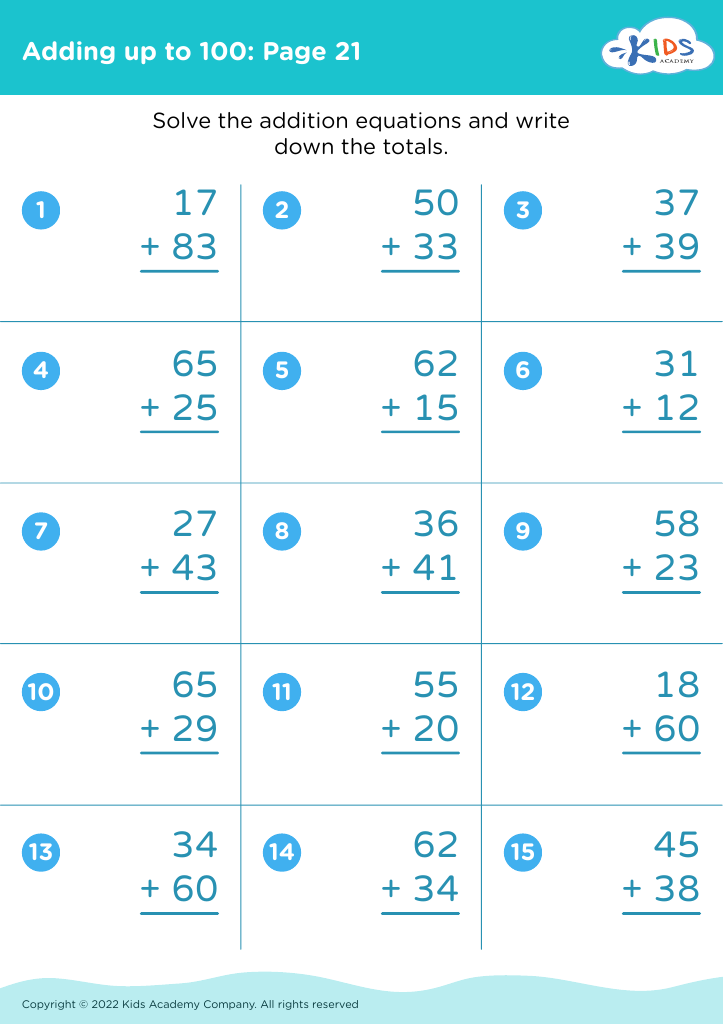







Practicing arithmetic skills at ages 7-8 is crucial for children as it forms the foundational groundwork for all future mathematical learning. During this formative stage, children are developing cognitive skills that enable them to understand numbers, basic operations, and problem-solving techniques. Solid arithmetic skills are essential because they not only boost academic performance but also build confidence in young learners. When children master basic arithmetic, such as addition, subtraction, multiplication, and division, they are more likely to excel in more advanced areas like algebra and geometry.
Parents and teachers should care about these skills as they contribute significantly to overall cognitive development. Arithmetic practice enhances memory, logical reasoning, and pattern recognition. It also improves critical life skills, such as telling time, handling money, and measuring, which are fundamental in day-to-day activities. Supporting children at this age with engaging, age-appropriate math activities helps them to develop a positive attitude towards learning and reduces anxiety around difficult tasks.
Moreover, regular practice encourages discipline and perseverance, key traits that are beneficial beyond math, across various subjects and endeavors. Collaboration between parents and teachers in fostering these skills creates a supportive learning environment, making mathematical concepts more accessible and enjoyable.








