Check out this FREE Trial Lesson on Math for age 7-8!

Fractions on a Number Line (same numerator)

Favorites
With answer key
Interactive
  • 7-8
  • Understanding fractions
  • Math
Sharing Pizza Worksheet

Sharing Pizza Worksheet

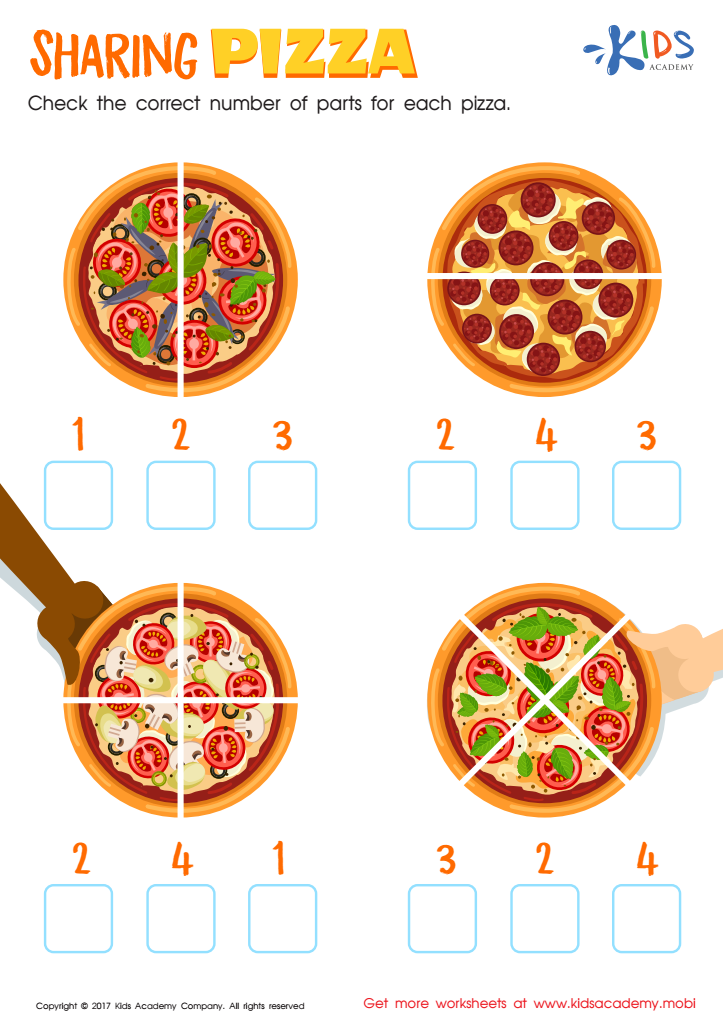
Show your child the four pizzas in this worksheet. Ask them to count the number of slices each one has. Help them count and check the answer for the first pizza, then do the same for the rest. Have fun counting the slices and see if they can spot the pizza!
Sharing Pizza Worksheet
Worksheet
Name That Fraction Worksheet

Name That Fraction Worksheet

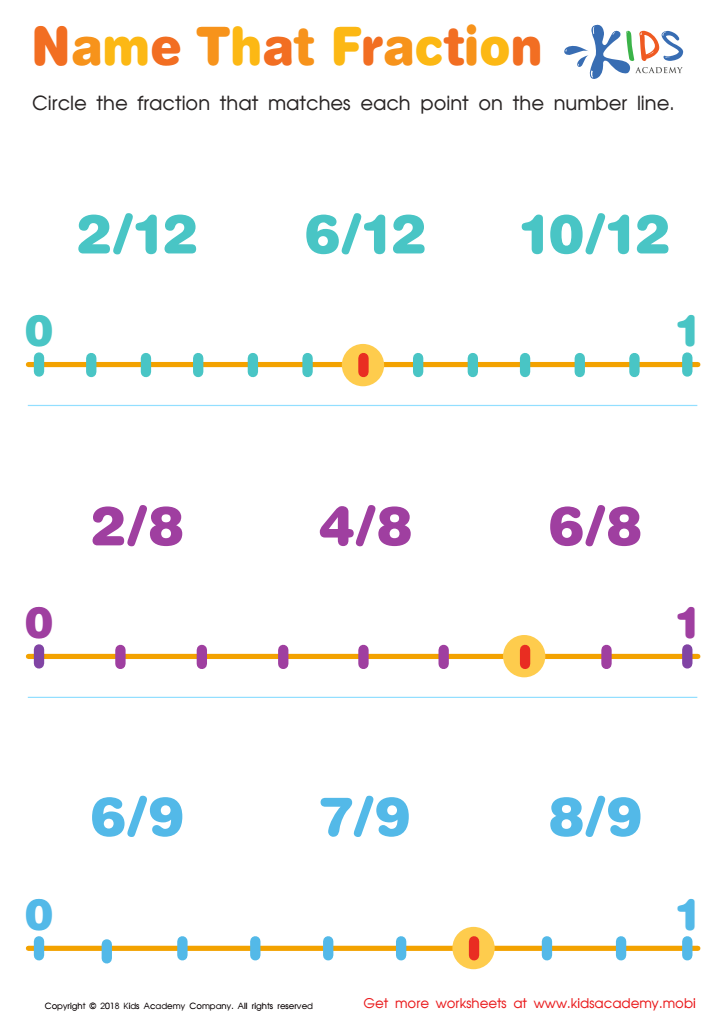
Kids must learn to identify and name fractions to solve equations. Included in this worksheet are three equations that need solving. Have your child match each point on the number line with the correct fraction and circle it. This exercise helps build their fraction skills.
Name That Fraction Worksheet
Worksheet
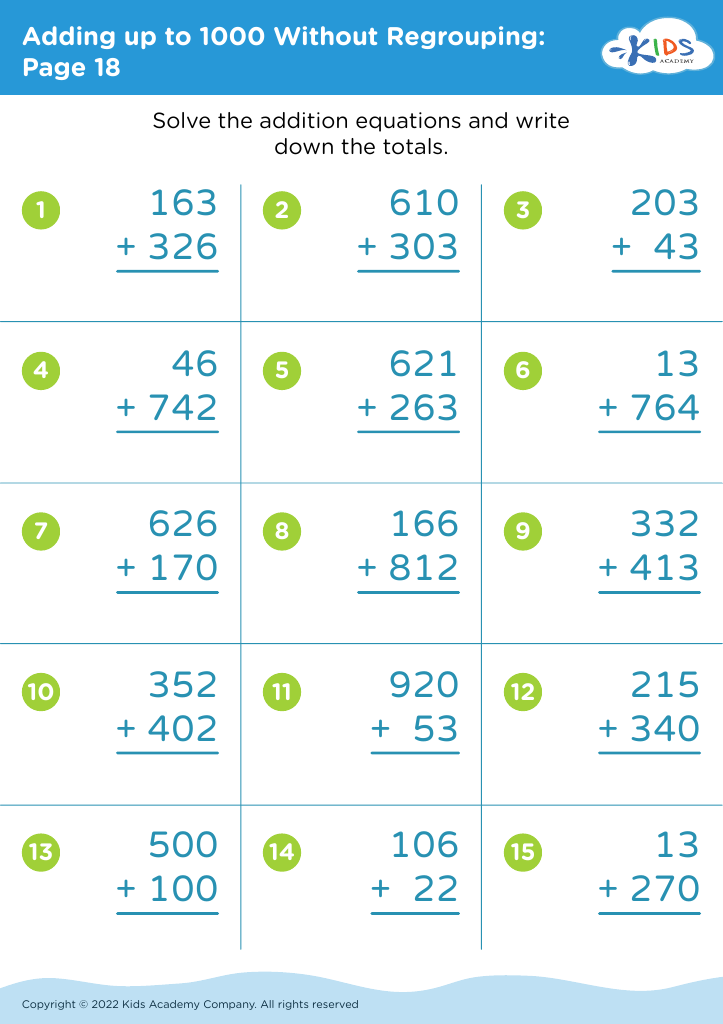
Adding up to 1000 Without Regrouping: Page 18
Worksheet
Finding Fourths Worksheet
Finding Fourths Worksheet
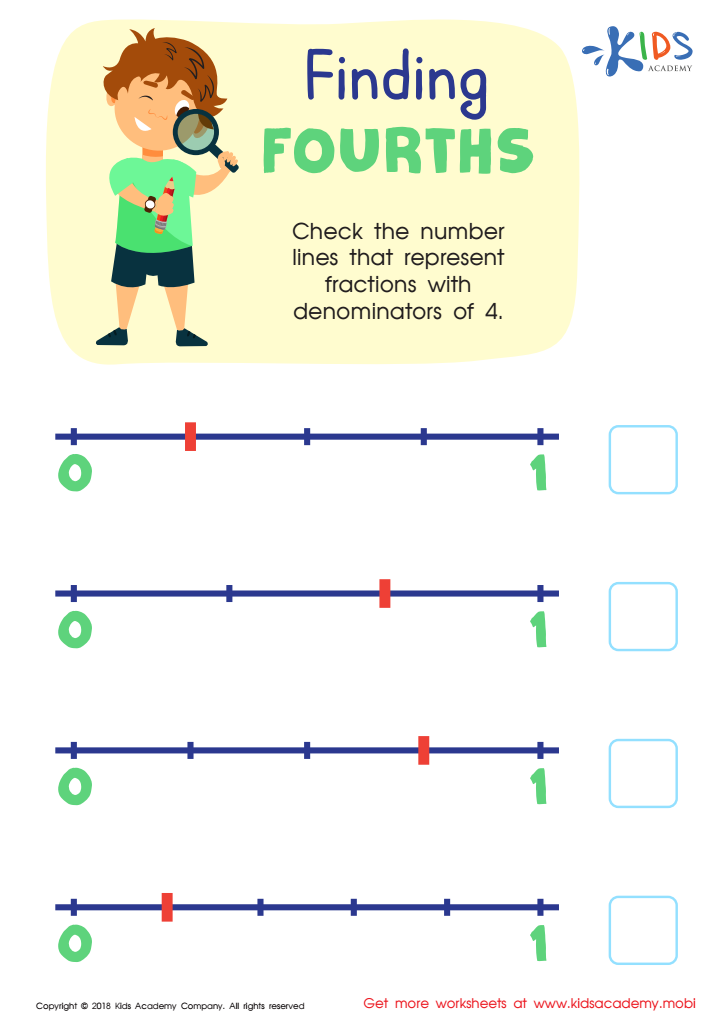
Help your kids sharpen math skills with extra homework, stimulating exercises, and fun worksheets. This printout features four equations with fractions and number lines. Your child's task is to check the number lines with denominators of 4. Enough to get them thinking and learning.
Finding Fourths Worksheet
Worksheet
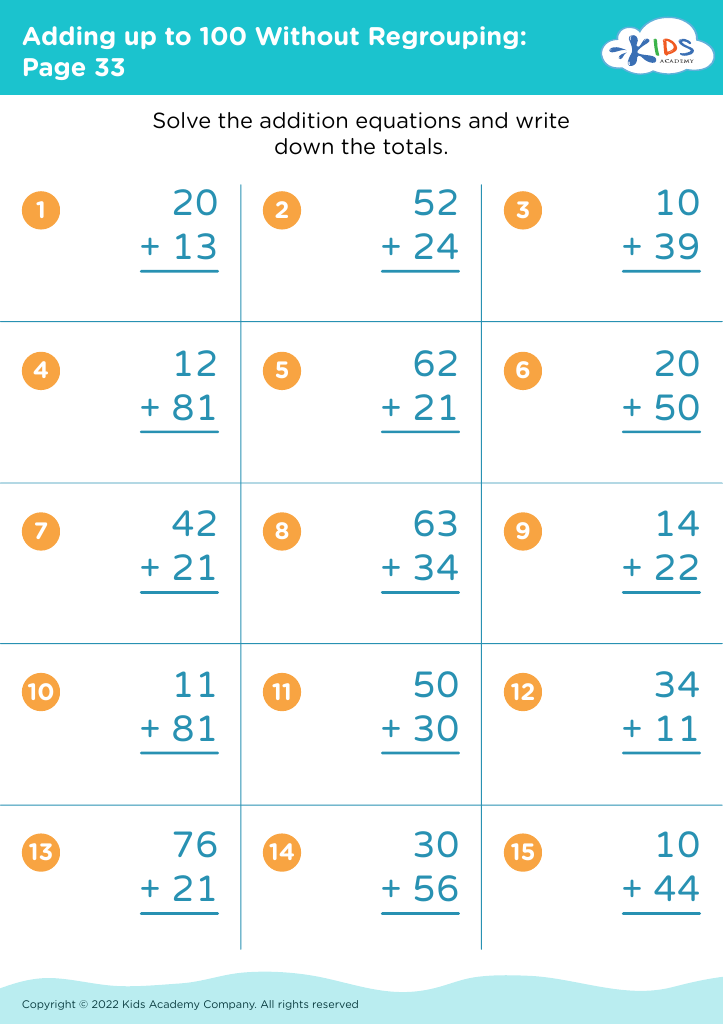
Adding up to 100 Without Regrouping: Page 33
Worksheet
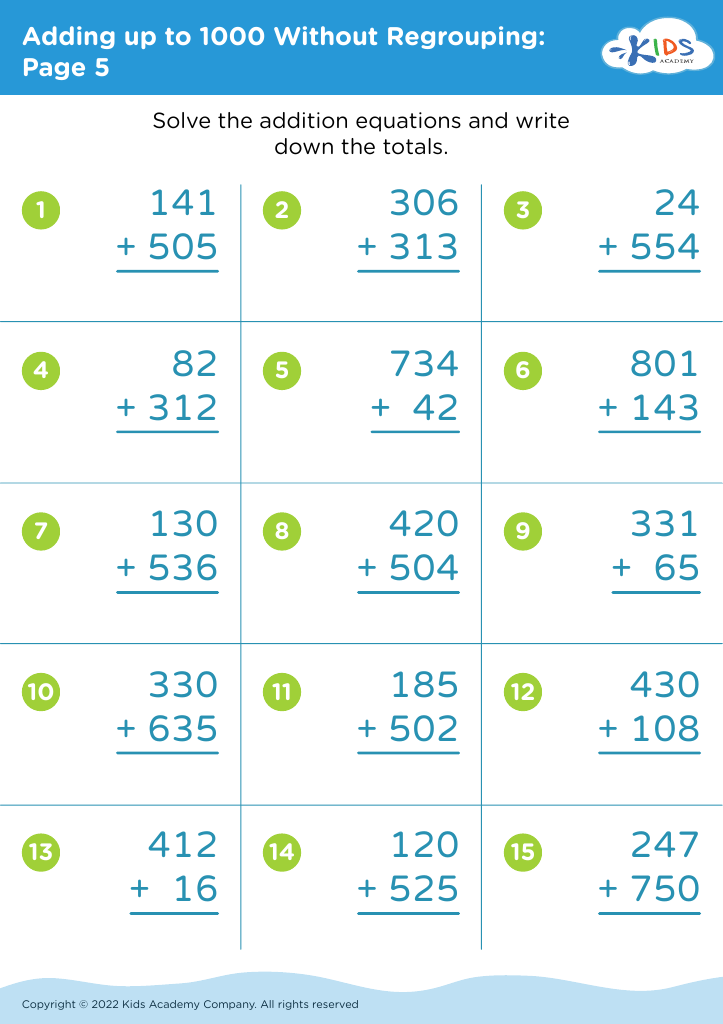
Adding up to 1000 Without Regrouping: Page 5
Worksheet
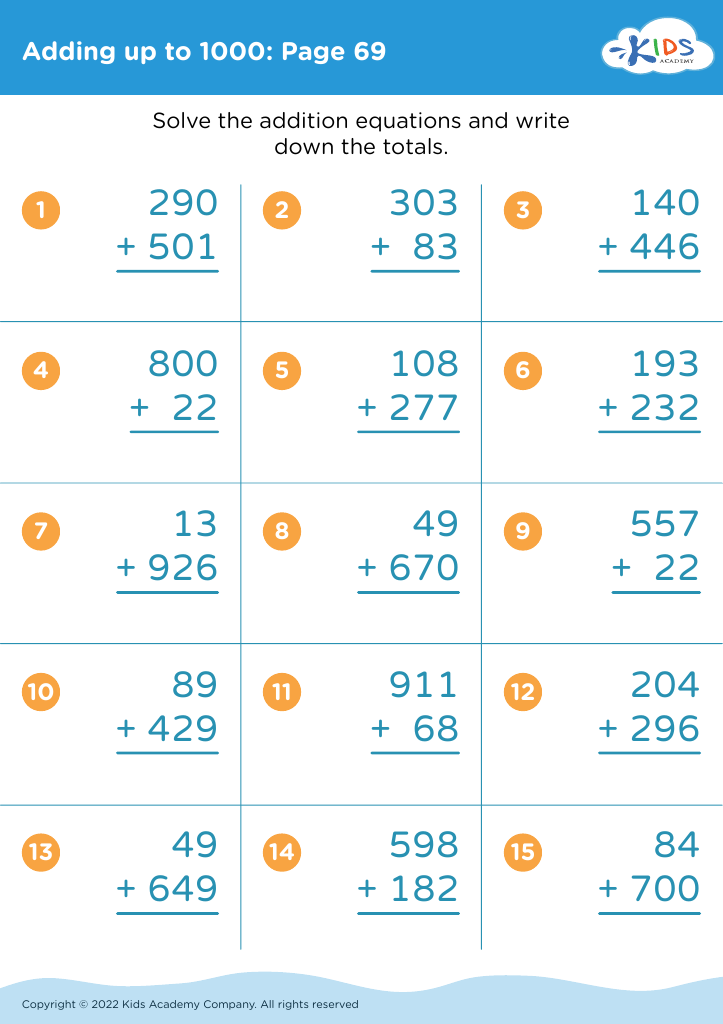
Adding up to 1000: Page 69

Adding up to 1000: Page 69

Adding up to 1000: Page 69
Worksheet
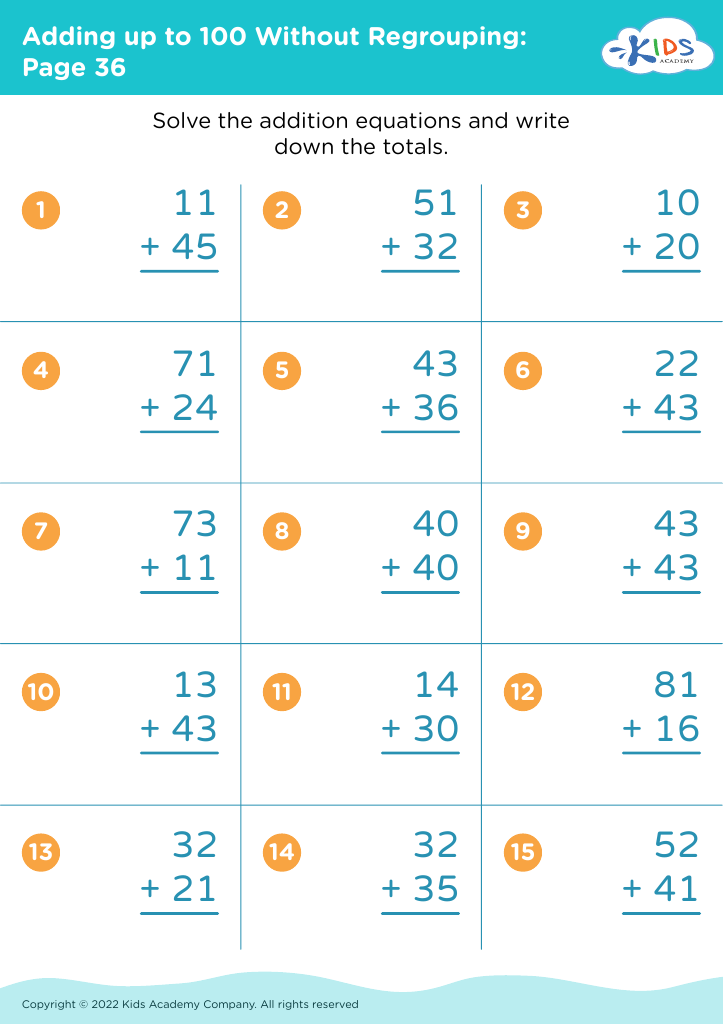
Adding up to 100 Without Regrouping: Page 36
Worksheet
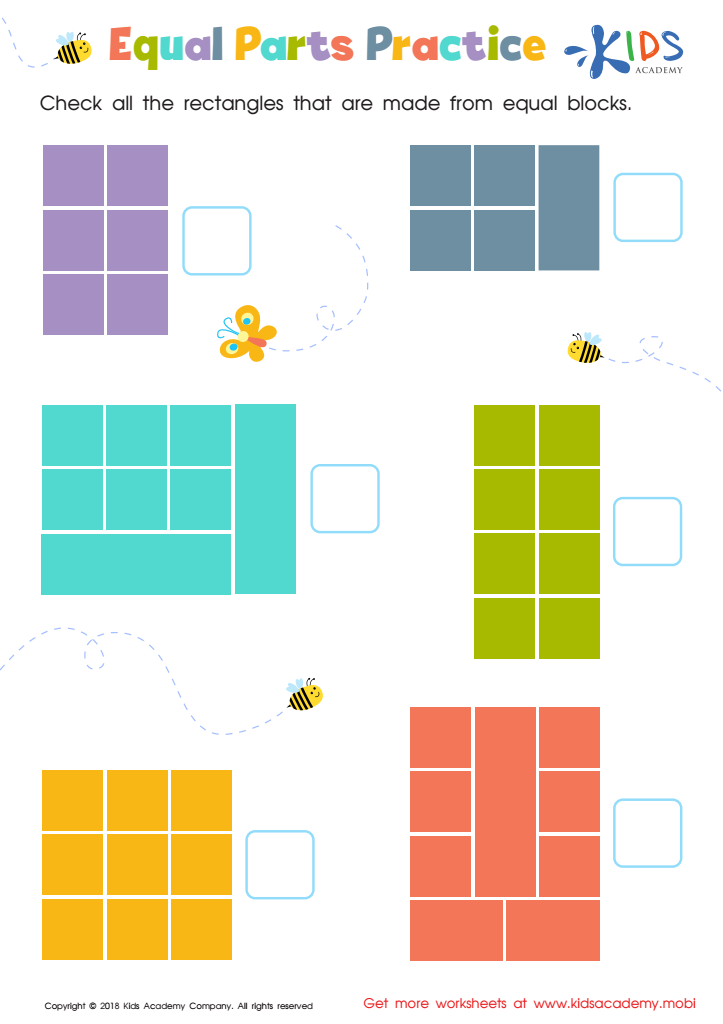
Equal Parts Practice Worksheet
Equal Parts Practice Worksheet
This worksheet checks your child's knowledge of halves and equal pieces. Have them go through the rectangles and check those made up of equal blocks. Your kids should be able to tell which parts are equal and which are not after the exercise.
Equal Parts Practice Worksheet
Worksheet
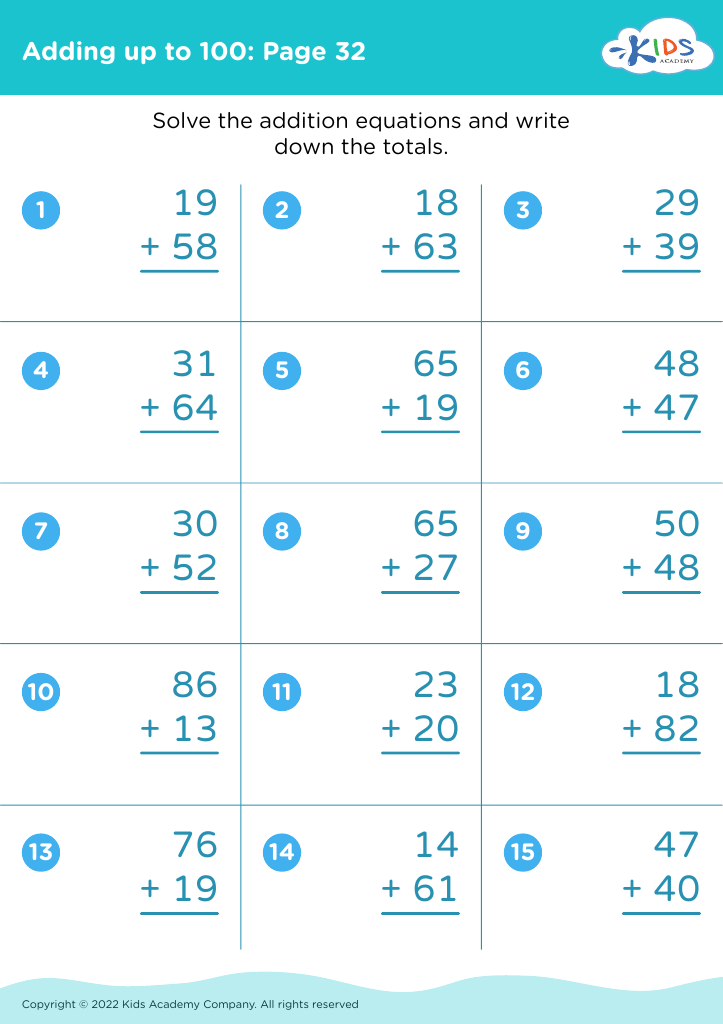
Adding up to 100: Page 32

Adding up to 100: Page 32

Adding up to 100: Page 32
Worksheet
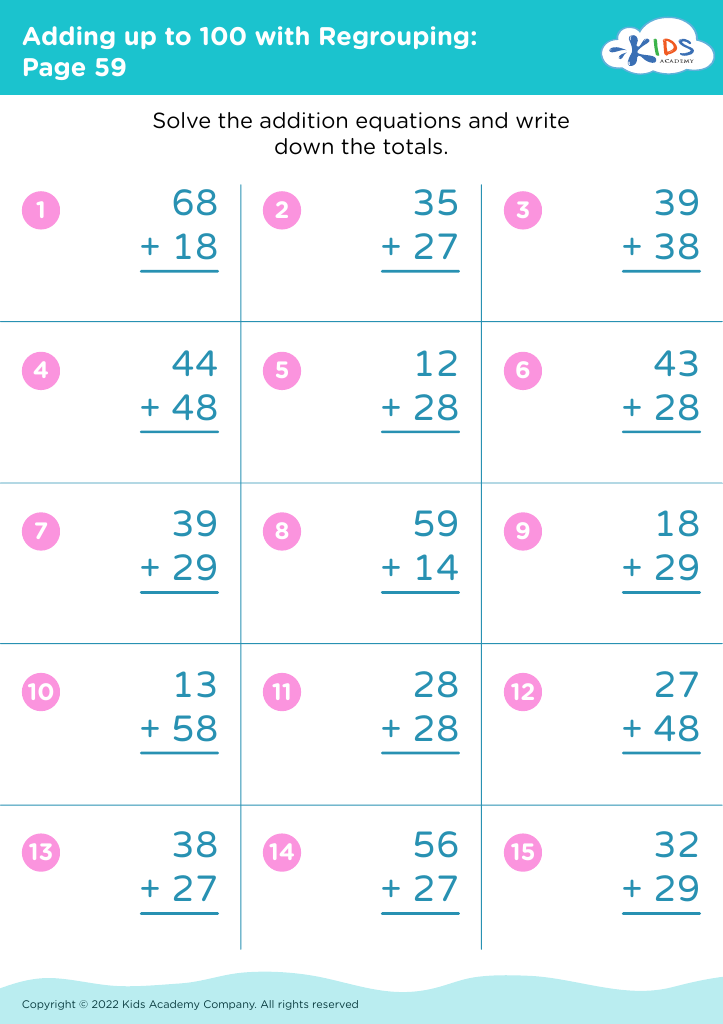
Adding up to 100 with Regrouping: Page 59
Worksheet
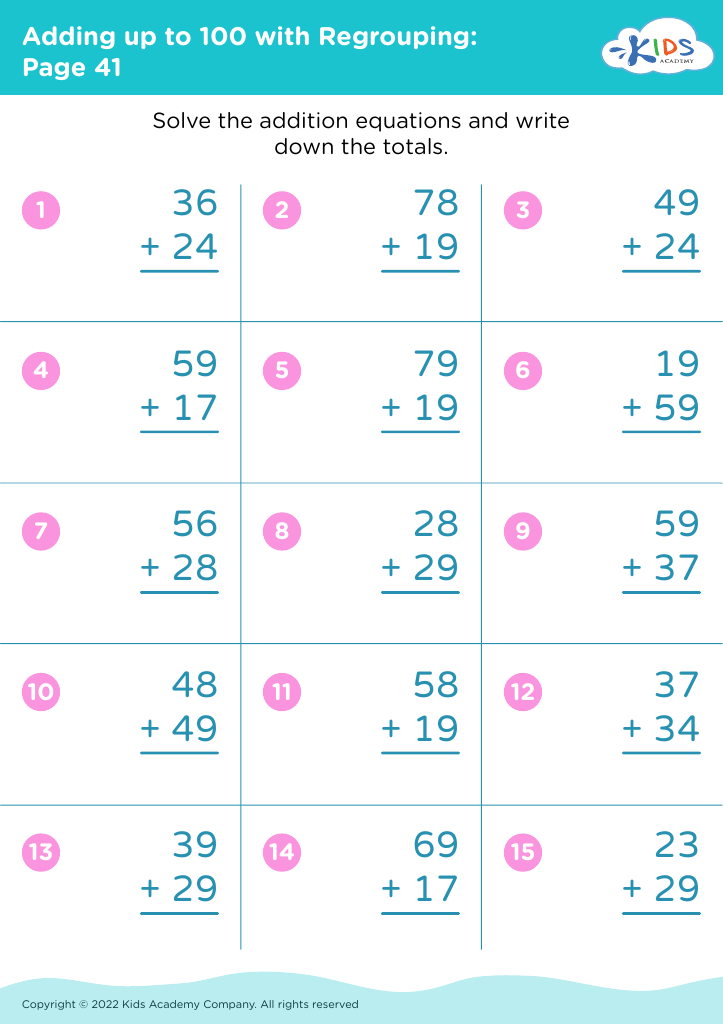
Adding up to 100 with Regrouping: Page 41
Worksheet
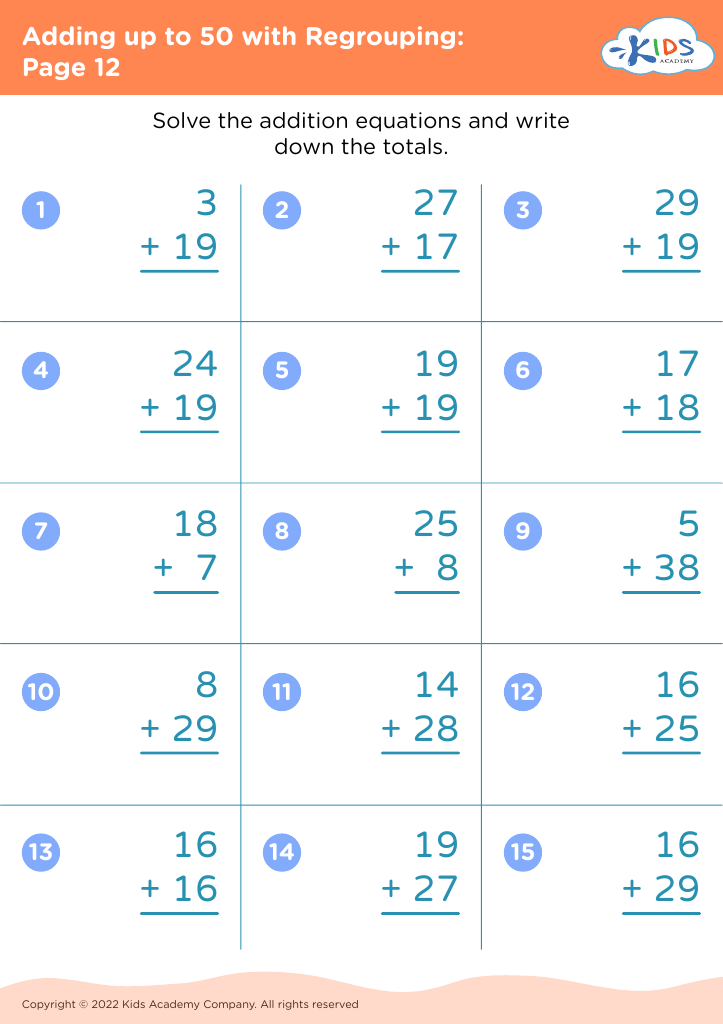
Adding up to 50 with Regrouping: Page 12
Worksheet
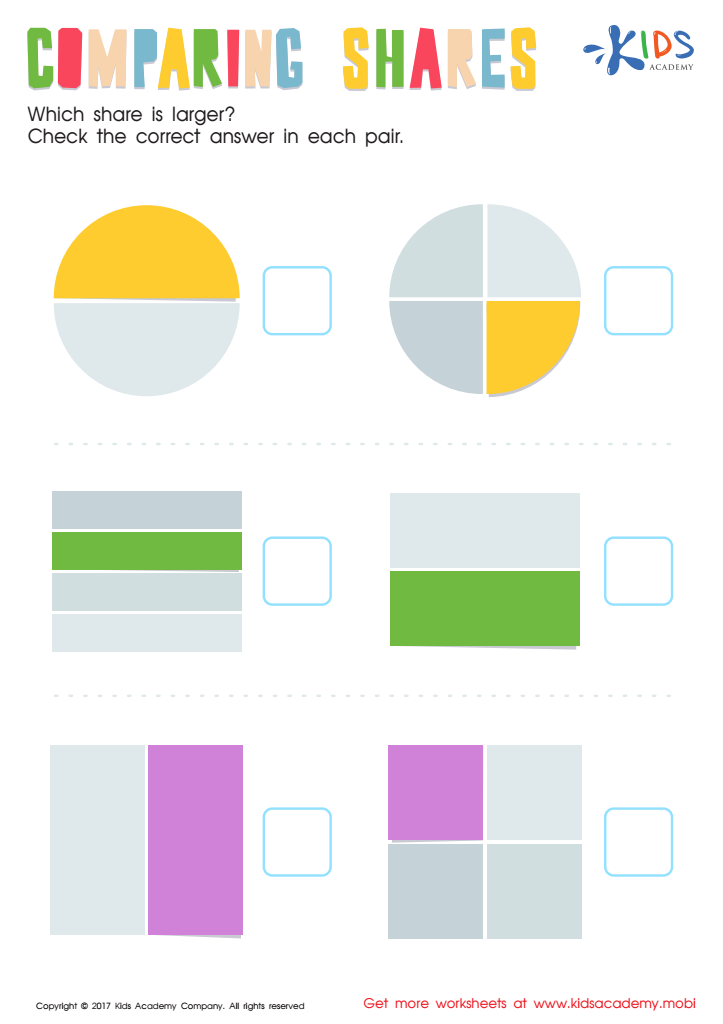
Comparing Shares Worksheet
Comparing Shares Worksheet
Can your students identify and draw shapes correctly? If so, this exercise may be too easy. For those who are still learning, extra help may be needed. The worksheet requires students to select which shape is larger in each pair; circles and squares are included.
Comparing Shares Worksheet
Worksheet
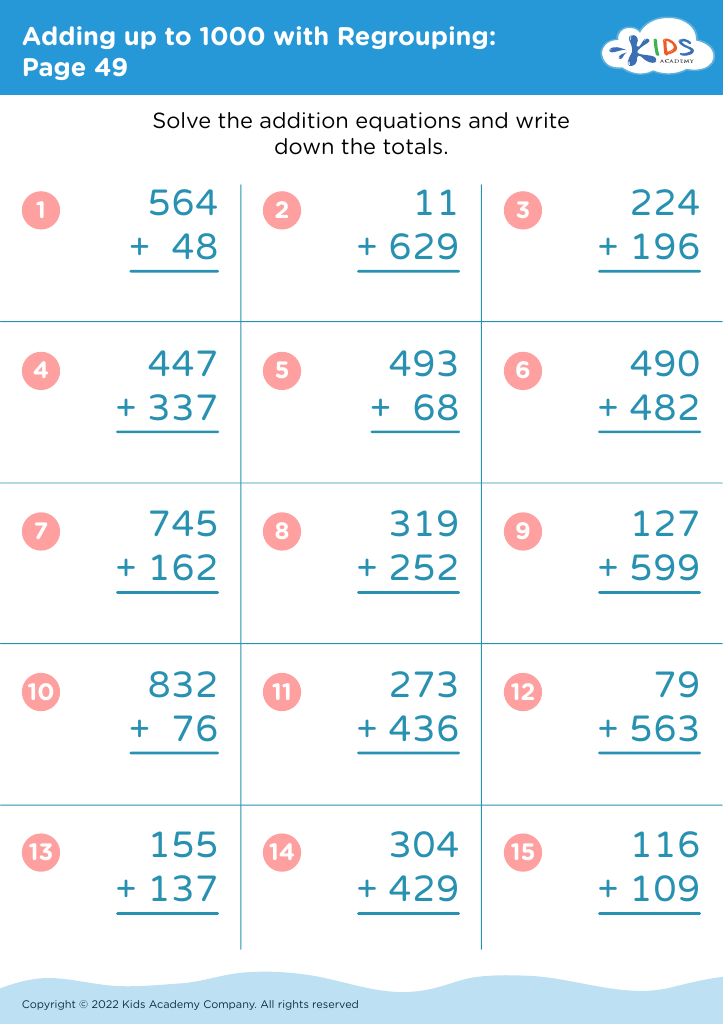
Adding up to 1000 with Regrouping: Page 49
Worksheet
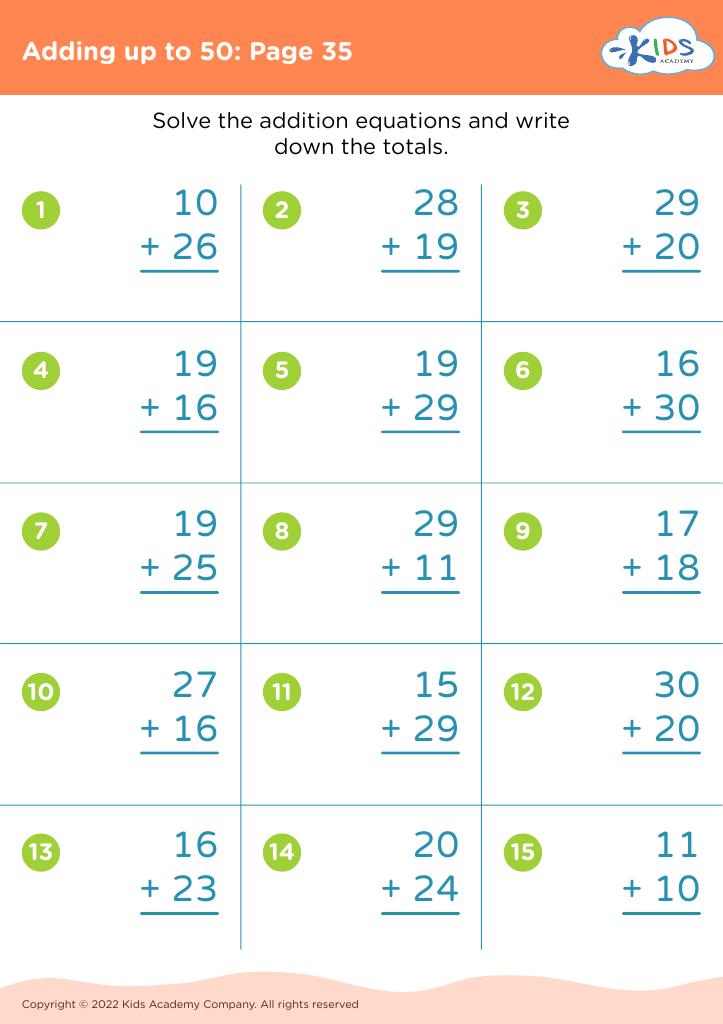
Adding up to 50: Page 35

Adding up to 50: Page 35

Adding up to 50: Page 35
Worksheet
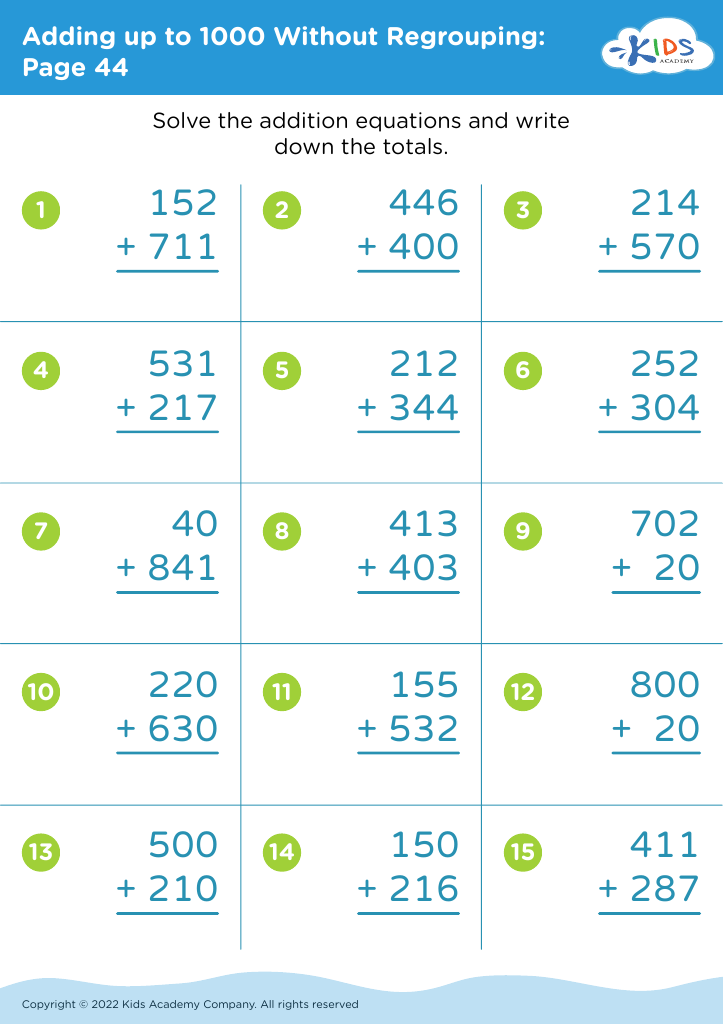
Adding up to 1000 Without Regrouping: Page 44
Worksheet
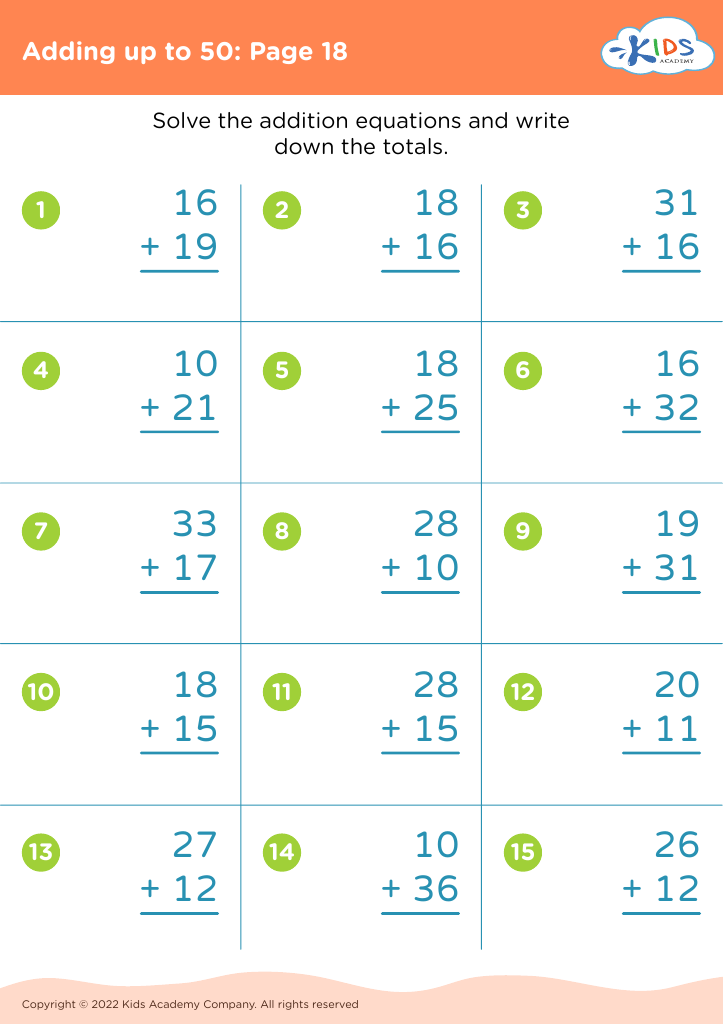
Adding up to 50: Page 18

Adding up to 50: Page 18

Adding up to 50: Page 18
Worksheet
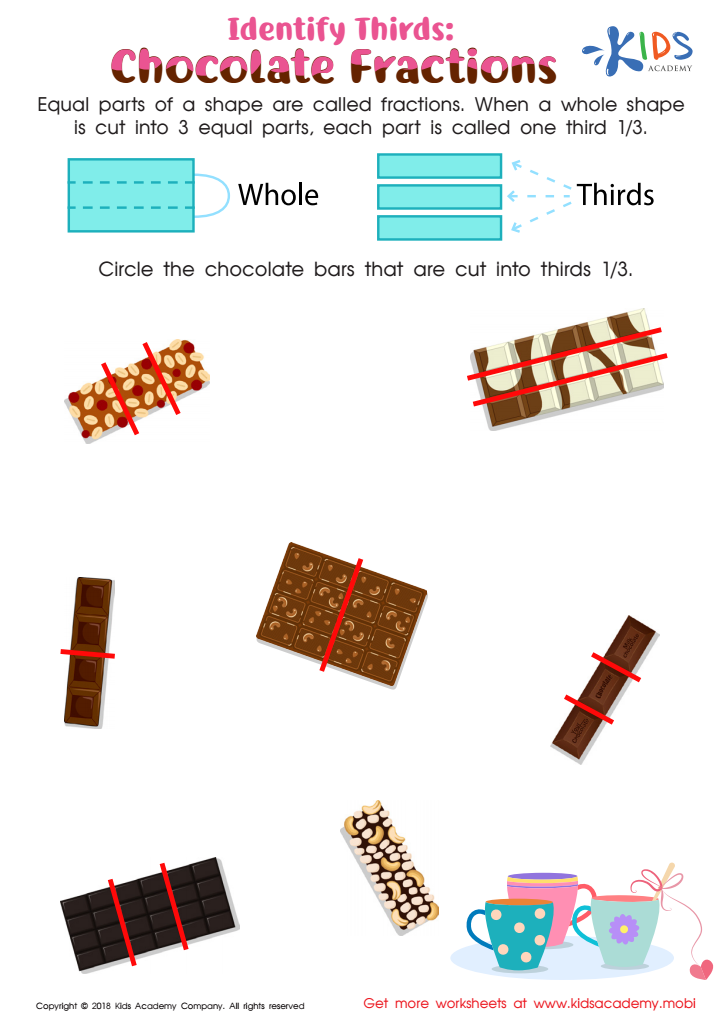
Identify Thirds: Chocolate Fractions Worksheet
Identify Thirds: Chocolate Fractions Worksheet

Divide shapes into equal parts and explain fractions to your child. Show them a worksheet with pictures of chocolate bars cut into thirds (1/3) and ask them to circle them.
Identify Thirds: Chocolate Fractions Worksheet
Worksheet
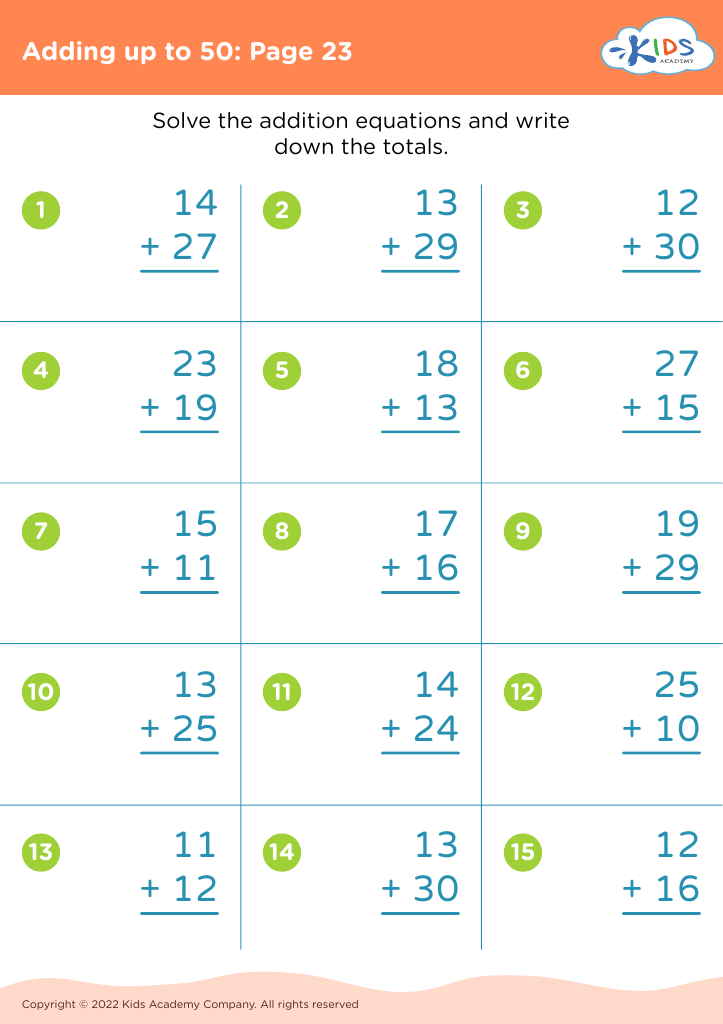
Adding up to 50: Page 23

Adding up to 50: Page 23

Adding up to 50: Page 23
Worksheet
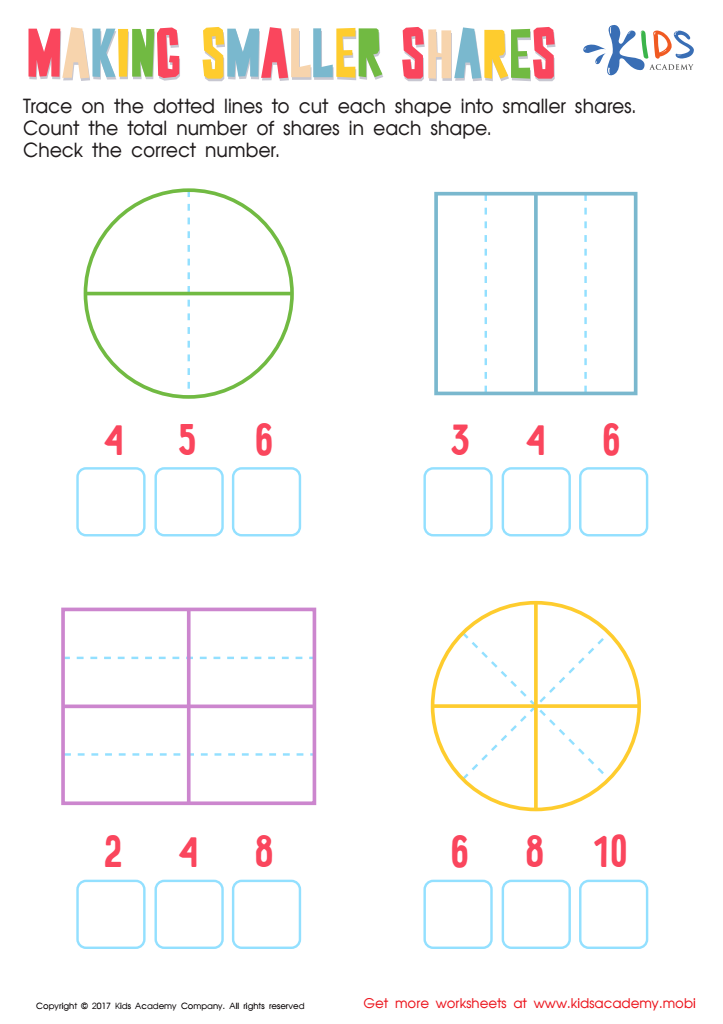
Making Smaller Shares Worksheet
Making Smaller Shares Worksheet
Help your kids learn shapes by having them cut out shapes on this tracing sheet. Point out the dotted lines, then guide their hand as they trace them, breaking shapes into smaller parts. Ask your children to count the number of parts and check the answers given.
Making Smaller Shares Worksheet
Worksheet
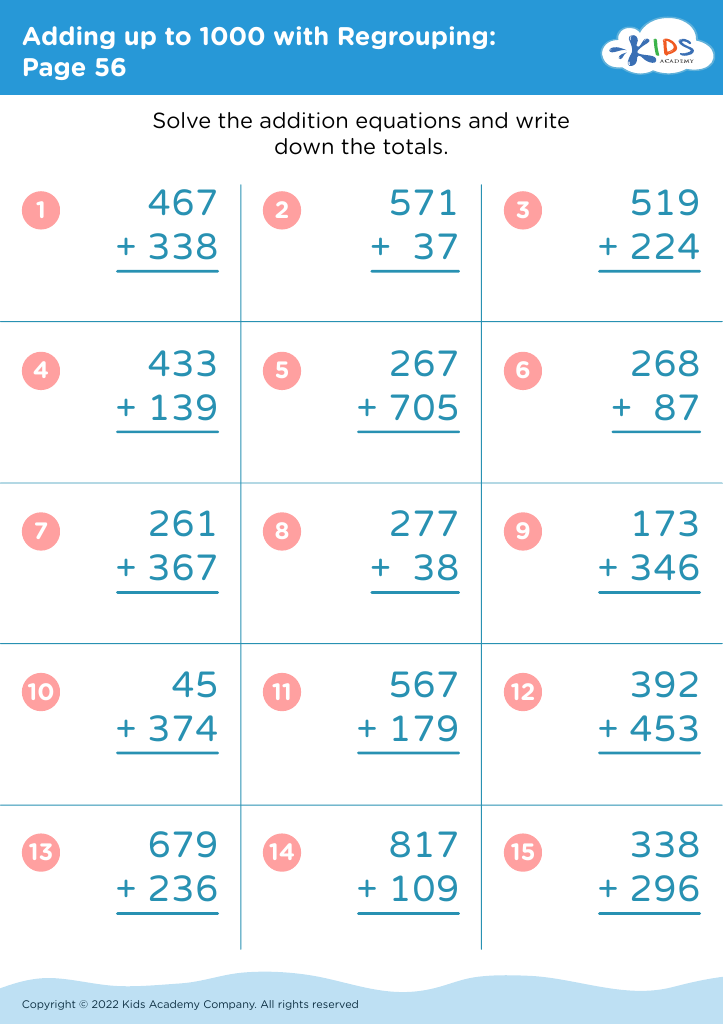
Adding up to 1000 with Regrouping: Page 56
Worksheet
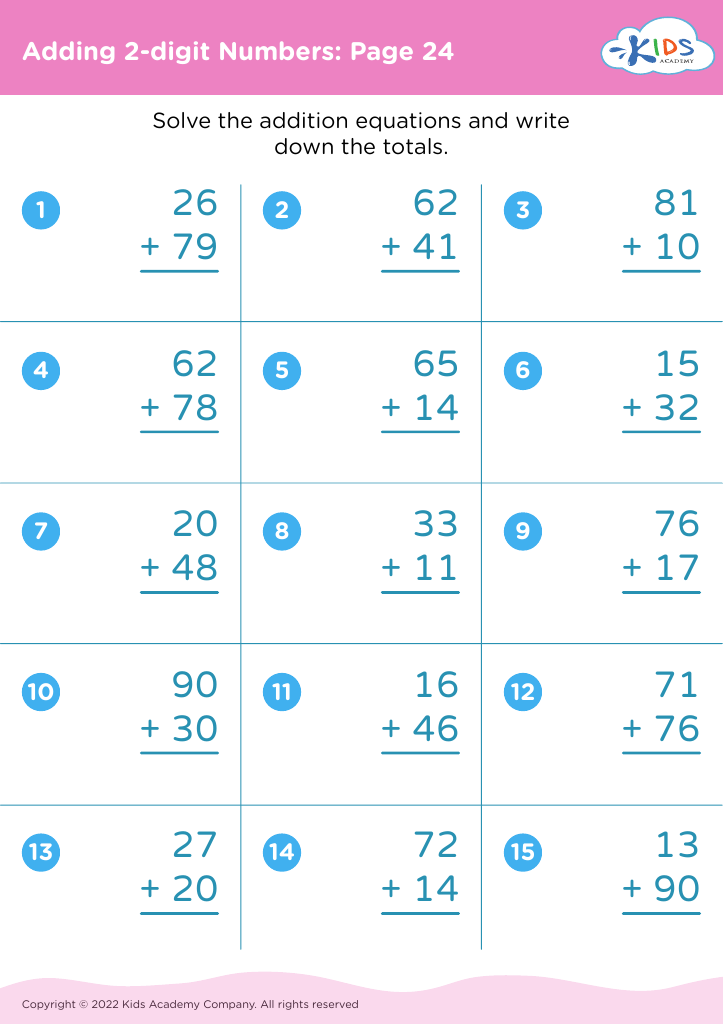
Adding 2-digit Numbers: Page 24

Adding 2-digit Numbers: Page 24

Adding 2-digit Numbers: Page 24
Worksheet
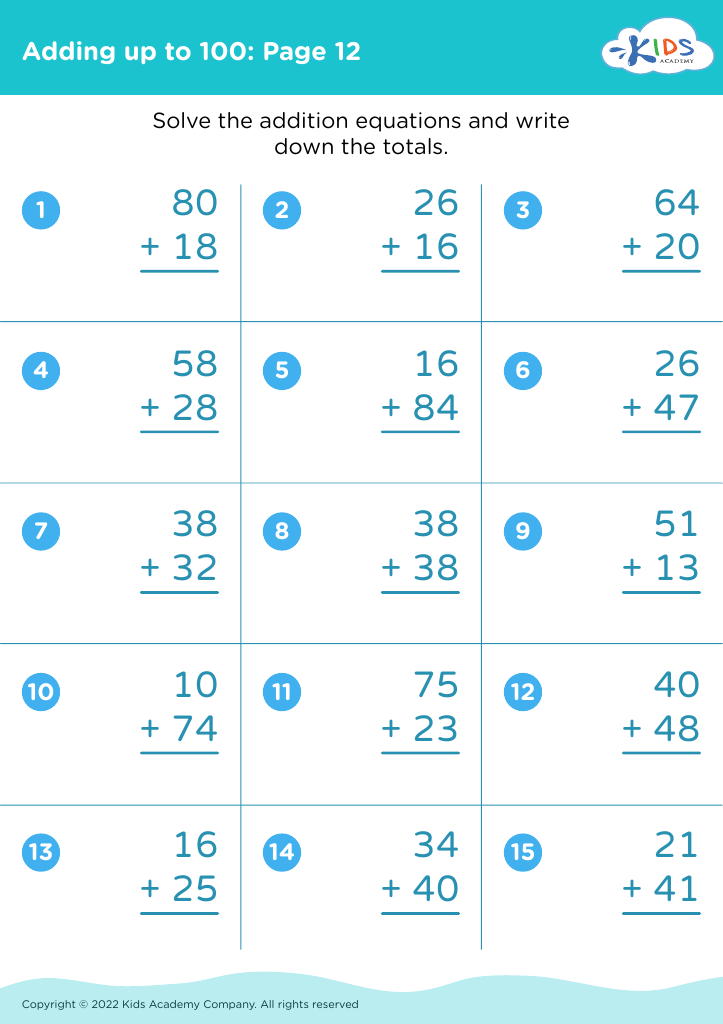
Adding up to 100: Page 12

Adding up to 100: Page 12

Adding up to 100: Page 12
Worksheet


Understanding fractions is crucial for children ages 7-8 as it lays the foundation for their future mathematical learning and everyday problem-solving skills. At this age, children are transitioning from basic arithmetic to more complex concepts, and fractions offer a natural introduction to proportional reasoning. When children grasp fractions, they develop a deeper understanding of parts and wholes, which enhances their ability to comprehend percentages, ratios, and proportional relationships later on.

Furthermore, fractions are not just confined to math; they are prevalent in daily life. Cooking, measuring, and budgeting often involve fractional parts, and equipping children with these skills fosters confidence and independence in practical situations. When parents and teachers prioritize fraction education, they help children build logical thinking and analytical skills that are vital in multiple disciplines beyond mathematics.

Moreover, a solid foundation in fractions boosts performance in standardized testing and higher-level math, ensuring that students do not encounter significant barriers as they advance academically. Lastly, fostering enthusiasm for math through engaging fraction activities can spark a lifelong interest in learning. By emphasizing this critical area of study, parents and teachers play a pivotal role in nurturing not only academic success but also essential life skills in children.