Understanding symmetry Math Worksheets for Ages 7-8 - Page 2
30 filtered results
-
From - To
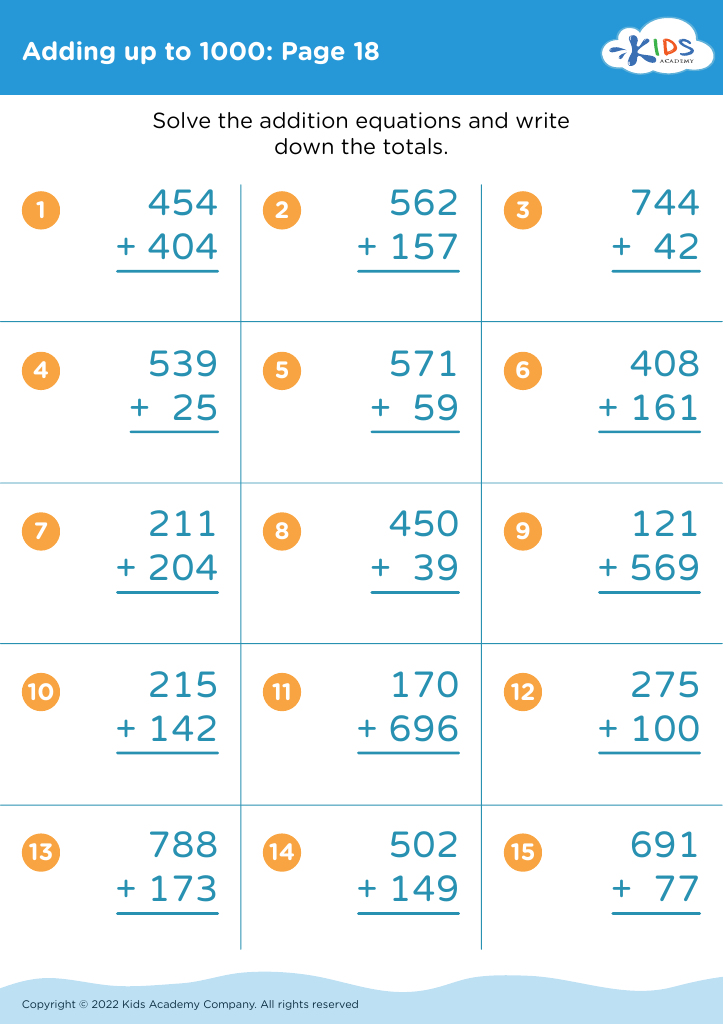
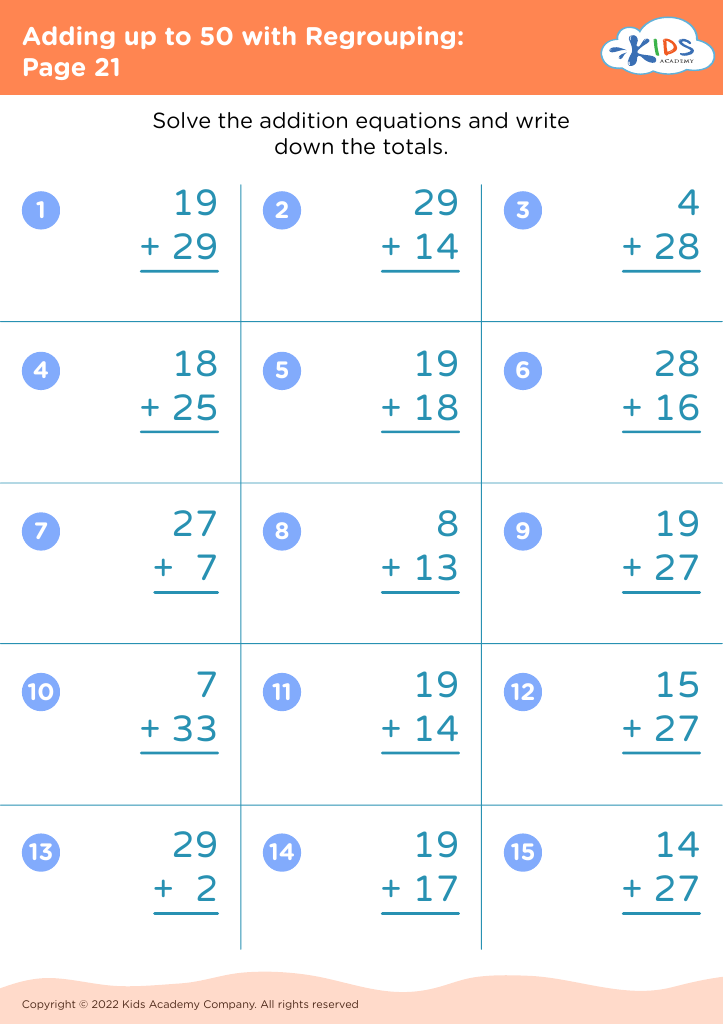
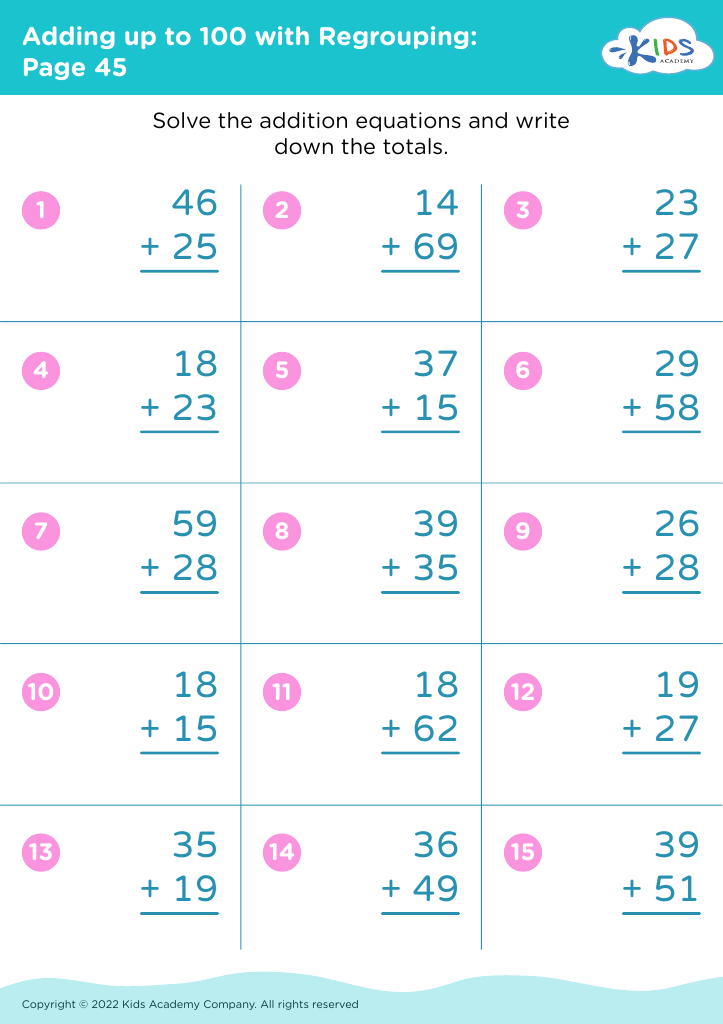
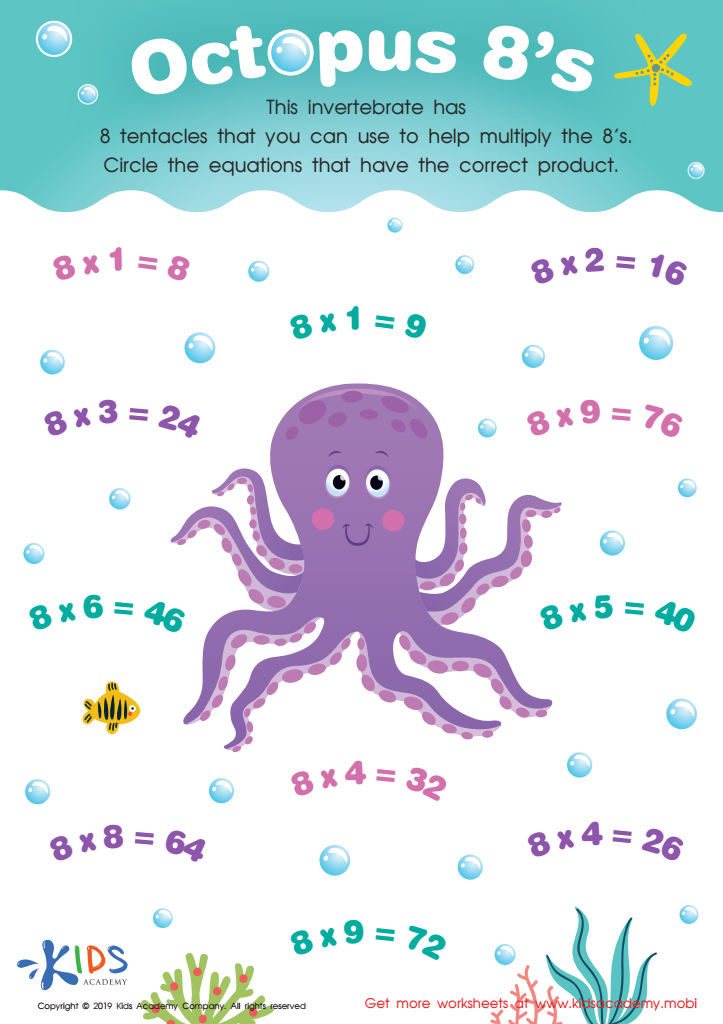
Octopus 8’s Worksheet
 Assign to My Students






Understanding symmetry is crucial for children aged 7-8 as it forms the foundation for critical thinking and problem-solving skills. At this developmental stage, children are naturally curious and begin to notice patterns in the world around them. By engaging with the concept of symmetry, they enhance their spatial awareness and visual perception, important skills in both math and science.
Moreover, recognizing symmetrical forms lays the groundwork for more complex mathematical concepts. As students learn to identify symmetrical shapes, they also develop their understanding of geometry, which is essential for advanced topics later in their education. Symmetry serves as a bridge to algebra through understanding reflections and transformations.
Beyond academics, grasping symmetry can enhance creativity. Art and design often utilize symmetry, allowing children to express themselves creatively while applying mathematical concepts.
Parents and teachers can also foster a playful learning environment by integrating symmetry into everyday activities, such as art projects or nature walks, making math engaging. Ultimately, helping children understand symmetry equips them with a valuable tool for analysis and fosters a positive attitude toward math, encouraging lifelong learning and discovery. By prioritizing this understanding, adults play a crucial role in nurturing future problem solvers and innovators.








