Understanding tens Math Worksheets for Ages 7-8
4 filtered results
-
From - To
Unlock your child’s potential with our "Understanding Tens" math worksheets, designed for ages 7-8. These engaging and interactive worksheets help young learners grasp the foundational concept of place value, making math enjoyable and accessible. Through fun exercises and vivid illustrations, kids build confidence in breaking down numbers into tens and ones, preparing them for more complex arithmetic. Tailored for young minds, our worksheets transform abstract ideas into clear and manageable tasks, fostering a love for learning. Perfect for home or classroom use, ensure your child’s success in math with resources from Kids Academy.
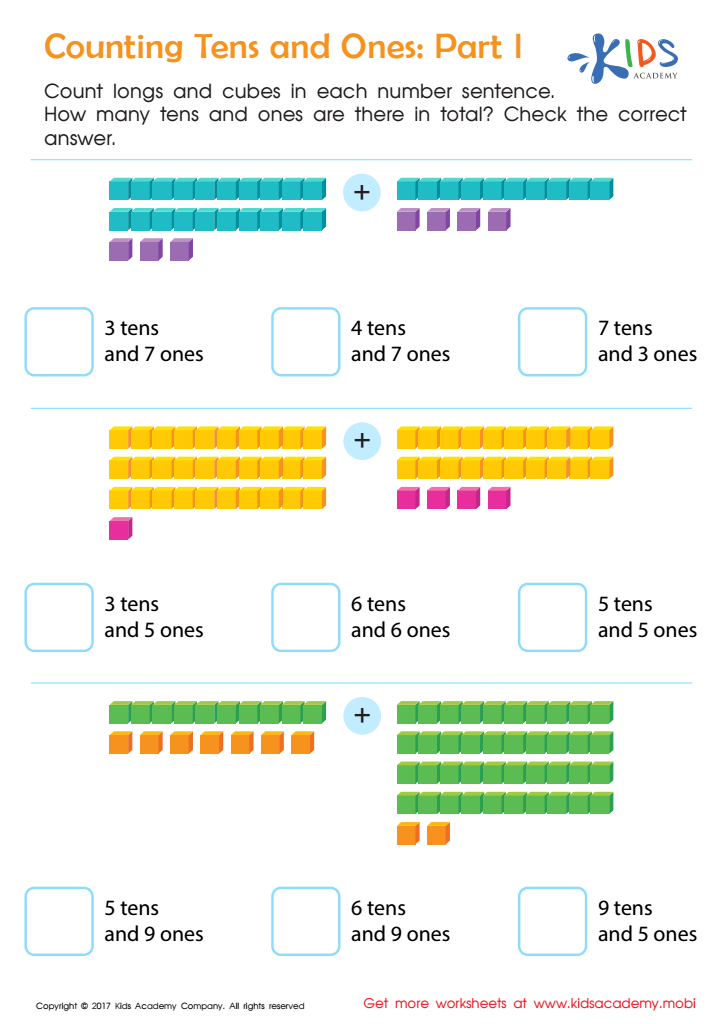
Counting Tens and Ones: Part 1 Worksheet
 Assign to My Students
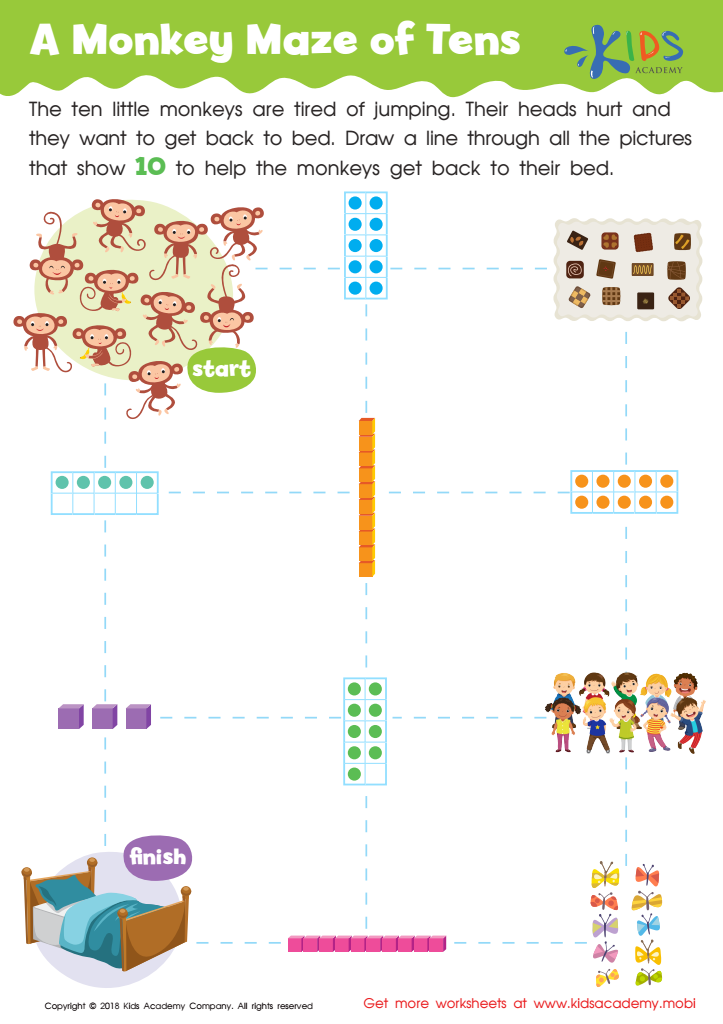
A Monkey Maze of Tens Worksheet
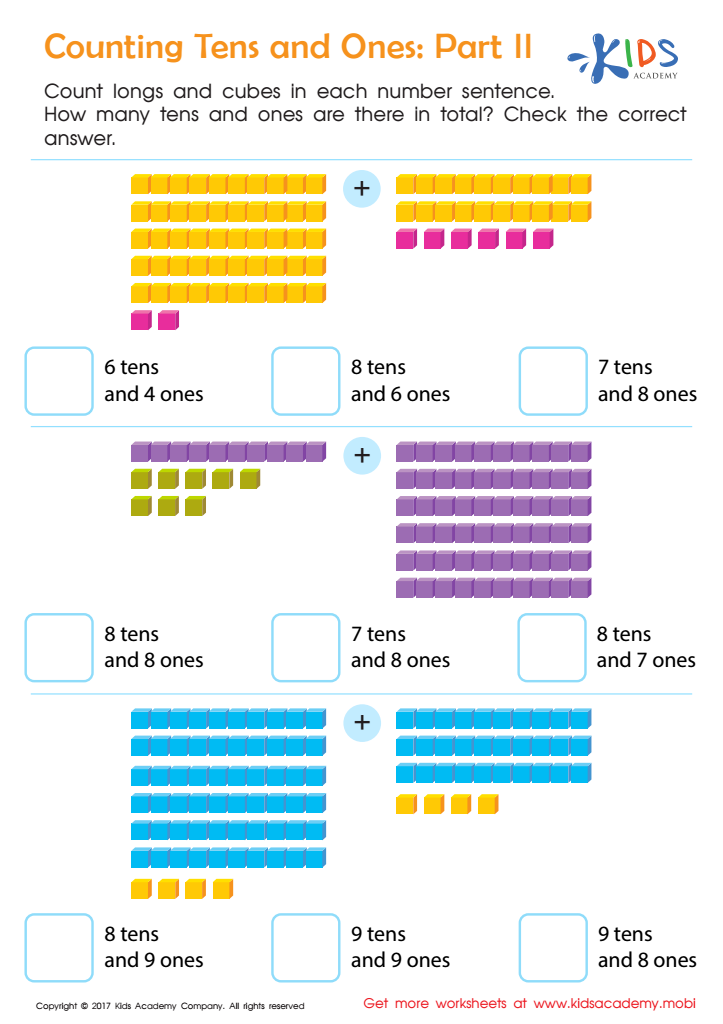
Counting Tens and Ones: Part 2 Worksheet
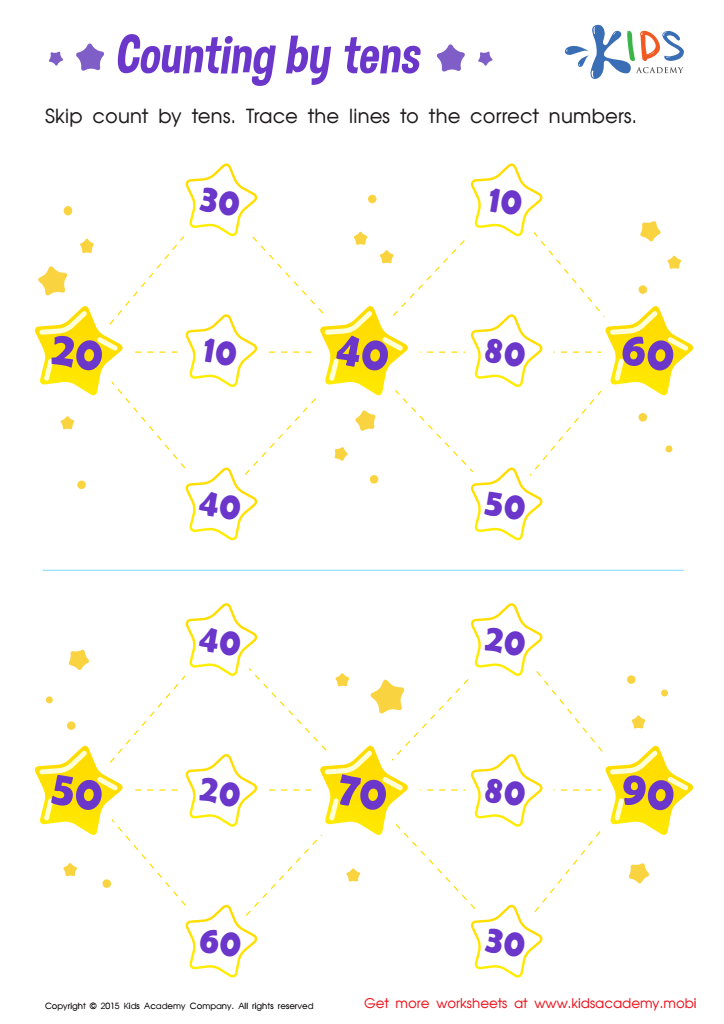
Learn Dozens: Counting by Tens Printable


%20(1).jpg)




Understanding the concept of tens is fundamental for children ages 7-8, as it lays the cornerstone for building strong mathematical foundations. Parents and teachers should prioritize this because it provides the essential framework for comprehending place value and the base-ten number system, which are critical for all future mathematical learning.
When children grasp the idea of tens—knowing that ten ones make a ten—they can efficiently perform multi-digit addition and subtraction. This understanding simplifies arithmetic and helps children to fluidly transition between units and larger numbers, boosting their confidence and proficiency in math.
Moreover, recognizing the importance of tens aids in the development of problem-solving skills. Kids are able to break down complex problems into manageable parts, enhancing their ability to critically analyze and approach math tasks. This foundational knowledge is not just limited to arithmetic but extends to skills used in higher mathematical concepts, such as multiplication, division, measurement, and data analysis.
By ensuring that children understand tens deeply and thoroughly, parents and teachers can foster an environment where mathematical concepts are clear and less intimidating. This early success can inspire a positive attitude towards math, reducing anxiety and building a solid foundation for lifelong numeracy skills.








