Interpreting data Measurement Worksheets for Ages 7-8
5 filtered results
-
From - To
Unlock the world of measurement with our Interpreting Data Measurement Worksheets for ages 7-8! These engaging, printable worksheets are designed to help young learners develop essential skills in understanding and analyzing data through measurement. Kids will practice interpreting charts, tables, and graphs, enhancing their ability to compare, summarize, and draw conclusions. Our worksheets encourage critical thinking and problem-solving in a fun and interactive way, making learning enjoyable. Ideal for classroom use or at-home practice, these resources empower children to build a solid foundation in data interpretation, setting them on the path to mathematical confidence and success. Start measuring progress today!
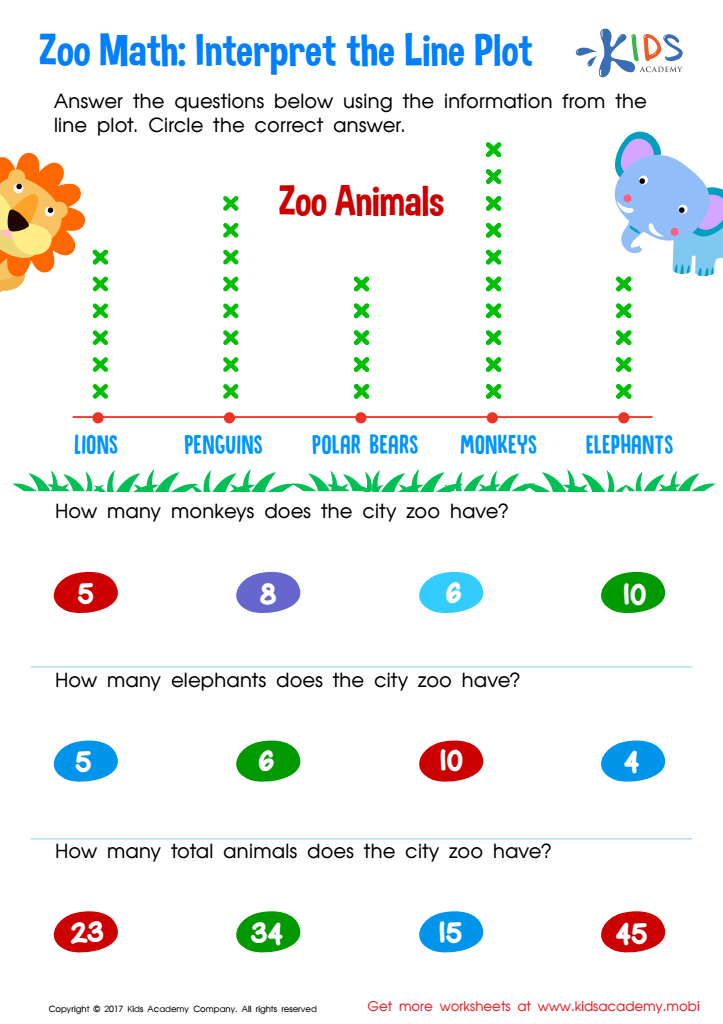
Interpret Line Plot Worksheet
 Assign to My Students
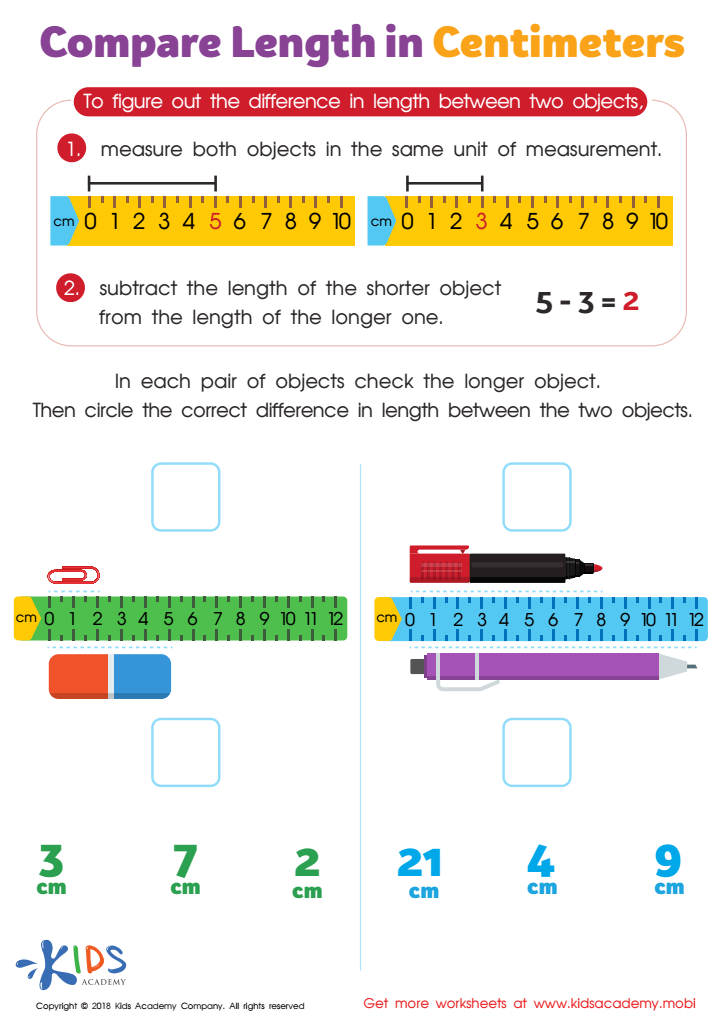
Compare Length in Centimeters Worksheet
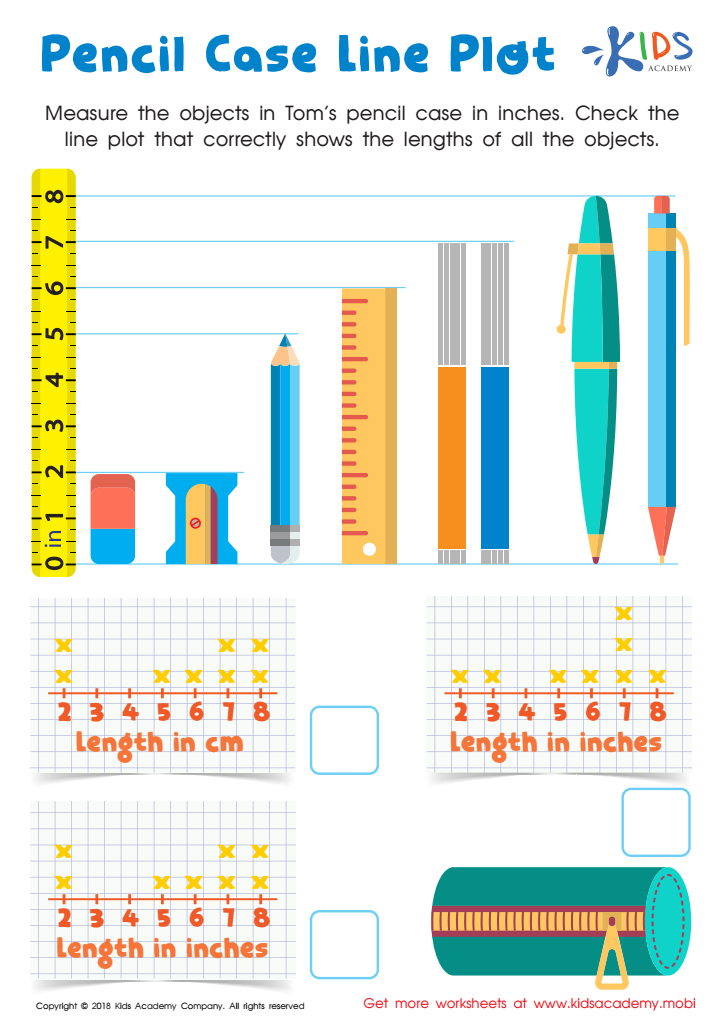
Pencil Case Line Plot Worksheet
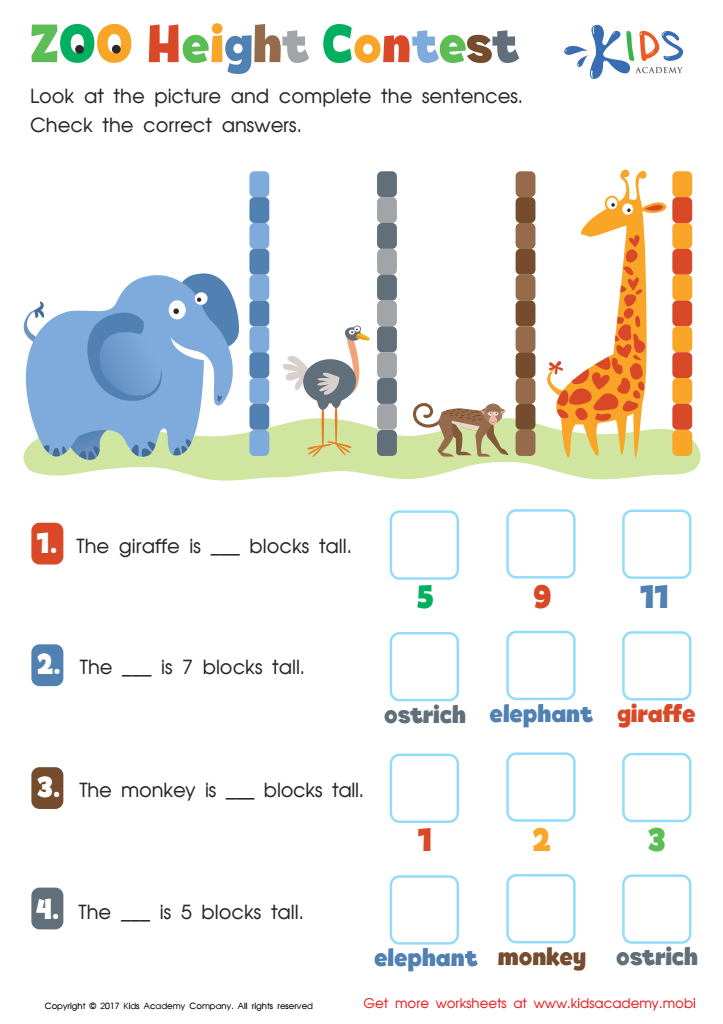
Zoo Height Contest Worksheet
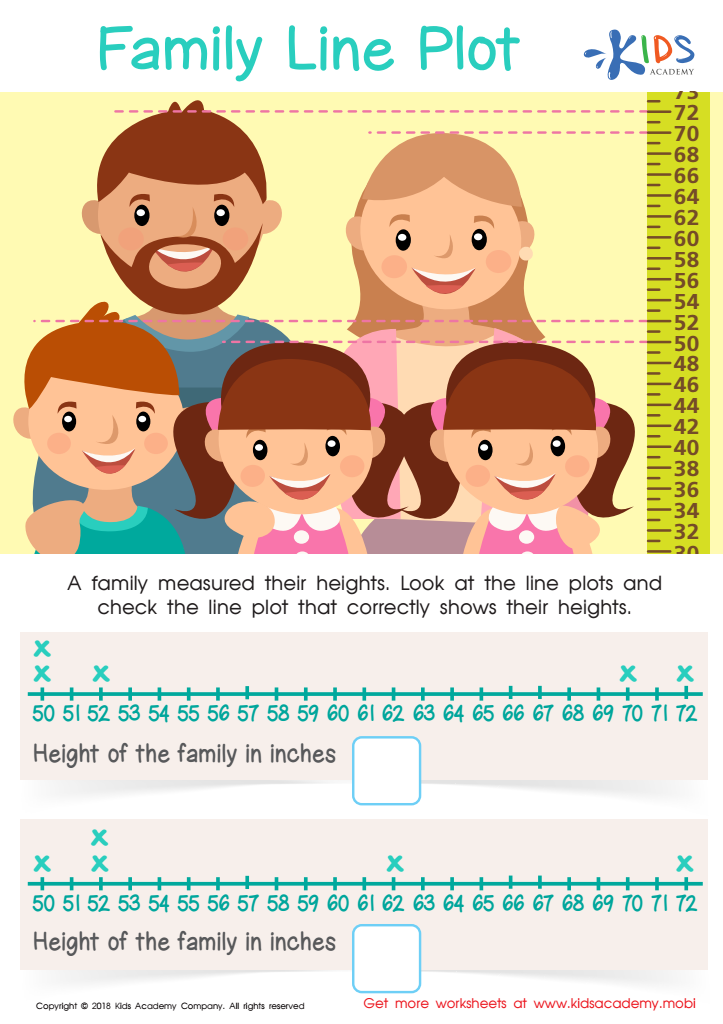
Family Line Plot Worksheet








Interpreting data measurement is essential for children ages 7-8 as it builds foundational skills critical for their academic growth and everyday problem-solving. At this age, children begin to encounter more complex concepts in mathematics and science, including statistics and data analysis. By understanding how to gather, analyze, and make sense of data, young learners equip themselves with the tools needed to think critically about information, distinguishing between facts and opinions.
For parents and teachers, fostering an appreciation for data interpretation encourages a growth mindset around math and science—a subject area in which many children historically struggle. Both groups can help demystify the subject by incorporating real-life examples, like measuring ingredients for cooking or using survey data to understand class preferences. Such practical applications make learning relevant and engaging.
Additionally, developing data interpretation skills at a young age prepares children for more advanced topics as they progress in their education. Moreover, these skills support essential life skills, enabling children to make informed decisions, evaluate information critically, and develop spatial reasoning skills. Emphasizing the importance of data interpretation not only enhances student learning but also cultivates informed, analytical thinkers who can navigate an increasingly data-driven world.








