Number Recognition Skip Counting Worksheets for Ages 7-8
3 filtered results
-
From - To
Enhance your child’s mathematical skills with our engaging Number Recognition Skip Counting Worksheets designed specifically for ages 7-8. These fun, interactive worksheets help young learners grasp the concept of skip counting while improving their number recognition abilities. Each activity encourages children to identify and follow patterns by skipping numbers, laying a strong foundation for more advanced math concepts. Our resources not only promote critical thinking but also make math enjoyable! Ideal for homeschooling or classroom settings, these worksheets are perfect for fostering confidence and proficiency in young mathematicians. Discover the joy of skip counting today with our printable worksheets!
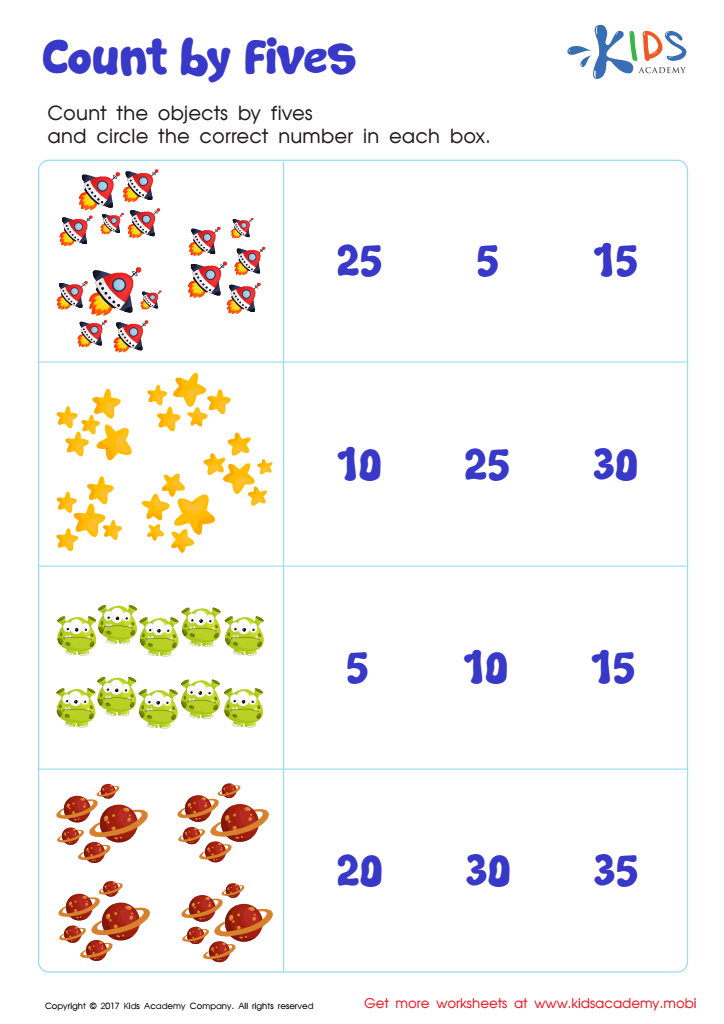
Skip Counting by 5s: Space Math Printable
 Assign to My Students
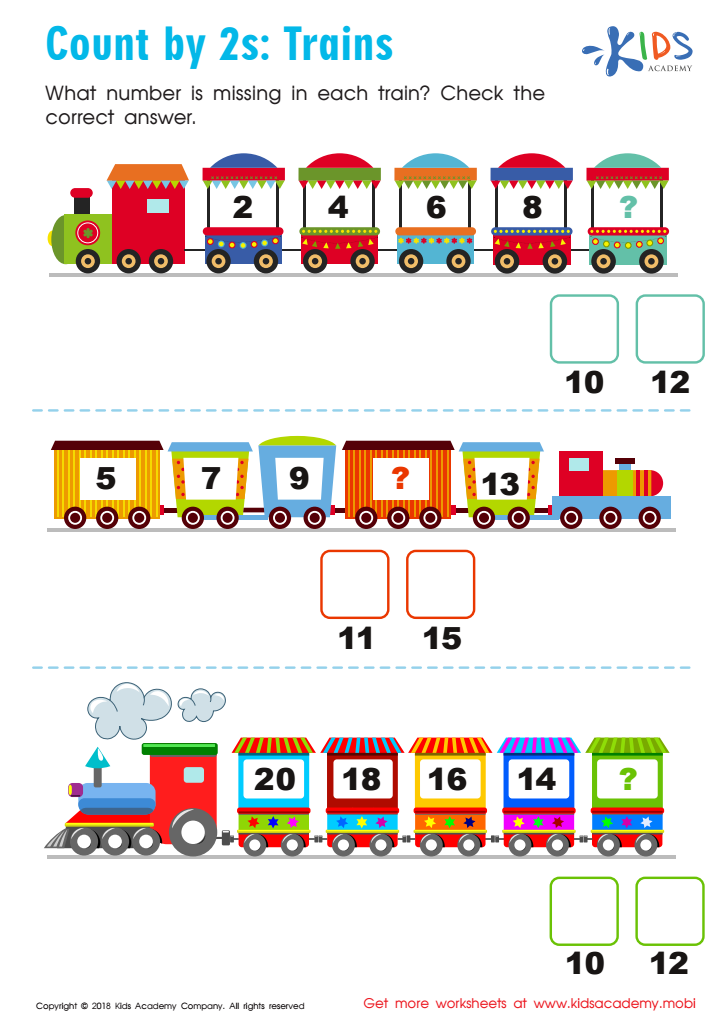
Count by 2's: Trains Worksheet
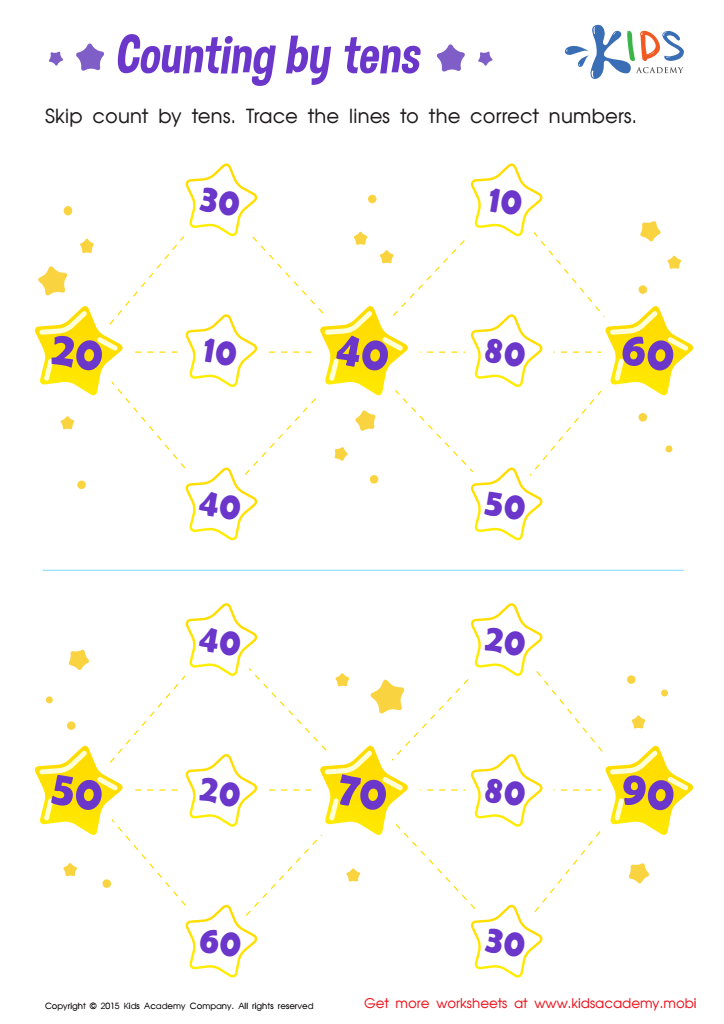
Learn Dozens: Counting by Tens Printable








Number recognition and skip counting are foundational skills in mathematics for children, especially between the ages of 7 and 8. At this developmental stage, children begin to grasp more complex mathematical concepts, making it crucial for parents and teachers to actively engage with these skills.
Number recognition helps children identify and understand numbers, which is essential for developing confidence in mathematics. When children can recognize numbers quickly, they become more competent in performing basic operations such as addition and subtraction, which are pivotal for higher-order math skills.
Skip counting, on the other hand, allows students to understand patterns in numbers, paving the way for concepts such as multiplication and division. By counting in increments (like 2s, 5s, or 10s), children strengthen their number sense, making calculations easier and helping them to grasp the concept of grouping—critical for understanding multiple mathematical concepts.
Moreover, both skills promote cognitive development and problem-solving abilities. Parents and teachers should actively encourage these skills through fun activities and real-life applications to instill a love for math and build a strong foundation. Investing in number recognition and skip counting now will lead to greater mathematical fluency and confidence in their future academic endeavors.








