Number comprehension Subtraction Worksheets for Ages 7-8
10 filtered results
-
From - To
Enhance your child's math skills with our Number Comprehension Subtraction Worksheets designed specifically for ages 7-8. These engaging and interactive worksheets focus on developing a solid understanding of subtraction by introducing various strategies and visual aids. Children will explore subtraction concepts through fun exercises that promote critical thinking and problem-solving. Each worksheet is crafted to boost confidence and fluency in subtraction, making math enjoyable! Help your young learners grasp essential number relationships while preparing them for more advanced concepts. Whether at home or in the classroom, our worksheets are perfect for aiding number comprehension and establishing a strong foundation in mathematics.
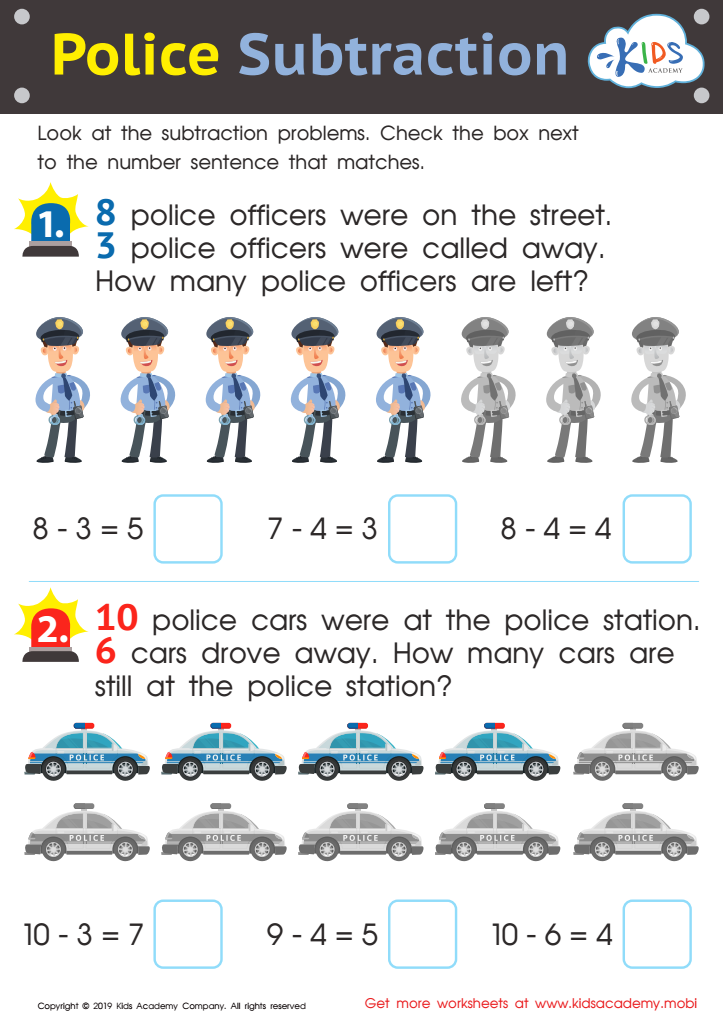
Police Subtraction Worksheet
 Assign to My Students
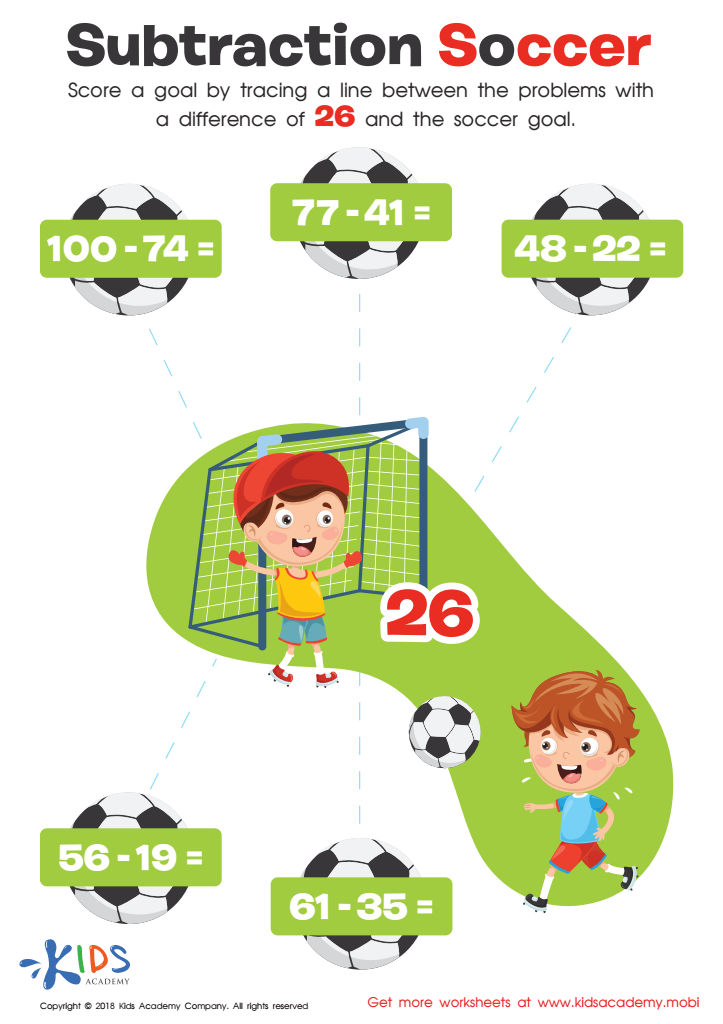
Subtraction Soccer Worksheet
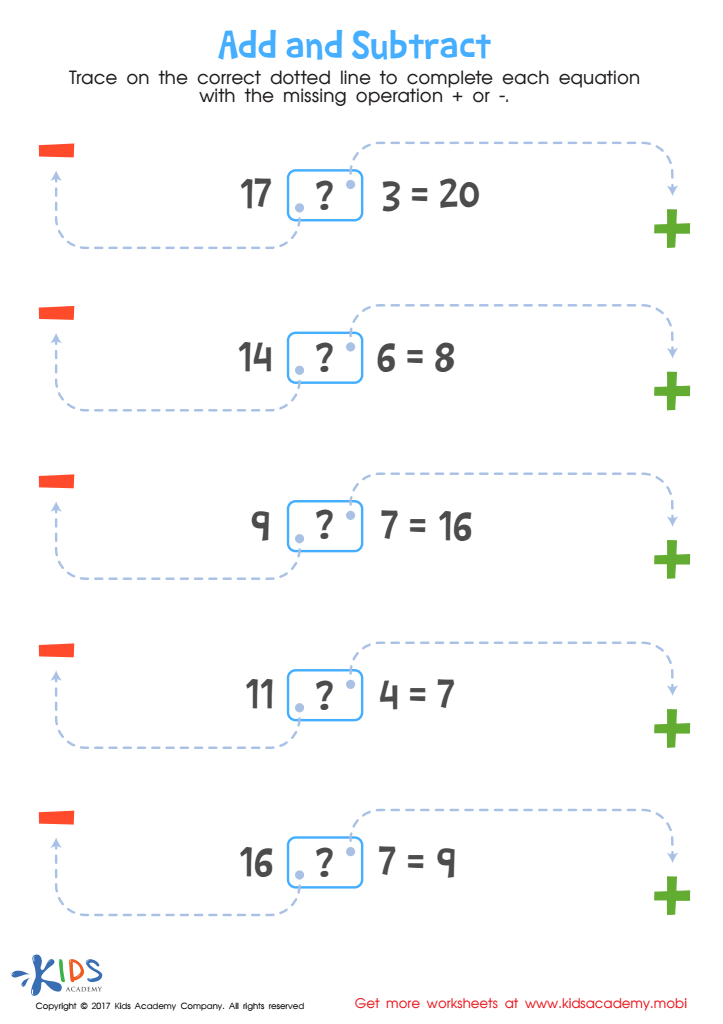
Add and Subtract Worksheet
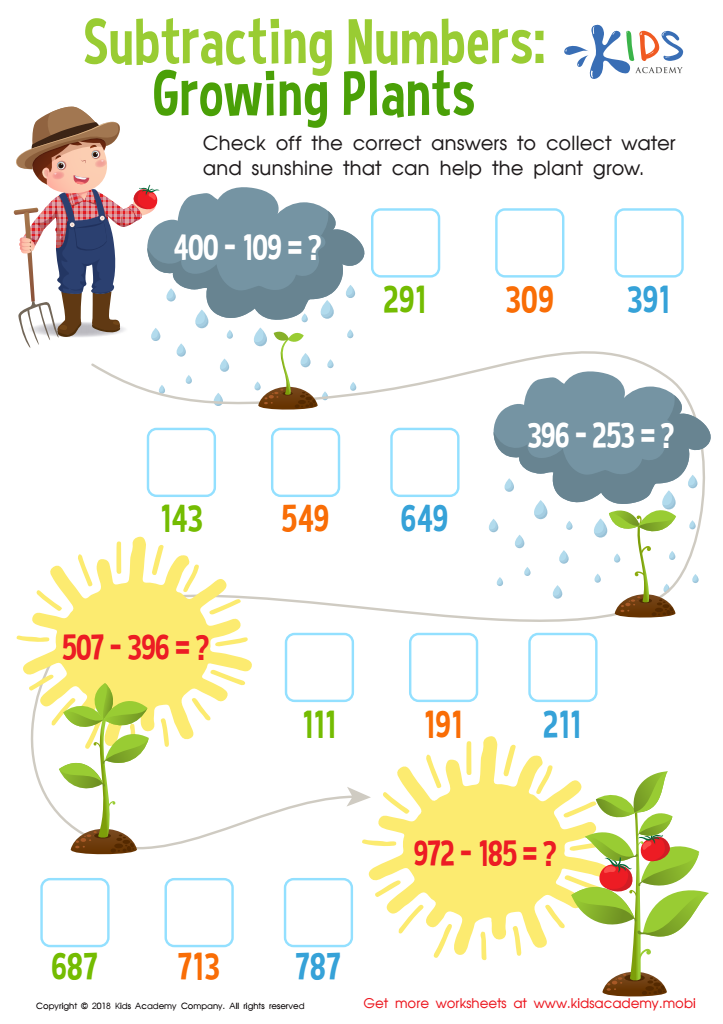
Subtracting Numbers: Growing Plants Worksheet
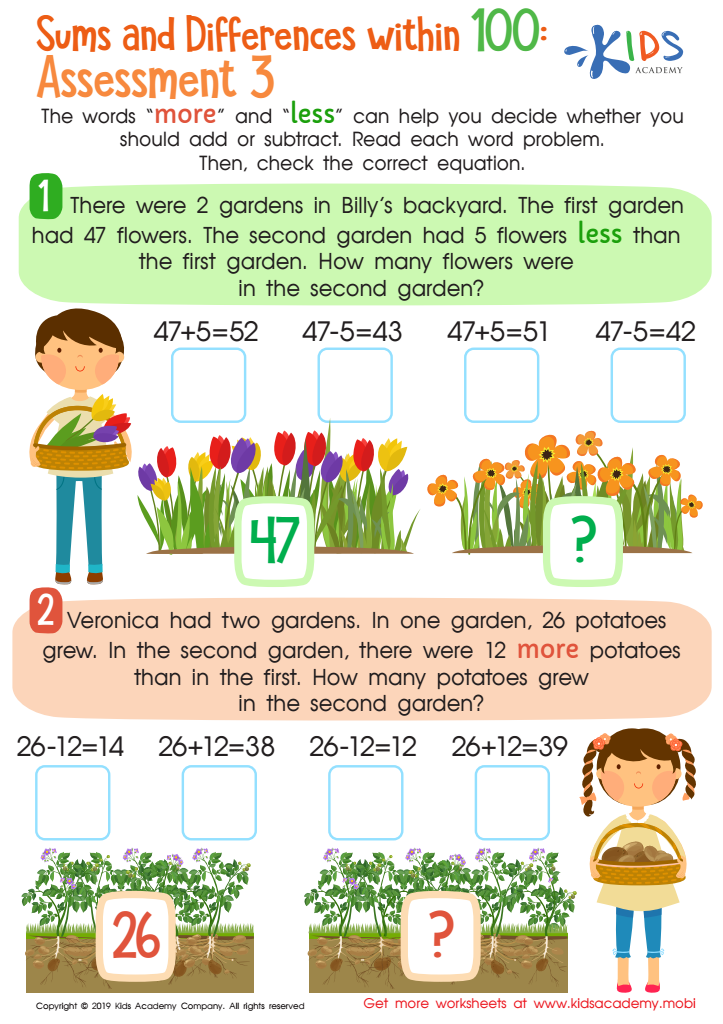
Sums and Differences Within 1 - Assessment 1 Worksheet
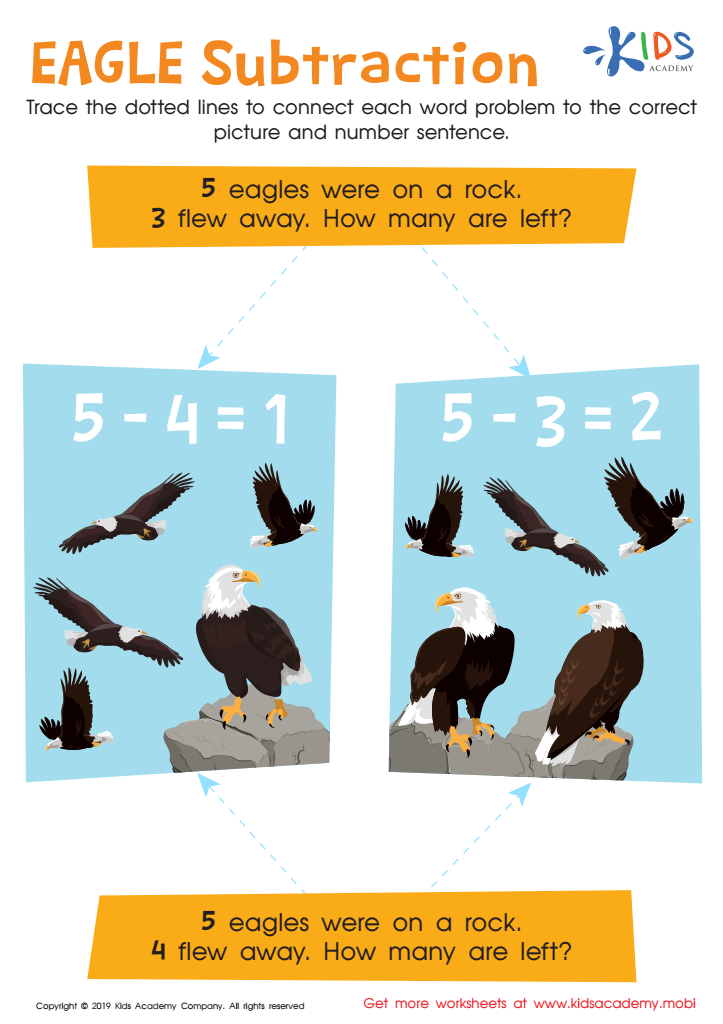
Eagle Subtraction Worksheet
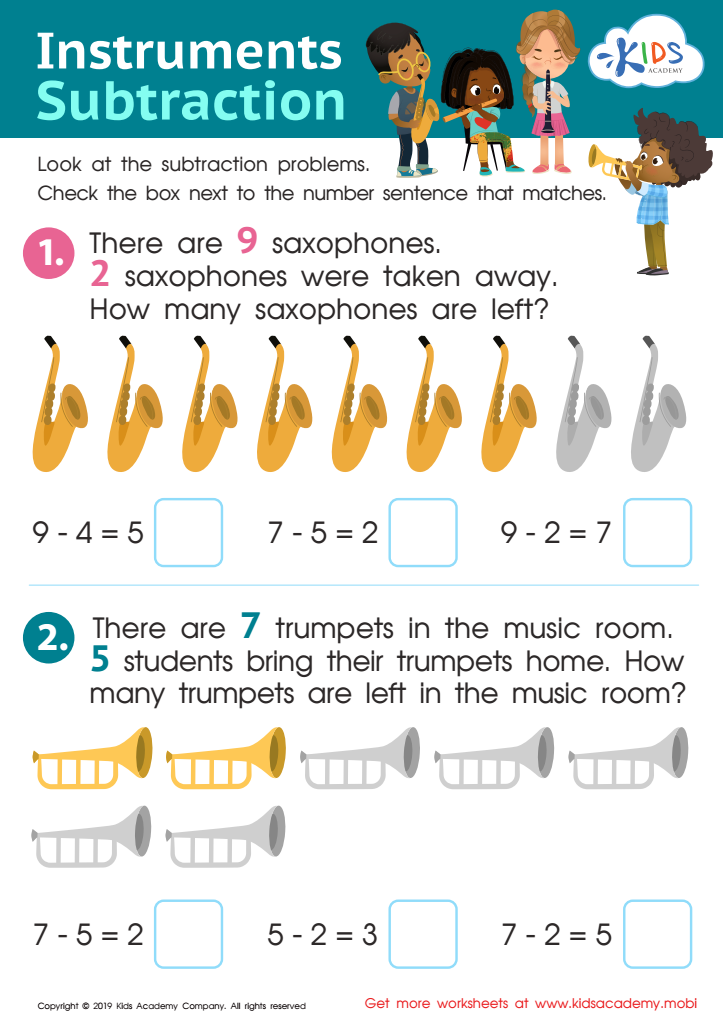
Instrument Subtraction Worksheet
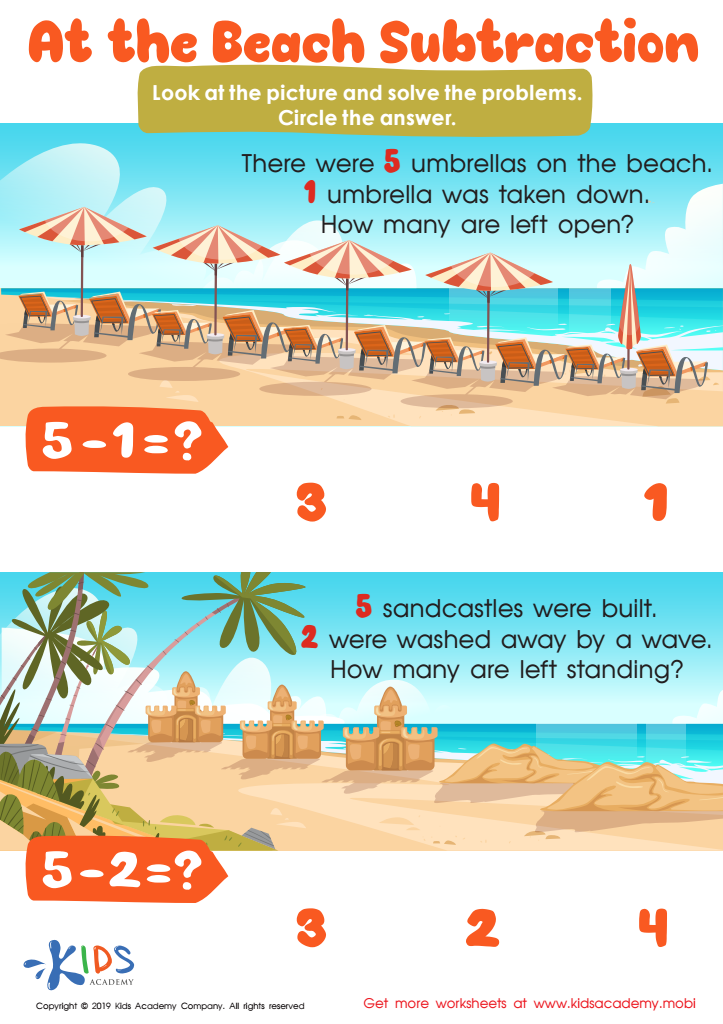
At the Beach Subtraction Worksheet
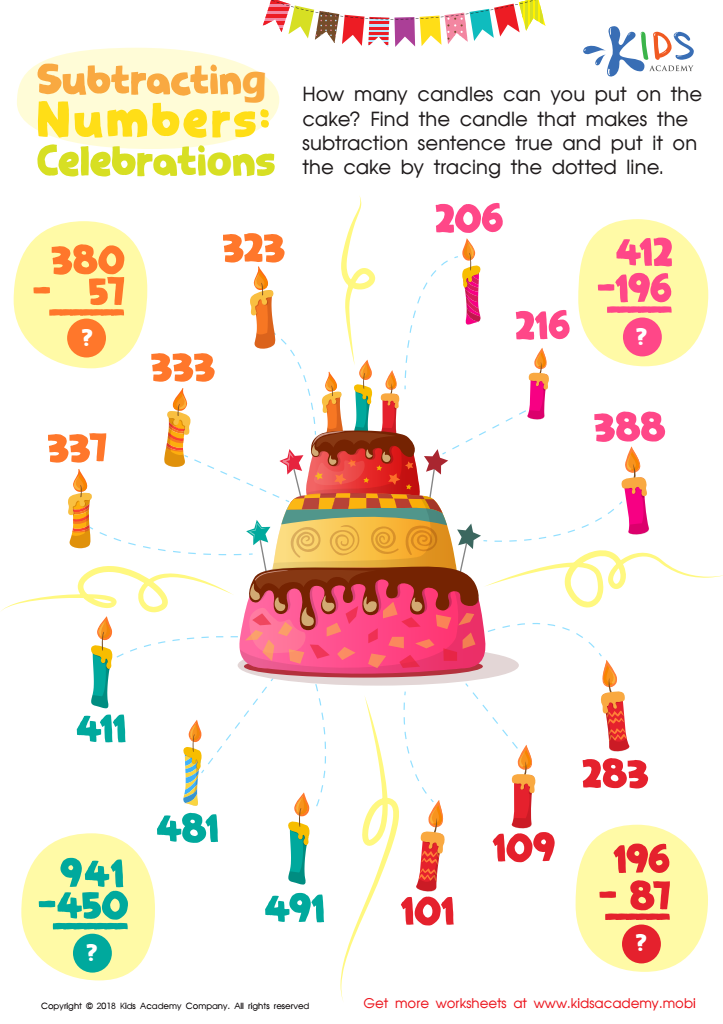
Subtracting Numbers: Celebrations Worksheet
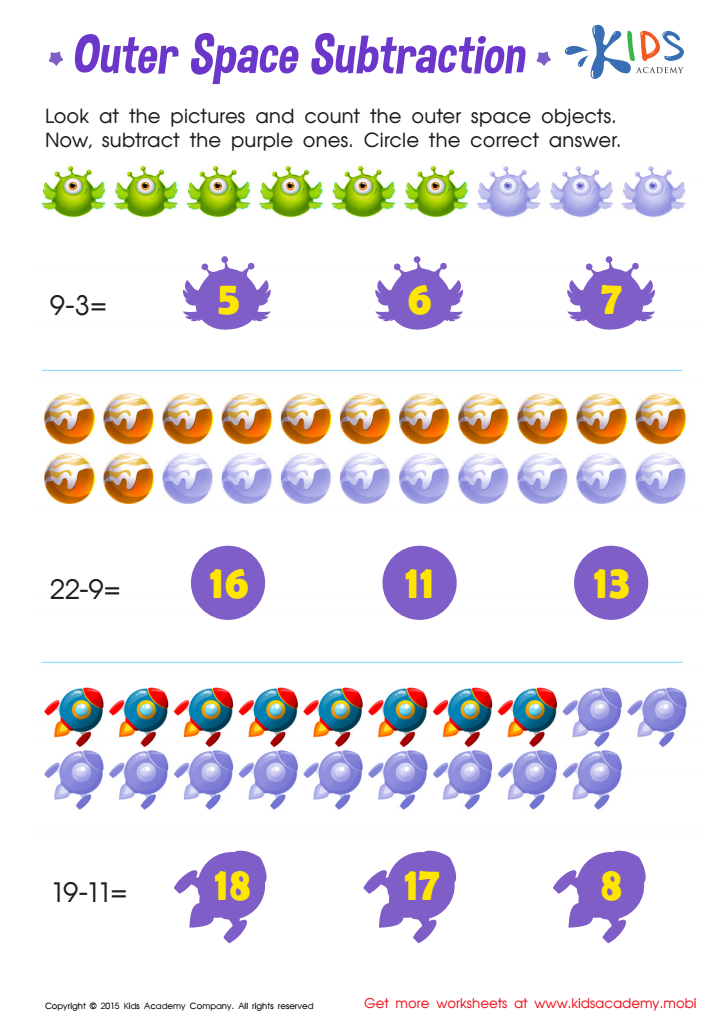
Outer Space Substraction Worksheet








Number comprehension in subtraction is crucial for children aged 7-8 as it lays the foundation for their overall mathematical understanding. This developmental stage is characterized by a significant shift in cognitive abilities, enabling children to grasp essential concepts beyond rote memorization.
At this age, children start to understand not just how to subtract but why subtraction works. This involves recognizing relationships between numbers, understanding the concept of 'taking away', and gaining insight into the idea of zero as an important outcome in subtraction. When parents and teachers focus on number comprehension in subtraction, they help children enhance their critical thinking and problem-solving skills, which are essential in both mathematics and everyday life.
Mastering subtraction builds confidence and encourages a positive attitude towards math, reducing anxiety around the subject as they progress to more complex operations, such as multiplication and division. Furthermore, strong number comprehension aids children in applying subtraction in real-world scenarios, enhancing their practical understanding and relevance of math.
In summary, supporting children's comprehension of subtraction not only fosters academic success but also promotes essential life skills, making it a vital focus for parents and teachers during these formative years.








