Basic arithmetic skills Word Problems Worksheets for Ages 7-8
4 filtered results
-
From - To
Our "Basic Arithmetic Skills Word Problems Worksheets for Ages 7-8" are designed to strengthen essential math skills in young learners. These engaging, child-friendly worksheets combine fun scenarios with fundamental arithmetic operations such as addition, subtraction, multiplication, and division. Perfect for both classroom and home use, the puzzles not only enhance computational skills but also stimulate critical thinking and problem-solving abilities. Bright, colorful designs and relatable contexts help keep children motivated and eager to learn. Empower your child to master basic arithmetic joyfully with our expertly crafted word problem worksheets, fostering both confidence and academic success.
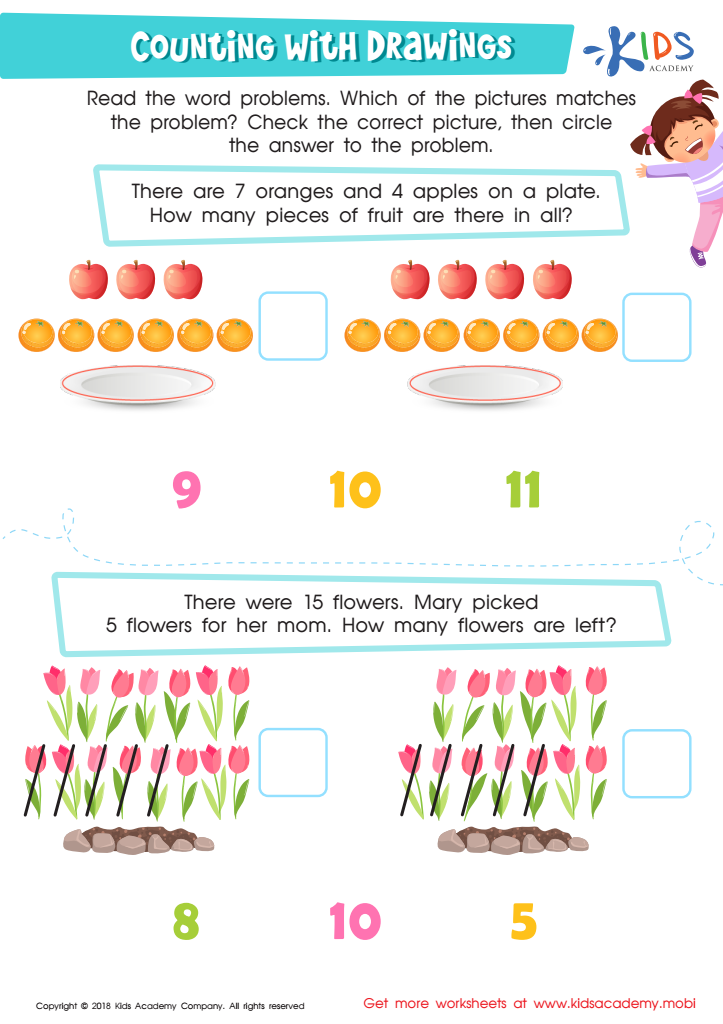
Counting with Drawings: Fruits & Chocolates Worksheet
 Assign to My Students
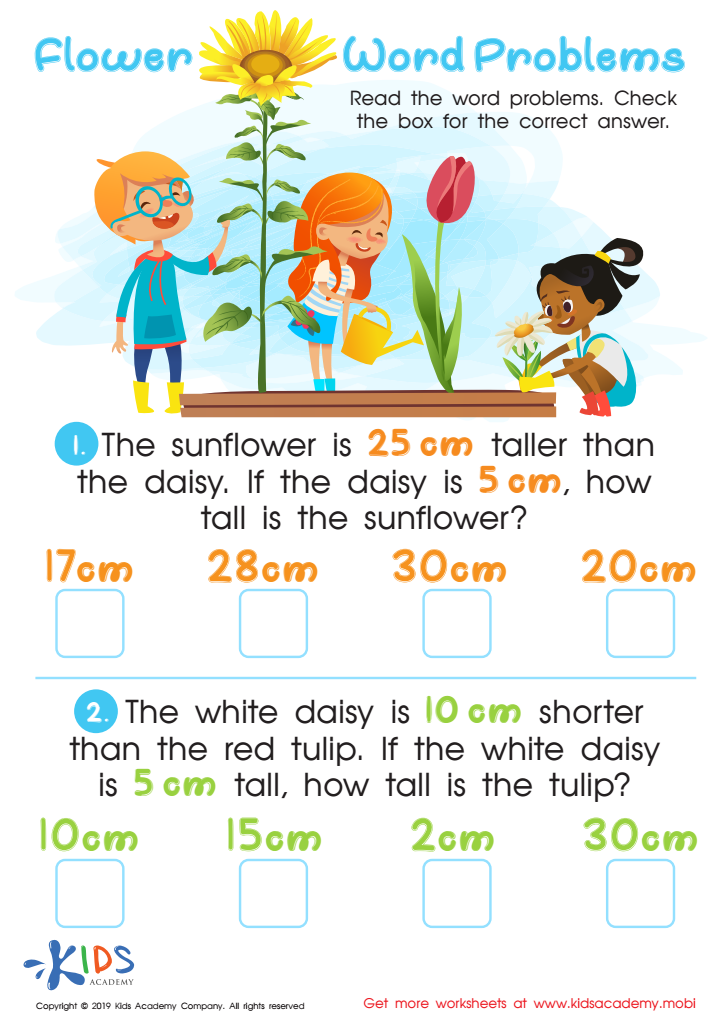
Flower Word Problems Worksheet
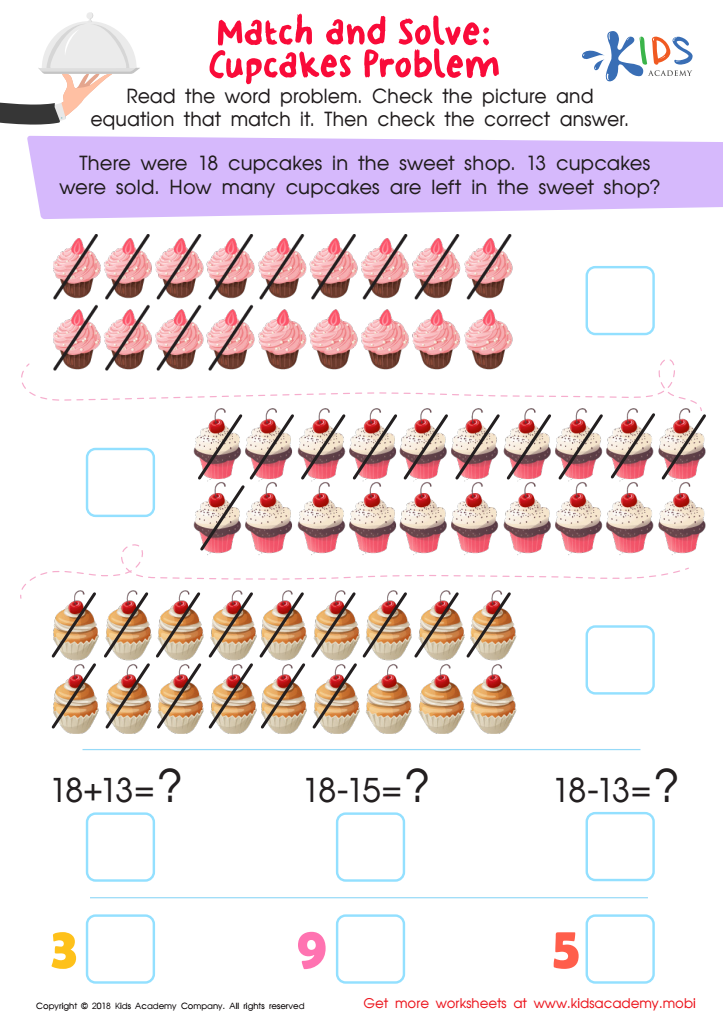
Match and Solve: Cupcakes Problem Worksheet
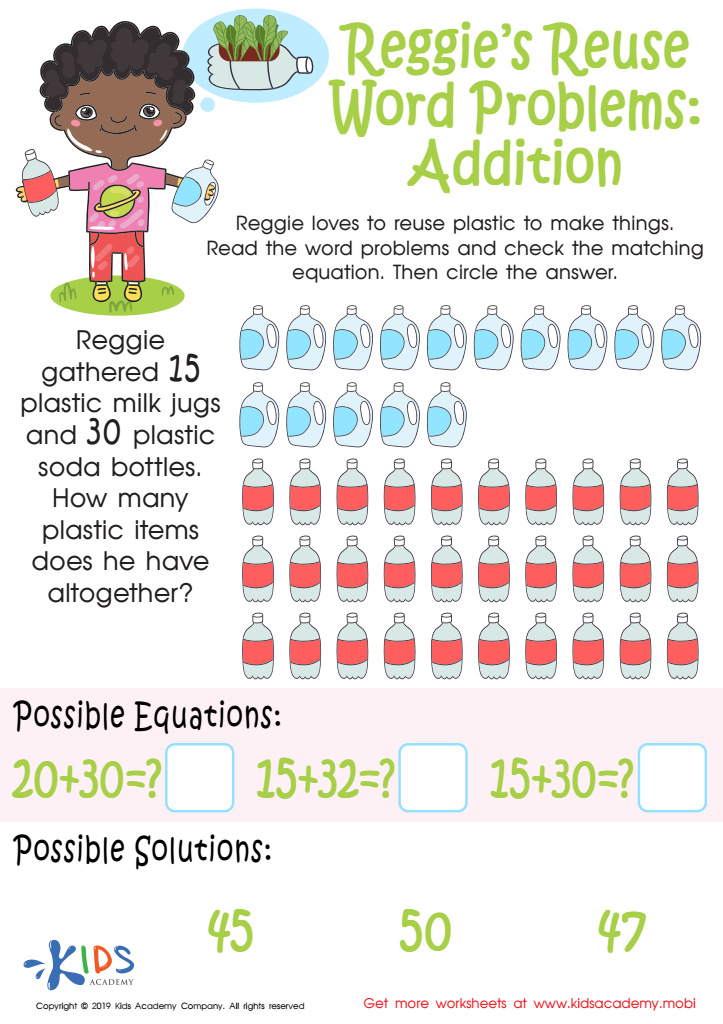
Reggie's Reuse Word Problems: Addition Worksheet








Basic arithmetic skills and word problems are critical for children aged 7-8 because they lay a foundational understanding of more complex mathematical concepts and real-world problem-solving. At this age, kids transition from simple counting to more structured arithmetic operations such as addition, subtraction, multiplication, and division. Word problems contextualize these operations in scenarios familiar to children, making math relatable and practical.
Parents and teachers play pivotal roles in nurturing these skills. When children recognize math's practical applications, their motivation to engage with the subject often increases. For example, word problems involving shopping scenarios teach addition and subtraction, helping kids understand money management—a vital life skill. This early arithmetic fluency also promotes cognitive development, encouraging logical reasoning and critical thinking.
Moreover, proficiency in basic math builds confidence. Children who master these skills early tend to perform better academically across subjects, as many areas of study incorporate mathematical thinking. Teachers and parents who emphasize arithmetic help set the stage for future academic success, fostering an environment where learning is associated with positive outcomes.
In summary, basic arithmetic skills are not just numbers in isolation; they are building blocks for lifelong learning and everyday problem-solving. By focusing on these word problems, teachers and parents give children the tools they need to navigate both their education and their world.








