Addition Practice Building Vocabulary Worksheets for Ages 7-8
5 filtered results
-
From - To
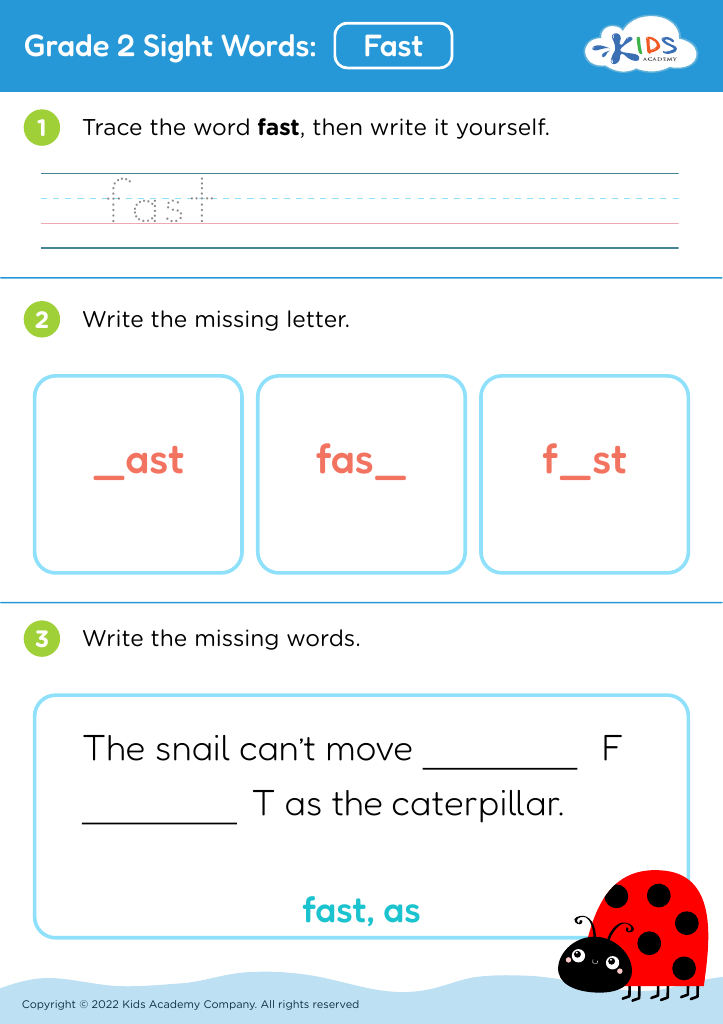
Boost your child's math and vocabulary skills with our Addition Practice Building Vocabulary Worksheets, designed for ages 7-8! These engaging worksheets combine the fundamental concepts of addition with vocabulary-building exercises to enhance learning in a fun and interactive way. Perfect for home or classroom use, each worksheet provides a variety of challenging problems that promote critical thinking and reinforce arithmetic skills. As children complete addition problems, they expand their vocabulary, making connections between numbers and words. These resources are ideal for young learners eager to improve their math abilities while enriching their language skills. Start building a strong foundation today!














.jpg)




Parents and teachers should prioritize addition practice that builds vocabulary for children ages 7-8 because these skills are interlinked and essential for holistic learning. At this developmental stage, children not only fortify their mathematical abilities but also enhance their language skills. Engaging with addition problems often introduces children to specific mathematical vocabulary—terms like "sum," "addend," and "total." Understanding these concepts helps children articulate their thought processes more clearly and confidently.
Moreover, depth in vocabulary supports better comprehension overall, including in reading and problem-solving scenarios. When students encounter word problems, having a robust mathematical vocabulary allows them to decode what is being asked more effectively. Practicing addition in varied contexts, such as word problems, also allows students to connect math to everyday life, making learning more relevant.
Furthermore, bridging math and literacy fosters greater engagement in classrooms—for many children, diverse methods of learning seem less daunting and more fun. Incorporating vocab-building exercises in addition practice thus nurtures well-rounded learners who are prepared for future academic challenges, fosters critical thinking, and instills a love for both math and language early in life. This foundational exposure equips them for success throughout their educational journeys.








