Enhance your child's vocabulary with our engaging Contextual Understanding Building Vocabulary Worksheets for ages 7-8! These thoughtfully designed worksheets help young learners grasp new words through context, promoting deeper comprehension and retention. Each activity encourages critical thinking by encouraging students to use sentence clues and surrounding information to decode meaning. With varied, interactive exercises suitable for different learning styles, children will build their vocabulary in a fun, supportive environment. Perfect for classroom use or at-home practice, these worksheets inspire a love for language while strengthening essential reading skills. Boost your child's confidence and literacy with our targeted vocabulary-building resources!

Check out this FREE Trial Lesson on Building Vocabulary for age 7-8!

Determine the Meaning of Words with Prefixes

Favorites
With answer key
Interactive
  • 7-8
  • Contextual understanding
  • Building Vocabulary
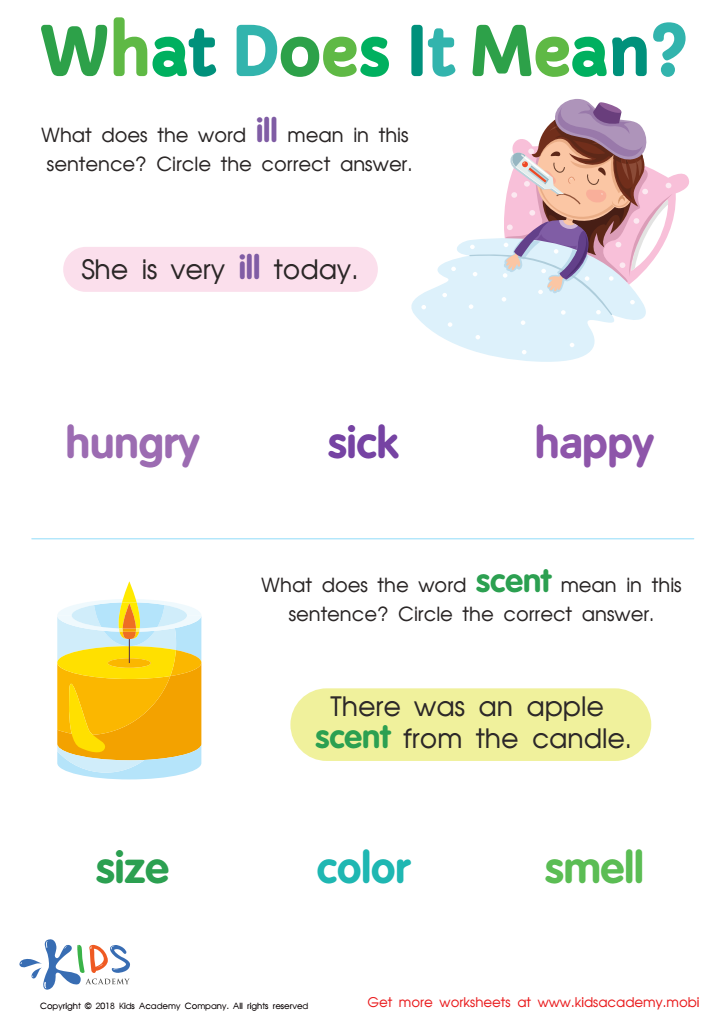
What Does It Mean? Worksheet

What Does It Mean? Worksheet

Students should know the meaning of words, even when used in different contexts. This worksheet has two sections. In the first, there's a picture on the right side. Ask students the meaning of 'ill' in "she is very ill today". Help them circle the correct answer from the options. The second section follows the same pattern. Make sure students circle the right answer.
What Does It Mean? Worksheet
Worksheet
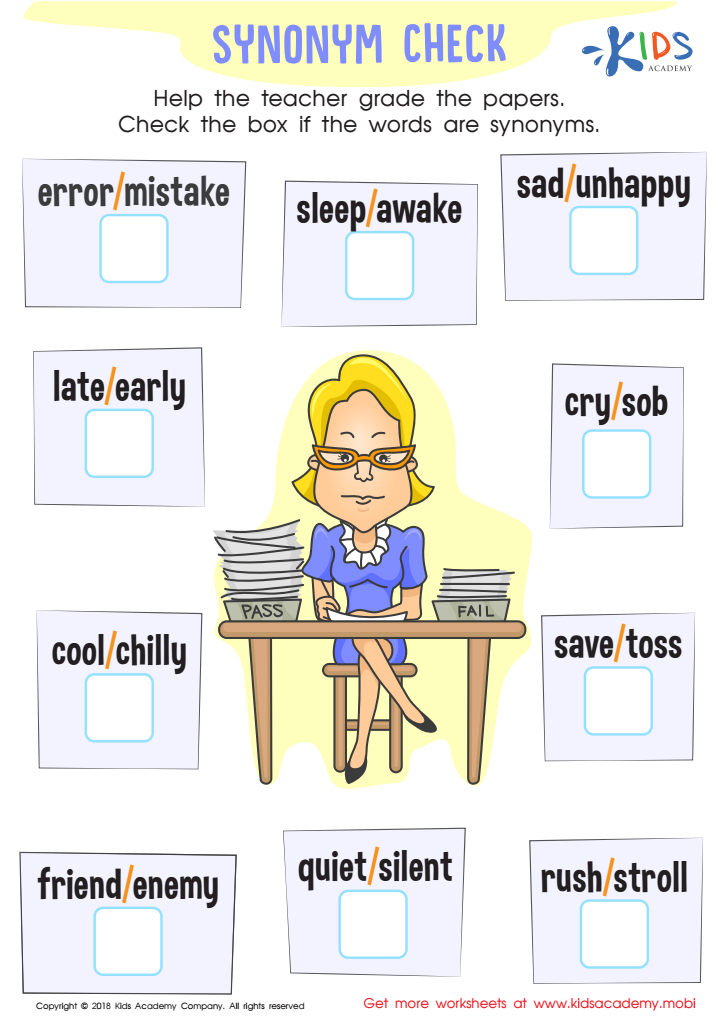
Synonym Check Worksheet

Synonym Check Worksheet

Ask your kids what a synonym is, and listen to their definitions. If needed, explain it's a word that has a similar meaning to another. Give examples, then ask them to do the same. For this worksheet, get them to help grade the papers. Have them check the boxes if the words are synonyms.
Synonym Check Worksheet
Worksheet
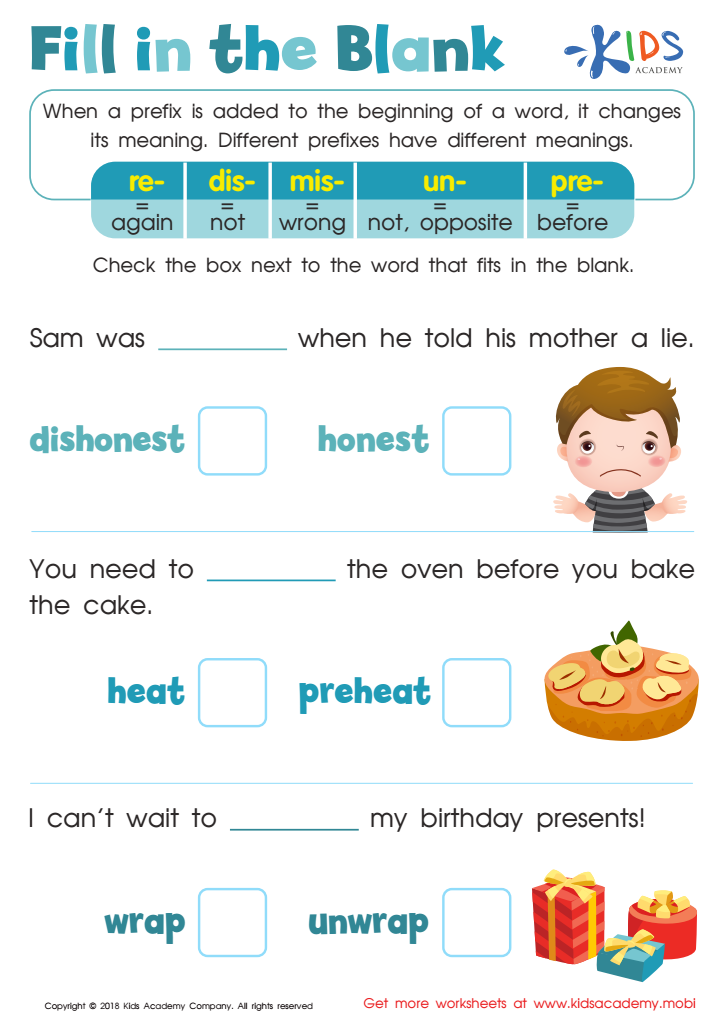
Reading: Fill in the Blank Worksheet

Reading: Fill in the Blank Worksheet

Students can practice understanding the meaning of common prefixes with this worksheet. They read sentences and pick the correct word with the appropriate prefix to complete it. Downloadable and a great addition to reading and vocabulary resources, this helps improve comprehension with mastery of the skill!
Reading: Fill in the Blank Worksheet
Worksheet
Adjectives: At The Zoo Worksheet

Adjectives: At The Zoo Worksheet

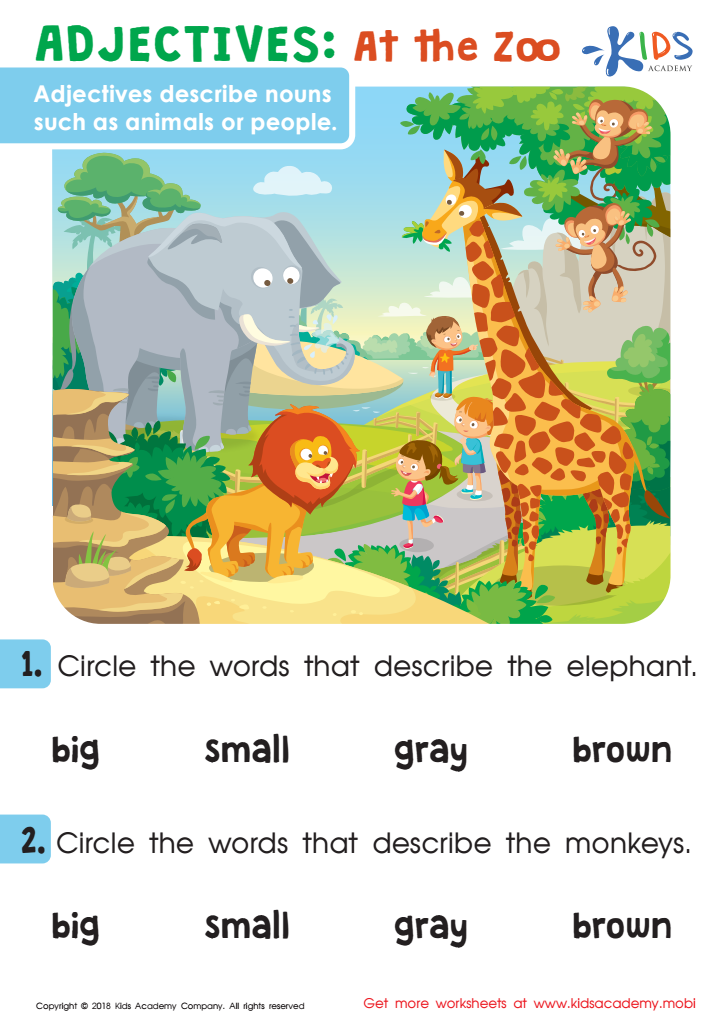
Take your kids to the zoo and ask them about their favorite activities and animals. This worksheet is a great way for kids to learn about adjectives. Explain that adjectives describe nouns like people or animals (e.g. big, tall, dark). Look at the printout with your kids and help them circle words that describe the animals in the picture.
Adjectives: At The Zoo Worksheet
Worksheet
Free printable synonym worksheets for 2nd grade

Free Printable Synonym Worksheet

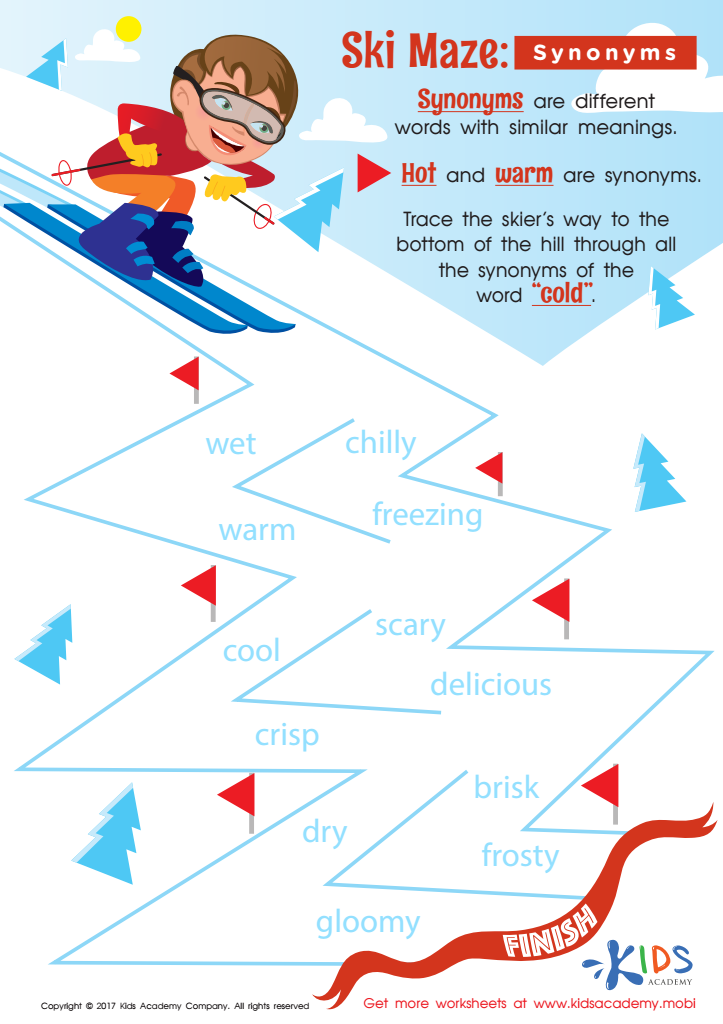
Our free printable synonym worksheet for 2nd grade will help kids learn similar words to expand their vocabulary. Kids will have fun challenging themselves to find all the words that are synonyms for “cold”. Enhance their language and writing with this joyful worksheet!
Free Printable Synonym Worksheet
Worksheet
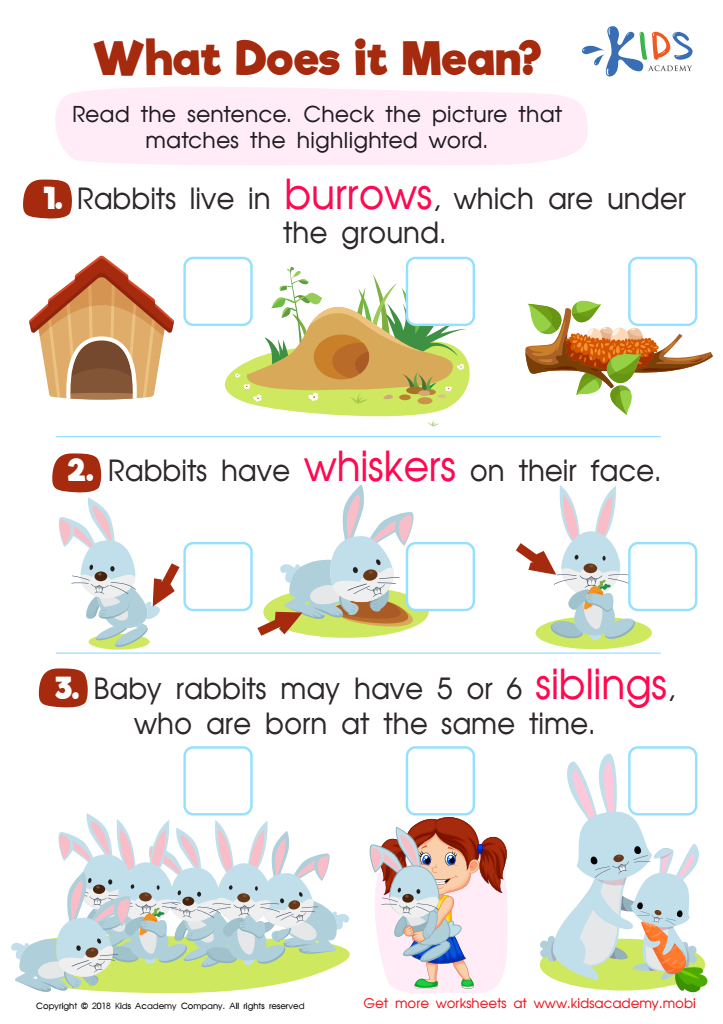
What Does It Mean? Worksheet

What Does It Mean? Worksheet

Teach your child to use context clues with this engaging Kids Academy worksheet. Read the sentences and find the pink-highlighted word. Use the other words in the sentence to figure out the meaning, then check the box next to the picture that represents it.
What Does It Mean? Worksheet
Worksheet
Word Choice Worksheet


Word Choice Worksheet

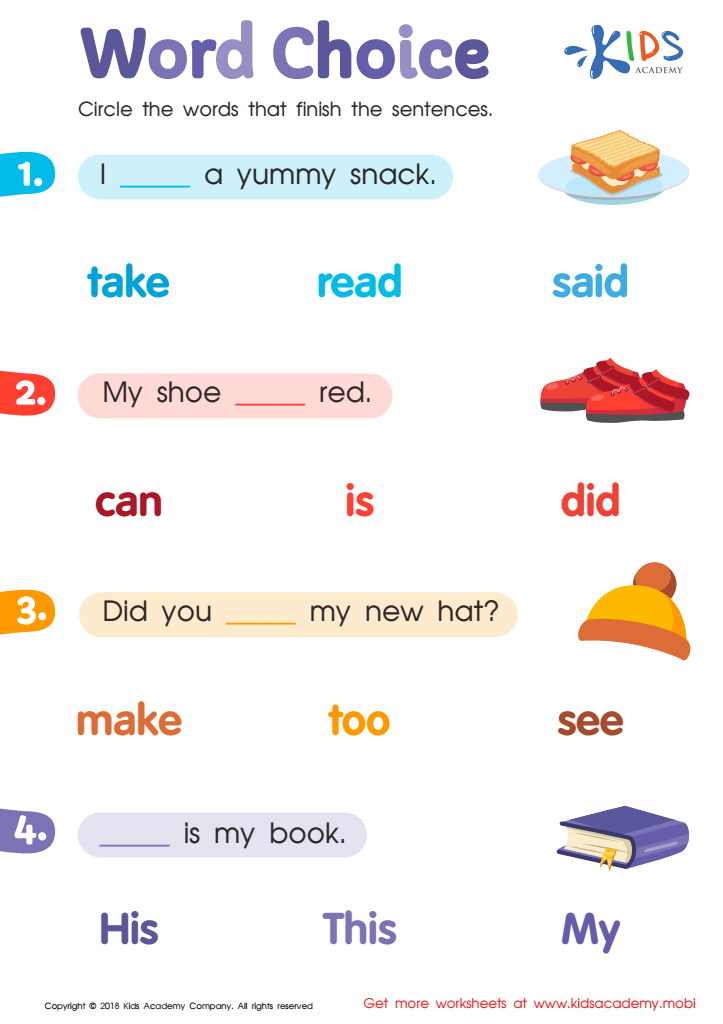
This worksheet can help your children become better readers. By now, you should have an idea of their reading level. Read the incomplete sentences aloud and point to the missing piece. Have your students pick the correct word they think best fits the sentence out of the options given.
Word Choice Worksheet
Worksheet


Contextual understanding and building vocabulary are crucial for children aged 7-8 as they form the foundation for academic success and effective communication. At this age, children are transitioning from learning to read to reading to learn. A robust vocabulary not only enhances their ability to understand texts but also enriches their expression and comprehension skills. When children grasp words in context, they can infer meanings, link ideas, and develop critical thinking.

Parents and teachers play an essential role in this phase by providing opportunities for interactive discussions, storytelling, and exposure to diverse vocabulary through reading various genres. Engaging children in conversation helps them see how different words fit into various situations, improving their ability to contextualize language. This understanding not only aids in their literacy development but also boosts their confidence in using language in social interactions.

Moreover, building vocabulary at this stage supports emotional intelligence, allowing children to better articulate their feelings and thoughts. Fostering a rich linguistic environment ultimately empowers children to thrive in school and beyond, equipping them with the skills needed for future learning and personal growth. By prioritizing contextual understanding and vocabulary development, parents and teachers invest in children’s lifelong educational journey.