Improve reading comprehension Building Vocabulary Worksheets for Ages 7-8
3 filtered results
-
From - To
Unlock your child’s potential with our engaging "Improve Reading Comprehension Building Vocabulary Worksheets" designed for ages 7-8. These worksheets enhance vocabulary skills, a vital component for developing strong reading comprehension. Through fun activities and exercises, children will explore new words, understand their meanings, and learn to use them in context. As they build confidence in their reading abilities, they will also enjoy discovering the joy of storytelling. Ideal for home or classroom use, these resources make learning enjoyable while fostering essential literacy skills. Start your child’s journey to becoming a proficient reader today!
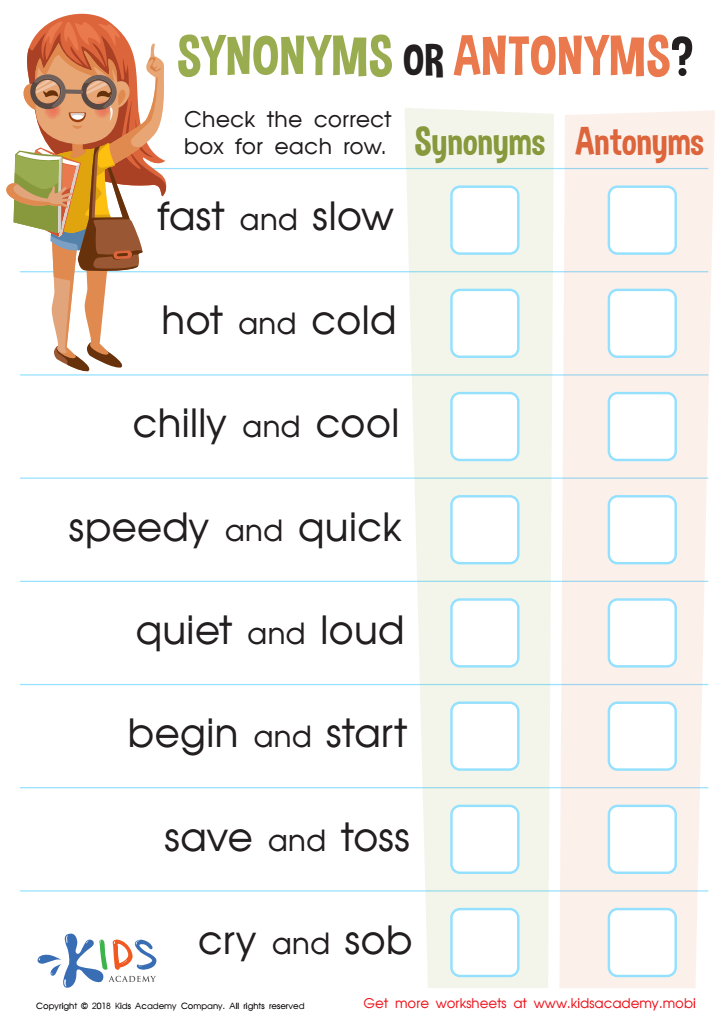
Synonyms or Antonyms: Assessment Worksheet
 Assign to My Students











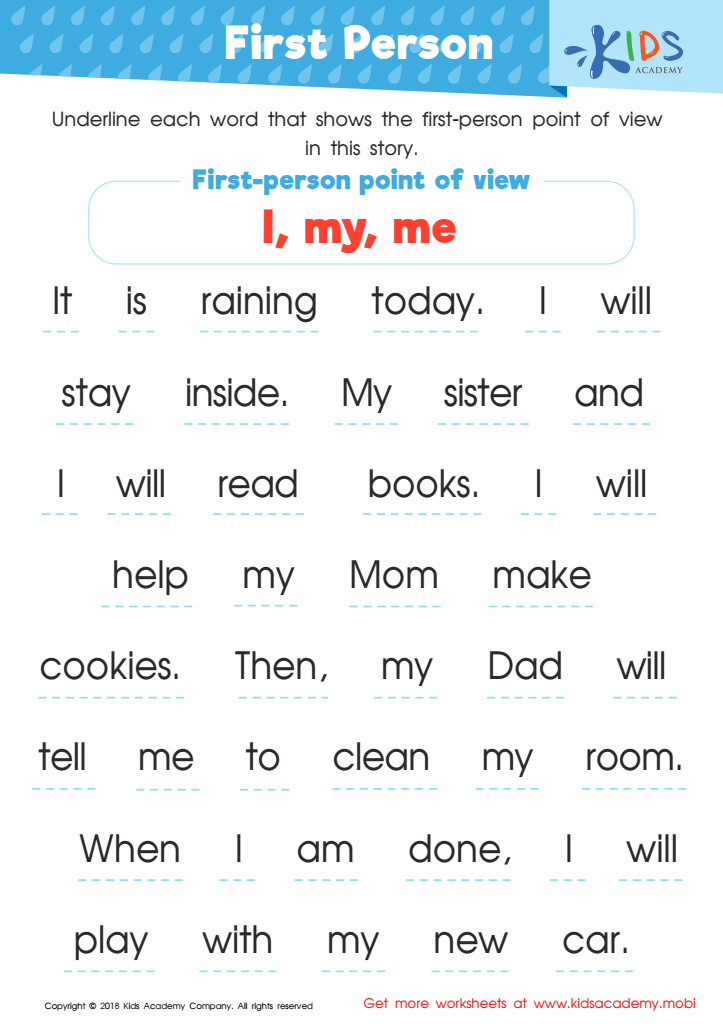
First Person Worksheet
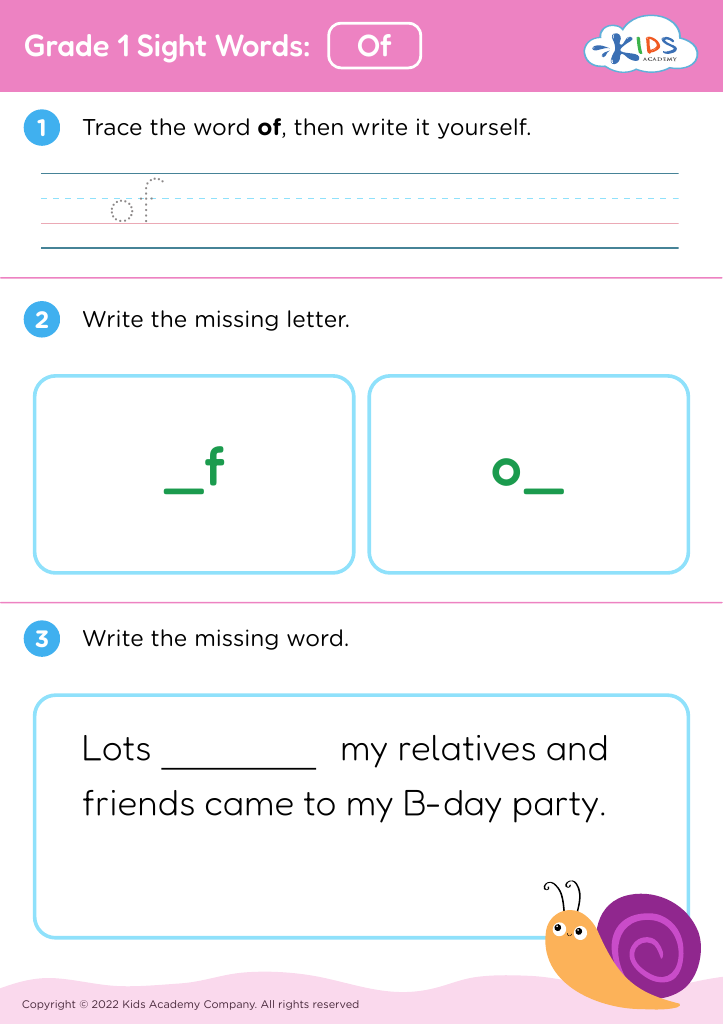



.jpg)



.jpg)
Improving reading comprehension and building vocabulary for children ages 7-8 is crucial for several reasons. At this developmental stage, children are transitioning from learning to read towards reading to learn. Strong reading comprehension enables them to understand and analyze information, which is foundational for success in all academic subjects. When children can comprehend texts, they can develop critical thinking skills, make connections to their experiences, and engage more deeply with the material.
Additionally, a rich vocabulary enhances communication skills, allowing children to express their thoughts and feelings effectively. Expanding vocabulary helps children decode new words and understand different contexts, fostering greater enjoyment in reading. This age group is also increasingly influenced by social interactions, and a solid vocabulary can boost their confidence when participating in discussions with peers and adults.
Parents and teachers play a vital role in facilitating this development through interactive reading, discussions about stories, and word games. By prioritizing reading comprehension and vocabulary growth, adults empower children to become enthusiastic and proficient readers, laying the groundwork for lifelong learning, academic achievement, and personal development. Ultimately, investing in these skills enhances children's educational experiences and shapes their future success.








