
Recognizing Patterns Building Vocabulary Worksheets for Ages 7-8
3 filtered results
Difficulty Level
Grade
Age
-
From - To
Subject
Activity
Standards
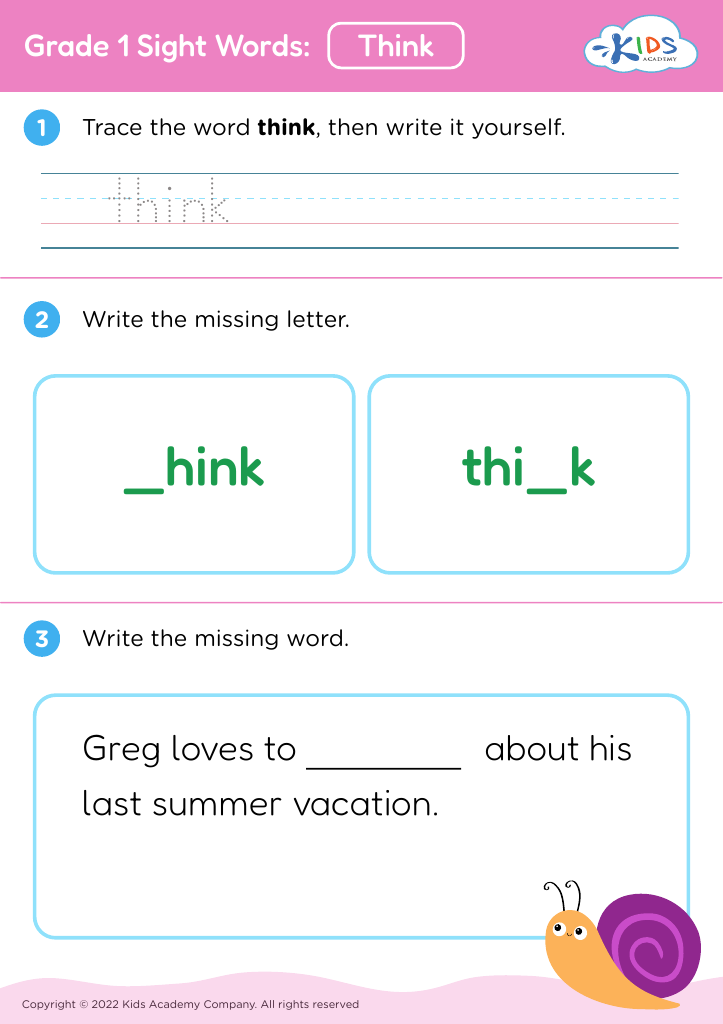
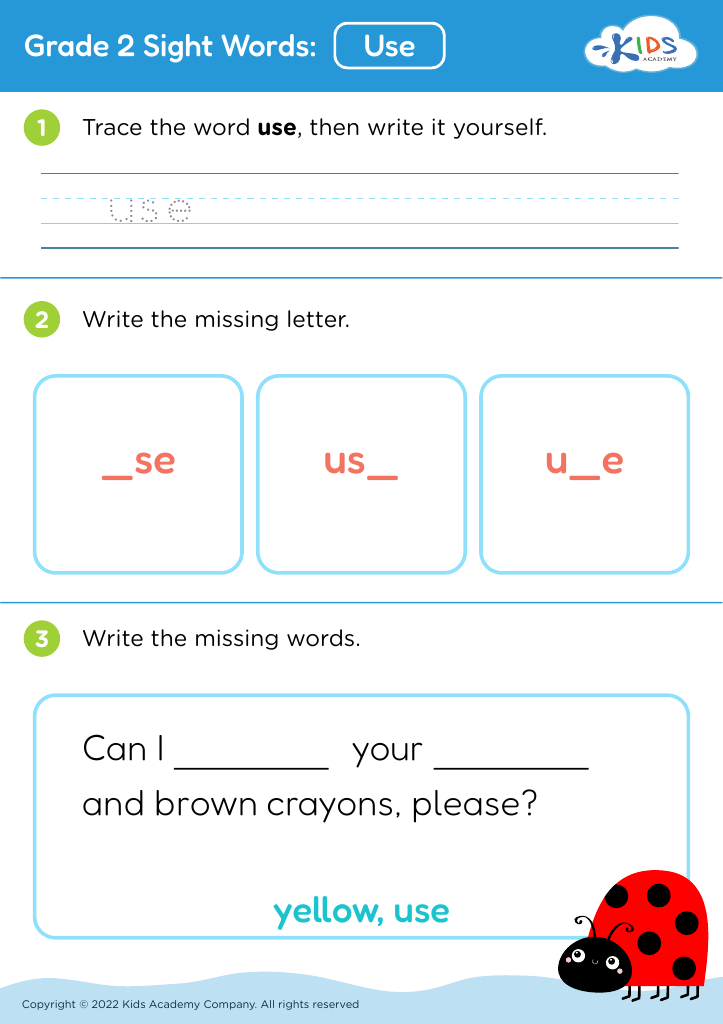
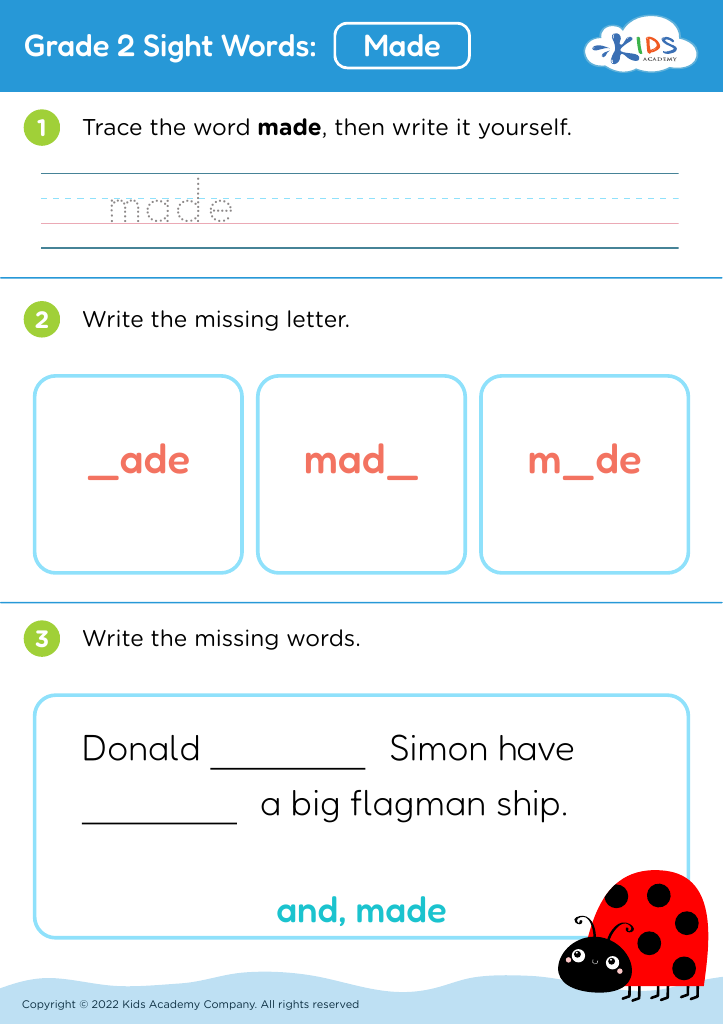
Enhance your child’s vocabulary with our engaging "Recognizing Patterns Building Vocabulary Worksheets" designed for ages 7-8. These worksheets foster essential reading skills by helping kids identify and understand patterns in language. With a focus on fun and interactive activities, children will explore new words, strengthen their spelling, and bolster their grammar. Each worksheet presents a variety of exercises aimed at recognizing patterns in word formation, sentence structure, and usage. Perfect for both classroom and at-home learning, these resources support young learners in developing a strong vocabulary foundation crucial for their academic success. Discover more: kidsacademy.mobi.
Favorites
With answer key
Interactive











Join Kids Academy for Free
Who is primarily going to use this learning content?







.jpg)
Recognizing patterns and building vocabulary are cornerstone skills for children ages 7-8, playing a pivotal role in their cognitive and language development. At this age, children are rapidly developing their ability to observe and interpret their environment. Recognizing patterns hones critical thinking and problem-solving abilities, foundational for subjects like mathematics and science, and even everyday decision-making. For instance, recognizing numerical patterns aids in understanding sequences and mathematical operations, while identifying patterns in stories enhances comprehension and narrative prediction.
Similarly, a robust vocabulary is crucial for effective communication and academic success. It underpins reading proficiency, which is pivotal as learning shifts from 'learning to read' to 'reading to learn.' A rich vocabulary aids in understanding and processing new information, thus fostering a love for learning. It's also essential for writing skills, enabling children to express complex ideas more clearly and precisely.
As such, parents and teachers should prioritize creating a rich learning environment that encourages pattern recognition and vocabulary expansion. Activities like reading diverse genres, playing word games, solving puzzles, and exploring nature can seamlessly integrate learning into daily routines. By nurturing these skills, adults empower children with the tools necessary for academic success and lifelong learning.








