Enhance critical thinking Reading Worksheets for Ages 7-8
3 filtered results
-
From - To
Welcome to our "Enhance Critical Thinking Reading Worksheets" for ages 7 to 8! These engaging and thoughtfully designed worksheets focus on developing essential critical thinking skills through reading comprehension activities. Your child will explore varied texts that encourage analysis, interpretation, and evaluation. With fun contexts, imaginative stories, and thought-provoking questions, our resources ignite curiosity and deepen understanding. Ideal for enhancing classroom learning or supporting at-home education, these worksheets help lay a strong foundation for future academic success. Perfect for teachers and parents alike, our printable materials make learning both effective and enjoyable. Unlock your child's potential and boost their critical thinking with our interactive reading worksheets!
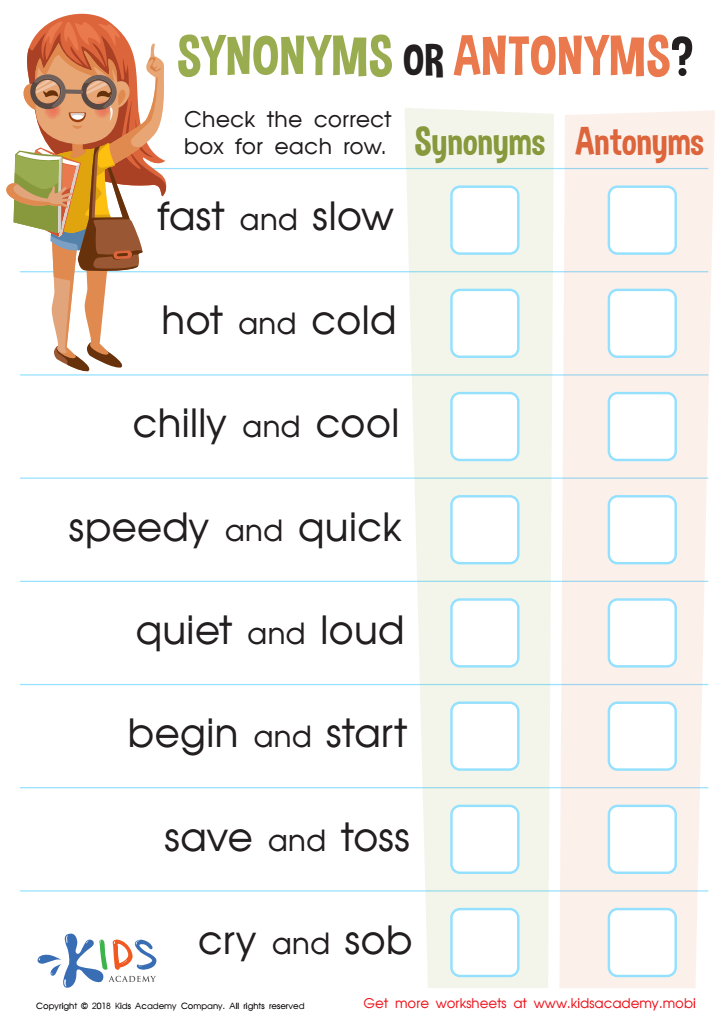
Synonyms or Antonyms: Assessment Worksheet
 Assign to My Students
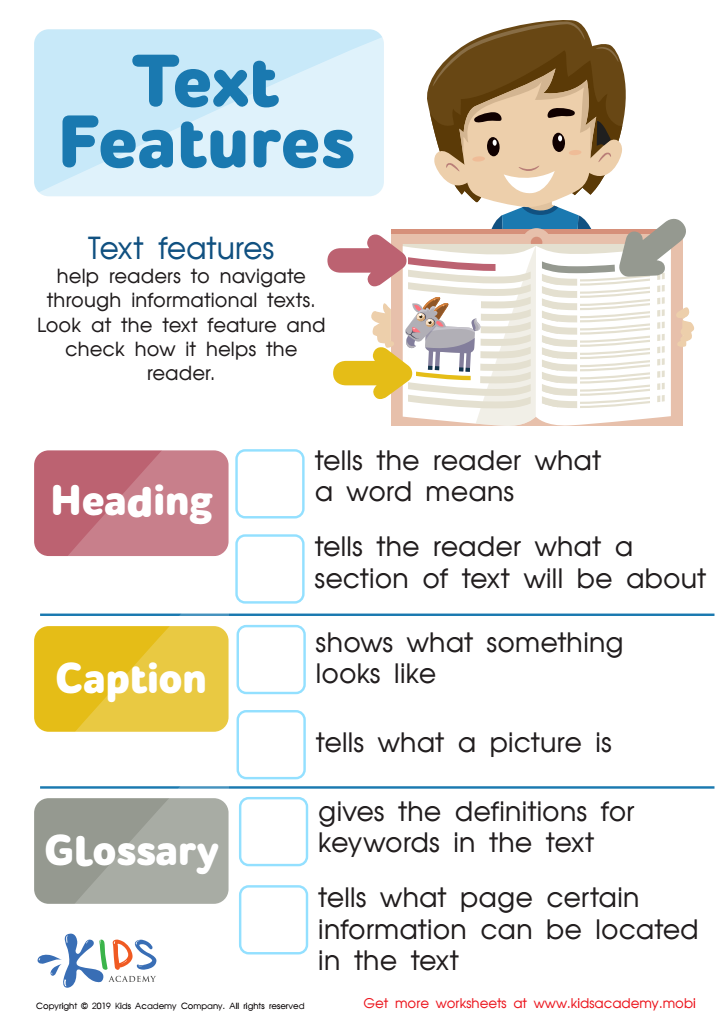
Text Features Worksheet







Enhancing critical thinking skills in reading among children aged 7-8 is essential for their cognitive and social development. At this age, children are beginning to form their own opinions, analyze information, and make connections between different concepts. By fostering critical thinking in reading, parents and teachers can help children interpret narratives more deeply, question the motives behind characters' actions, and compare different perspectives within a text.
Additionally, critical thinking boosts comprehension skills, allowing children to engage with complex ideas and make inferences that go beyond the surface level of a story. This not only improves their academic performance but also prepares them for real-life problem-solving situations. Reading critically teaches kids to evaluate information sources and understand the potential biases inherent in various texts, skills that are increasingly vital in today's information-rich environments.
Furthermore, nurturing critical thinking in young readers encourages a lifelong love for reading and learning. Children will be more likely to explore diverse topics, engage in discussions, and develop a better understanding of themselves and the world around them. As such, enhancing critical thinking skills during these formative years is crucial for helping young learners become thoughtful, informed, and inquisitive adults.








