Grammar skills improvement Reading Worksheets for Ages 7-8
5 filtered results
-
From - To
Enhance your child’s grammar skills with our engaging reading worksheets designed for ages 7-8! Our comprehensive collection offers fun and interactive activities that focus on essential grammar concepts such as sentence structure, punctuation, and parts of speech. These worksheets are perfect for reinforcing classroom learning or practicing at home. Each activity encourages critical thinking and boosts confidence in progressing reading abilities. Help your child master grammar in a playful way as they enjoy vibrant illustrations and age-appropriate exercises. Download our prepared worksheets today and watch them flourish in their writing and reading skills—building a strong foundation for future success!
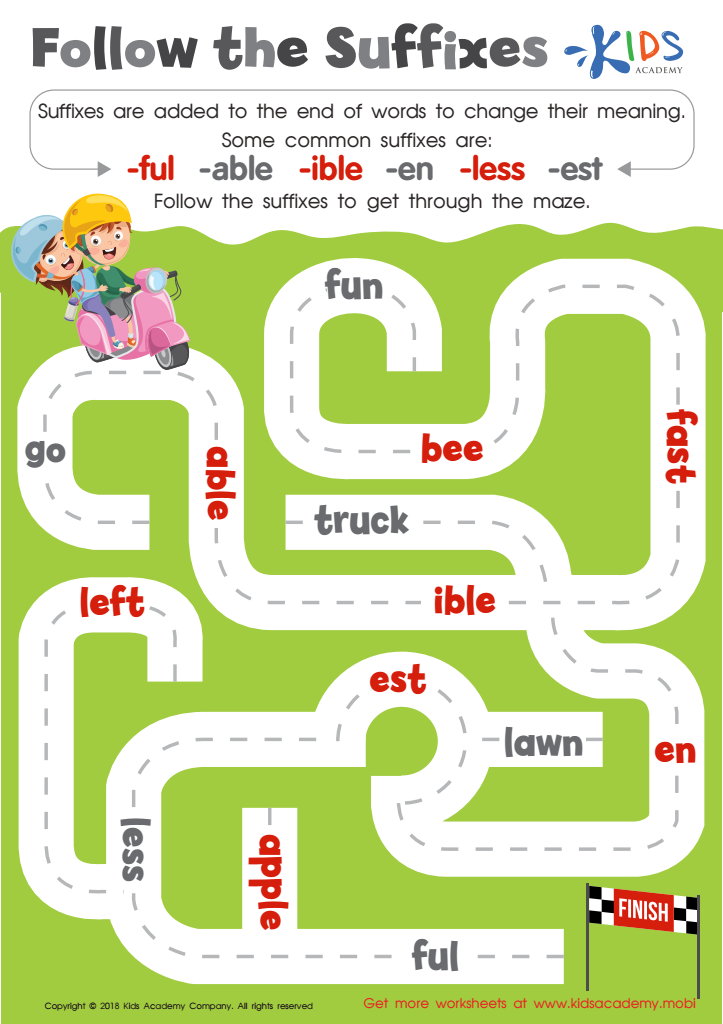
Reading: Follow the Suffixes Worksheet
 Assign to My Students
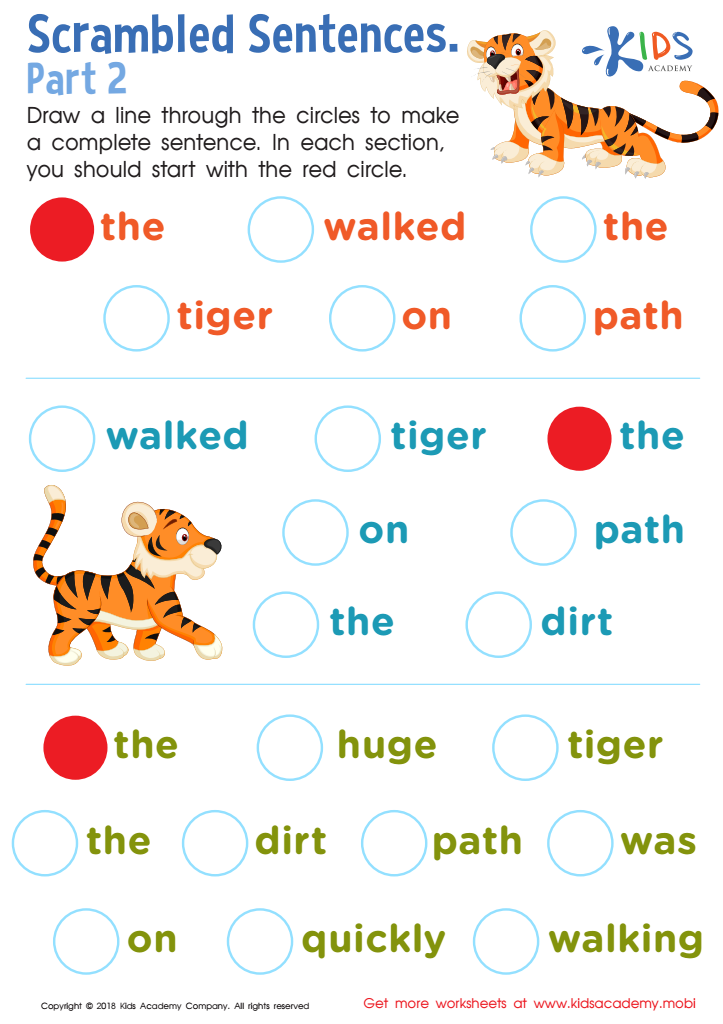
Scrambled Sentences Part 2 Worksheet
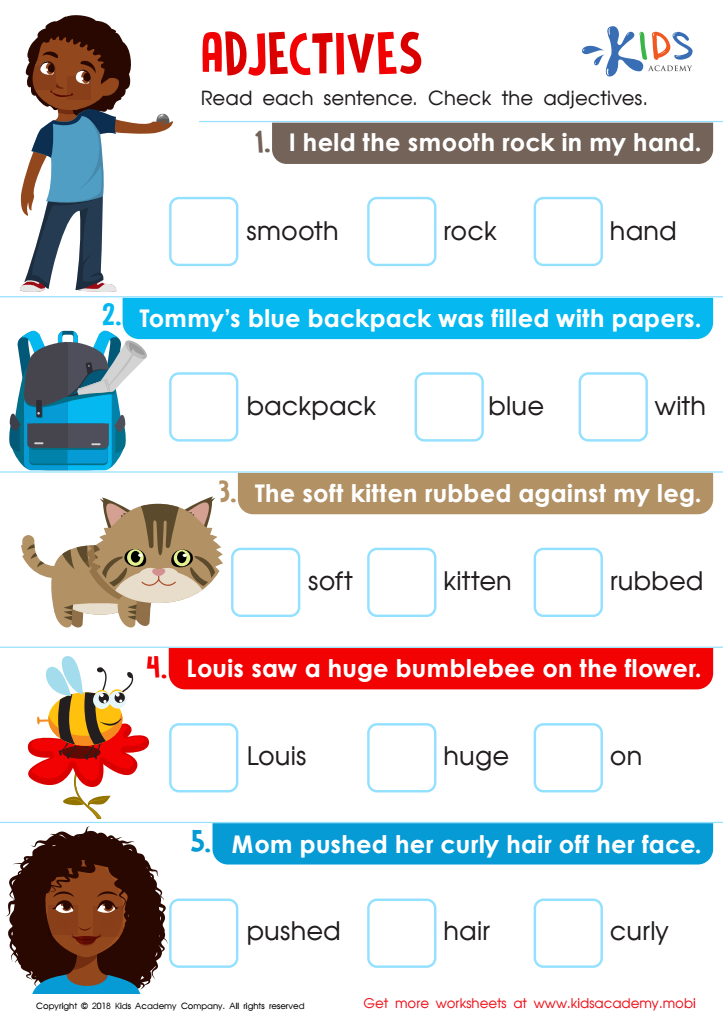
Adjectives Worksheet
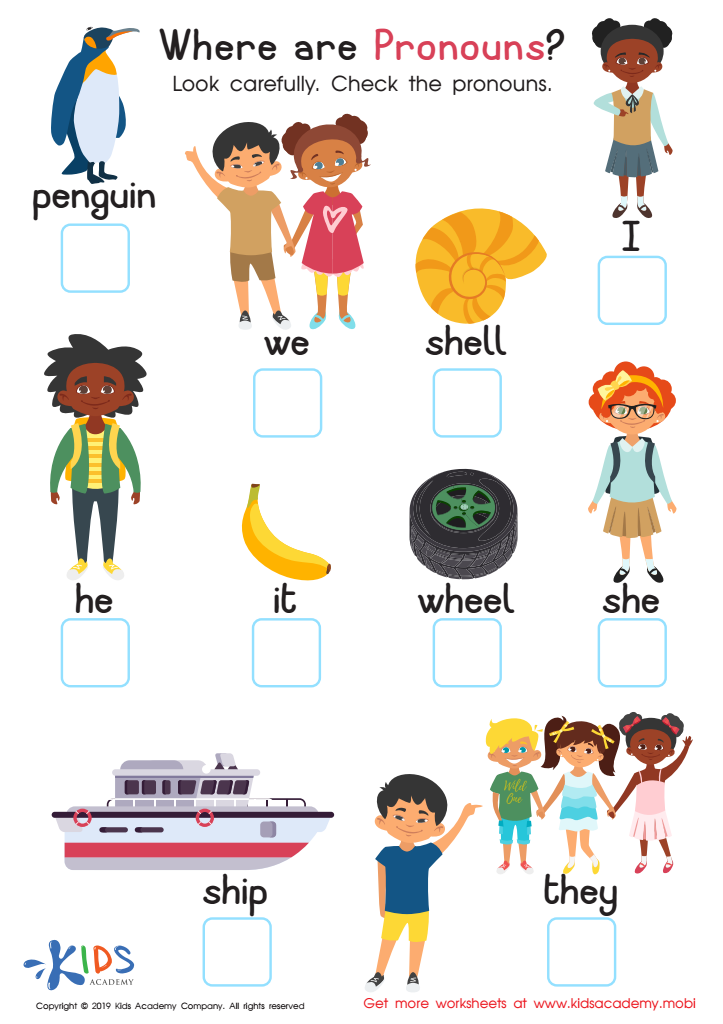
Where Are Pronouns? Worksheet
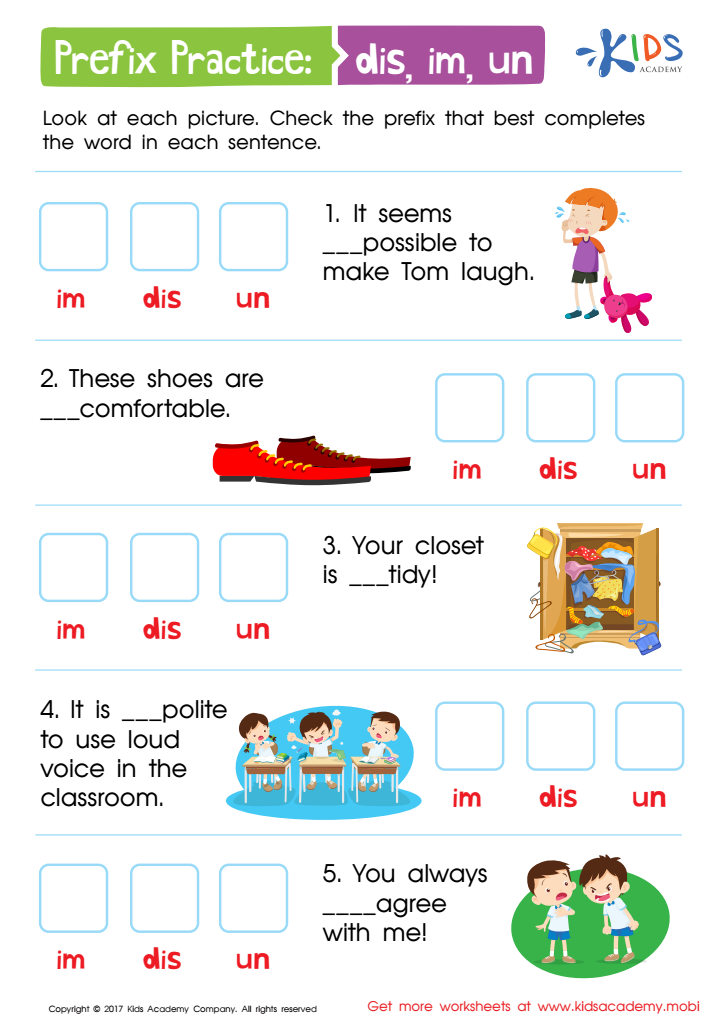
Prefix Practice Worksheet: DIS, IM, UM



.jpg)




Grammar skills are crucial for children aged 7-8 as they form the foundation of effective communication. At this stage, children begin to write more complex sentences and express their thoughts more clearly. Improved grammar skills enhance their ability to comprehend what they read and articulate their ideas, fostering better literacy overall.
When parents and teachers prioritize grammar improvement in reading, they prepare children for future academic success. Strong grammar skills not only support reading comprehension but also boost confidence in both writing and speaking. Children learn to follow the rules of language, which aids in developing critical thinking and reasoning abilities as they analyze texts.
Moreover, understanding grammar helps children recognize how language works, equipping them to appreciate different writing styles and genres. This knowledge encourages creativity, as they begin to experiment with their writing, enhancing engagement in learning activities.
In a world increasingly shaped by communication, fostering robust grammar skills in young learners is essential for their overall development. Parents and teachers play a key role in guiding and nurturing these skills, laying the groundwork for their child's future academic endeavors and effective interpersonal communication.








