Historical Knowledge Reading Worksheets for Ages 7-8
6 filtered results
-
From - To
Explore our engaging Historical Knowledge Reading Worksheets designed specifically for children ages 7-8! These worksheets offer a captivating way for young learners to delve into the past while developing essential reading skills. Each activity is tailored to enhance comprehension and critical thinking as students read about significant historical figures, events, and cultures. With vibrant illustrations and age-appropriate content, children will be motivated to read and learn about their history. Perfect for at-home learning or classroom activities, these worksheets promote a love for reading while enriching historical knowledge in an enjoyable and interactive way. Discover history with kids today!
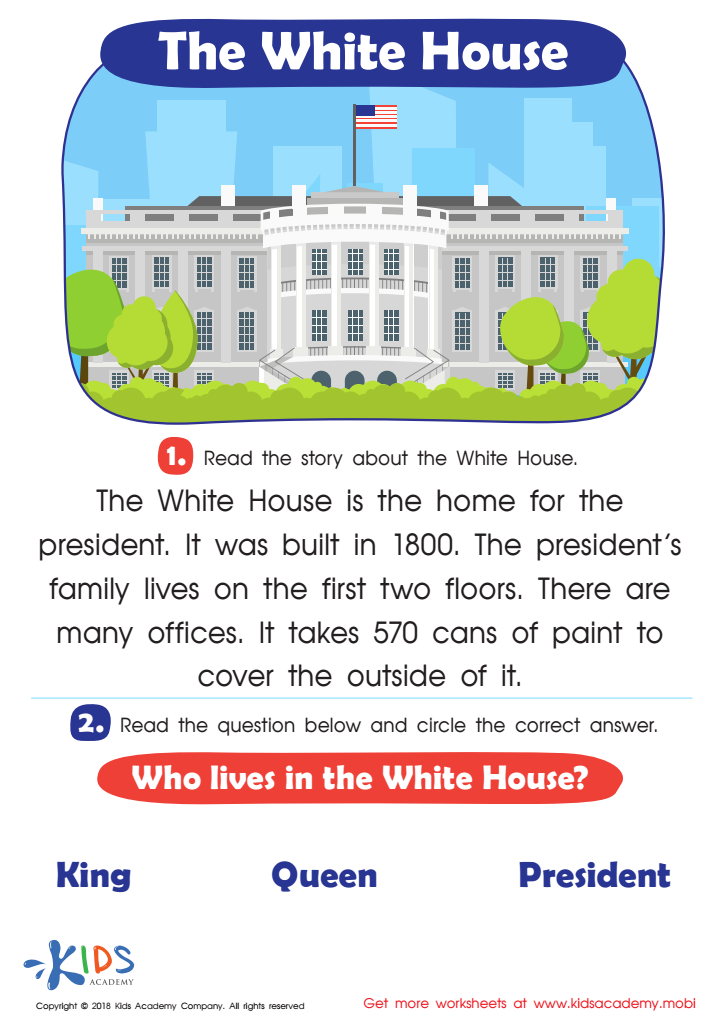
White House Worksheet
 Assign to My Students
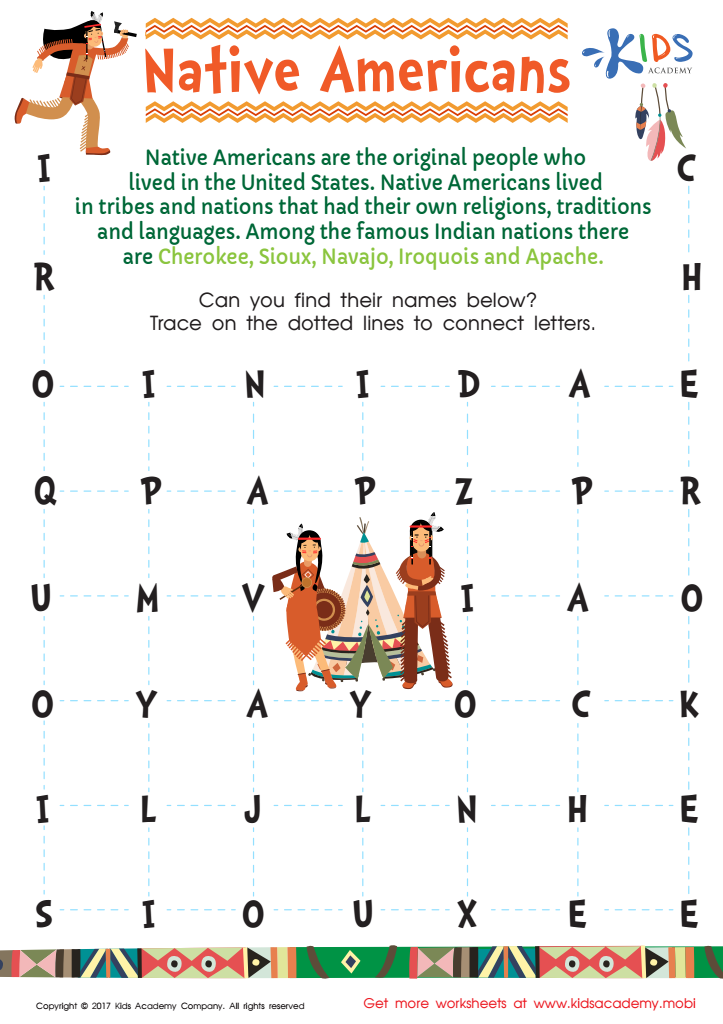
Native American Word Search Printable
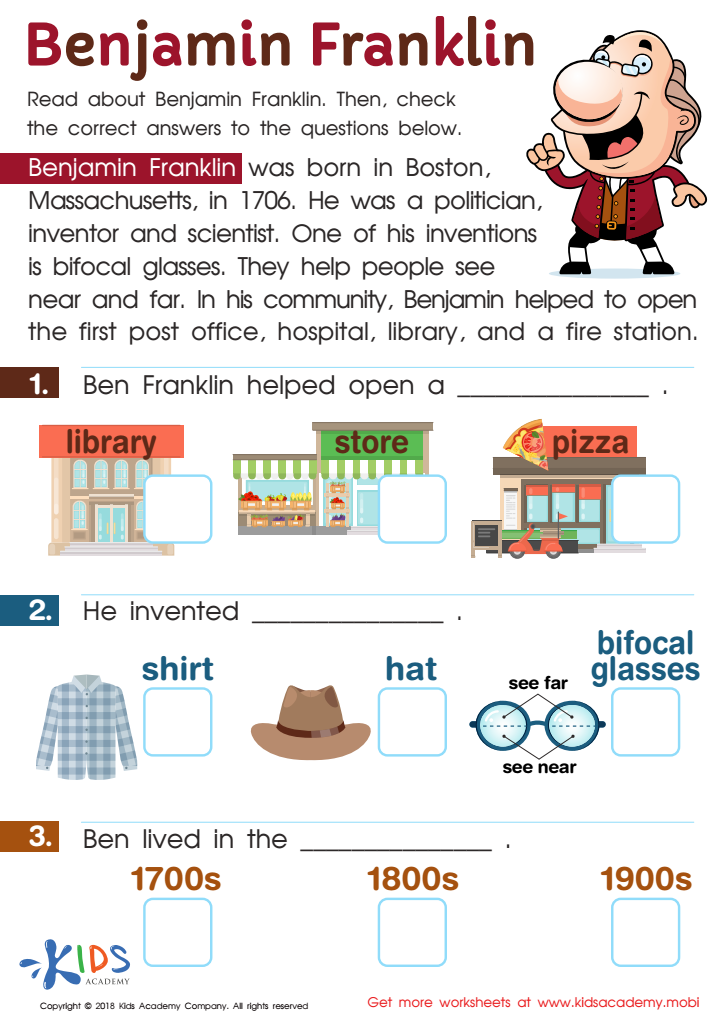
Benjamin Franklin Worksheet
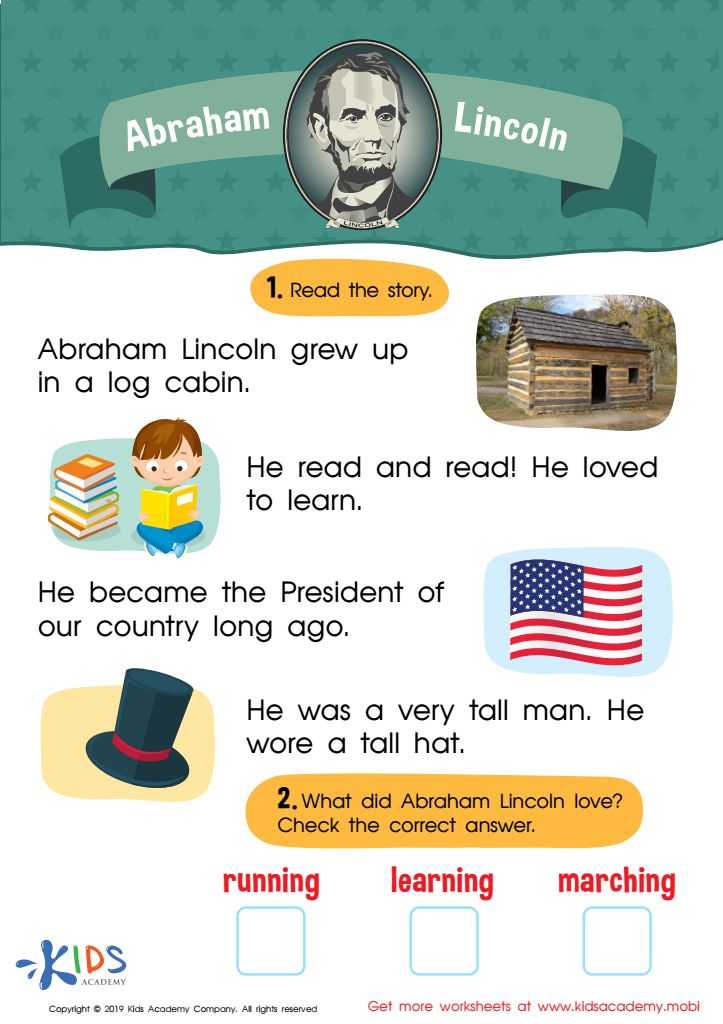
Abraham Lincoln Worksheet
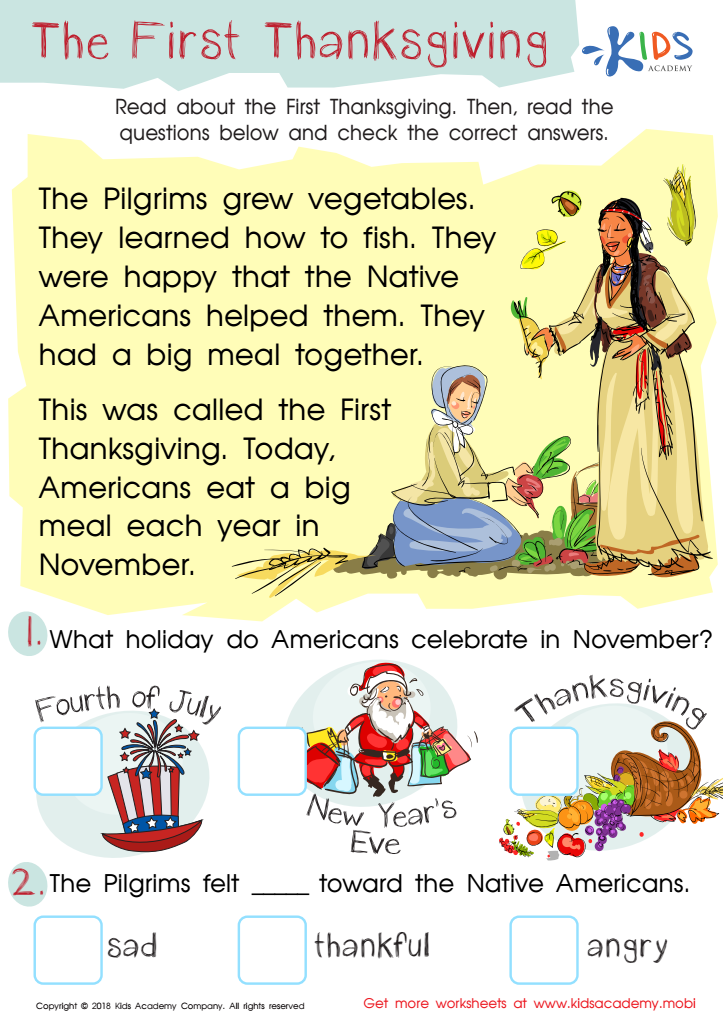
Assessment: First Thanksgiving Worksheet
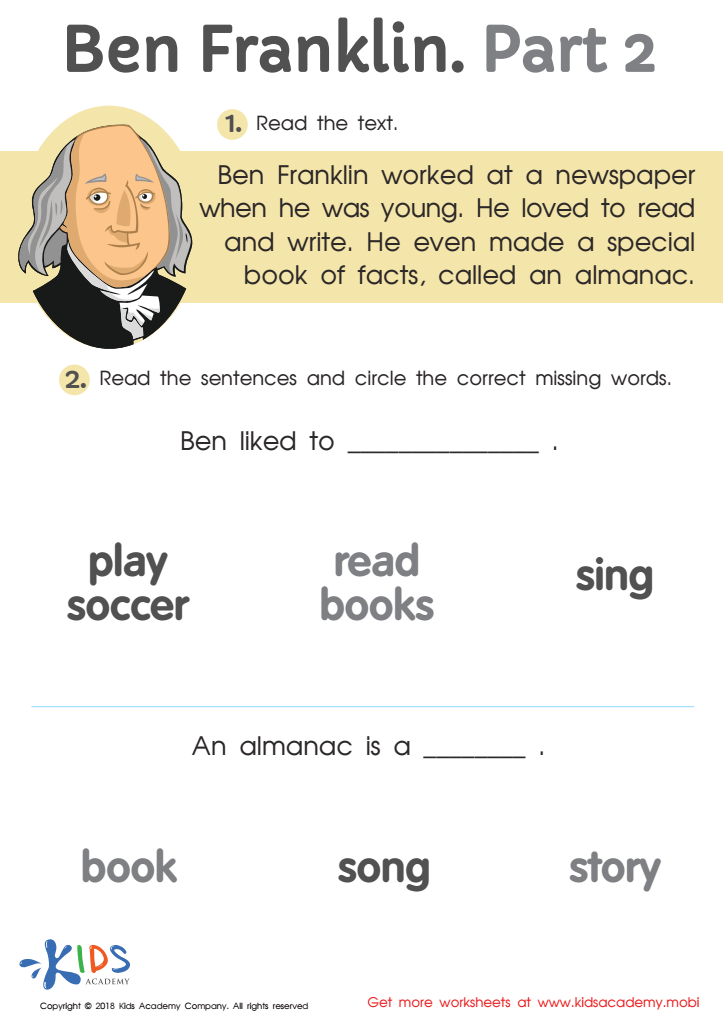
Ben Franklin Part 2 Worksheet







Historical knowledge reading is crucial for children ages 7-8 as it lays a foundation for critical thinking, empathy, and a sense of identity. At this stage, children begin to understand concepts of time and chronology, which are vital for comprehending how past events shape the present. Engaging with historical stories captivates young readers’ imaginations, fostering a curiosity about the world and its diverse cultures.
For parents and teachers, introducing historical knowledge through reading promotes literacy skills. It enhances vocabulary and comprehension while connecting children to broader themes like community, society, and change. Books about significant historical figures and events can inspire discussions, helping children develop analytical skills as they explore differing perspectives and the consequences of actions.
Moreover, understanding history cultivates empathy. By learning about the experiences of individuals from various backgrounds, children understand diversity and the importance of inclusivity. This fosters respect and tolerance, which are key elements in a well-rounded education.
Lastly, historical knowledge can instill a sense of pride and understanding of one's own heritage. By engaging with history early on, parents and teachers empower children to navigate the complexities of the modern world with a well-informed and empathetic outlook.








