Improve vocabulary Reading Worksheets for Ages 7-8
4 filtered results
-
From - To
Boost your child's linguistic skills with our "Improve Vocabulary Reading Worksheets" designed for ages 7-8. These engaging worksheets from Kids Academy are perfect for young learners who are developing their reading abilities. Each worksheet focuses on fun, age-appropriate exercises that expand vocabulary, enhance comprehension, and foster a love for reading. Through diverse activities like matching words to pictures, filling in the blanks, and synonym hunts, children will develop a broader word bank and improved language skills. Ideal for classroom use or at-home practice, our carefully crafted worksheets will give your child the confidence to excel in reading.
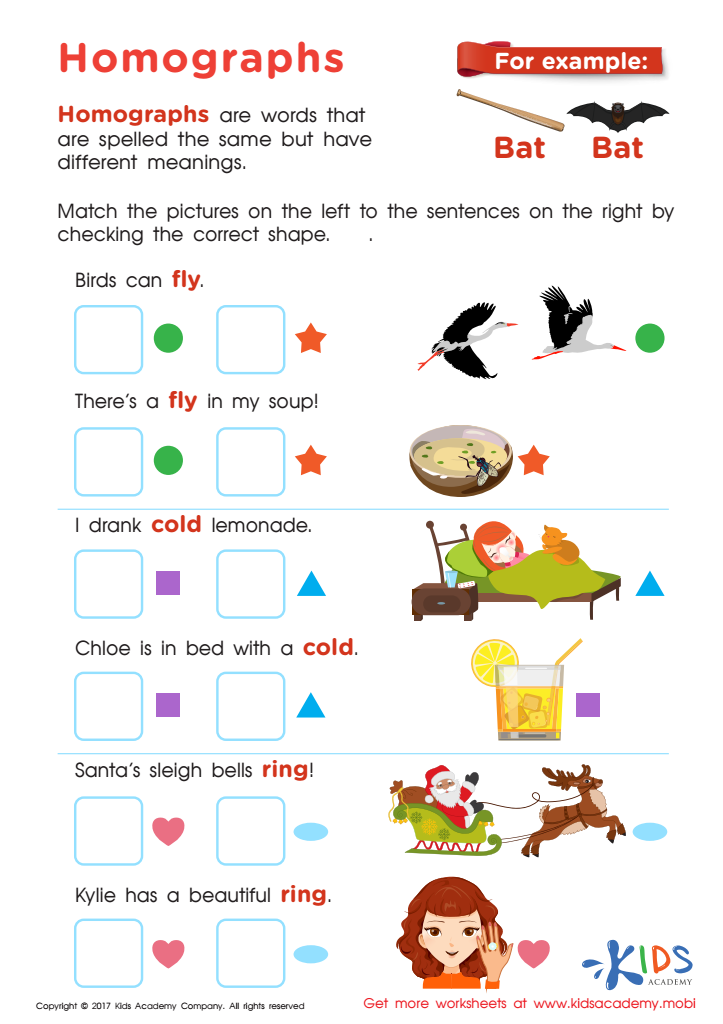
Homographs Free Printable Worksheet
 Assign to My Students
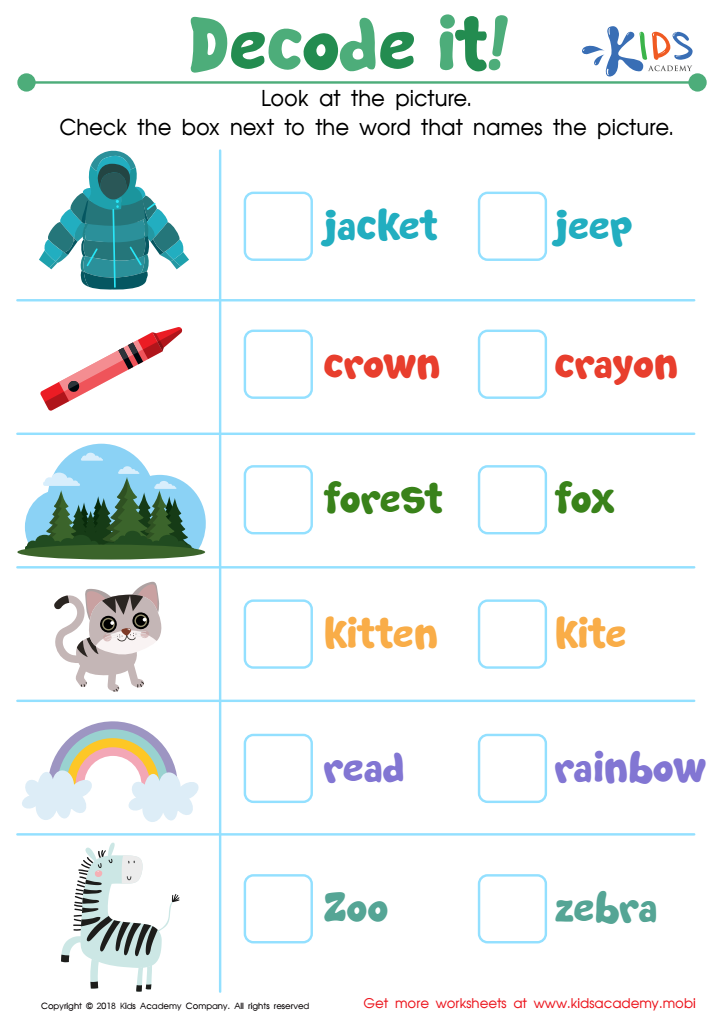
Reading: Decode It Worksheet
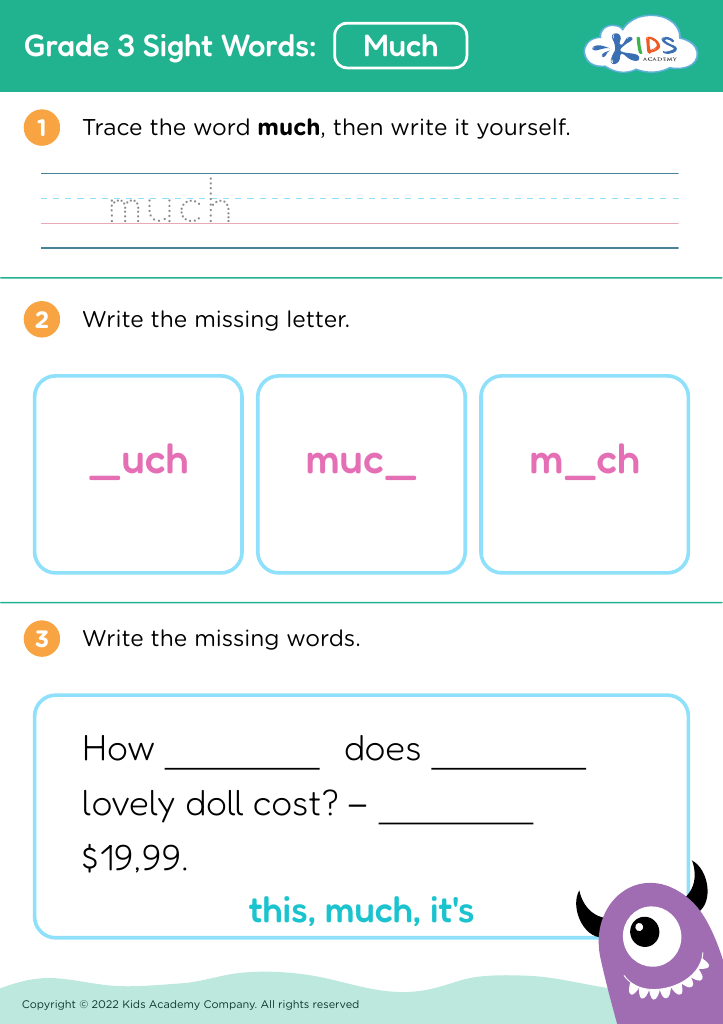
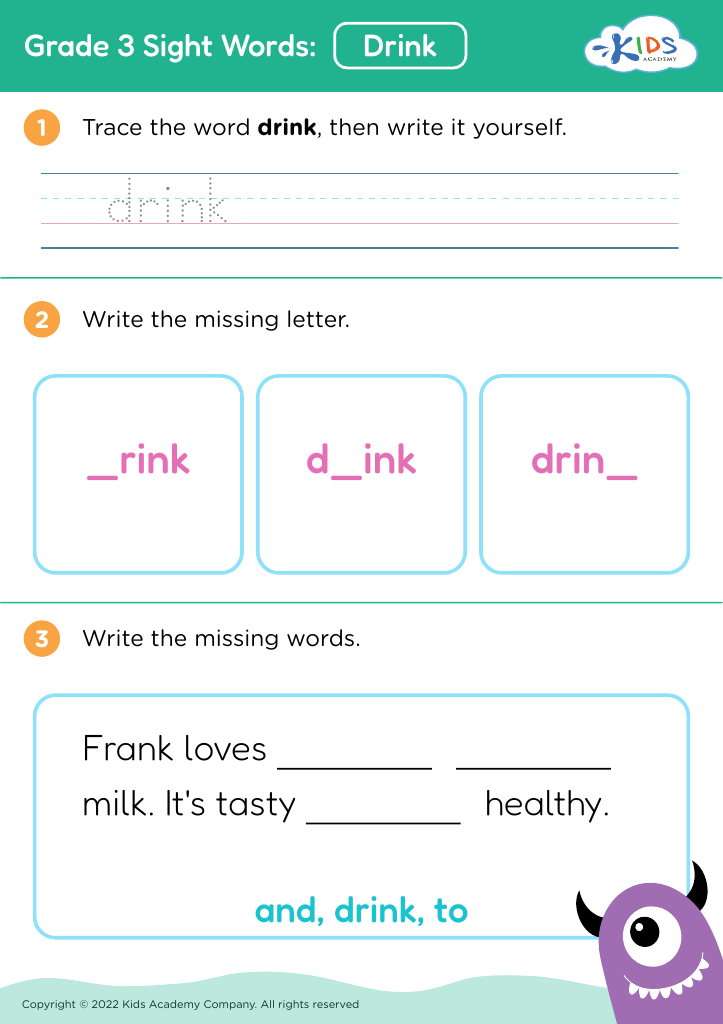








Investing in vocabulary improvement for children aged 7-8 is crucial for several reasons. At this stage, children's brains are highly receptive to new information, making it an optimal time for language development. Enhanced vocabulary equips children with the words they need to express their thoughts and emotions more precisely, aiding in better interpersonal communication. Furthermore, a robust vocabulary forms the foundation for reading comprehension. When children understand the words they read, they are more likely to enjoy and engage with literature, which, in turn, fosters a lifelong love for reading.
Vocabulary also plays a significant role in academic success across different subjects. For instance, understanding complex instructions in math problems or grasping scientific concepts often relies on a strong vocabulary. Beyond academics, enriched vocabulary enhances critical thinking and problem-solving skills, as children can categorize and analyze information more effectively.
Additionally, strong verbal skills contribute to building self-confidence and social skills. When children can articulate their ideas clearly, they are more likely to participate in classroom discussions and social settings, further encouraging interaction and learning.
Therefore, parents and teachers should prioritize vocabulary enrichment through varied and engaging reading materials, conversations, and exercises, ensuring children have the linguistic tools they need to succeed both academically and socially.








