Phonics recognition Reading Worksheets for Ages 7-8
5 filtered results
-
From - To
Enhance your child's reading skills with our Phonics Recognition Worksheets tailored for ages 7-8! These engaging, printable resources focus on key phonics concepts like sound-letter connections, blending, and decoding. Our worksheets help young learners practice recognizing phonetic patterns through fun and interactive activities. By reinforcing phonics skills, children can improve their reading fluency and comprehension, setting a strong foundation for future literacy development. Easy to download and accessible anytime, these worksheets make learning enjoyable for both kids and parents. Support your child on their reading journey and foster a lifelong love for books with our carefully designed phonics resources!
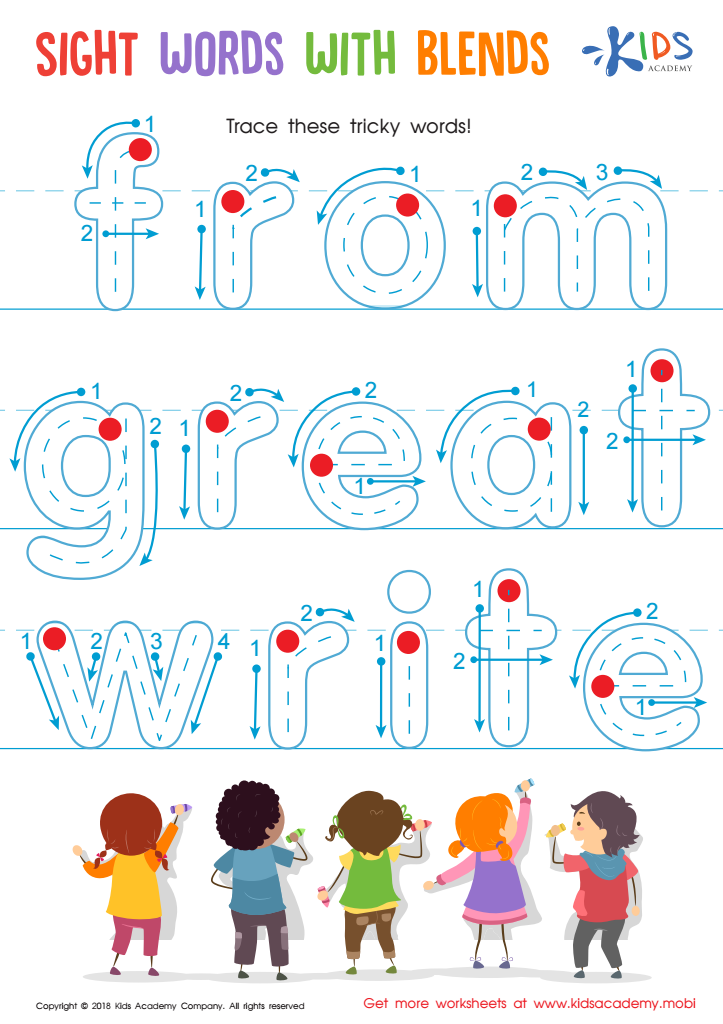
Sight Words with Blends Worksheet
 Assign to My Students
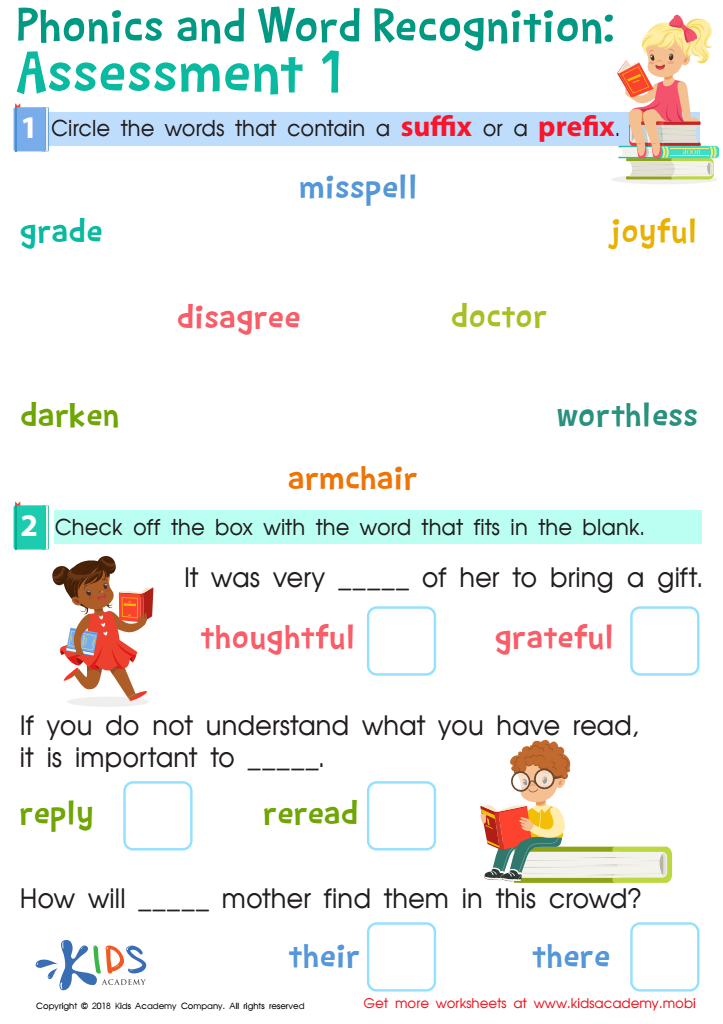
Phonics and Word Recognition: Assessment 1 Worksheet
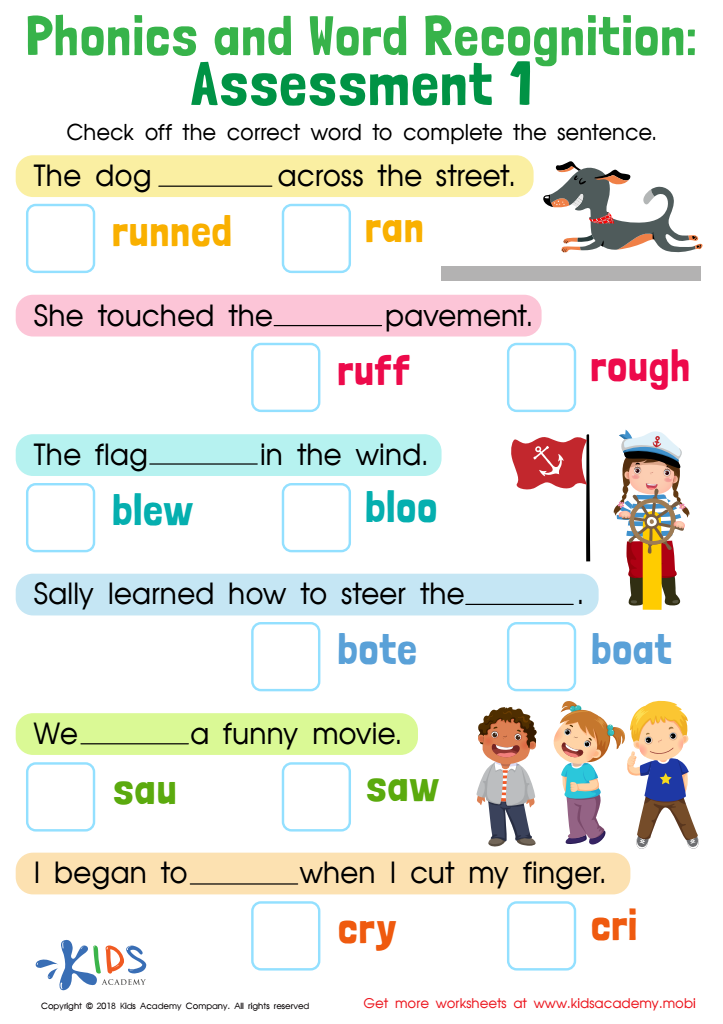
Phonics and Word Recognition: Assessment 1 Worksheet
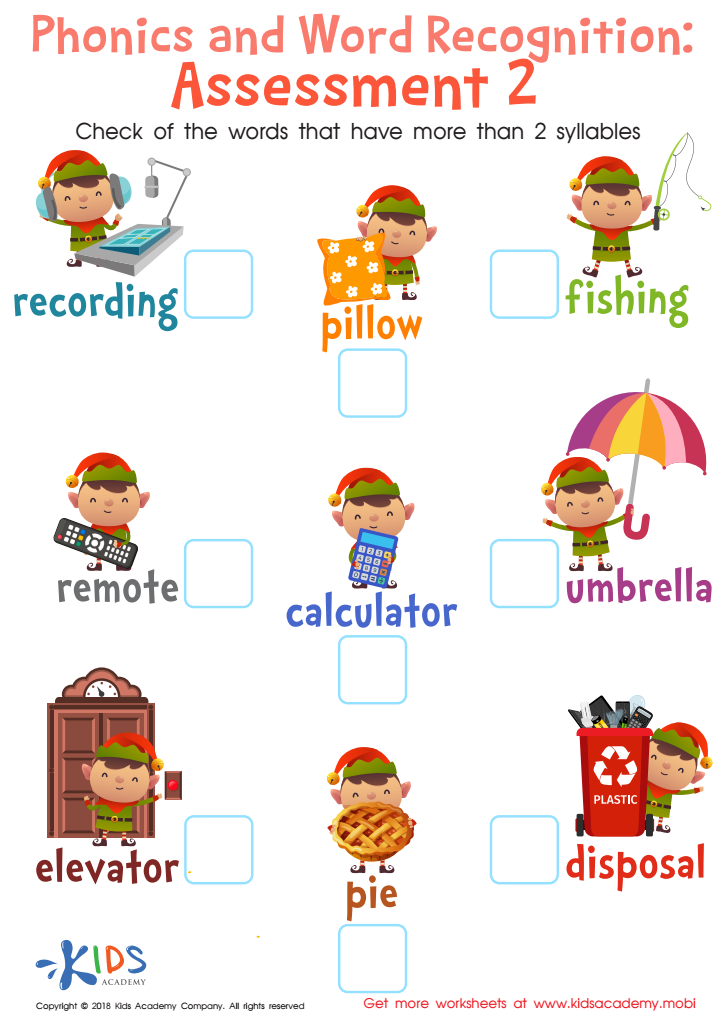
Phonics and Word Recognition: Assessment 2 Worksheet
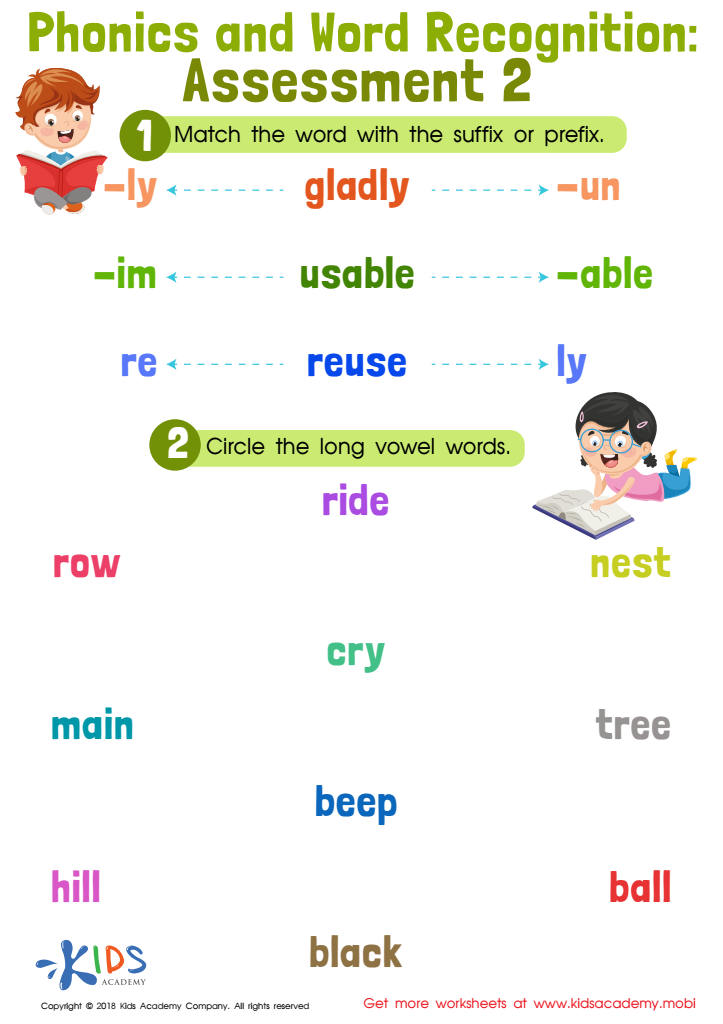
Phonics and Word Recognition: Assessment 2







Phonics recognition is crucial for children aged 7-8 as they transition from learning to read to reading to learn. At this age, children begin to encounter more complex texts, making strong phonics skills essential for building fluency and comprehension. Phonics teaching helps students decode unfamiliar words, facilitating greater independence in reading. Mastery of phonics can significantly boost a child's confidence and motivation, fostering a lifelong love for reading.
Additionally, phonics instruction addresses diverse learning styles and needs, laying the groundwork for effective literacy development. Understanding how letters and sounds work together enables children to explore new vocabulary, enhancing their ability to express themselves verbally and in writing.
Parents and teachers play a pivotal role in reinforcing phonics at home and in the classroom. Engaging in phonics activities, such as reading alphabetical books or playing word games, creates a supportive learning environment. This active involvement bridges gaps in skills, ensuring children are equipped with the necessary tools for academic success.
Moreover, strong phonics recognition can positively impact a child’s overall academic performance, affecting subjects like math and science where reading comprehension is vital. By prioritizing phonics, parents and educators lay the foundation for holistic, lifelong learning.








