
Rhyming skills Reading Worksheets for Ages 7-8
4 filtered results
Difficulty Level
Grade
Age
-
From - To
Subject
Activity
Standards
Our “Rhyming Skills Reading Worksheets for Ages 7-8” are designed to enhance young learners’ phonetic awareness in fun and engaging ways. Through a variety of rhyming exercises, children will improve their reading skills by recognizing sound patterns and building their auditory discrimination. Each worksheet involves tasks like matching rhyming words and creating rhyme sequences, ensuring kids grasp the concept thoroughly. Perfect for classroom or home use, these worksheets offer a delightful method to reinforce foundational reading abilities. Encourage your child to explore the joy of rhyming, and watch their confidence in reading soar! Download now at Kids Academy.
Favorites
With answer key
Interactive
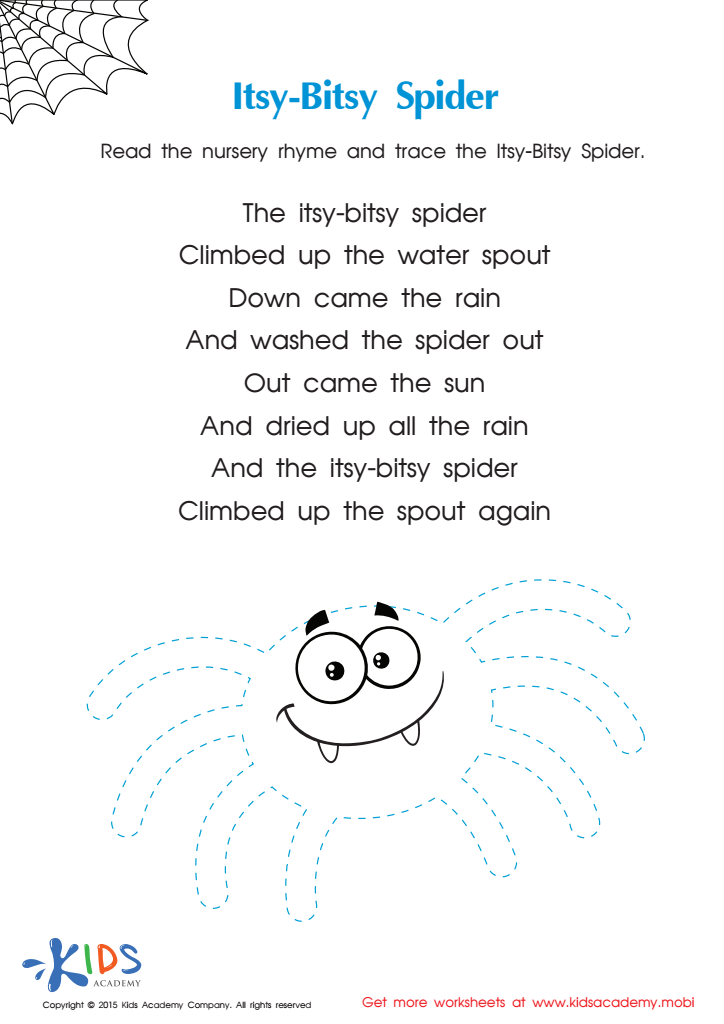
Itsy Bitsy Spider Nursery Rhyme PDF Worksheet
Introduce your child to the classic nursery rhyme with this worksheet. They'll learn the song, develop their motor skills, and find and count the letters 'A'. Pick up your crayons and add some color to the missing spider!
 Assign to My Students
Itsy Bitsy Spider Nursery Rhyme PDF Worksheet
Worksheet
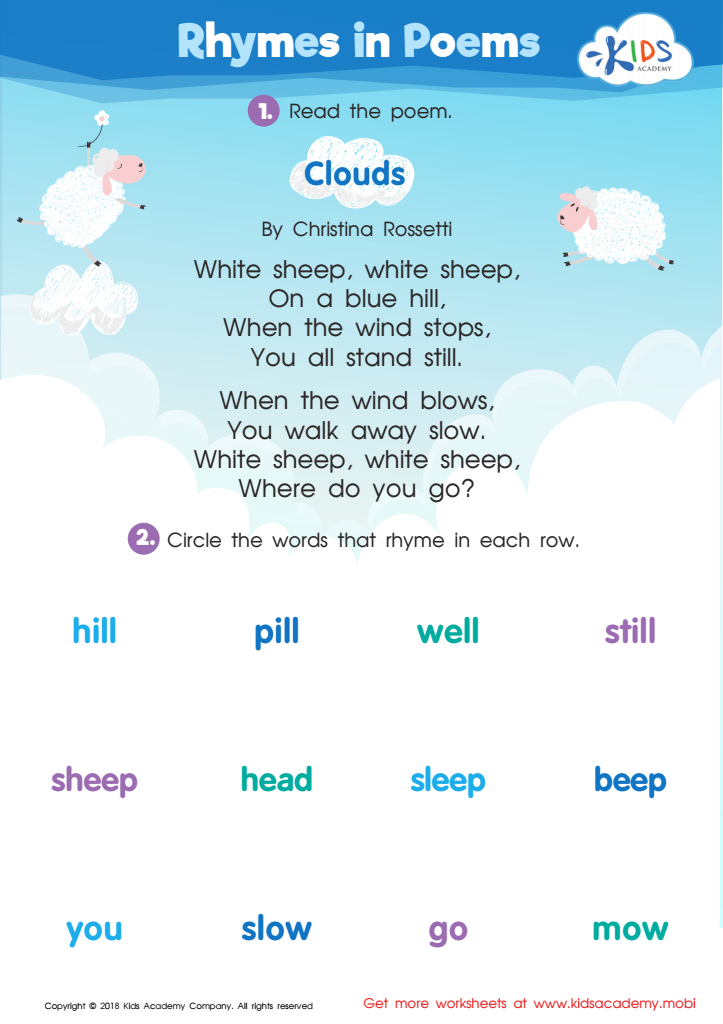
Rhymes in Poems Worksheet
Poems are lovely works of literature; some with rhymes, and some without. This poem for kids is full of rhymes and tells the tale of a sheep. Read it aloud to your kids, then help them circle the rhyming words.
Rhymes in Poems Worksheet
Worksheet
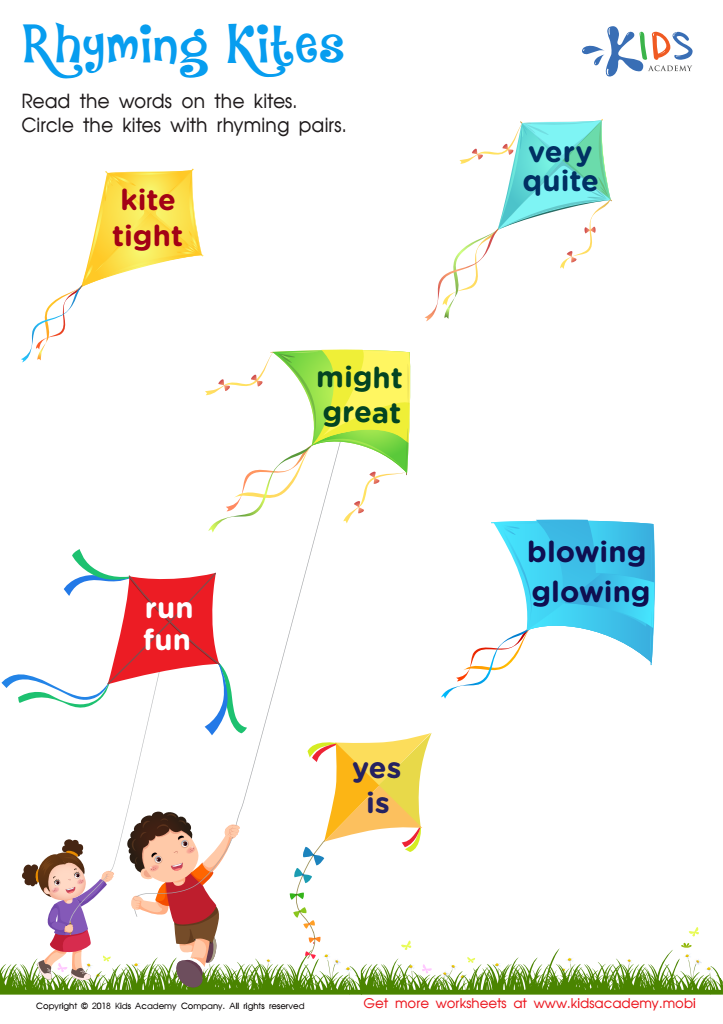
Rhyming Kites Worksheet
On a spring day, fly a kite! Kids Academy has a rhyming worksheet to boost your child's skills. Read the pairs of words aloud. Circle the kites if they rhyme, leave them blank if they don't. Listen carefully and find all the rhyming word pairs to complete this sheet!
Rhyming Kites Worksheet
Worksheet
Join Kids Academy for Free
Who is primarily going to use this learning content?








Rhyming skills are crucial for children aged 7-8 as they form a foundational aspect of language development and reading proficiency. First and foremost, rhyming enhances phonemic awareness, allowing children to recognize and manipulate sounds within words. This is vital for decoding unfamiliar words, which is a key skill in early reading. When children learn to identify rhymes, they also become attuned to patterns within language, aiding memory retention and word recognition.
Moreover, rhyming skills contribute to children's vocabulary growth. Exposure to rhyming texts introduces new words within a familiar framework, making it easier for children to grasp and remember them. As their vocabulary expands, their comprehension skills also improve, laying a solid foundation for both reading fluency and overall academic success.
Engaging with rhymes can also make reading enjoyable and foster a love of literature. Reading rhymes involves a rhythmic and often playful use of language, which can captivate young learners, making the learning process feel like an enjoyable game rather than a task.
Finally, proficient rhyming skills are often a strong indicator of future reading achievement. Children who excel in these areas tend to find reading less challenging as they progress. Parents and teachers should thus prioritize rhyming in early literacy activities to nurture skilled, confident, and enthusiastic readers.








