Understanding perspectives Reading Worksheets for Ages 7-8
3 filtered results
-
From - To
Discover our engaging "Understanding Perspectives Reading Worksheets" designed specifically for ages 7-8! These worksheets aim to enhance critical reading skills by helping children learn to interpret different viewpoints in texts. Through age-appropriate reading exercises, kids will explore characters' thoughts, feelings, and intentions, fostering empathy and deeper comprehension. The activities are crafted to be fun and interactive, encouraging young learners to think critically about stories and characters. Perfect for classroom or at-home learning, our worksheets support literacy development while making reading a joyous experience. Help your child expand their mind and become a thoughtful reader today!
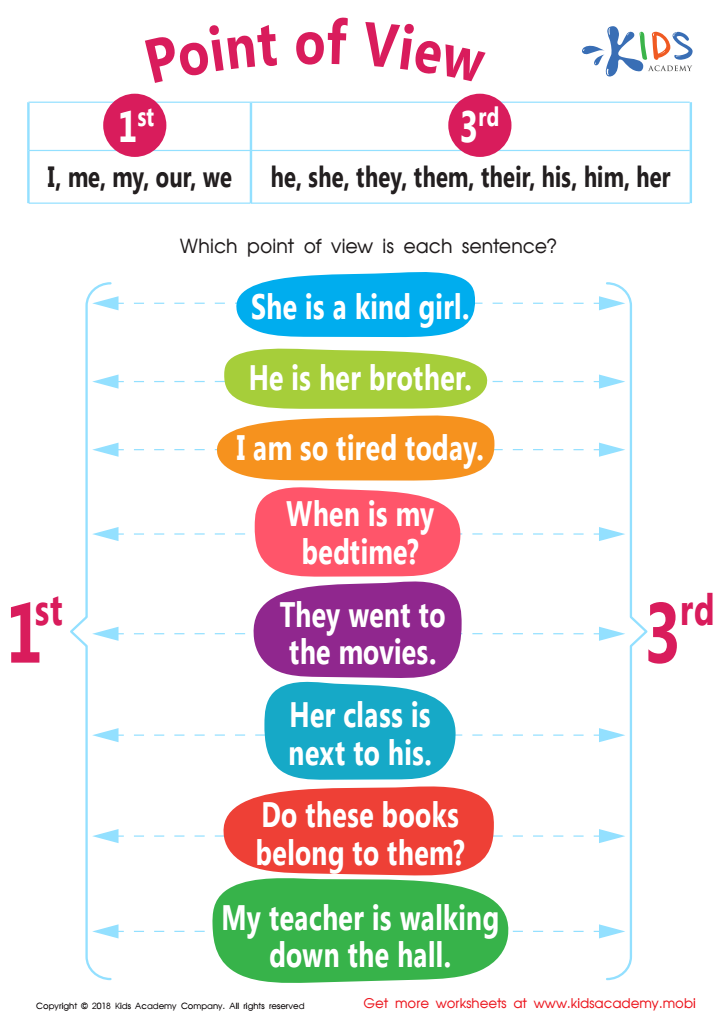
Point of View Worksheet
 Assign to My Students
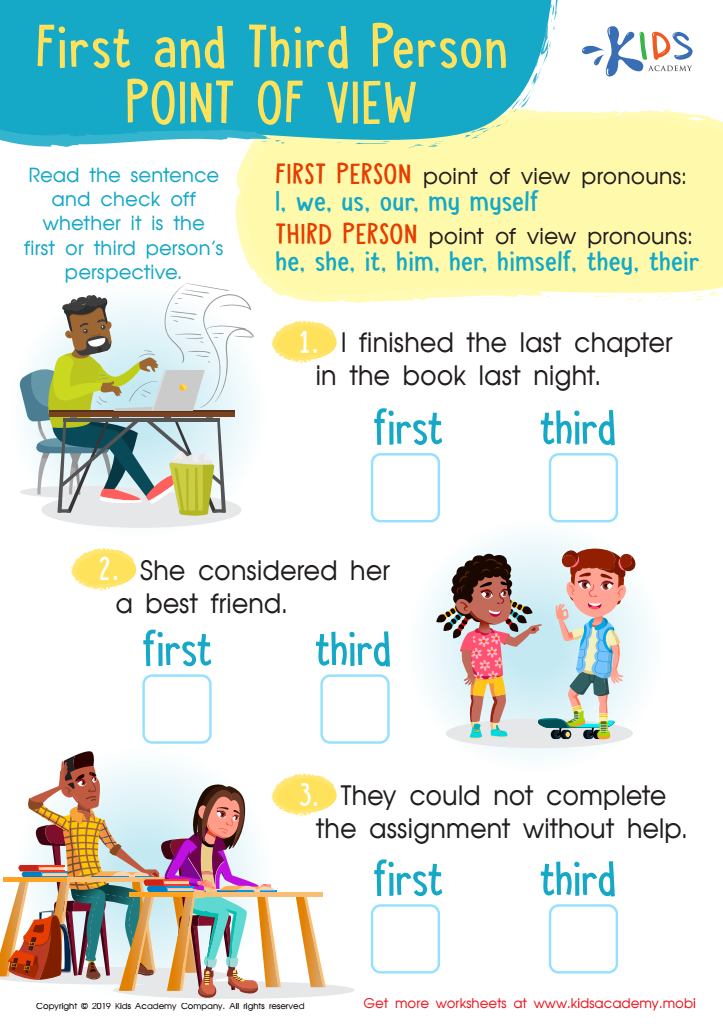
First and Third Person Point of View Worksheet
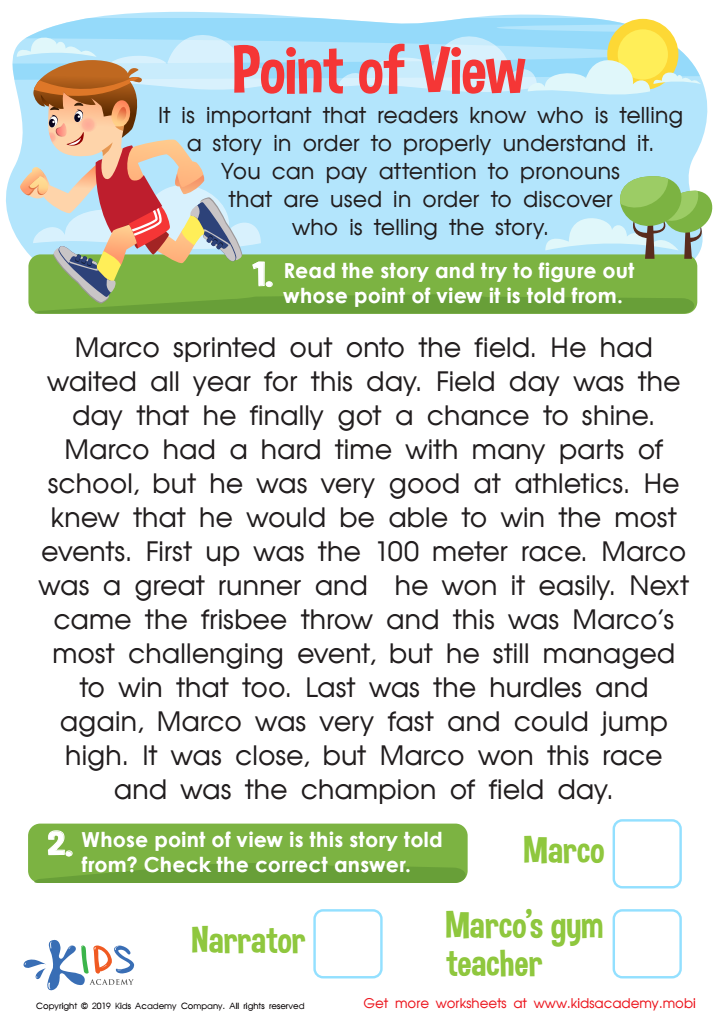
Point of View Worksheet





.jpg)

Understanding perspectives in reading is crucial for children aged 7-8, as it fosters empathy and critical thinking skills. At this age, children start to grasp that others have thoughts, feelings, and experiences different from their own. Encouraging them to explore various perspectives helps them internalize these concepts, boosting emotional intelligence. When children read stories from diverse viewpoints, they learn to appreciate diversity and cultivate inclusiveness—a valuable lesson in today’s multicultural world.
Furthermore, reading with an understanding of perspective aids comprehension. Young readers encounter characters with varying backgrounds, beliefs, and motivations. This exposure enhances their ability to analyze plots and predict outcomes, leading to richer discussions and better-deepened literary appreciation. Teachers and parents play a vital role in guiding discussions around these perspectives, asking open-ended questions to prompt deeper reflection and curiosity about the text.
Ultimately, nurturing an early understanding of perspectives turns reading into an interactive activity, rather than a passive one. It empowers children to connect literature to their own lives, appreciating the complexity of human experiences and reinforcing the idea that their voices and stories matter, just as much as those of the characters they read about. Engaging with diverse perspectives better prepares children for future social interactions and academic challenges.








