
Word association Reading Worksheets for Ages 7-8
3 filtered results
Difficulty Level
Grade
Age
-
From - To
Subject
Activity
Standards
Enhance your child's reading and vocabulary skills with our engaging Word Association Reading Worksheets for ages 7-8. These carefully designed worksheets provide an interactive approach to learning, helping children connect words with meanings and context. By identifying relationships between words, students develop critical thinking and comprehension abilities essential for effective reading. Our collection features diverse activities, including matching exercises and creative prompts, that make learning enjoyable while reinforcing essential skills. Ideal for both classroom and home use, these worksheets invite young learners to explore language, expand their vocabulary, and improve their reading proficiency in a fun and supportive environment. Start building strong readers today!
Favorites
With answer key
Interactive
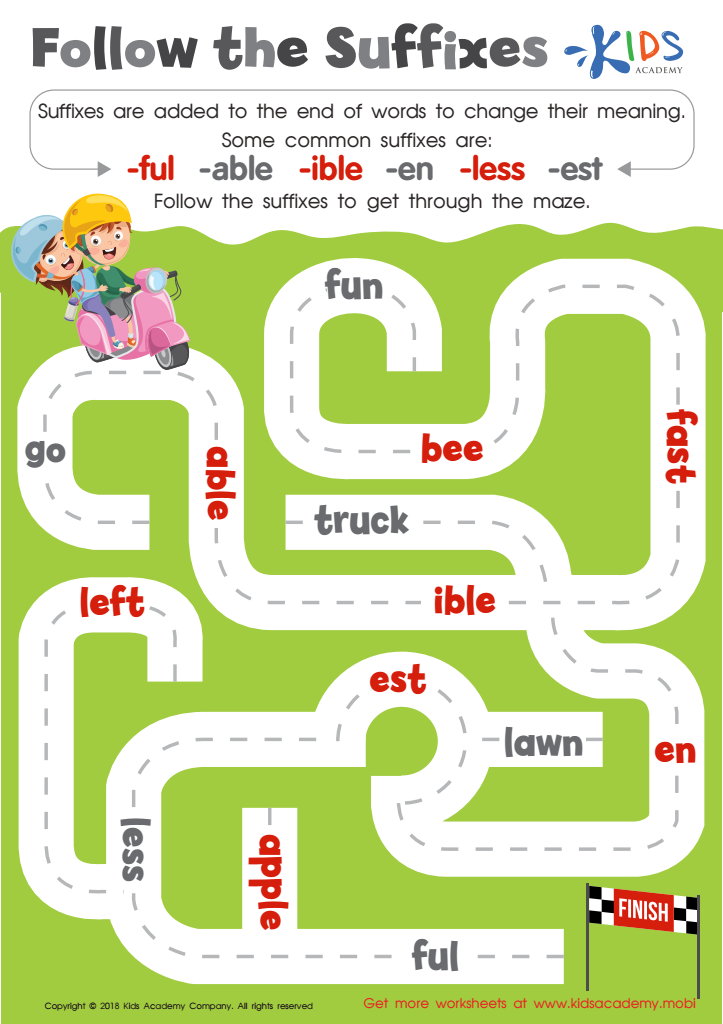
Reading: Follow the Suffixes Worksheet
Students use suffixes to find the right way through a maze in this enjoyable activity! Understanding suffixes helps kids decode and comprehend more words, leading to better reading fluency. A great addition to your reading classes, keep this printable close!
 Assign to My Students
Reading: Follow the Suffixes Worksheet
Worksheet
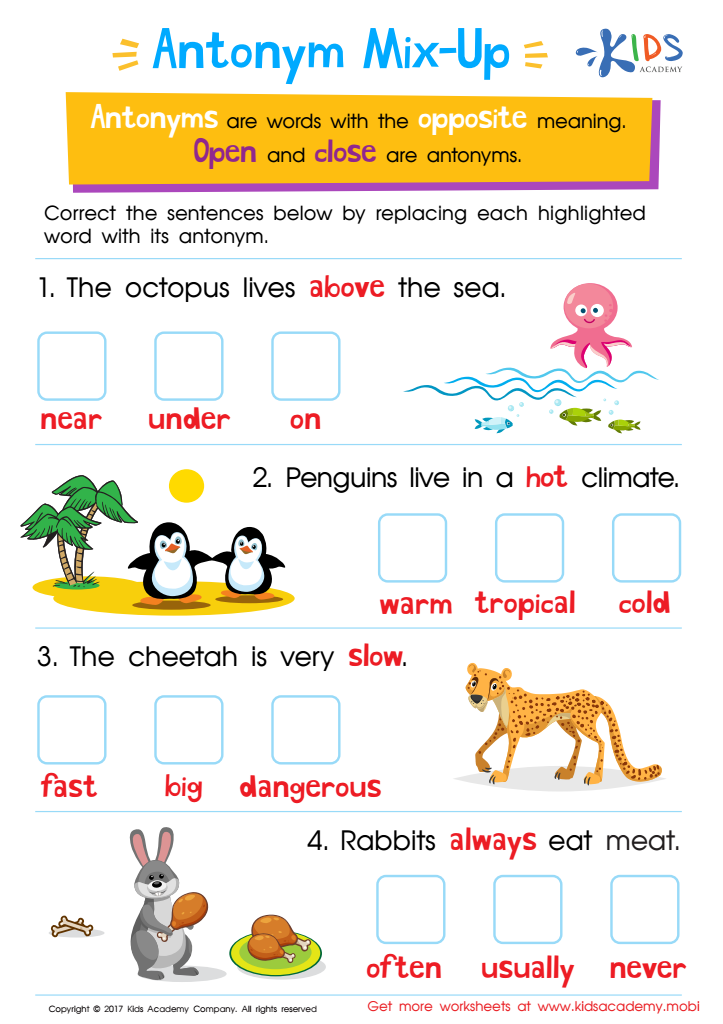
Vocabulary Antonyms Worksheet
Learning antonyms can be enjoyable and effortless! They are words that express the contrary of their meanings. This worksheet offers your kid a new word for words with contradictory interpretations, with vibrant pictures and fun phrases for an enjoyable learning experience.
Vocabulary Antonyms Worksheet
Worksheet
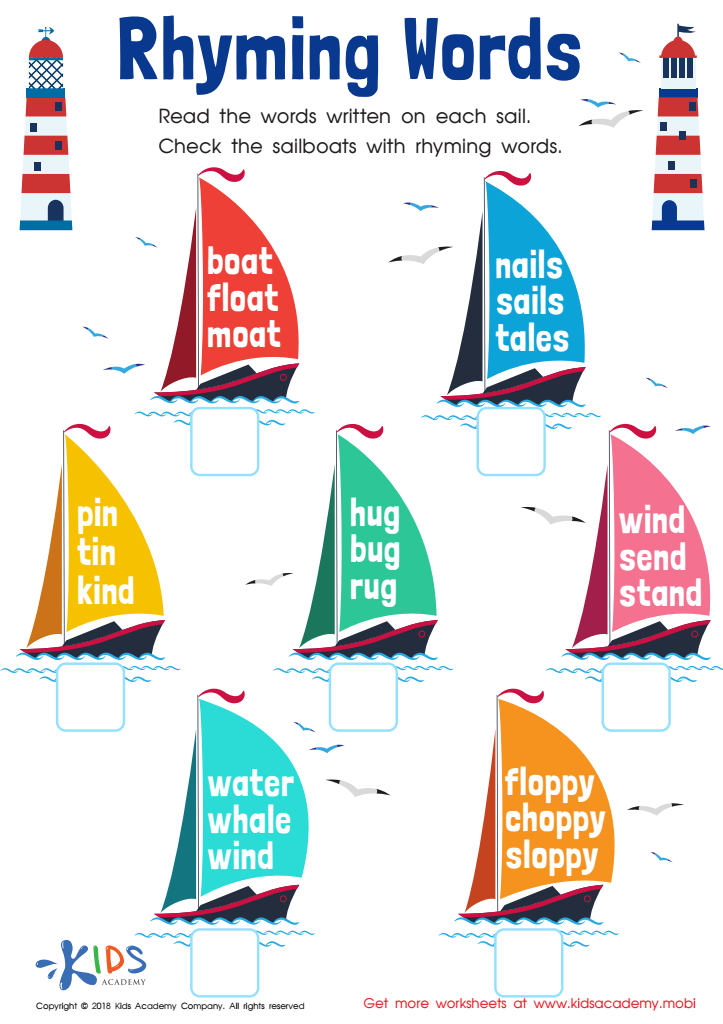
Rhyming Words Worksheet
Does your child know about rhyming words? Get them interested in poetry and explain that these words have similar sounds when pronounced. Read the words on each sailboat to your child and ask them to identify the rhyming pairs. Guide them to check the sailboats.
Rhyming Words Worksheet
Worksheet
Join Kids Academy for Free
Who is primarily going to use this learning content?






Word association reading is an engaging and valuable tool for children aged 7 to 8, and both parents and teachers should prioritize it for several reasons. At this developmental stage, children are honing their reading skills and expanding their vocabulary. Word association activities help to reinforce this expansion by connecting new words to familiar concepts and terms they already know.
This method not only boosts vocabulary but also enhances comprehension, as children learn to make connections between words, fostering deeper understanding. When students can see relationships between words, they are more likely to remember them, which improves overall reading fluency.
Additionally, word association reading encourages critical thinking and cognitive development. As children explore how words relate, they develop skills to analyze language structure and meanings, laying a strong foundation for future learning.
Moreover, this learning strategy is fun and interactive, making reading a more enjoyable experience. When children engage in playful word games or group activities, they are motivated to continue learning, leading to a positive attitude toward literacy.
Ultimately, by emphasizing word association reading, parents and teachers can support children's cognitive growth, foster enthusiasm for reading, and prepare them for more advanced literacy skills in the future.








