Rhyme recognition Reading Comprehension Worksheets for Ages 7-8
4 filtered results
-
From - To
Boost your child's reading skills with our engaging Rhyme Recognition Reading Comprehension Worksheets, designed specifically for ages 7-8. These worksheets not only enhance language abilities but also strengthen rhythmic understanding and phonemic awareness. Each activity encourages children to identify and match rhyming words, making learning fun and interactive. By incorporating captivating themes and colorful illustrations, our resources capture the interest of young learners. Perfect for use at home or in the classroom, these worksheets aim to build confidence in reading while fostering a love for language. Explore our collection and watch your child's reading skills flourish through the joy of rhyme!
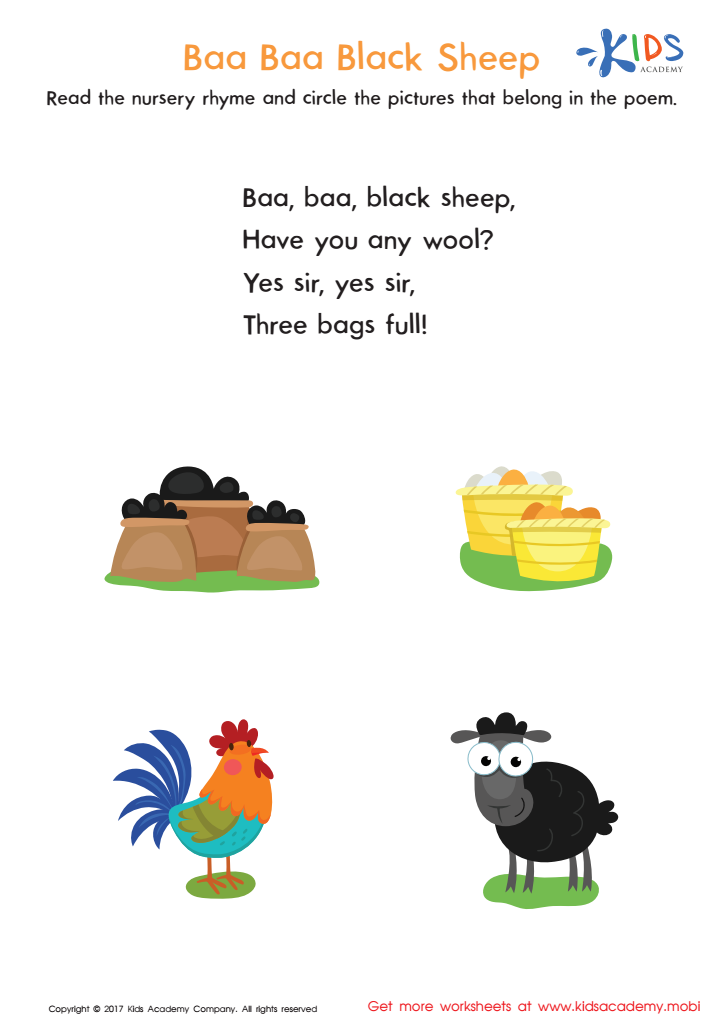
Baa Baa Black Sheep Printable
 Assign to My Students
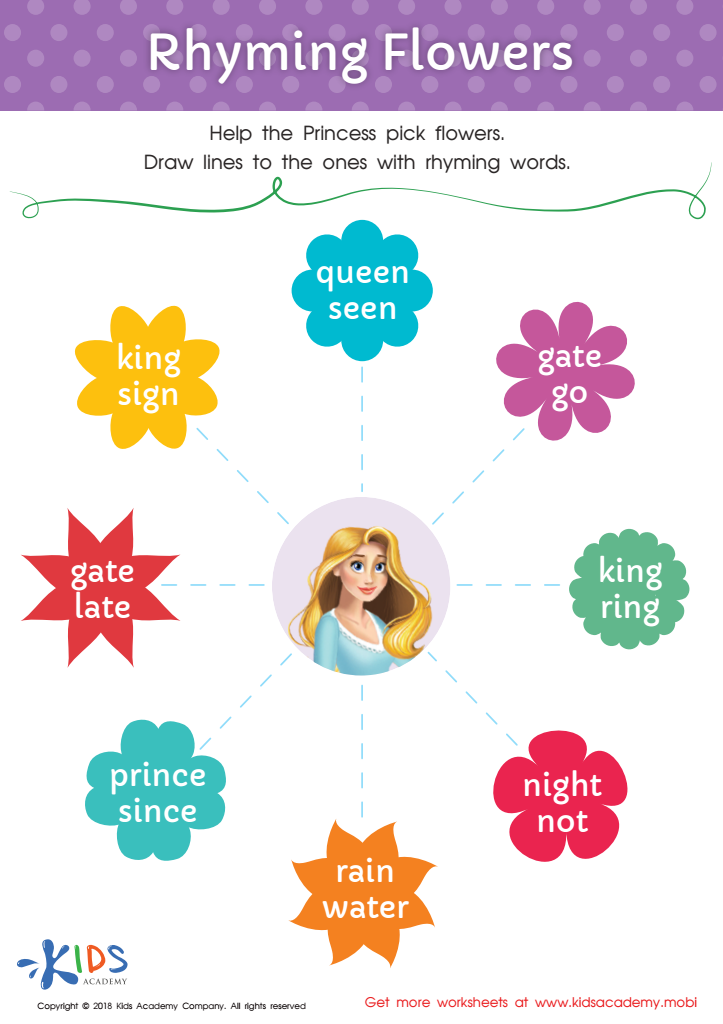
Rhyming Flowers Worksheet
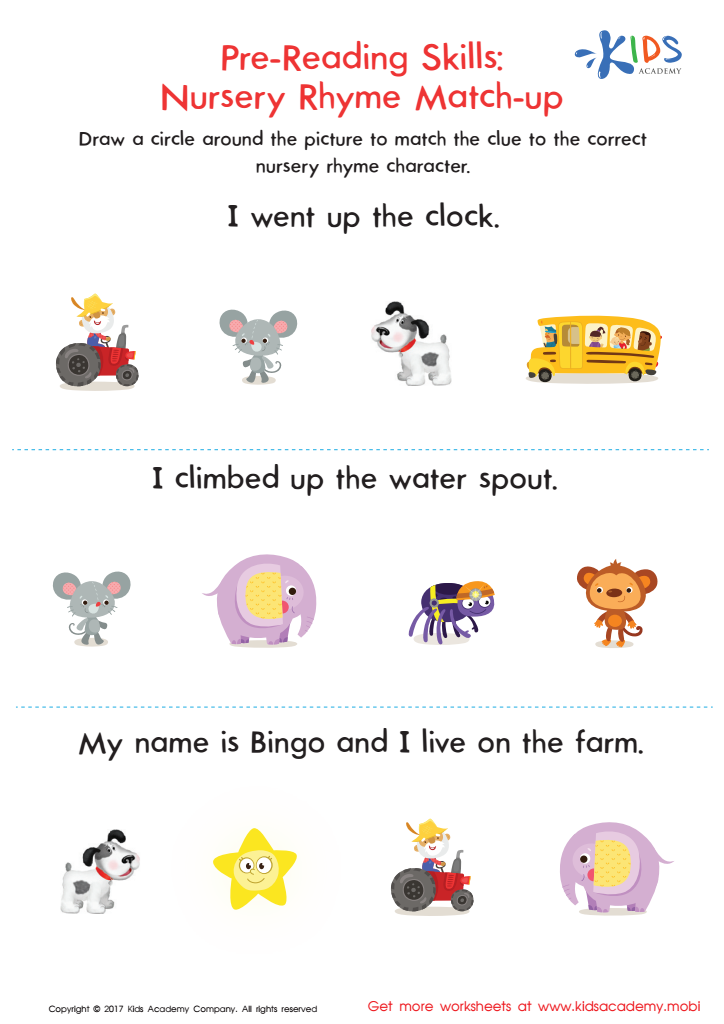
Nursery Rhyme Match–Up Worksheet
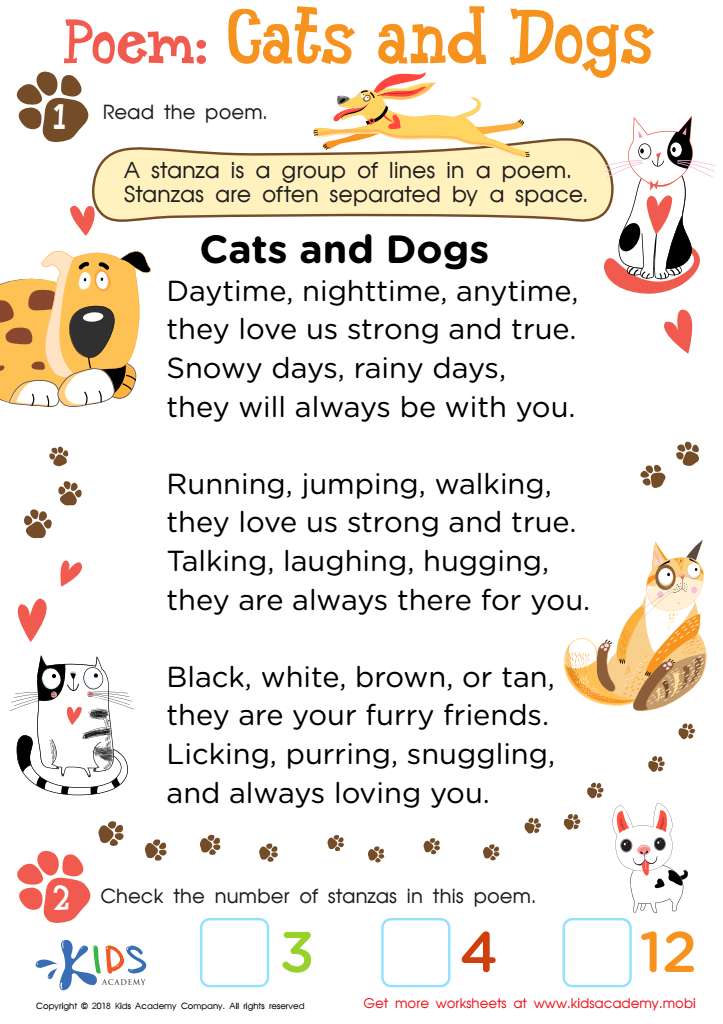
Poem: Cats and Dogs Worksheet





.jpg)

Rhyme recognition plays a crucial role in reading comprehension for children aged 7-8. At this age, children are transitioning from learning to read to reading to learn; their ability to recognize and understand rhymes enhances their phonemic awareness, a foundational skill in literacy development. Recognizing rhymes helps children identify phonetic patterns and the relationship between sounds and letters, ultimately promoting more fluent reading.
Moreover, rhyme recognition supports vocabulary expansion and language development. When children play with sounds, they become more engaged with language, which fosters critical thinking and interpretation skills vital for comprehension. They learn to decode meaning, infer context, and make connections between ideas—key elements of understanding and enjoying stories.
Parents and teachers should prioritize rhyme recognition in their everyday interactions and lesson plans, as it lays the groundwork for a child's love for reading. Incorporating rhyme in activities like poetry, songs, or storytelling not only makes learning fun but also cements essential reading skills. By nurturing these abilities, adults can help children become proficient readers who are well-equipped for academic success and lifelong learning. Recognizing the significance of rhyme enhances overall literacy and enables children to navigate printed texts more effectively and creatively.








