Story comprehension Reading Fiction Worksheets for Ages 7-8
5 filtered results
-
From - To
Enhance your child's reading skills with our "Story Comprehension Reading Fiction Worksheets for Ages 7-8." These engaging printable activities focus on helping young readers improve their ability to understand and interpret fictional stories. Through a variety of illustrative and thought-provoking tasks, children will develop critical thinking and analytical skills, boosting their confidence and love for reading. Each worksheet is designed to encourage interaction with the text, fostering a deeper comprehension and appreciation of literature. Ideal for home or classroom use, our worksheets offer a fun and educational way to support your child's reading journey.
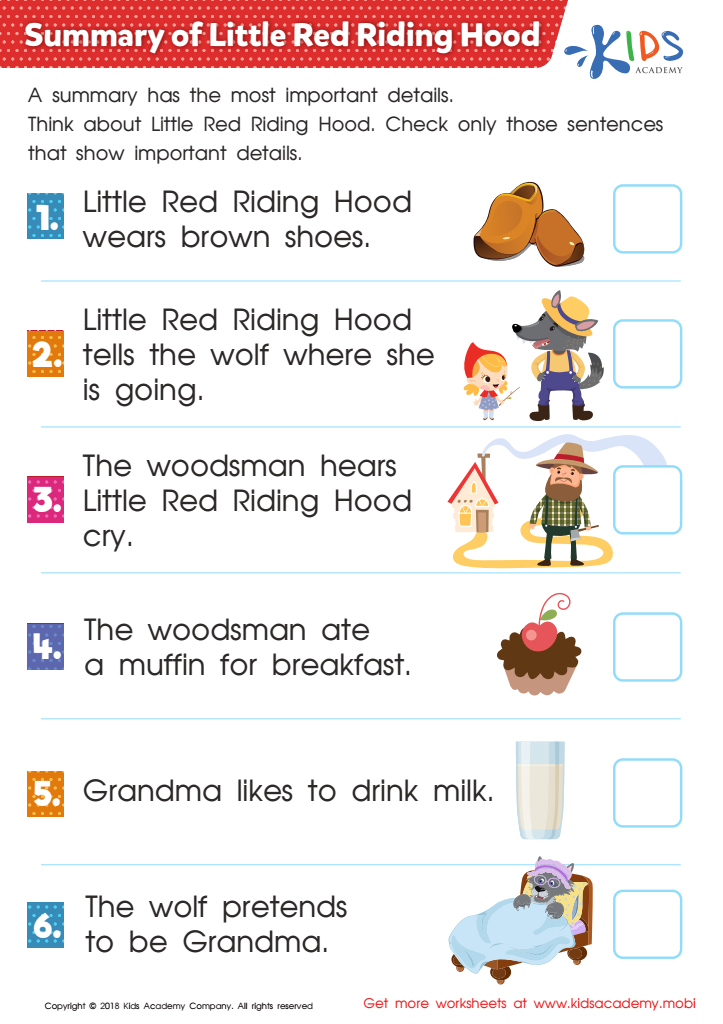
Summary of Little Red Riding Hood Worksheet
Red Riding Hood Coloring Page
 Assign to My Students
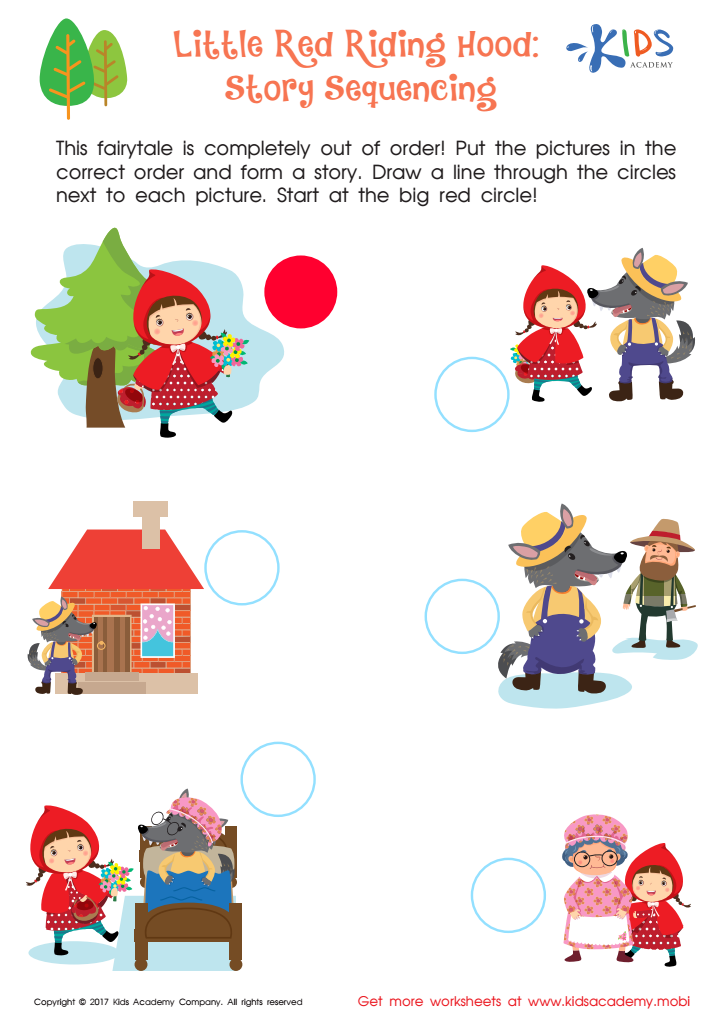
Story Sequencing Printable
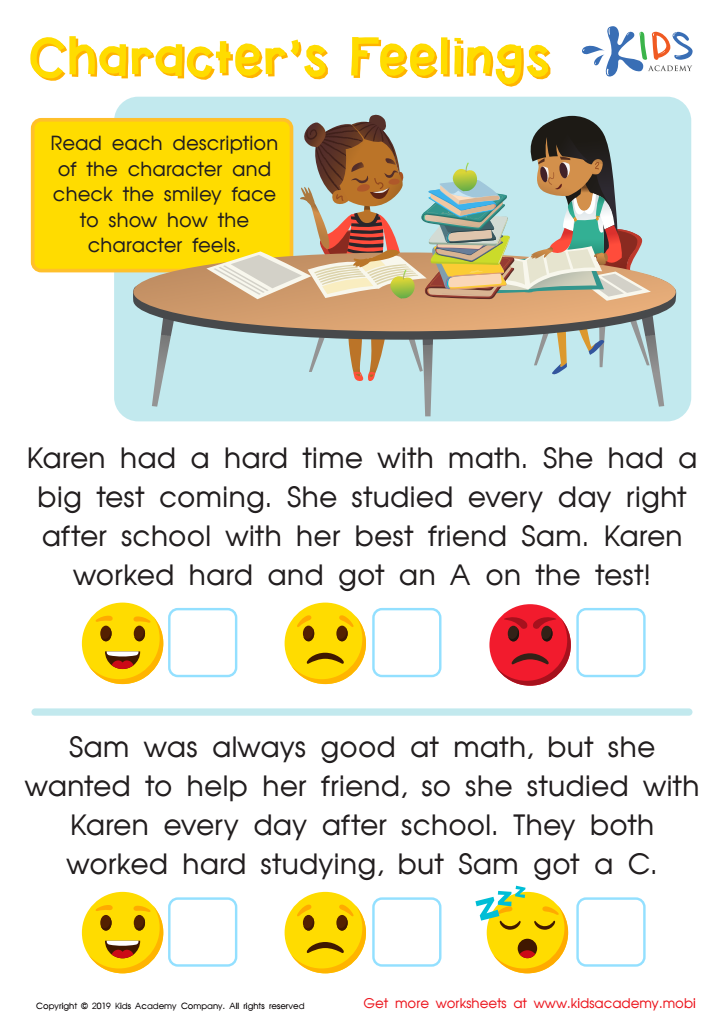
Character’s Feelings Worksheet
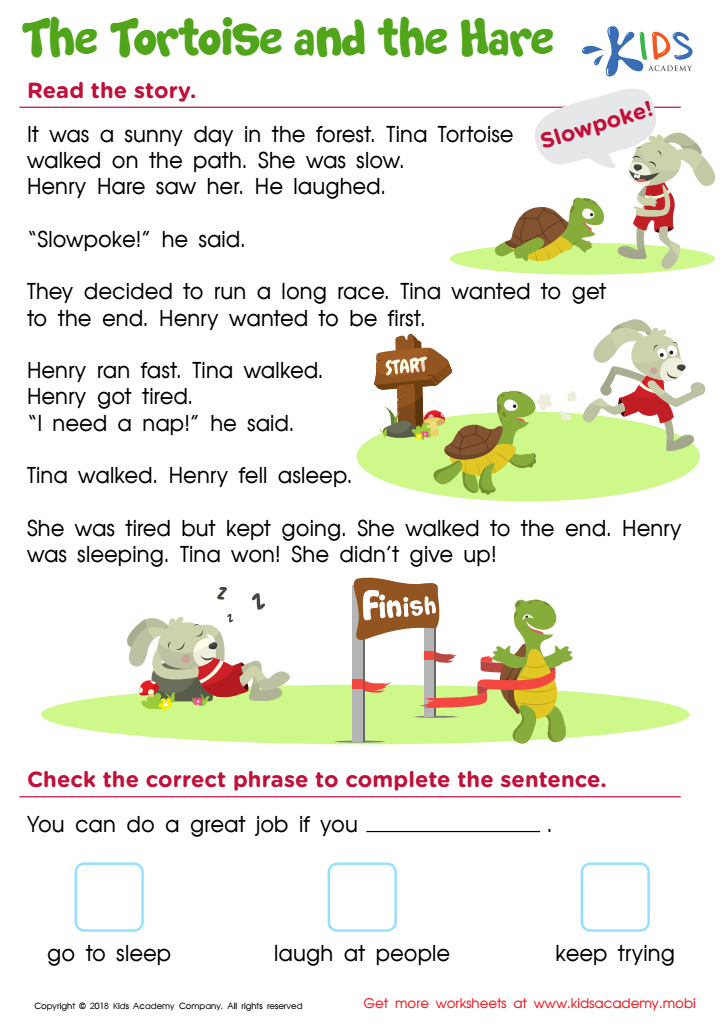
The Tortoise and the Hare Worksheet


.jpg)





Story comprehension and reading fiction for children aged 7-8 is crucial for several reasons. At this developmental stage, children are beginning to transition from learning to read to reading to learn. Fictional stories captivate young minds and provide an enjoyable way for them to practice reading skills. Comprehending stories helps children develop critical thinking skills, such as identifying main ideas, understanding sequences, and making inferences.
Engaging with fiction enhances vocabulary and language skills, exposing children to new words and diverse sentence structures. This can significantly boost their communication abilities. Moreover, characters and plots in fiction often present moral dilemmas and situations that require empathy, helping children understand different perspectives and develop emotional intelligence.
Additionally, story comprehension lays the foundation for a love of reading, encouraging a lifelong habit that can positively impact academic success and personal growth. It also stimulates imagination and creativity, which are essential for problem-solving and innovation.
Parents and teachers play a vital role in fostering these skills by discussing stories, asking questions about plot and characters, and encouraging children to predict outcomes. By prioritizing story comprehension, they can significantly contribute to the cognitive, linguistic, and social development of children.








