Information retention Reading Non-Fiction Worksheets for Ages 7-8
4 filtered results
-
From - To
Enhance information retention and comprehension in young readers ages 7-8 with our engaging non-fiction worksheets. Designed by educational experts, these printable activities focus on boosting essential learning skills through reading informative texts. Each worksheet encourages critical thinking, improves focus, and reinforces memory by asking kids to answer questions, summarize information, and identify key points. Perfect for classroom use or at-home practice, these worksheets make learning fun and effective. Build a strong foundation for academic success with our reliable, age-appropriate resources that help children absorb and retain vital information from non-fiction materials.
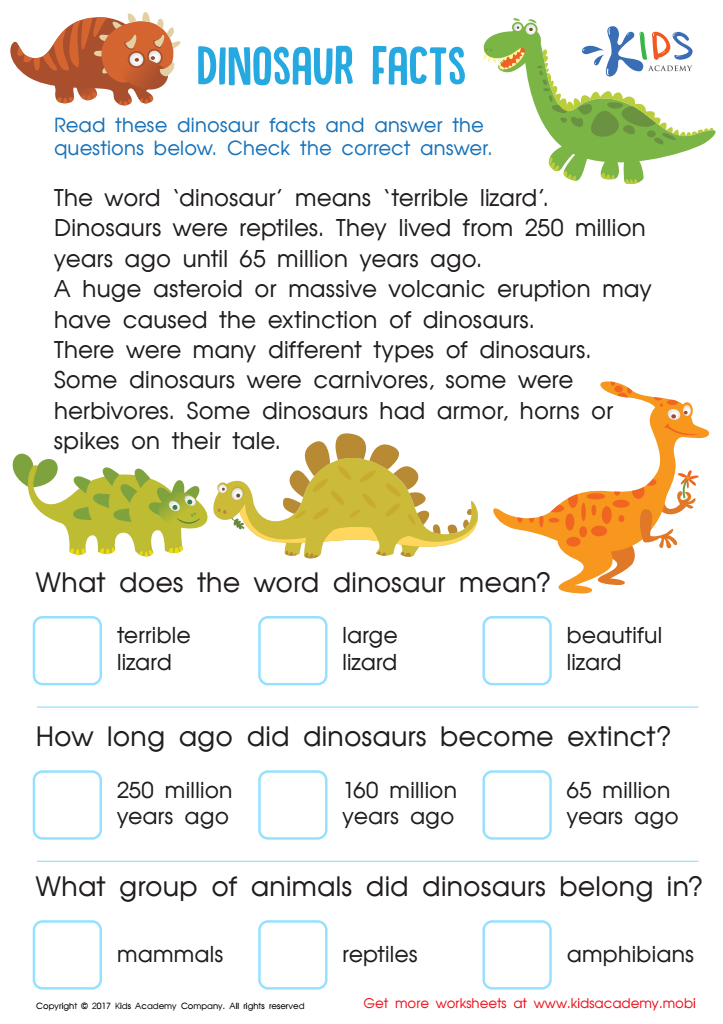
Dinosaur Facts Worksheet
 Assign to My Students
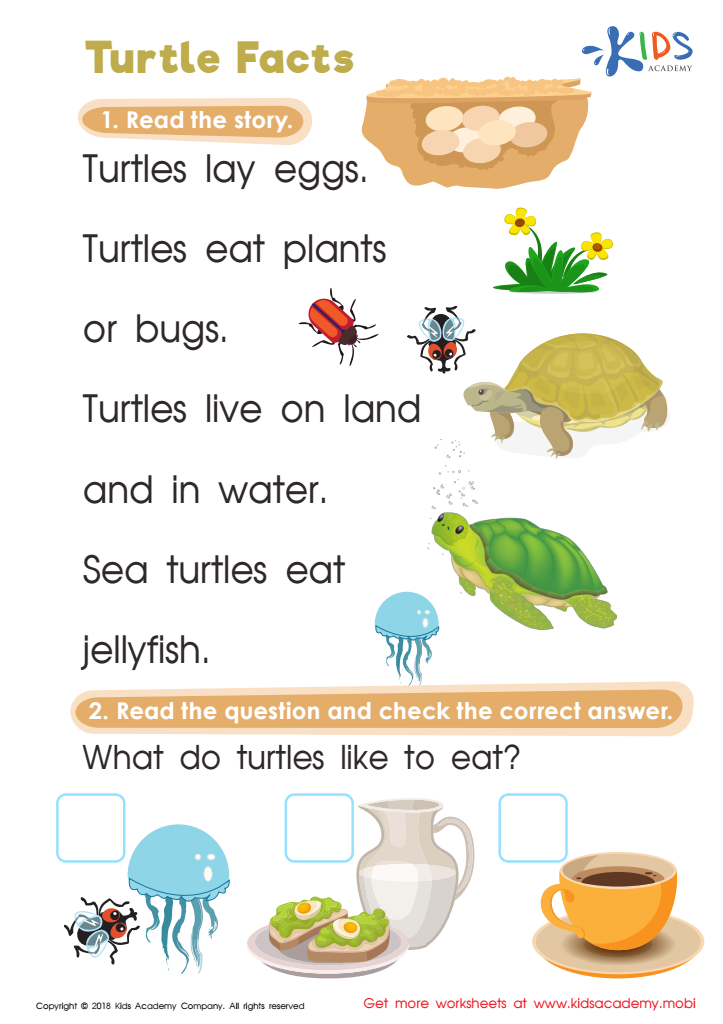
Turtle Facts Worksheet
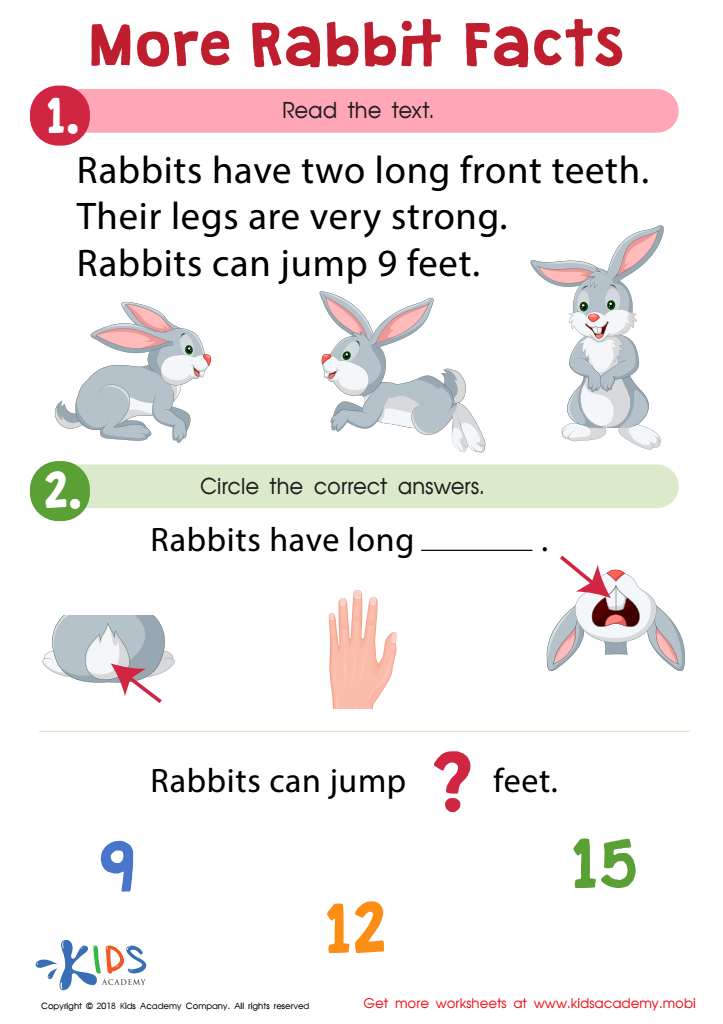
More Rabbit Facts Worksheet
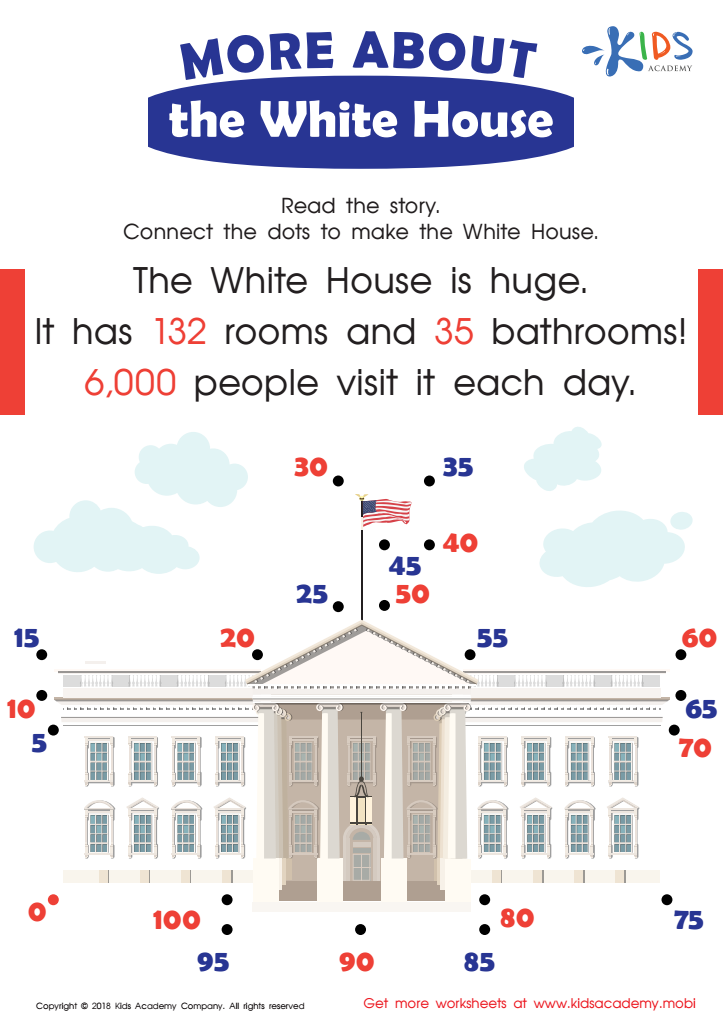
More About the White House Worksheet








Parents and teachers should care about information retention while reading non-fiction for children aged 7-8 because it lays a crucial foundation for future learning. At this developmental stage, children begin to enhance their comprehension skills and expand their knowledge base significantly. Retaining information from non-fiction texts helps them understand the world around them, stimulates curiosity, and encourages a love for learning.
Moreover, early retention of factual content enhances children's cognitive abilities. It aids in memory development, critical thinking, and problem-solving skills. When children can recall and use information from non-fiction texts, they build connections between new concepts and existing knowledge, which reinforces their understanding and fosters intellectual growth.
Information retention also has a direct impact on children's academic performance. It is essential for subjects like science, social studies, and math, where factual knowledge is key. Strong retention skills enable children to participate effectively in classroom discussions, complete assignments accurately, and perform better on tests and quizzes.
Lastly, fostering these skills at an early age promotes lifelong learning habits. Children who excel at retaining non-fiction information become well-equipped to tackle more complex books and subjects as they grow older, thus setting them up for success in higher education and beyond.








