Rhyming skills development Rhyming Words Worksheets for Ages 7-8
3 filtered results
-
From - To
Boost your child's phonemic awareness with our Rhyming Words Worksheets for ages 7-8! Our expertly crafted worksheets foster crucial rhyming skills, helping children recognize and produce similar sounding words effortlessly. Each activity engages young learners through fun, interactive tasks that enhance word recognition and pronunciation. Designed especially for 7-8-year-olds, these worksheets support literacy development and build a strong foundation for reading fluency. Perfect for classrooms or homeschooling, our resources align with educational standards to ensure your child’s success. Give your child the tools they need to excel with our Rhyming Words Worksheets today!
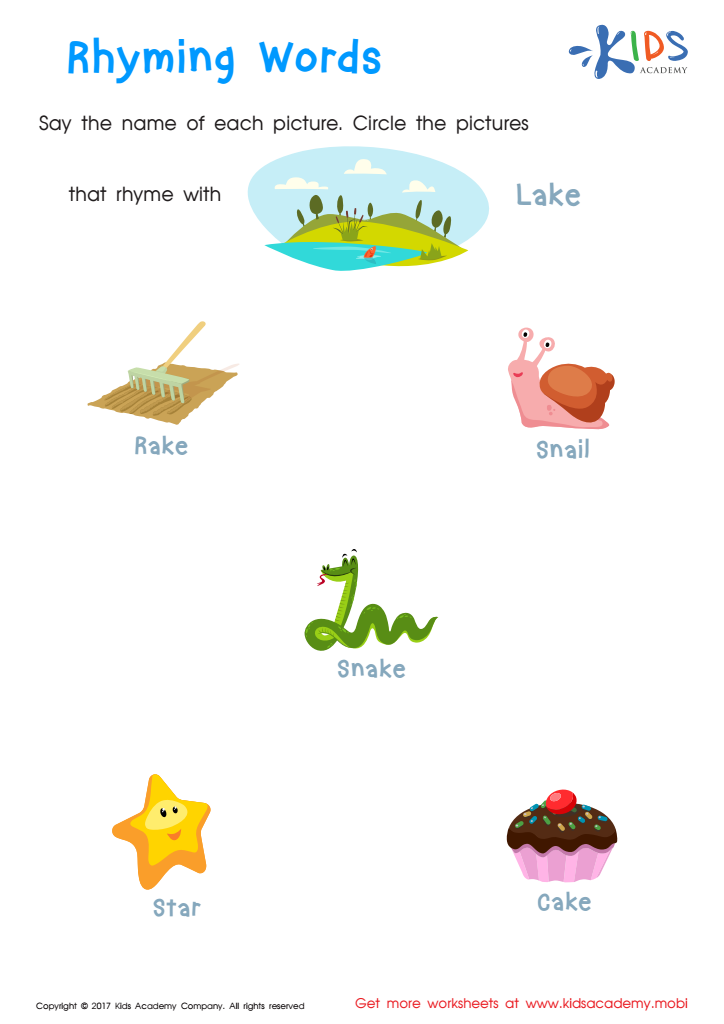
Rhyming Words Rhyming Worksheet
 Assign to My Students
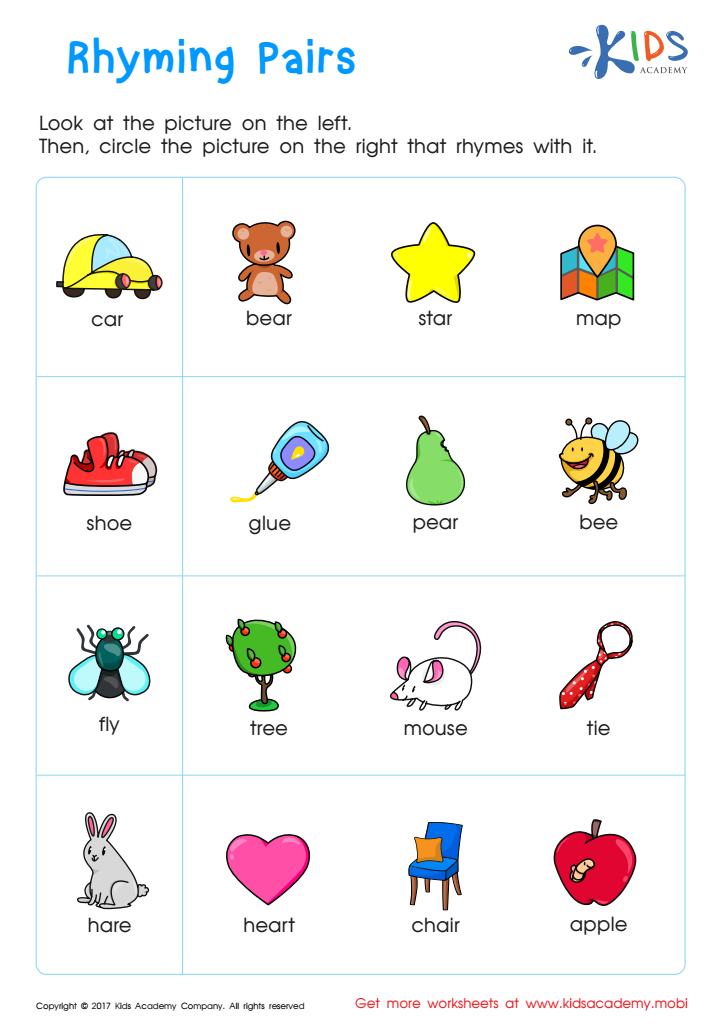
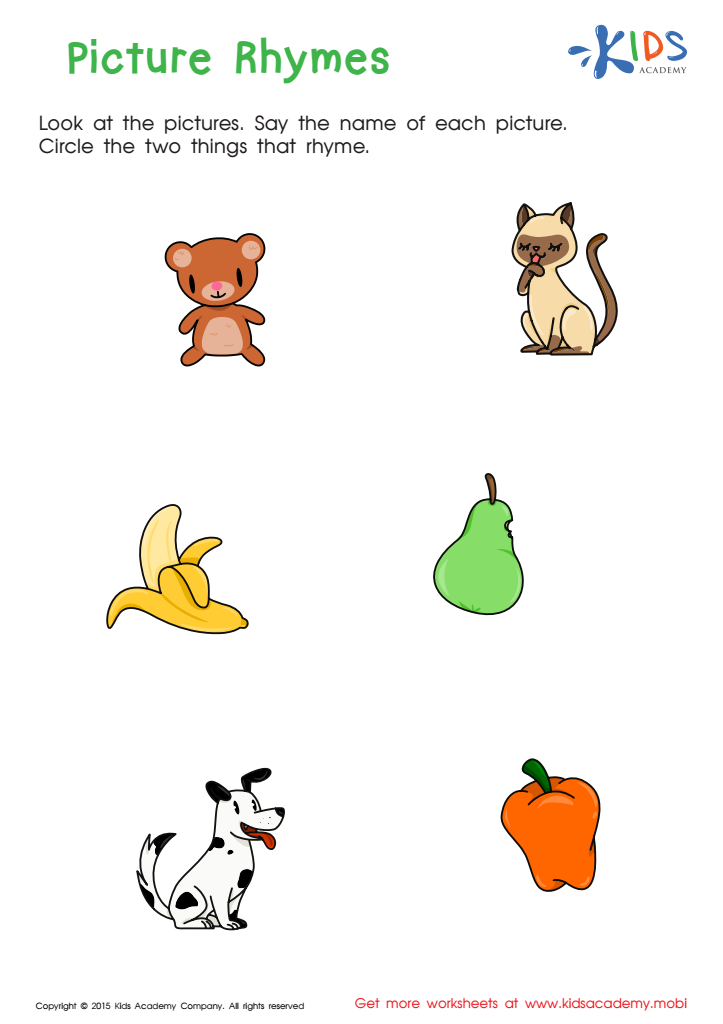
First Words: Picture Rhymes Worksheet








Rhyming skills are essential for children aged 7-8 to support their linguistic and cognitive development. When parents and teachers emphasize rhyming, they help kids enhance their phonemic awareness, a critical component of reading proficiency. By recognizing and generating rhyming words, children learn to distinguish similarities and differences in the sounds of words, which is a fundamental skill for decoding new words while reading.
Rhyming not only strengthens reading abilities but also boosts memory and creativity. Engaging with rhymes encourages kids to play with language, fostering a love for reading and storytelling. This playfulness with words enhances vocabulary, as children explore and use a wide array of words that sound alike but have different meanings.
Furthermore, rhyming activities can be particularly beneficial for struggling readers or those learning English as a second language. The repetition and predictability of rhymes provide a comforting structure, helping to build confidence in their language skills.
Teachers and parents who integrate rhyming games, songs, and poems into daily routines contribute significantly to the child's academic success and enjoyment of learning. In summary, rhyming skills development is a powerful tool for building a strong foundation in reading, expanding vocabulary, and nurturing creativity in young learners.








