
Analytical skills Animals Worksheets for Ages 7-8
3 filtered results
Difficulty Level
Grade
Age
-
From - To
Subject
Activity
Standards
Welcome to our "Analytical Skills Animals Worksheets for Ages 7-8"! These interactive worksheets are designed to enhance young learners' critical thinking and analysis through engaging animal-themed activities. Tailored for children ages 7-8, our resources encourage exploration and discovery, prompting students to observe, compare, and draw conclusions about various animal characteristics and habitats. With a mix of fun illustrations and challenging tasks, these worksheets foster curiosity and strengthen cognitive skills essential for future learning. Ideal for homeschooling or classroom use, our worksheets support educators in nurturing analytical abilities while instilling a love for the animal kingdom. Start exploring today!
Favorites
With answer key
Interactive
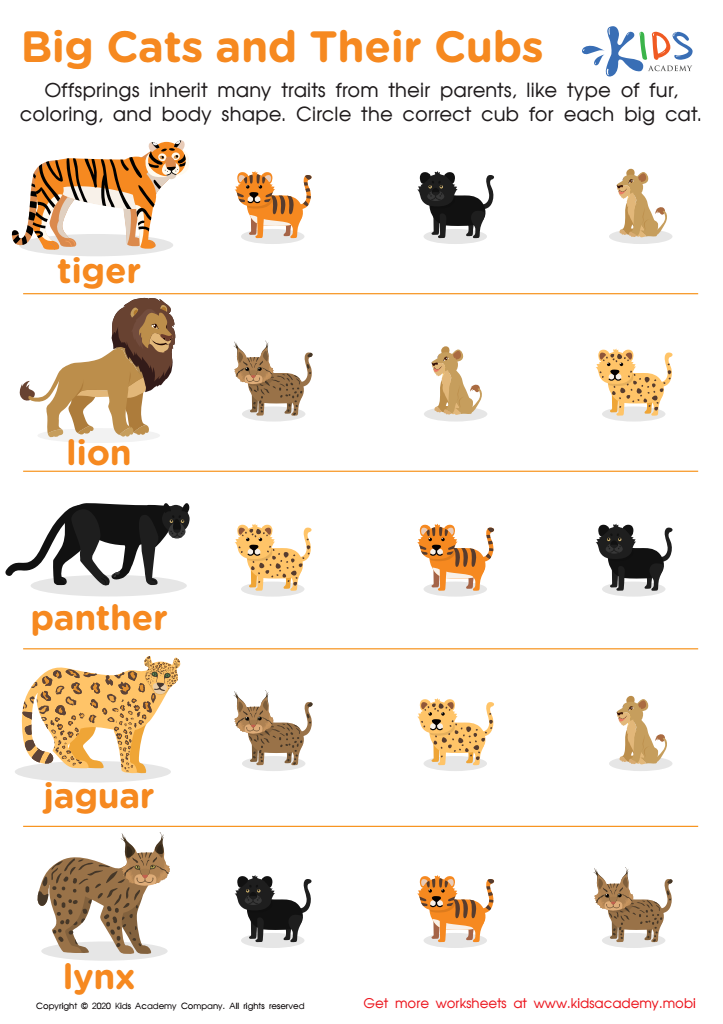
Big Cats and Their Cubs Worksheet
Kids are often like their parents, and the same is true for big cats and their cubs. Introduce your young scientists to genetics with this fun printable worksheet from Kids Academy! Observe the big cats and their cubs, then circle the right cub to complete! It's a great way to teach an early lesson in genetics.
 Assign to My Students
Big Cats and Their Cubs Worksheet
Worksheet
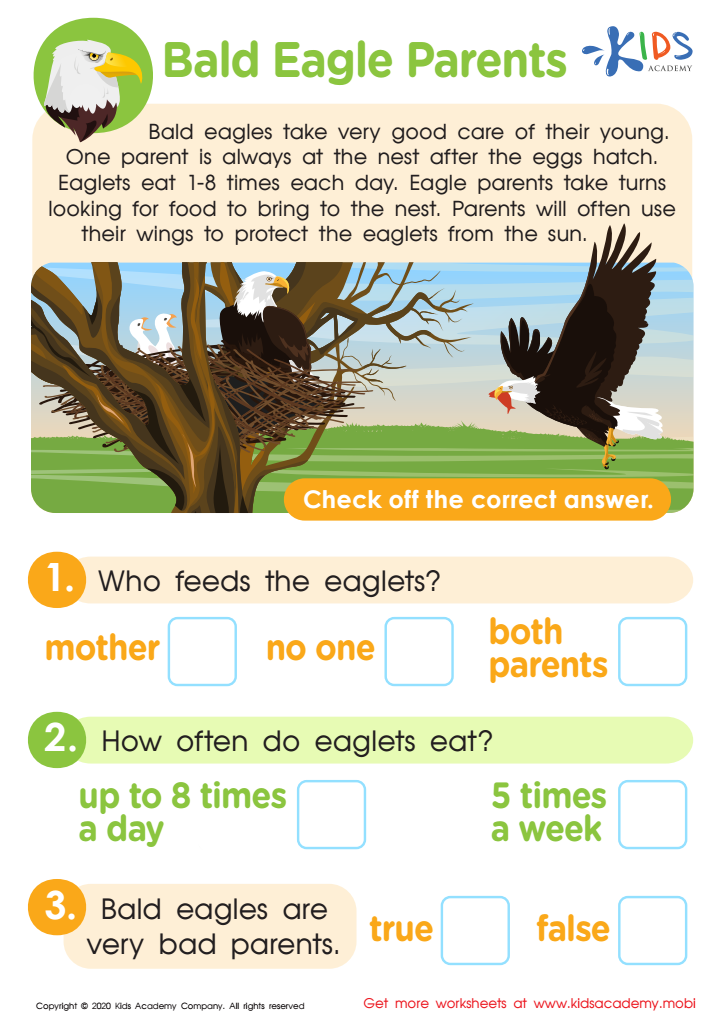
Bald Eagle Parents Worksheet
Teach your child about bald eagle parenting with this science worksheet! Read the passage and answer the questions to learn how these majestic birds protect their young from predators. Eaglets need protection, and the bald eagle parents are masters of providing it!
Bald Eagle Parents Worksheet
Worksheet
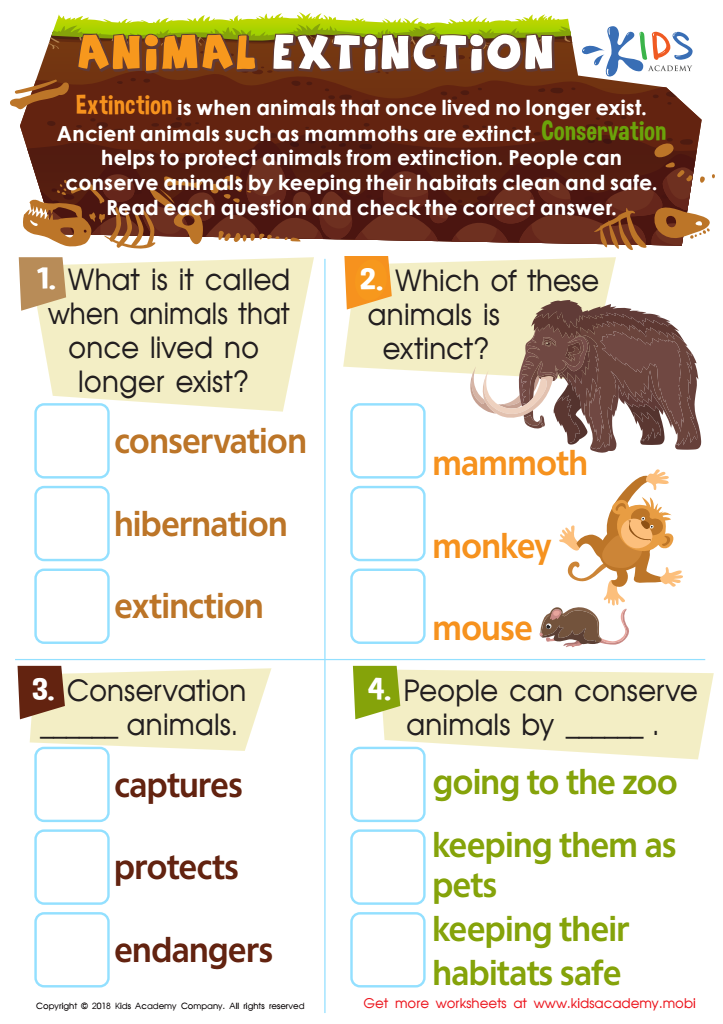
Animal Extinction Worksheet
Children can learn how their actions can help endangered animals with this free PDF worksheet. It explains extinction, looks at the mammoth as an example, and poses questions about conservation. Keeping habitats clean and safe is key to protecting animals and keeping them abundant. Learning about this now can make a huge difference for future generations.
Animal Extinction Worksheet
Worksheet
Join Kids Academy for Free
Who is primarily going to use this learning content?




%20(1).jpg)



Parents and teachers should prioritize the development of analytical skills in children aged 7-8, particularly through engaging themes like animals. At this age, children are naturally curious and eager to explore the world around them. Studying animals provides a relatable context for developing critical thinking and problem-solving skills. It encourages children to observe, ask questions, and draw conclusions based on evidence.
Analytical skills enable children to identify patterns, compare and contrast different species, and understand ecological relationships. For example, discussing animal habitats can enhance inferential reasoning as children analyze how environmental factors affect living conditions. Furthermore, inquiry-based activities like class projects or science experiments involving animals foster collaboration and communication, essential skills for future learning.
Additionally, engaging with animals can cultivate empathy and an awareness of biodiversity, highlighting the importance of conservation and animal welfare. These discussions help children appreciate their role in the world and develop a sense of responsibility.
In summary, fostering analytical skills through animal studies promotes cognitive development while nurturing social-emotional growth. Parents and teachers play a crucial role in inspiring inquisitiveness, making these learning experiences meaningful and impactful for young learners.








