
Critical thinking skills Science Worksheets for Ages 7-8
8 filtered results
Difficulty Level
Grade
Age
-
From - To
Subject
Activity
Standards
Enhance your child's critical thinking skills with our Science Worksheets for Ages 7-8. Designed to stimulate young minds, these engaging worksheets incorporate real-world scenarios, encouraging kids to question, analyze, and draw conclusions. Each activity fosters curiosity and scientific reasoning, helping children develop essential problem-solving skills. From hypothesis testing to data interpretation, these printable resources support educational standards while making learning fun and interactive. Ideal for classroom use or at-home practice, our critical thinking science worksheets are the perfect tool to prepare your child for future academic success. Explore today and ignite a passion for science in your young learner!
Favorites
With answer key
Interactive
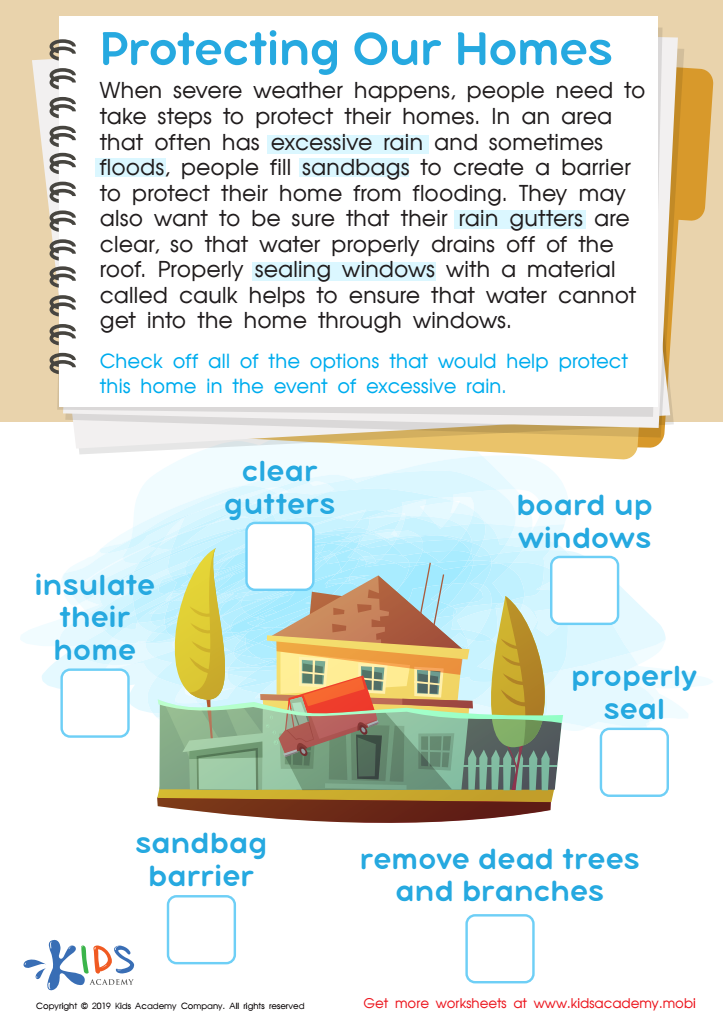
Protecting Our Homes Worksheet
Teach kids about severe weather with this free worksheet. It helps them learn how to protect their home from excessive rain, as well as what not to do. Check the given actions to make the damage from weather events less devastating.
 Assign to My Students
Protecting Our Homes Worksheet
Worksheet
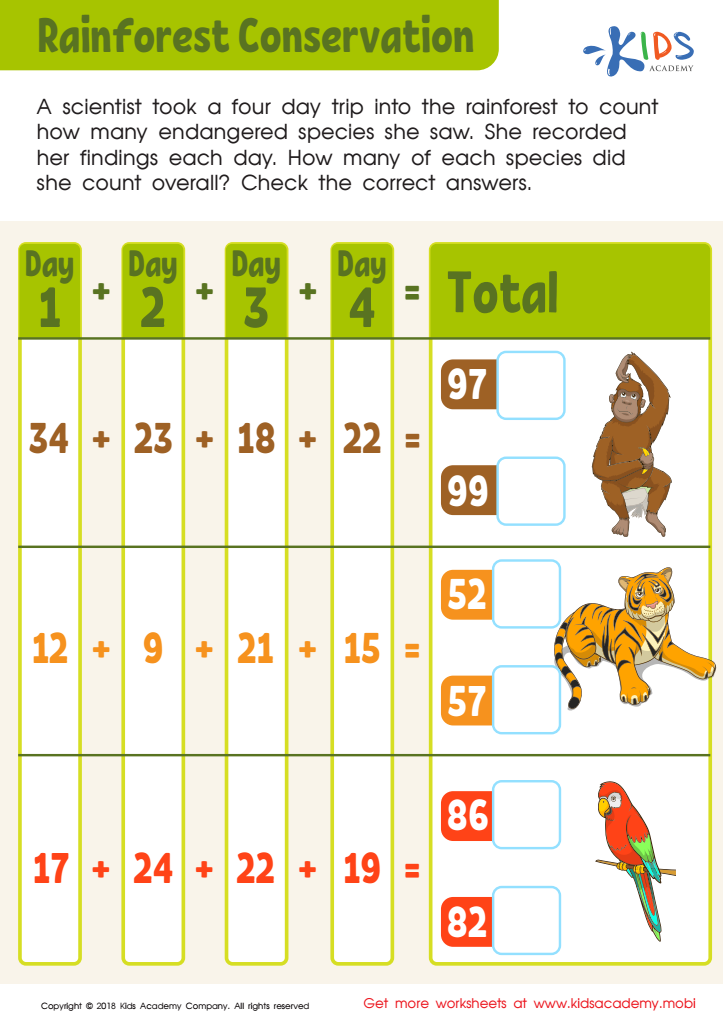
Rainforest Conservation Worksheet
Explain to your child what a rainforest is and why it's important. A scientist took a four-day trip to count endangered species. Let your child count how many of each species were seen in total. Check the answers and help them understand.
Rainforest Conservation Worksheet
Worksheet
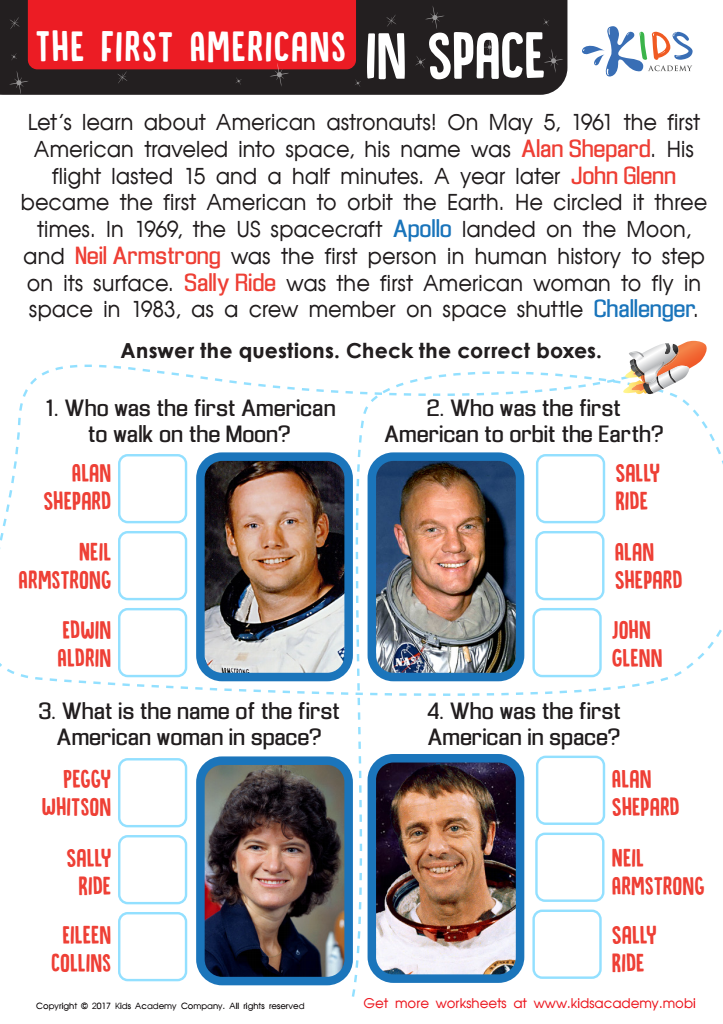
First Americans in Space Worksheet
Delve into space history with your child! Learn about the first astronauts and their impact on U.S. space exploration. Our captivating worksheet features real photos and facts about these famous individuals. Spark your kid’s interest in space today!
First Americans in Space Worksheet
Worksheet
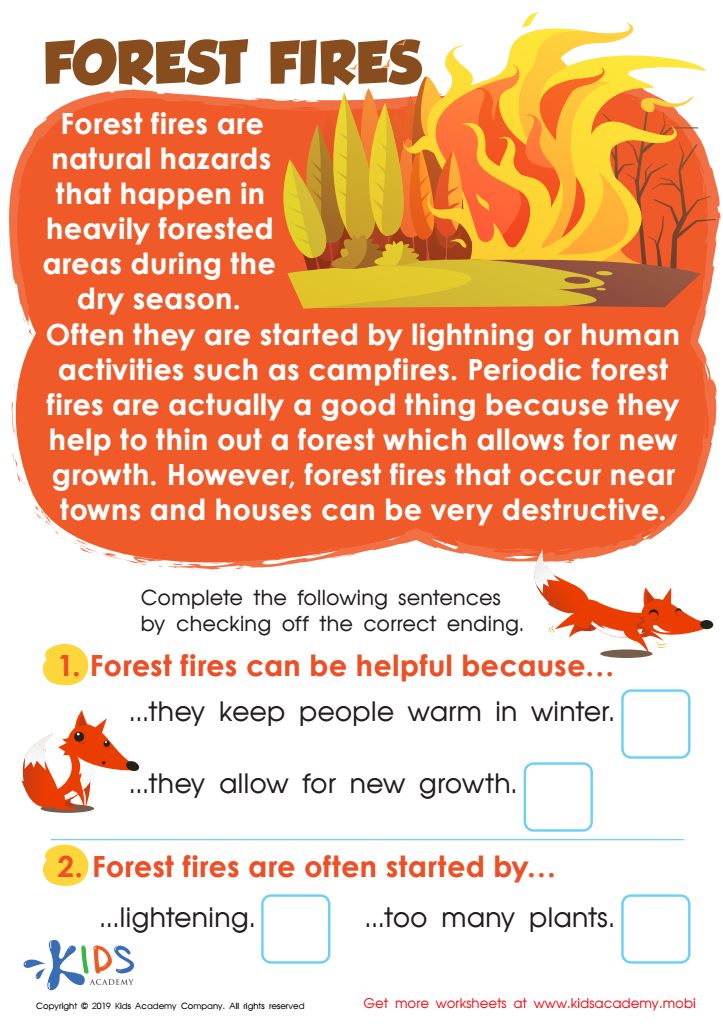
Forest Fires Worksheet
This free worksheet helps kids learn about forest fires. It encourages critical thinking by allowing them to answer multiple-choice questions. It is an important opportunity for children to develop reading skills, as understanding text is essential for further academic success. Download the PDF to give them the chance to practice comprehension and strengthen their knowledge.
Forest Fires Worksheet
Worksheet
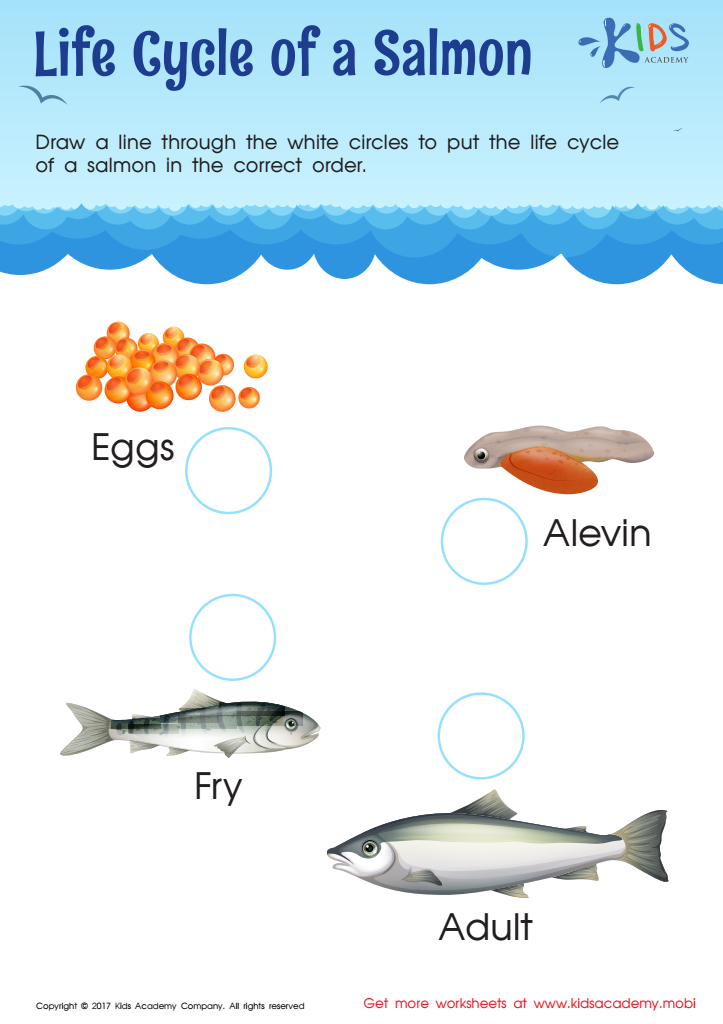
Cycle Of Salmon Worksheet
Explore the life cycle of a salmon with this grade 2 worksheet! Kids will learn by arranging the stages of the salmon's lifecycle in order. Science activities in this set cover a wide range of lifecycles in nature.
Cycle Of Salmon Worksheet
Worksheet
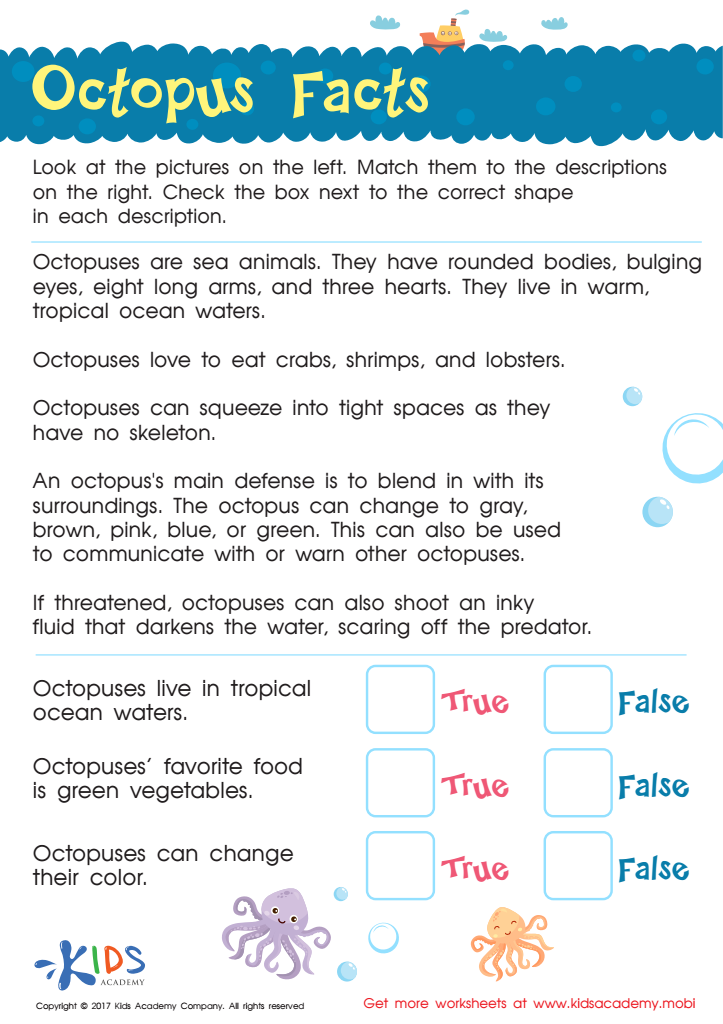
Octopus Facts Worksheet For Kids
Let your child dive into the world of octopuses with this fun worksheet. It offers invaluable practice in reading non-fiction texts, while they learn interesting facts about these strange sea creatures. It's a great way to help them hone their skills in reading comprehension.
Octopus Facts Worksheet For Kids
Worksheet
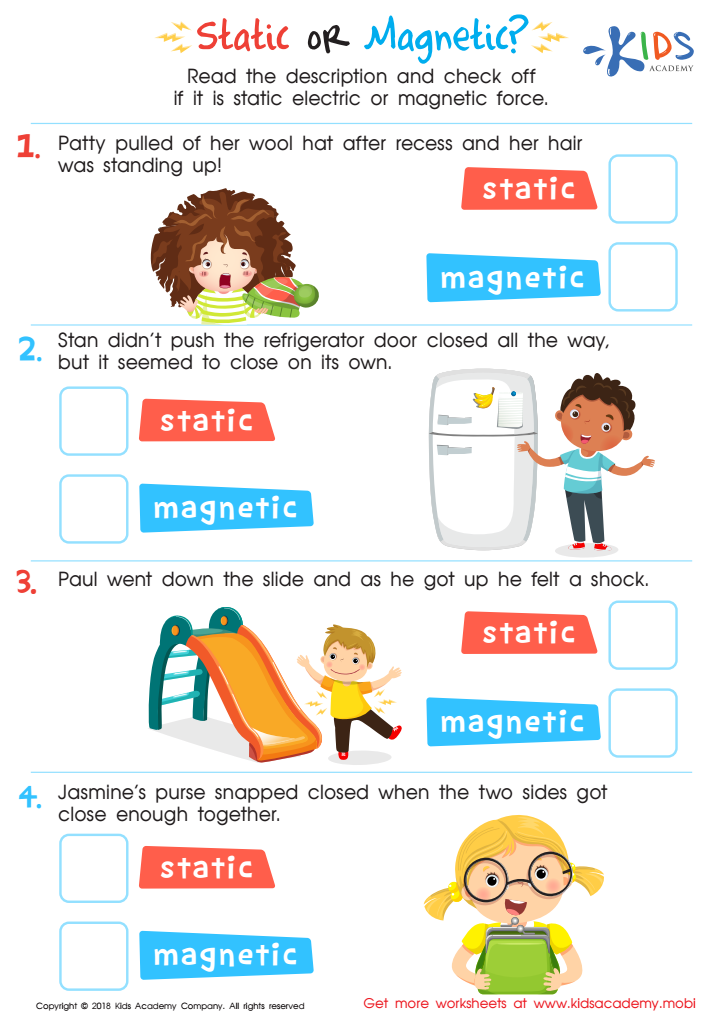
Static or Magnetic Printable Worksheet
Ever wondered if a situation involved static or magnetic force? This printable worksheet has the answer! Read the scenarios and check out the illustrations to decide which force is in play for each. Learn about these two amazing forces with this fun activity!
Static or Magnetic Printable Worksheet
Worksheet
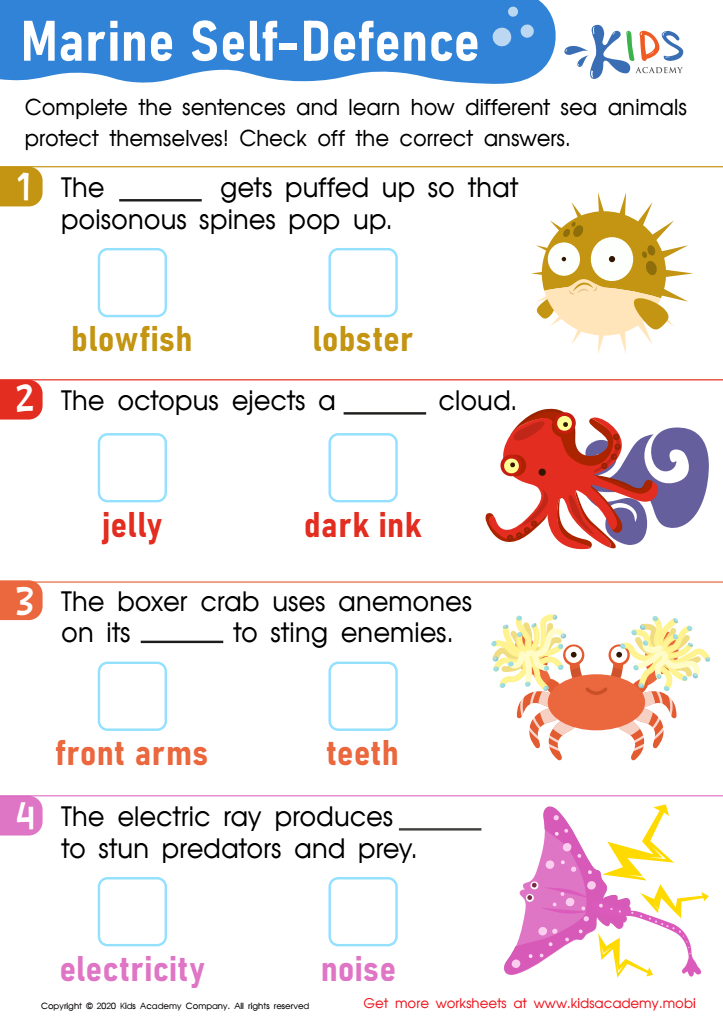
Marine Self-Defence Worksheet
Kids will love discovering the ingenious ways sea creatures protect themselves from predators such as sharks and whales! Let them explore the strategies with this fun science worksheet, which features vibrant illustrations. Have them fill in the blanks with each creature's defense strategy, such as shells, spikes, ink, or even electricity!
Marine Self-Defence Worksheet
Worksheet
Join Kids Academy for Free
Who is primarily going to use this learning content?





.jpg)


Critical thinking skills in science are crucial for children aged 7-8 as they form the foundation for lifelong learning and problem-solving abilities. At this developmental stage, kids are naturally curious and eager to explore the world around them. Cultivating critical thinking involves teaching them how to ask pertinent questions, assess information critically, and make reasoned decisions based on evidence.
First, encouraging critical thinking in science helps to stimulate curiosity and cognitive development. By exploring scientific concepts, children learn to observe, analyze, and interpret data. This not only boosts their understanding of science but also enhances their overall reasoning and decision-making skills.
Second, in an era where information is abundant but not always accurate, critical thinking teaches children how to distinguish between credible information and misinformation. This skill is invaluable in navigating today’s digital world, where they will encounter multiple sources of information throughout their lives.
Third, fostering these skills promotes independence and confidence. Students learn to trust their reasoning abilities, take intellectual risks, and become more resilient when facing challenges. This growth mindset prepares them not just for academic success but for practical problem-solving in everyday life.
In essence, critical thinking in science equips young learners with the tools to explore, understand, and interact with the world more effectively, setting them up for future success across various disciplines.







