Geography skills Geography Worksheets for Ages 7-8
3 filtered results
-
From - To
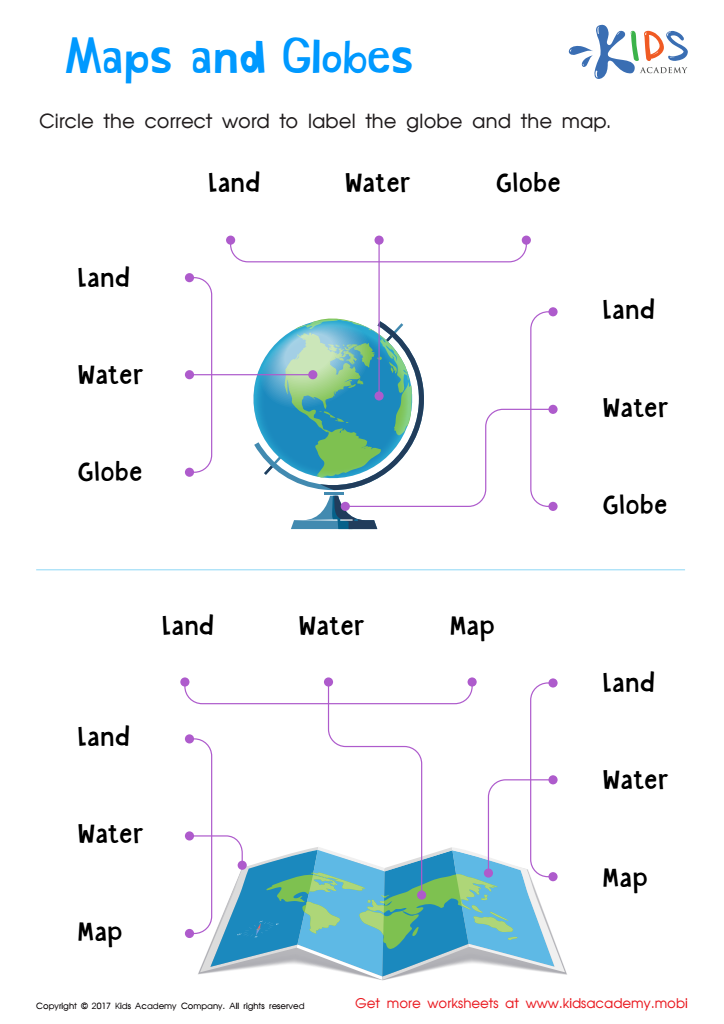
Introducing our engaging Geography Skills Worksheets for children ages 7-8, designed to enhance young learners' understanding of the world! These printable resources focus on key concepts such as map reading, understanding continents and oceans, and recognizing various geographical features. Thoughtfully crafted with vibrant visuals and hands-on activities, these worksheets make learning geography fun and interactive. Perfect for both classroom use and at-home practice, our geography worksheets support essential skills development while nurturing curiosity about the surroundings. Help your child explore the world with confidence and excitement through these valuable educational tools! Ideal for educators and parents alike!
 Assign to My Students
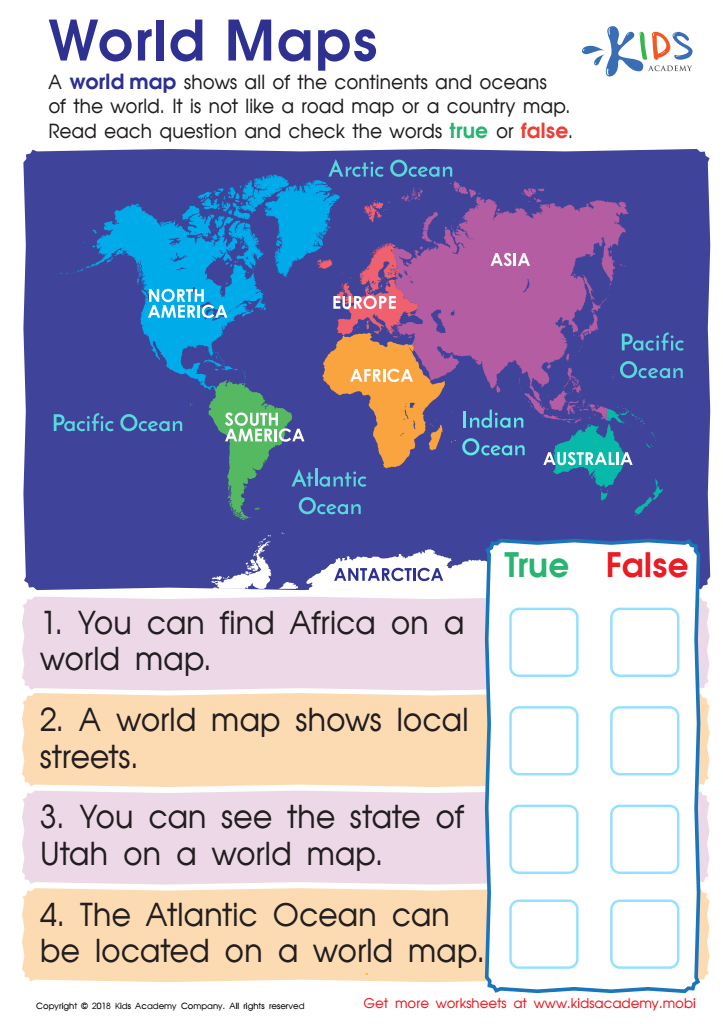
World Maps Worksheet
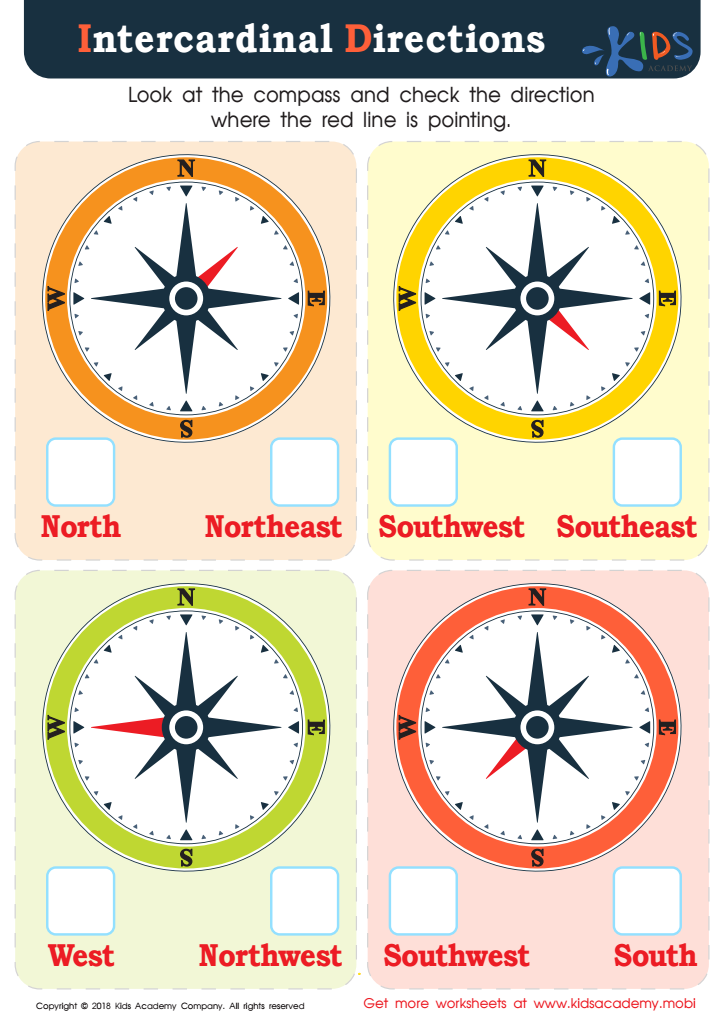
Intercardinal Directions Worksheet






Geography skills are essential for children aged 7-8 as they lay a foundational understanding of the world around them. At this age, children are naturally curious and eager to explore. Developing geography skills helps them make sense of their environment, promoting critical thinking about places, cultures, and human interactions.
Understanding geography encourages awareness of global diversity, fostering empathy and respect for different cultures and lifestyles. This is particularly important in our increasingly interconnected world, where children will encounter diverse perspectives throughout their lives. Moreover, geography skills help children develop vital skills like map reading, spatial awareness, and data interpretation, which are beneficial across various subjects, including math and science.
Incorporating geography into the curriculum enriches students' learning experiences and improves their problem-solving abilities and analytical thinking. As they engage with geography, children learn about weather, habitats, and resources, ultimately fostering responsible citizens aware of environmental issues.
Parents and teachers should prioritize geography education, not only to meet academic standards but to equip children with the knowledge and skills they need to navigate and appreciate their world. Ultimately, geography helps build informed, compassionate individuals ready to contribute positively to society.