Map reading Geography Worksheets for Ages 7-8
3 filtered results
-
From - To
Explore our engaging Map Reading Geography Worksheets designed for children ages 7-8! These interactive resources help young learners develop essential map skills while sparking their curiosity about geography. Kids will enjoy identifying landmarks, understanding symbols, and mastering basic map concepts through playful activities and illustrations. Our worksheets promote critical thinking and are suitable for both classroom use and at-home learning. Enhance your child's spatial awareness and navigational abilities, making geography fun and accessible! Perfect for educators and parents alike, these worksheets encourage exploration and foster a lifelong love of learning about the world around them. Download and start learning today!
 Assign to My Students
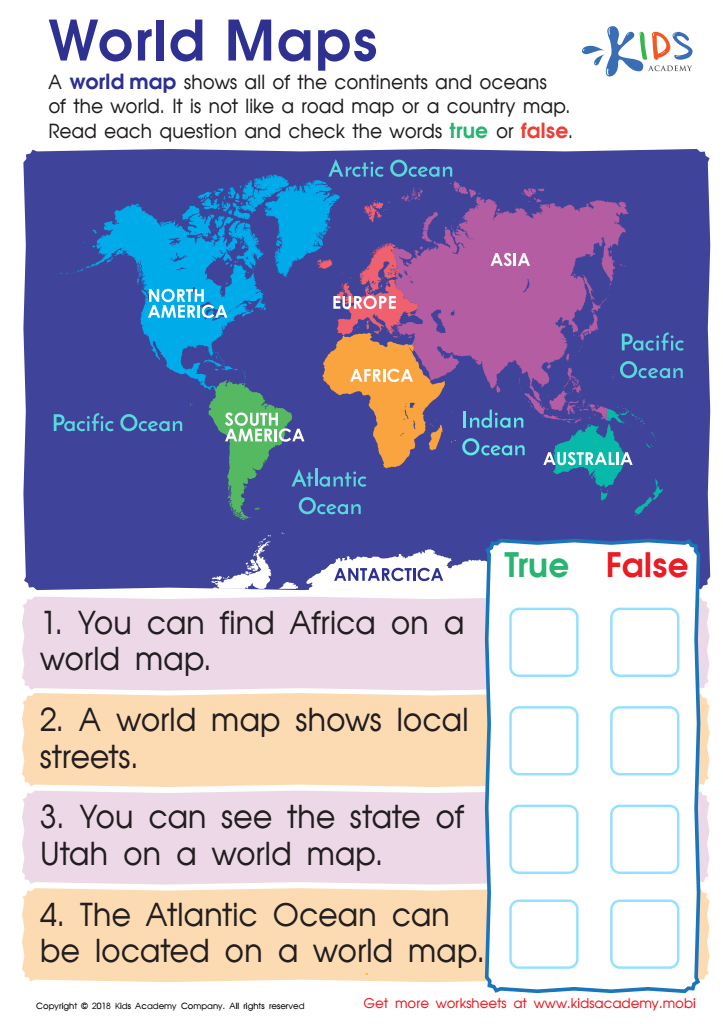
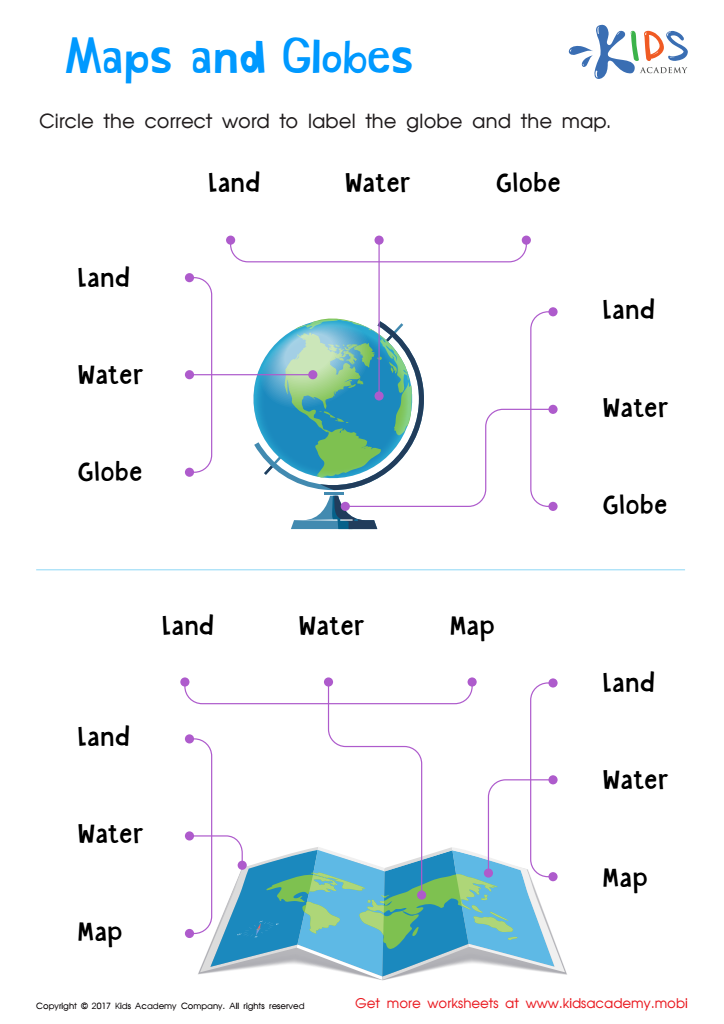
World Maps Worksheet
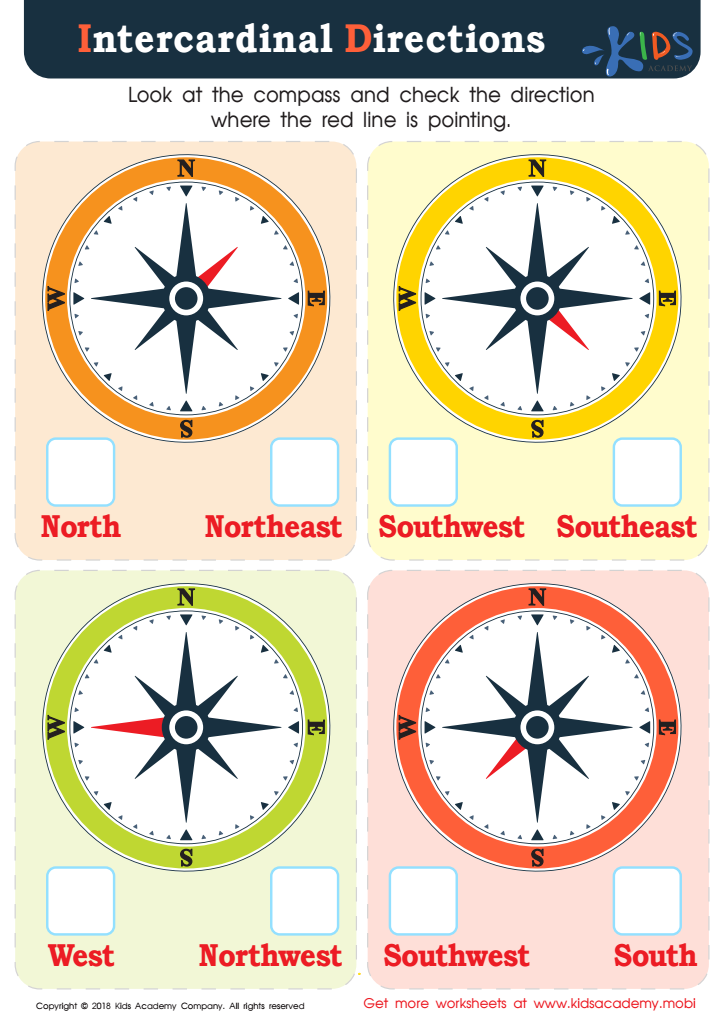
Intercardinal Directions Worksheet






Map reading geography is a crucial skill for children ages 7-8, as it lays the foundation for their understanding of the world around them. Learning to read maps enhances spatial awareness, enabling kids to grasp geographic relationships, such as distances, directions, and the location of various places. This skill fosters critical thinking and problem-solving abilities, encouraging children to navigate their environment effectively.
Furthermore, map reading introduces young learners to concepts like scale and symbols, deepening their appreciation for geography. This knowledge is essential as it connects their immediate surroundings to broader contexts, nurturing curiosity and exploration. In today's world, where global citizenship is vital, understanding maps equips children with the tools to comprehend various cultures, environmental issues, and world events.
For parents and teachers, engaging with map reading promotes active learning and can be an enjoyable, interactive experience. Activities like treasure hunts or mapping their local community can bolster enthusiasm for geography while promoting teamwork and communication skills. In summary, fostering map reading skills in early learners not only enriches their educational journey but also helps them develop lifelong skills for exploration and understanding in an increasingly interconnected world.