
Understanding history History Worksheets for Ages 7-8
7 filtered results
Difficulty Level
Grade
Age
-
From - To
Subject
Activity
Standards
Dive into the past with our "Understanding History" worksheets tailored for ages 7-8! These engaging and informative resources provide young learners with an exciting way to grasp historical concepts, develop critical thinking, and enhance their understanding of how past events shape the present. Perfect for classroom and home use, each worksheet is designed to inspire curiosity by using age-appropriate narratives, visual aids, and interactive exercises. “Understanding History” equips children with foundational skills and knowledge, paving the way for a lifelong interest in social studies. Spark curiosity about the past today! Explore more at Kids Academy!
Favorites
With answer key
Interactive
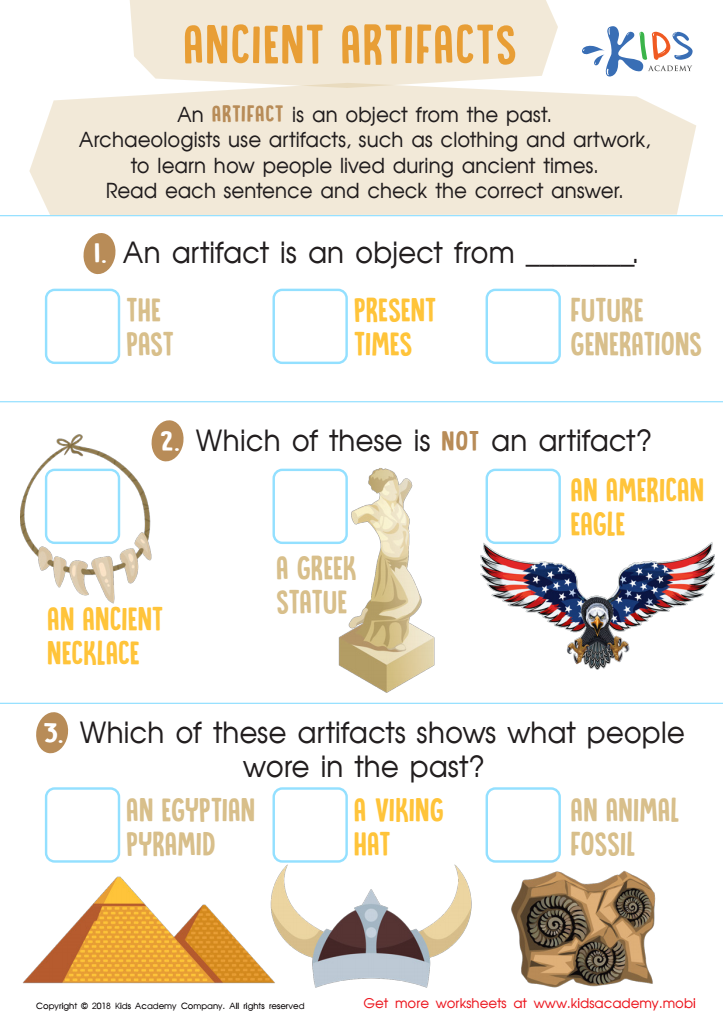
Ancient Artifacts Worksheet
This free worksheet helps kids understand ancient artifacts, from statues to necklaces to fossils. They'll read comprehension questions and select answers from multiple choice options, with pictures to help them grasp the concept. It's a great way for children to learn about artifacts and what they may look like.
Ancient Artifacts Worksheet
Worksheet
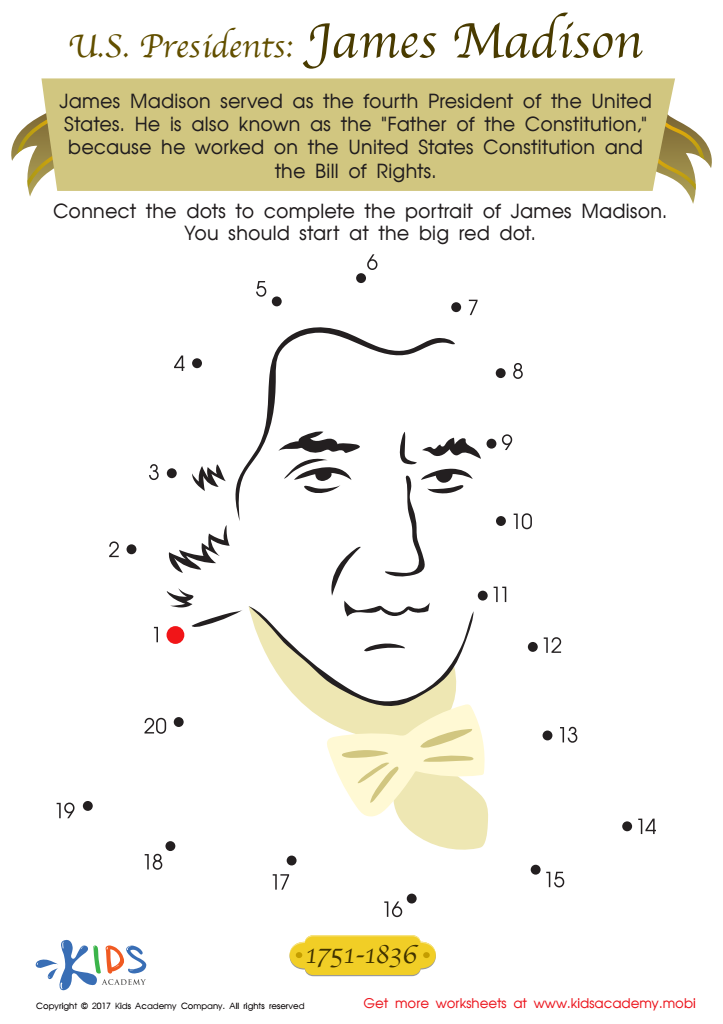
President Madison Printable
Introduce your child to the nation's fourth president, James Madison. This worksheet helps them learn about the "Father of the Constitution" and his contributions to American history. Discover Madison's legacy with your child today!
President Madison Printable
Worksheet
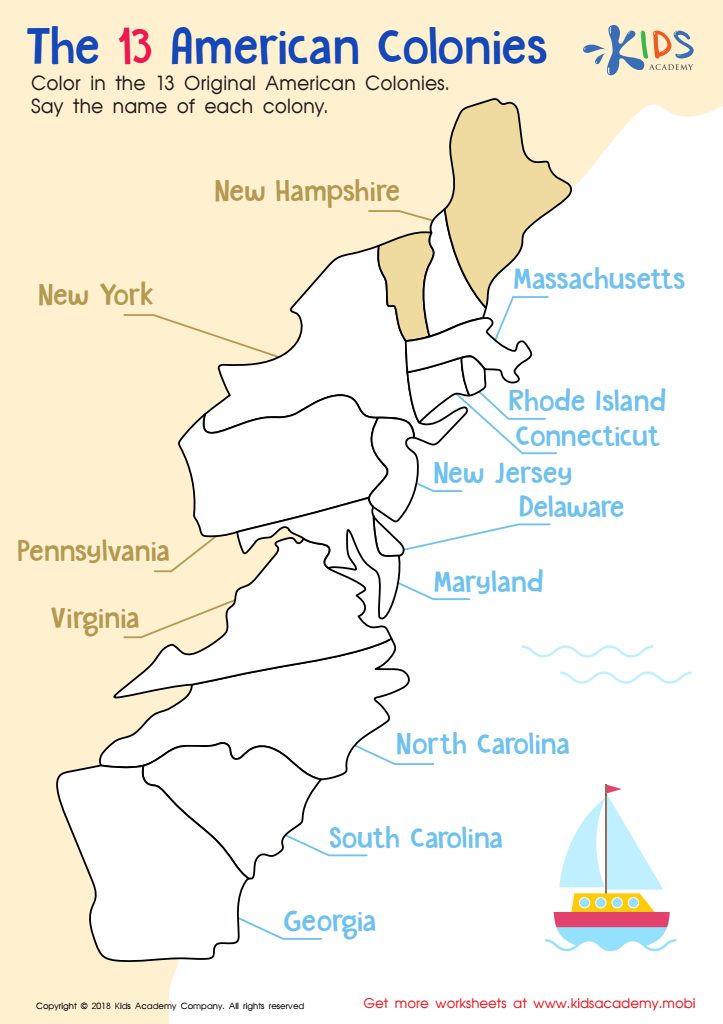
The 13 American Colonies Worksheet
Ensure kids are knowledgeable in maths, English, science, history, and geography. Test their American knowledge: Can they name the 13 Original American Colonies? Use the worksheet; have them color each colony and name it out loud.
Download (PDF)
 Assign to My Students
Assign to My Students
The 13 American Colonies Worksheet
Worksheet
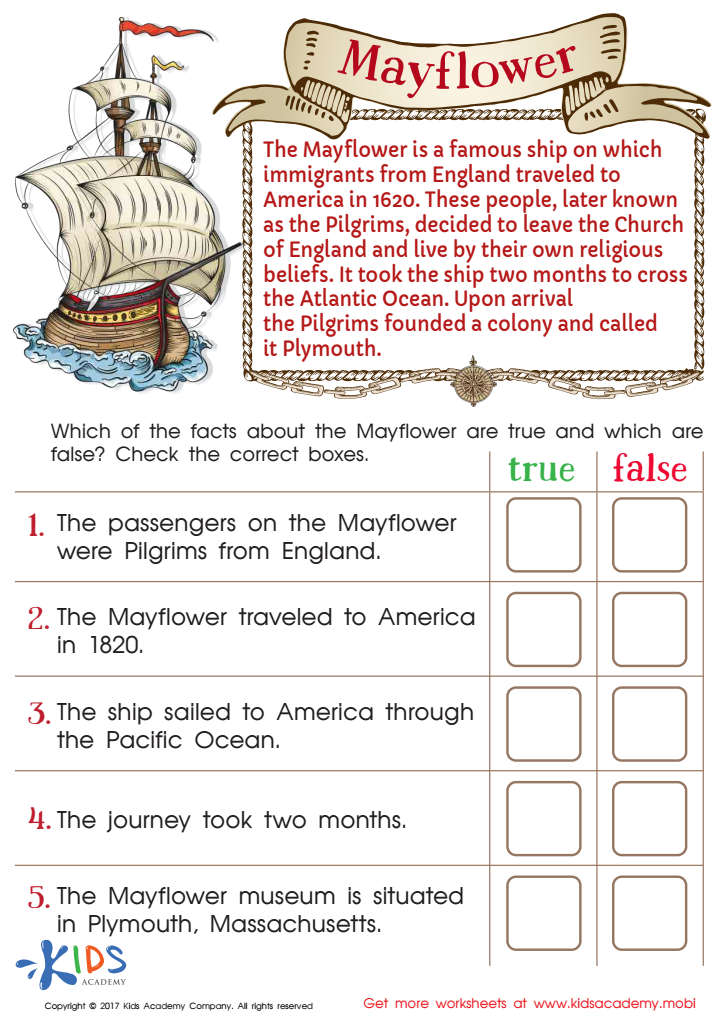
Free Mayflower Worksheet
Improve your child's knowledge of American history with this fun Mayflower worksheet! Have them read through and determine if each statement is true or false regarding the journey of the Mayflower. Download the free PDF and get started!
Free Mayflower Worksheet
Worksheet
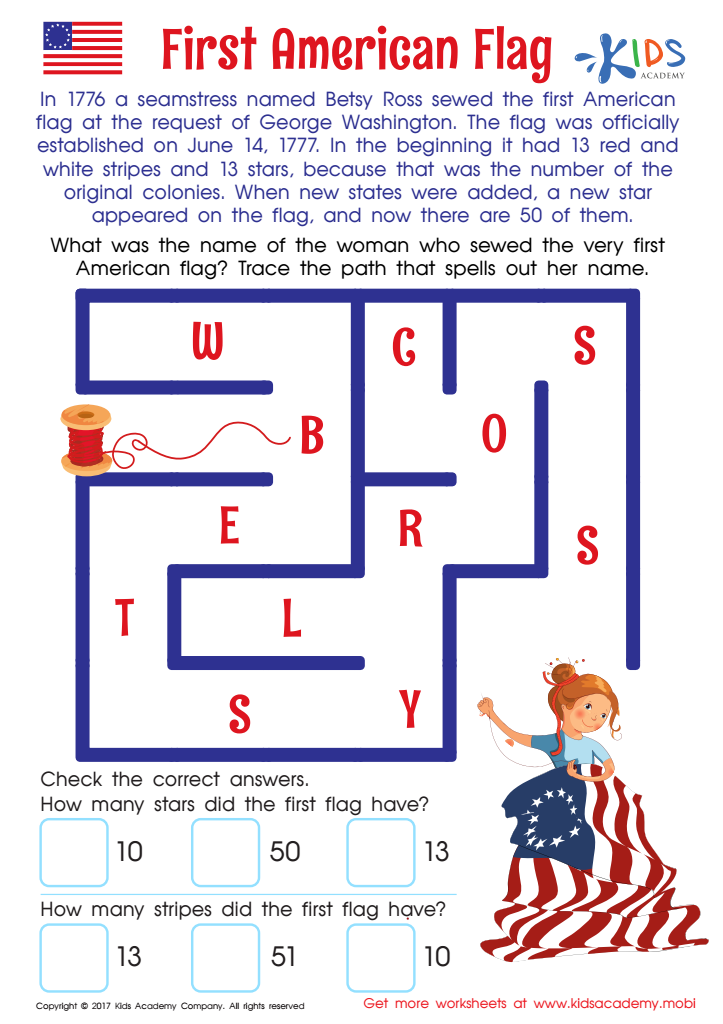
First American Flag Worksheet
Betsy Ross sewed the first American flag at the request of George Washington. This worksheet helps kids learn about this milestone in U.S. history, plus the design and origins of the flag.
First American Flag Worksheet
Worksheet
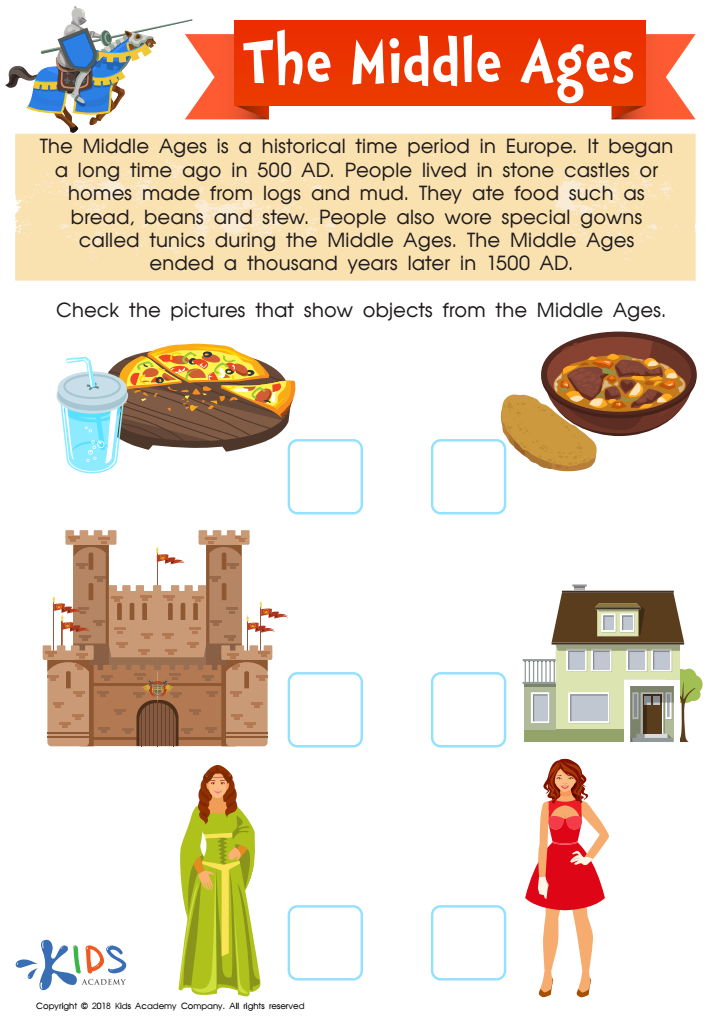
The Middle Ages Worksheet
History can be made exciting with this PDF! It encourages kids to compare and contrast the Middle Ages. They'll explore what people lived in, ate and wore back then, then compare those characteristics to modern day. Kids can check boxes next to pictures that represent the Middle Ages to complete the activity.
The Middle Ages Worksheet
Worksheet
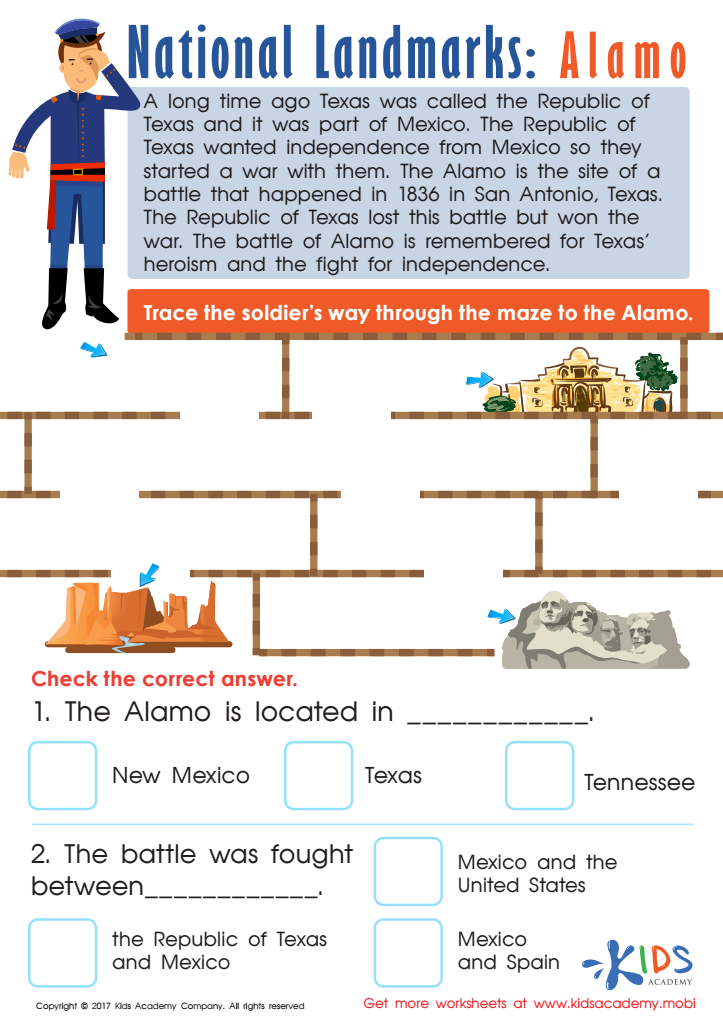
Alamo Printable Worksheet
Take your child on an educational journey to the Alamo! Our printable worksheet offers an interactive maze to explore the Republic of Texas and the fight for independence from Mexico.
Alamo Printable Worksheet
Worksheet
Join Kids Academy for Free
Who is primarily going to use this learning content?







Understanding history is crucial for children aged 7-8 because it lays the foundation for a well-rounded education and helps develop essential skills. At this formative age, children are naturally curious and open to new ideas, making it an ideal time to introduce them to the stories, events, and figures that have shaped our world.
First, learning about history helps children develop a sense of identity and belonging. By understanding the cultural, social, and familial heritage that history provides, children can appreciate their place in the world and the legacy they inherit. This fosters self-awareness and pride in their backgrounds.
Second, history lessons promote critical thinking and analytical skills. Examining historical events encourages children to ask questions, compare different perspectives, and assess the causes and consequences of actions. These intellectual skills are transferable and beneficial across all areas of learning.
Third, understanding history cultivates empathy and respect for others. By learning about the struggles, achievements, and experiences of diverse peoples, children grow to appreciate differences and understand the shared human experience, enhancing their social and emotional development.
In summary, a grasp of history enriches children's understanding of the world, equips them with vital skills, and promotes mutual respect, making it an essential part of early education.








