Critical Thinking Social Studies Worksheets for Ages 7-8 - Page 2
25 filtered results
-
From - To
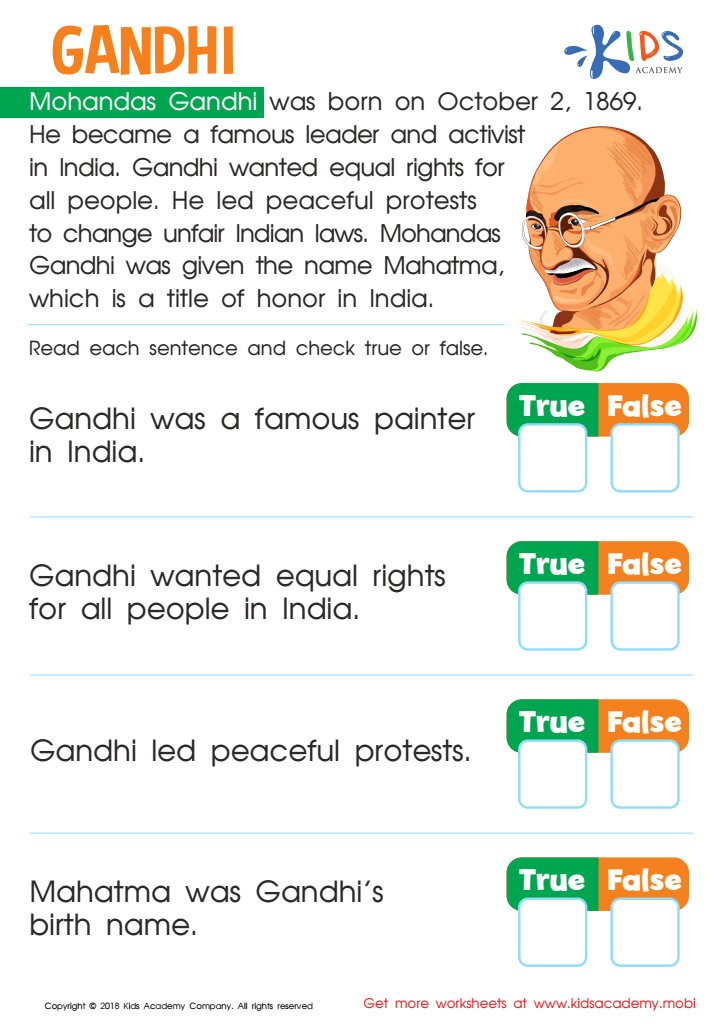
Gandhi Worksheet
 Assign to My Students







Critical thinking social studies are essential for children aged 7-8, as they form a cornerstone for both academic growth and personal development. At this stage, children are naturally inquisitive and open to exploring new ideas. Introducing them to critical thinking within the realm of social studies allows them to develop skills such as problem-solving, analysis, and logical reasoning. They start to understand societal structures, community roles, and historical contexts, which enhances their comprehension of the world around them.
Parents and teachers should care because these skills underpin successful lifelong learning and informed citizenship. Through engaging social studies content, young students learn to question information, consider multiple perspectives, and make reasoned decisions. These abilities are crucial for future academic success in all disciplines, as they promote deeper understanding over rote memorization.
Moreover, fostering critical thinking at this age helps children become responsible, empathetic individuals. They begin to appreciate cultural diversity, understand social justice, and recognize their role in their communities. This social awareness helps build a solid foundation for ethical reasoning and compassion.
Ultimately, teaching critical thinking in social studies invests in the development of perceptive, knowledgeable, and socially responsible individuals who can navigate a complex world thoughtfully and ethically. Parents and teachers are essential in guiding this process, shaping not just students' intellect but also their moral compass.








