Historical Knowledge Social Studies Worksheets for Ages 7-8 - Page 2
26 filtered results
-
From - To
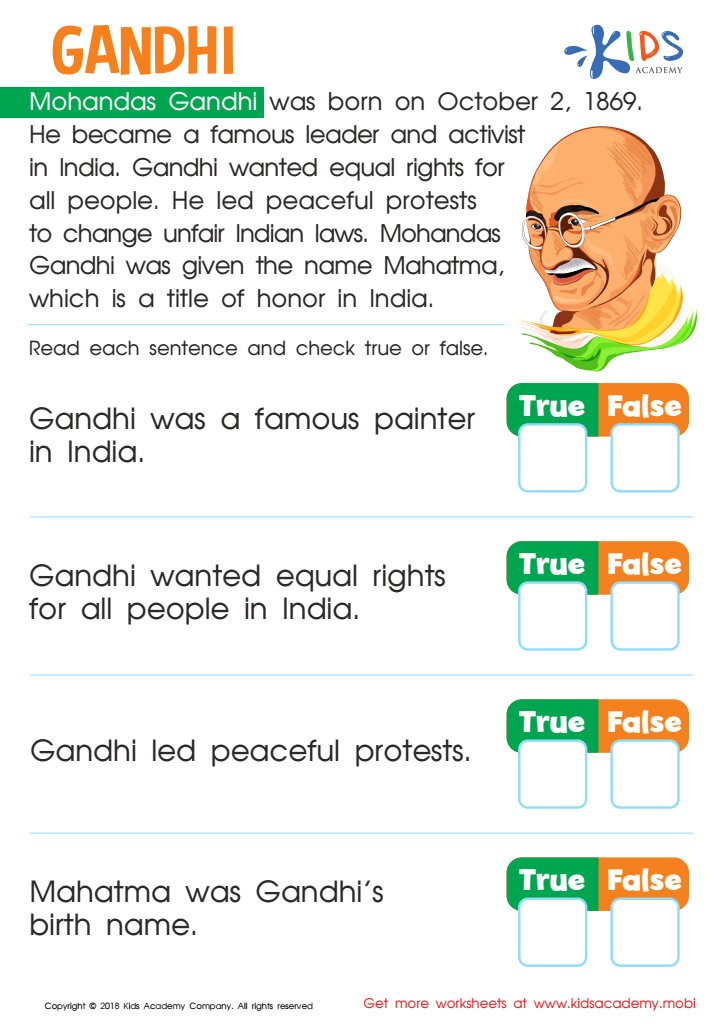
Gandhi Worksheet
 Assign to My Students
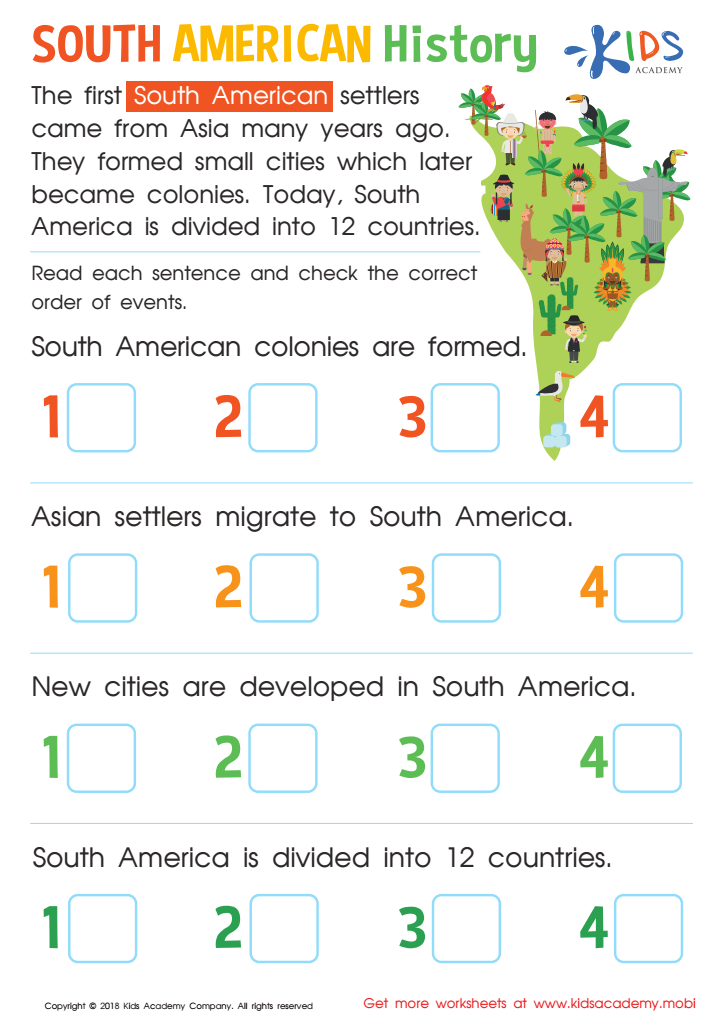
South American History Worksheet







.jpg)
Parents and teachers should care about historical knowledge in social studies for children aged 7-8 because it lays foundational skills and understandings that are crucial for their overall development. At this age, children are highly curious and eager to learn about the world around them. Introducing historical concepts helps them understand the context of their environment, develop critical thinking skills, and foster a sense of identity and belonging.
History provides narratives that explain how societies function, evolve, and interconnect. By learning about past events, cultures, and significant figures, young students can begin to appreciate diversity and cultivate empathy. This awareness can lead to a more inclusive mindset, as children recognize the different backgrounds and experiences of their peers.
Furthermore, historical knowledge introduces fundamental literacy and analytical skills. Storytelling in history enhances students’ reading and comprehension abilities, while activities like timelines and maps bolster their understanding of sequences and spatial relations. Encountering cause and effect in historical contexts helps them process and analyze information logically.
Lastly, fostering an early interest in social studies encourages lifelong curiosity and learning. When students grasp the importance of history, they are more likely to become informed citizens who can think critically about current events and actively participate in their communities. Thus, early exposure to historical knowledge is vital for personal growth and civic engagement.