
Map reading Social Studies Worksheets for Ages 7-8
3 filtered results
Difficulty Level
Grade
Age
-
From - To
Subject
Activity
Standards
Unlock the exciting world of geography with our Map Reading Social Studies Worksheets designed specifically for ages 7-8! These engaging resources help young learners develop essential map skills through fun activities that promote critical thinking and spatial awareness. Each worksheet encourages children to explore map symbols, directions, and scales, making it easier for them to navigate their surroundings. Ideal for classroom use or at-home learning, these worksheets support key educational standards while fostering curiosity about the world. Enhance your child’s knowledge of geography and empower their ability to interpret maps confidently with our thoughtfully crafted materials!
Favorites
With answer key
Interactive
 Assign to My Students
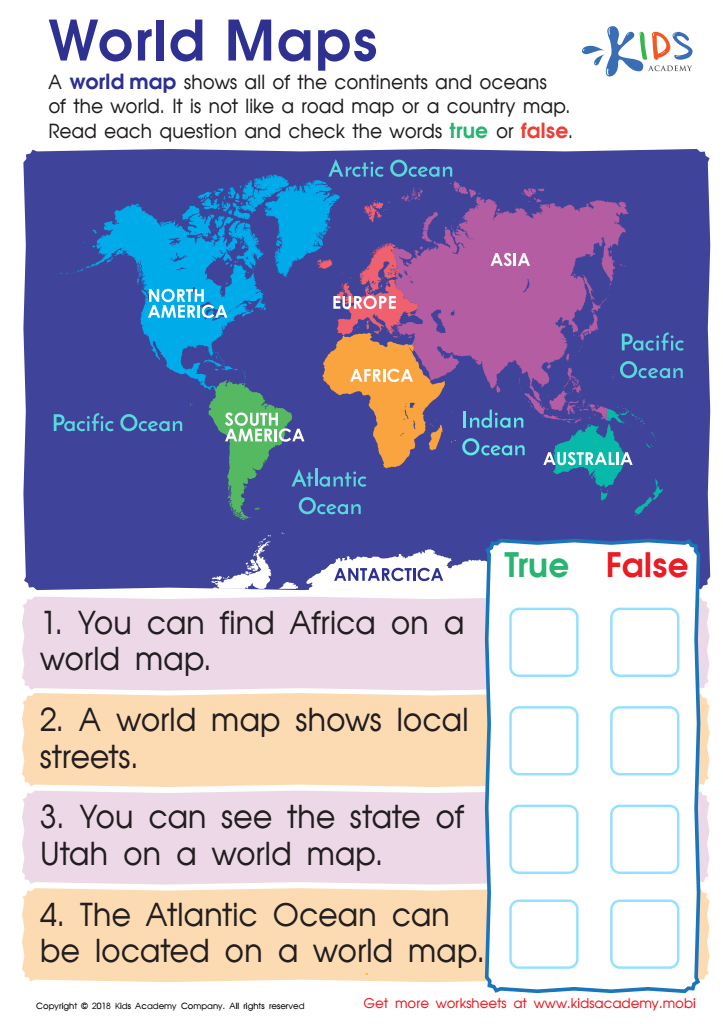
World Maps Worksheet
Help your young geographer learn about world maps. Show them that it displays all the oceans, continents and is distinct from other maps. Challenge them to answer the true/false questions on this free worksheet, and help them become a global citizen who understands the purpose of world maps.
World Maps Worksheet
Worksheet
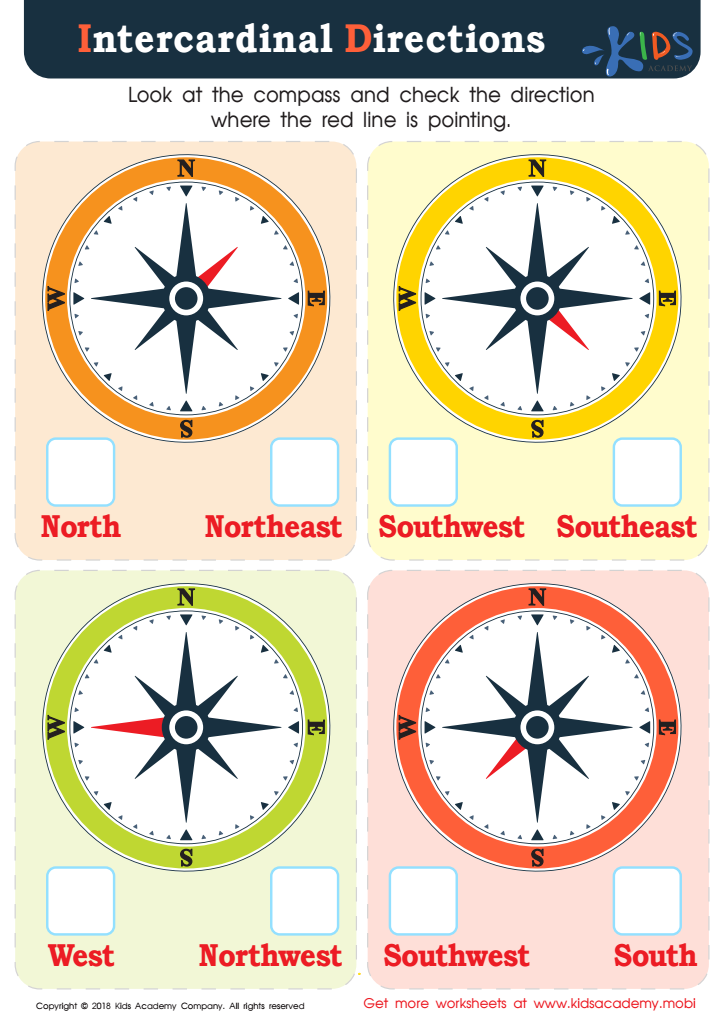
Intercardinal Directions Worksheet
Young students often don't get to practice cardinal and intercardinal directions in the digital age, but it's an important social studies and geography concept to learn. This PDF provides colorful compasses for them to practice with, giving them a real-world skill for common curriculum and independent living.
Intercardinal Directions Worksheet
Worksheet
Join Kids Academy for Free
Who is primarily going to use this learning content?




Map reading is a fundamental skill that encourages critical thinking and spatial awareness among children aged 7-8. For parents and teachers, promoting map reading in Social Studies fosters a deeper understanding of geography, culture, and global connections. By engaging with maps, children gain a concrete perspective on their immediate surroundings and the world beyond, enhancing their ability to visualize information and relationships.
Learning to read maps helps young learners develop essential skills such as navigating directions, understanding symbols, and interpreting various scales. These abilities not only empower children to explore their environment confidently but also encourage curiosity about diverse cultures, landscapes, and historical events. In an increasingly globalized world, cultivating these skills early can inspire an appreciation for different communities and their significance.
Moreover, map reading fosters collaboration and communication when children work together to solve geographic puzzles or engage in projects. This social interaction reinforces their learning and potentiates a sense of teamwork. By prioritizing map reading in Social Studies, parents and teachers can effectively lay the foundation for essential life skills, promoting informed, engaged, and responsible citizens who are capable of navigating the complexities of their world.








