Enhance your child's writing skills with our engaging Grammar Practice Writing Worksheets for Ages 7-8. These printable worksheets are designed to help young learners master key grammar concepts through fun and interactive exercises. Focusing on crucial areas such as proper punctuation, capitalization, sentence structure, and verb usage, these worksheets guide children in crafting clear and correct sentences. Ideal for both home and classroom use, the activities provide effective practice to build the foundational skills necessary for confident, proficient writing. Visit Kids Academy to explore and download these invaluable resources for your young writer today.

Check out this FREE Trial Lesson on Writing for age 7-8!

Read Words in Order

Favorites
With answer key
Interactive
  • 7-8
  • Grammar practice
  • Writing
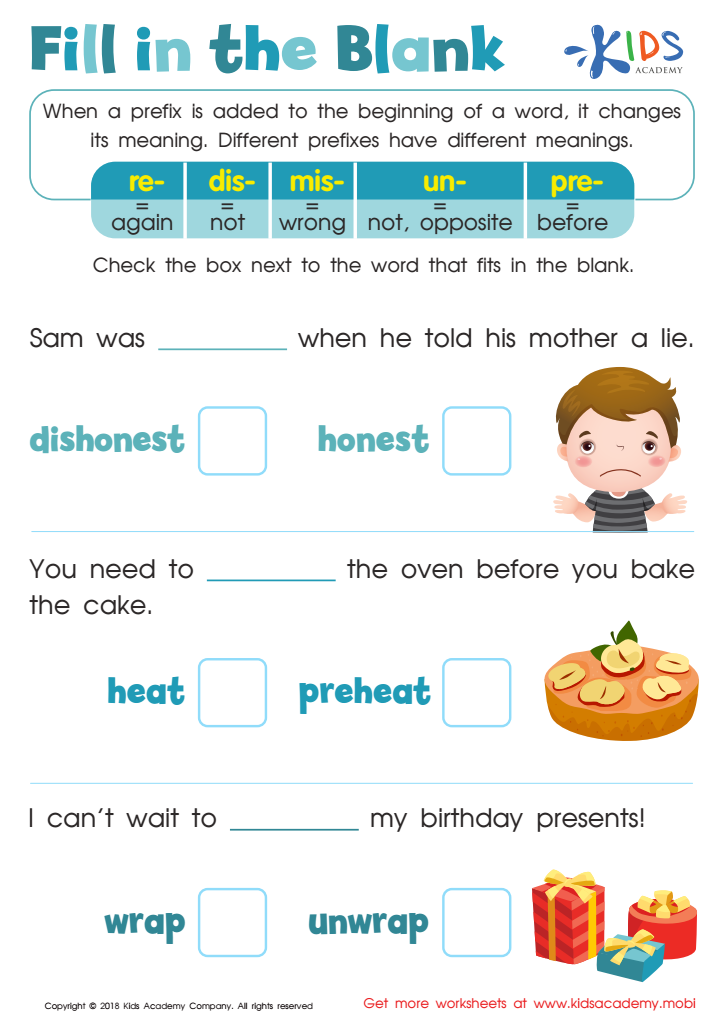
Reading: Fill in the Blank Worksheet

Reading: Fill in the Blank Worksheet

Students can practice understanding the meaning of common prefixes with this worksheet. They read sentences and pick the correct word with the appropriate prefix to complete it. Downloadable and a great addition to reading and vocabulary resources, this helps improve comprehension with mastery of the skill!
Reading: Fill in the Blank Worksheet
Worksheet
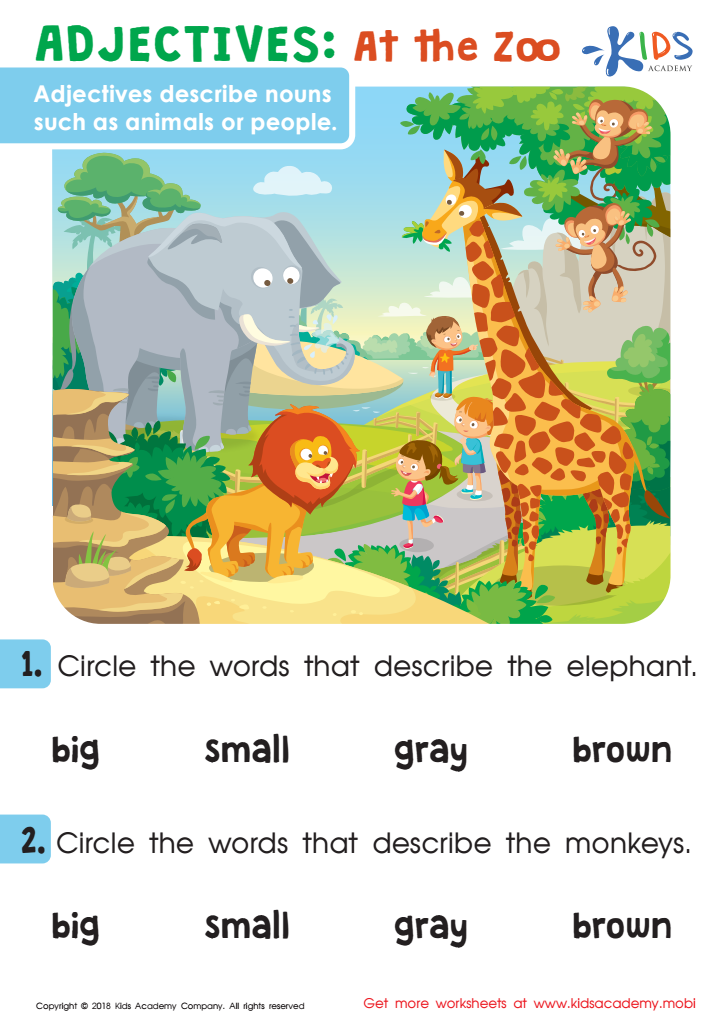
Adjectives: At The Zoo Worksheet

Adjectives: At The Zoo Worksheet

Take your kids to the zoo and ask them about their favorite activities and animals. This worksheet is a great way for kids to learn about adjectives. Explain that adjectives describe nouns like people or animals (e.g. big, tall, dark). Look at the printout with your kids and help them circle words that describe the animals in the picture.
Adjectives: At The Zoo Worksheet
Worksheet
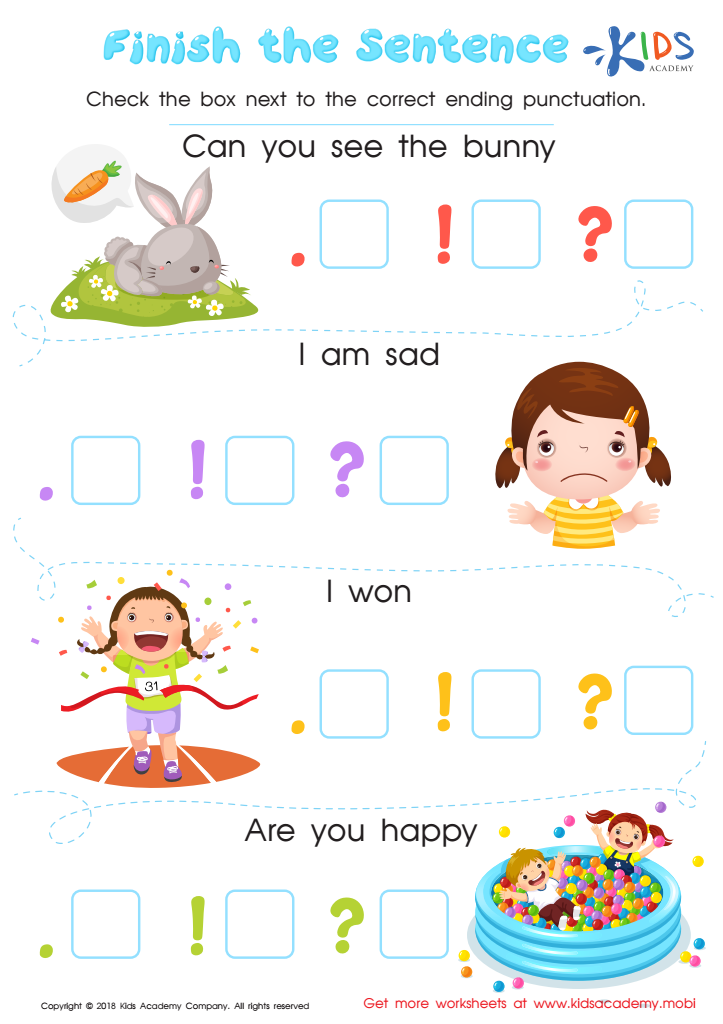
Finish the Sentence Worksheet

Finish the Sentence Worksheet

If your students have difficulty with punctuation, have them read sentences aloud and check the box next to the correct ending punctuation with this simple worksheet. Punctuation signals the tone and meaning of sentences. It helps students understand what is being communicated.
Finish the Sentence Worksheet
Worksheet
Assessment: Make a Sentence Worksheet

Assessment: Make a Sentence Worksheet

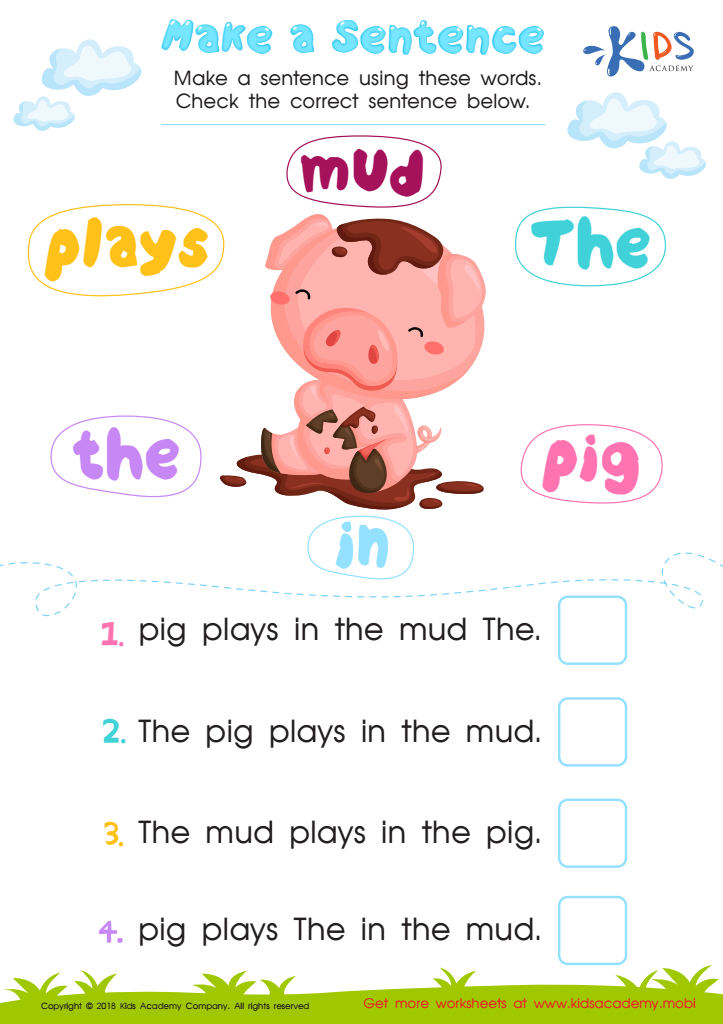
Help your kids identify the animal in the printout. Read the words in the bubbles and then read the four sentences in the options 1 – 4. Ask them to check the box with the correct sentence.
Assessment: Make a Sentence Worksheet
Worksheet
Start the Sentence Worksheet

Start the Sentence Worksheet

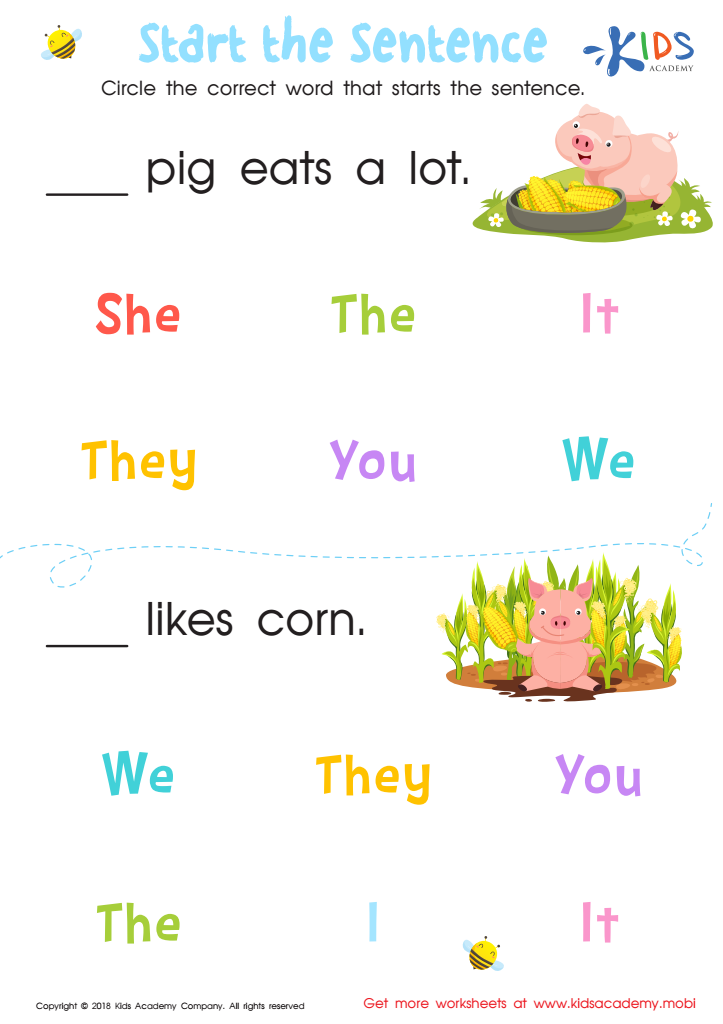
Test your students' understanding of sentences with this easy worksheet. Ask them to read the sentences and circle the correct word that starts each. This will show how well their lessons have paid off and if they can construct short simple sentences.
Start the Sentence Worksheet
Worksheet
Adjectives in Sentences Worksheet


Adjectives in Sentences Worksheet

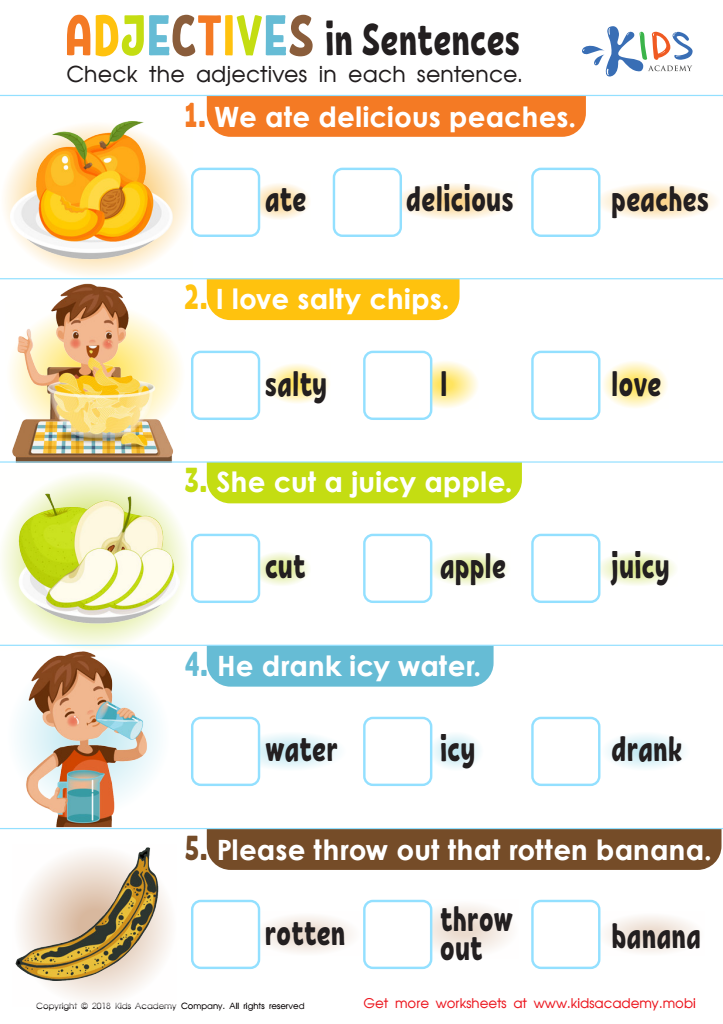
Our learners can find it hard to use writing to add detail, but adjectives can help. With this fun worksheet, kids can identify adjectives that describe food and drink. Guide them through each sentence, discussing the words and having them choose the one that gives information about the food/drink.
Adjectives in Sentences Worksheet

Worksheet


Grammar practice is essential for children aged 7-8 as it lays a crucial foundation for their future communication skills. At this developmental stage, students begin to grasp the basic structures of language, which play a significant role in their overall learning process. Proper grammar usage enhances their ability to express ideas clearly and accurately, both in speech and writing.

For parents and teachers, focusing on grammar practice can improve reading comprehension and writing abilities, equipping children with the tools they need to perform well academically. Understanding grammar rules helps students avoid confusion and miscommunication, enabling them to construct meaningful, coherent sentences.

Furthermore, early exposure to good grammar can foster a sense of confidence and curiosity in young learners, encouraging them to explore language more deeply. Grammar practice also aids in vocabulary development, as children learn new words and how to use them appropriately in context.

In summary, parents and teachers should prioritize grammar practice for ages 7-8 because it supports essential academic skills, enhances communication abilities, and fosters a love for learning. Investing time in grammar at an early age can have long-lasting positive effects on a child's educational journey and personal growth.