Reading comprehension Punctuation Worksheets for Ages 7-8
6 filtered results
-
From - To
Enhance your child's reading comprehension skills with our engaging Punctuation Worksheets designed specifically for ages 7-8! These printable worksheets allow young learners to practice essential punctuation rules while improving their understanding of how punctuation affects the meaning of sentences. Featuring a variety of fun exercises, children will tackle diverse reading passages and related questions, making learning both interactive and enjoyable. By integrating punctuation practice into reading comprehension activities, kids will not only boost their writing skills but also develop a stronger ability to grasp context and content. Explore our thoughtfully crafted worksheets and empower your child’s literacy journey today!
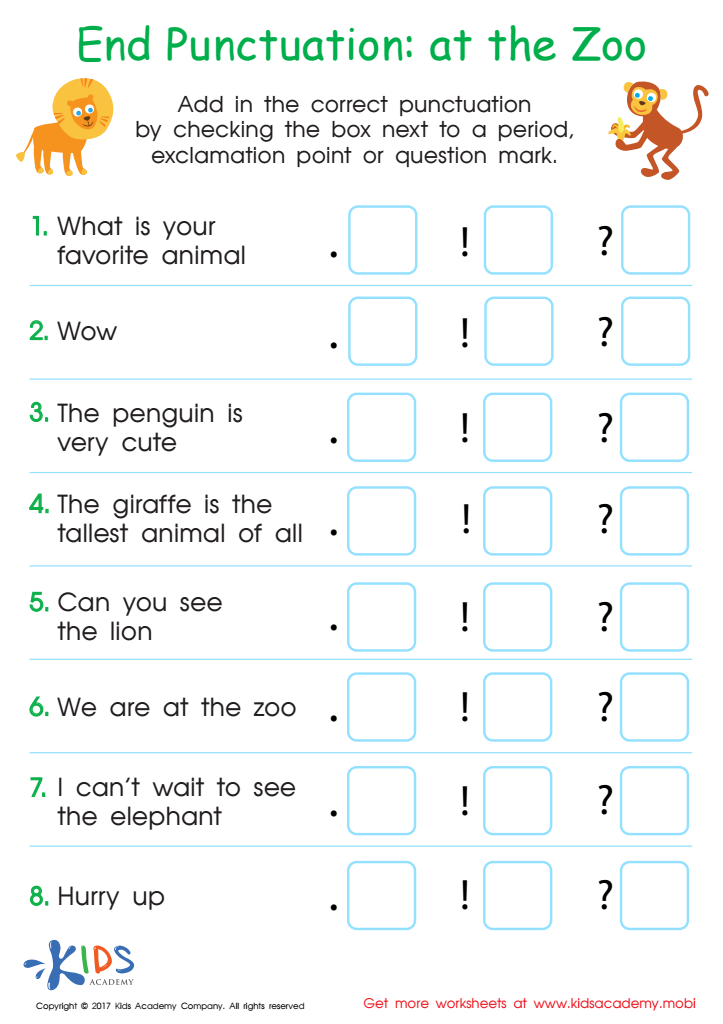
End Punctuation: At the Zoo Worksheet
 Assign to My Students
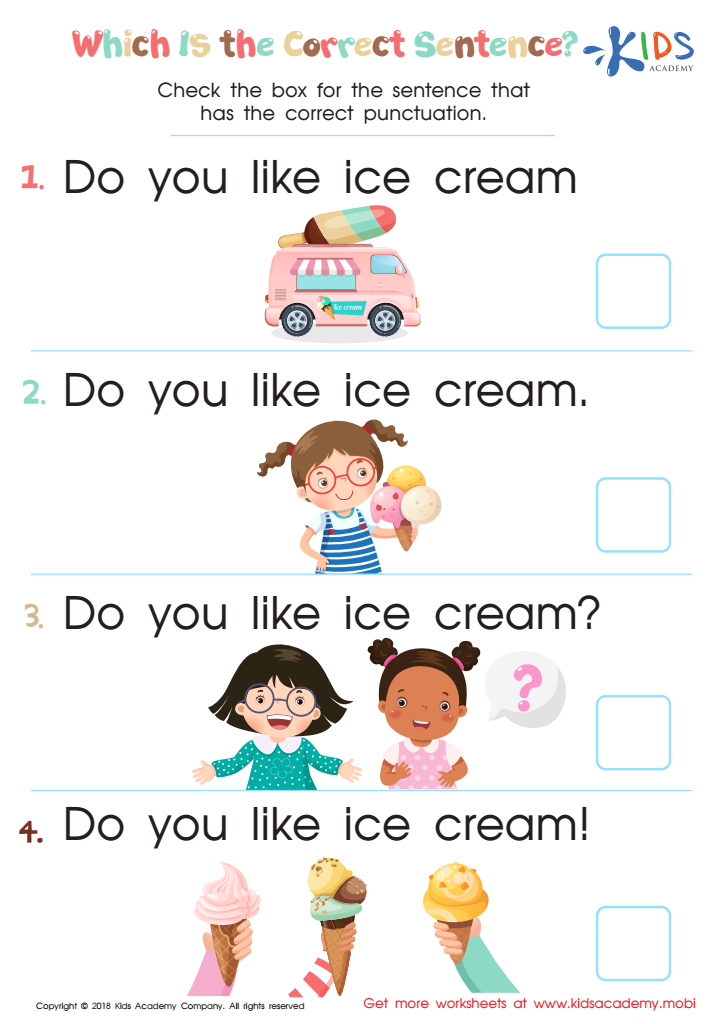
Which is the Correct Sentence? Worksheet
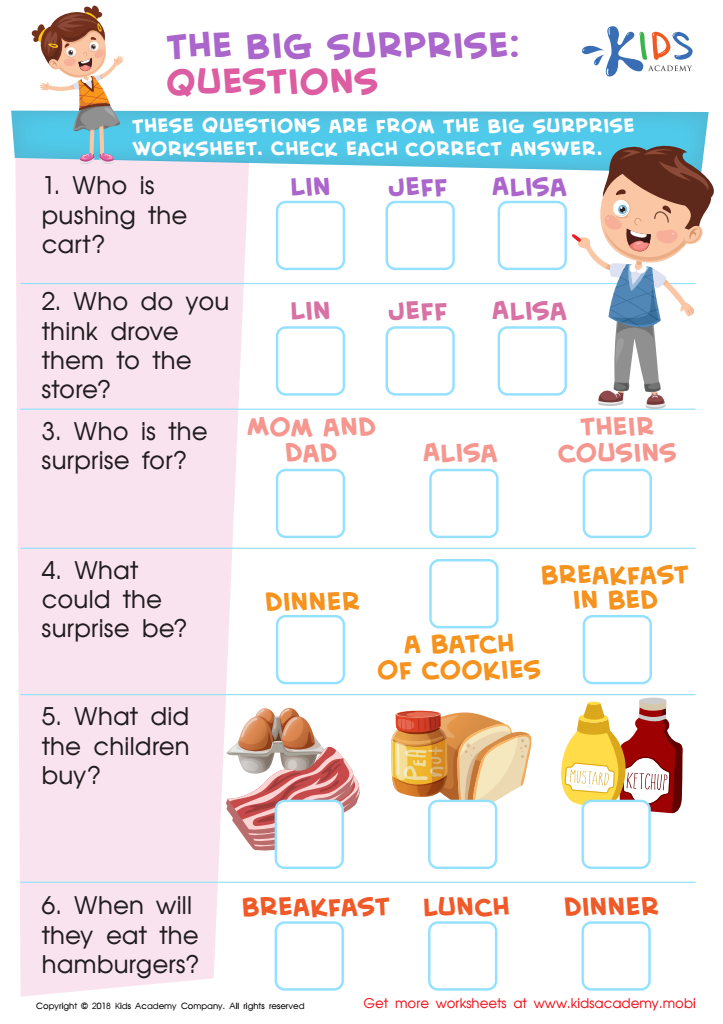
The Big Surprise: Questions Worksheet
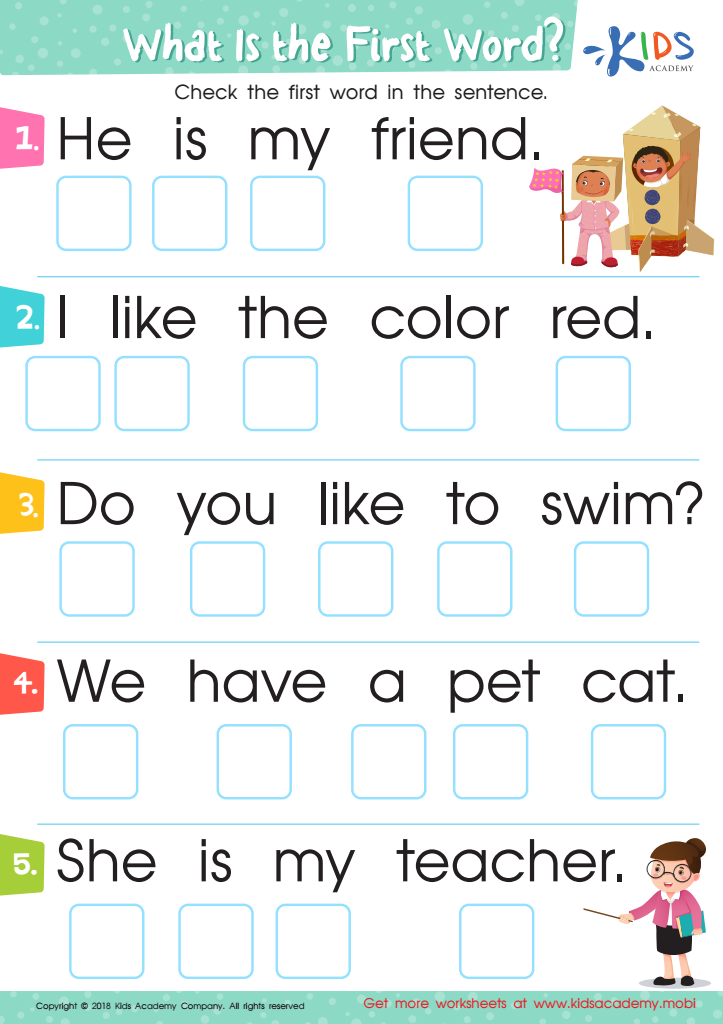
What is the First Word? Worksheet
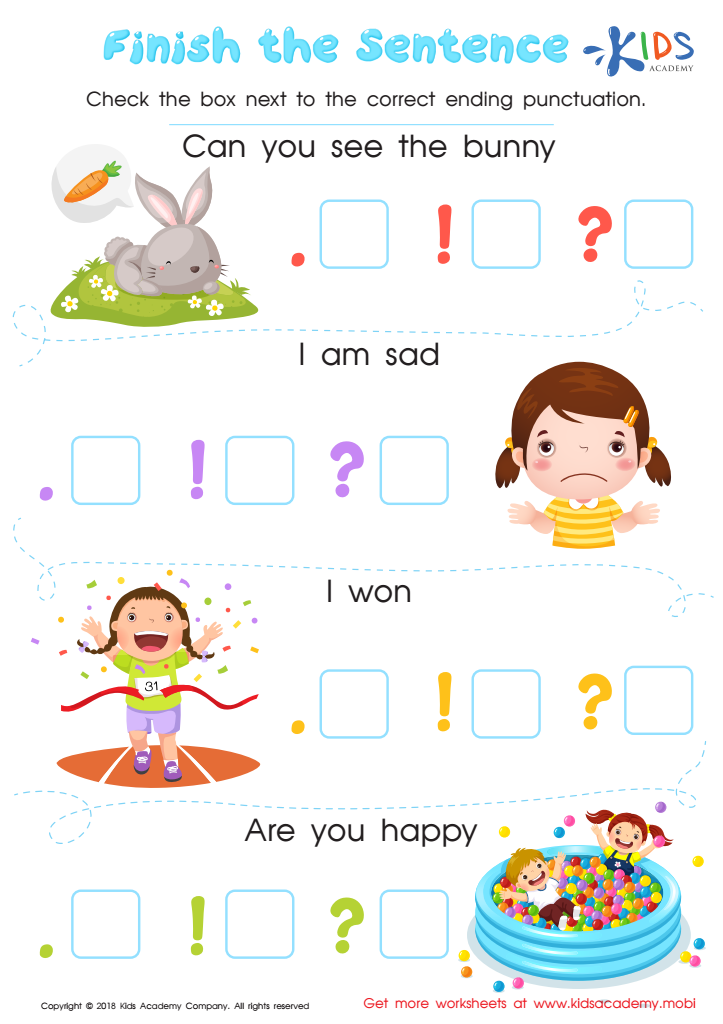
Finish the Sentence Worksheet
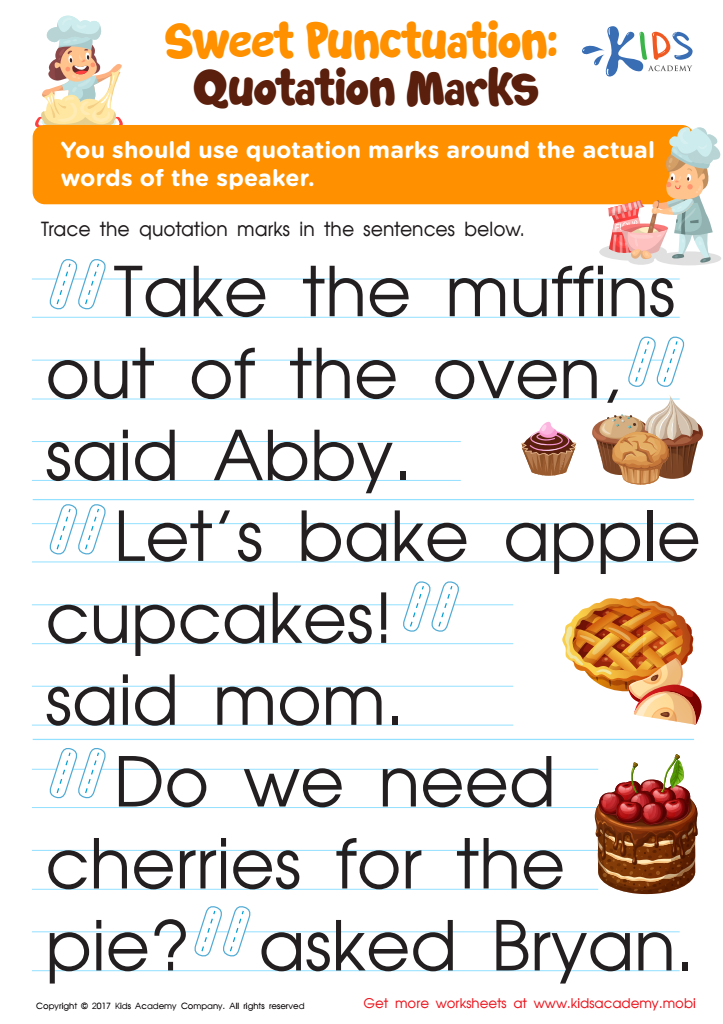
Commas and Quotation Marks Worksheet







Reading comprehension is a crucial skill for children ages 7-8, as it serves as the foundation for their academic success and overall cognitive development. At this age, children transition from learning to read to reading to learn, making it essential for them to fully understand texts across various subjects. Engaging with texts enables them to think critically, make connections, and grasp complex ideas, which are vital for future learning.
Punctuation plays a significant role in reading comprehension. Proper punctuation aids children in discerning the meanings of sentences, understanding the structure of the text, and grasping the intended tone and emotions conveyed by the author. For example, punctuation marks like commas and periods indicate pauses and relationships between ideas, guiding readers through the flow of information.
When parents and teachers prioritize reading comprehension and punctuation, they equip children with key literacy skills, enhancing their confidence and enjoyment of reading. This understanding fosters a lifelong love for literature and learning, making reading a valuable tool for both personal growth and academic achievement. Consequently, nurturing these skills ensures that children are not only proficient readers but also effective communicators, paving the way for success in school and beyond.








