Handwriting improvement ABC Letters Worksheets for Ages 7-9
3 filtered results
-
From - To
Boost your child's handwriting skills with our engaging "Handwriting Improvement ABC Letters Worksheets" designed specifically for ages 7-9. These meticulously crafted worksheets provide a fun and interactive way for children to practice writing uppercase and lowercase letters. Each worksheet focuses on improving fine motor skills, letter recognition, and proper letter formation, essential for developing strong handwriting abilities. With a variety of exercises, including tracing, free writing, and creative activities, kids will enjoy enhancing their penmanship while building confidence. Perfect for parents and educators alike, these worksheets make handwriting practice enjoyable and effective. Start your child's journey towards better handwriting today!
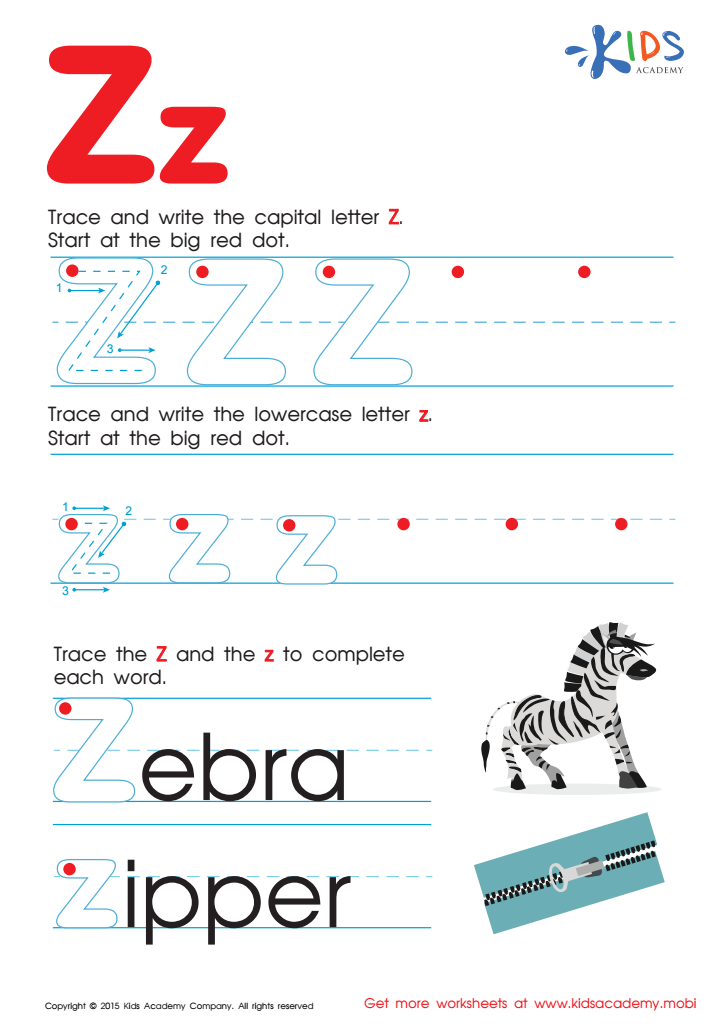
Letter Z Tracing Page
 Assign to My Students










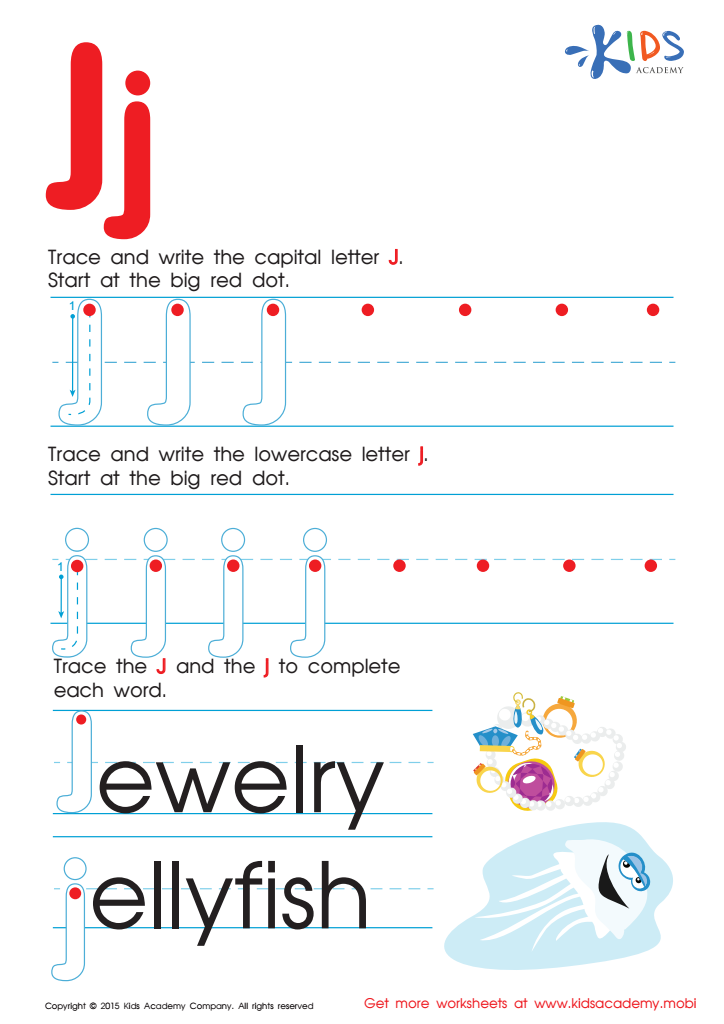
Letter J Tracing Page
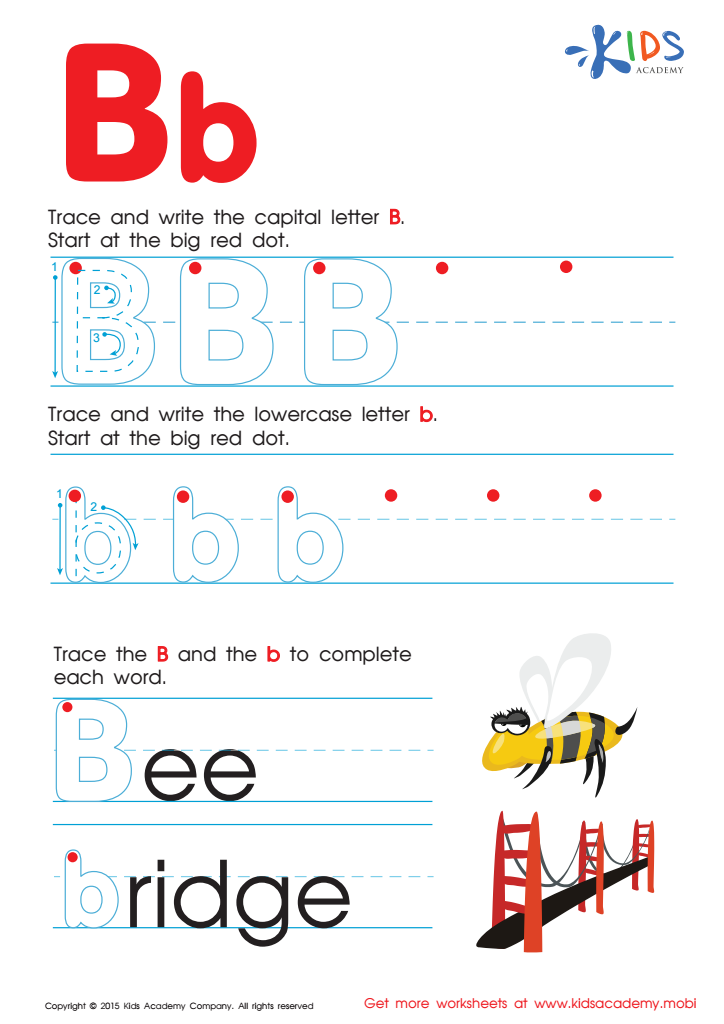
Letter B Tracing Page







Handwriting improvement in children aged 7-9 is crucial for several reasons. During this developmental stage, students are refining their fine motor skills, which are essential for many academic tasks. Clear and legible handwriting not only fosters effective communication but also builds confidence in young learners. Poor handwriting can lead to frustration and lower self-esteem when children struggle to express their thoughts on paper.
Furthermore, improved handwriting can enhance overall academic performance. Children are often judged on the presentation of their work, and neat handwriting can significantly impact grades. For teachers, encouraging handwriting improvement equips students with critical skills needed for standardized testing and other assessments.
Moreover, today's digital age doesn't negate the importance of handwriting. While typing is common, handwritten skills are still essential for note-taking, exams, and personal expression. Handwriting also promotes cognitive development; the process of forming letters and words strengthens brain connections related to memory and learning.
In summary, investing time and resources into handwriting improvement nurtures essential academic skills, boosts self-esteem, and cultivates a lifelong ability to communicate effectively, making it a key focus for both parents and teachers.







