Phonics Skills Consonant Blends Worksheets for Ages 7-9
4 filtered results
Difficulty Level
Grade
Age
-
From - To
Subject
Activity
Standards
Unlock reading success with our Phonics Skills Consonant Blends Worksheets designed for ages 7-9. These expertly crafted worksheets help young learners master tricky consonant blends, boosting their decoding abilities and reading fluency. Each engaging activity reinforces essential phonics skills, from initial and final blends to complex word practices. Our colorful, fun worksheets support classroom curricula and homeschooling, ensuring comprehensive phonics mastery. Perfectly tailored to build confidence and enhance literacy, these resources are a game-changer in early education. Empower your child's reading journey—explore our Phonics Skills Consonant Blends Worksheets today!
Favorites
With answer key
Interactive
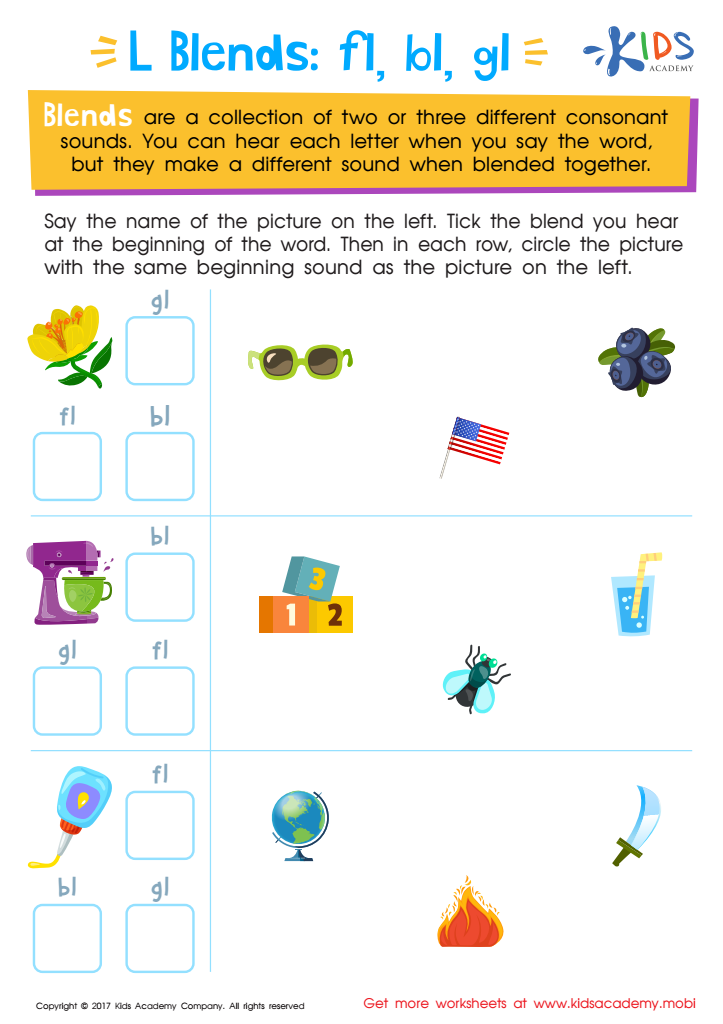
Blending Consonants: "Fl", "Bl" and "Gl" Printable
Help your child master consonant blends Fl, Bl, and Gl with this printable worksheet. Find words associated with the pictures and learn to better understand the difference between consonant blends. Vibrant images motivate and aid in learning. Download now for improved phonics success!
 Assign to My Students
Blending Consonants: "Fl", "Bl" and "Gl" Printable
Worksheet
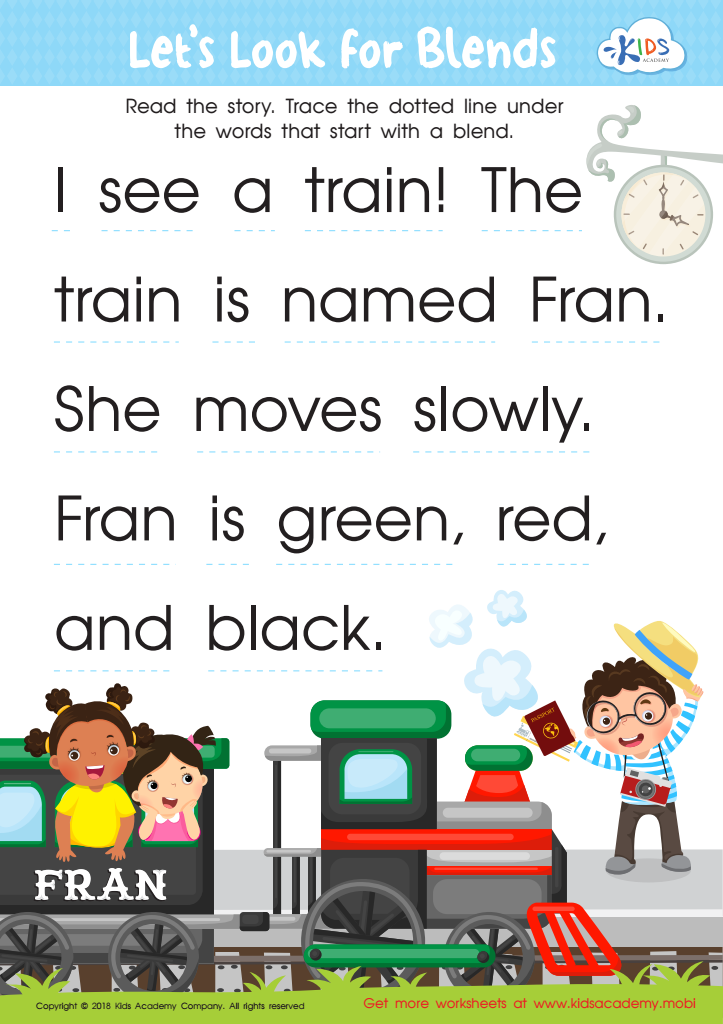
Let's Look for Blends Worksheet
Does your child love trains? Get them to read the story or help them read it aloud. Ask them to trace the words that start with blends on the dotted lines. This exercise will help them improve their blend-identifying skills!
Let's Look for Blends Worksheet
Worksheet
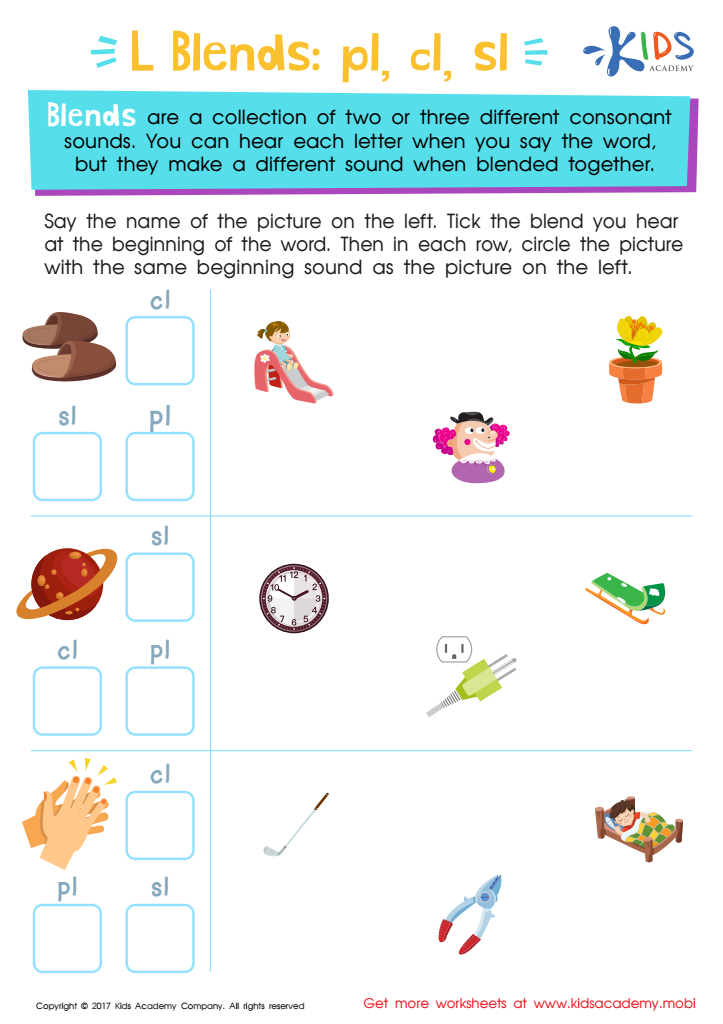
L Blends: "Pl", "Cl" and "Sl" Printable
This printable worksheet will help your child recognize and identify the Pl, Cl, and Sl consonant blends, sound them out, and identify them in print. Improve your child's reading and writing skills with fun and colorful phonics practice!
L Blends: "Pl", "Cl" and "Sl" Printable
Worksheet
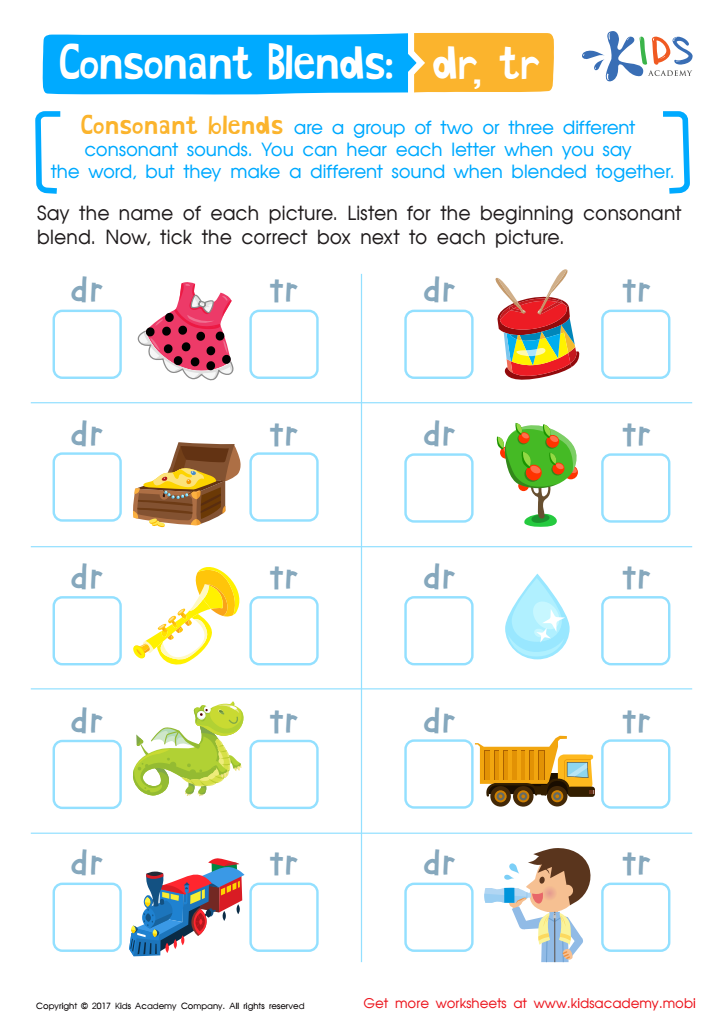
Consonant Blends: "Dr" and "Tr" Printable
Pictures of the words provide a visual cue, and sound-outs help with auditory cues.
Consonant Blends: "Dr" and "Tr" Printable
Worksheet
Join Kids Academy for Free
Who is primarily going to use this learning content?





Phonics skills, specifically understanding consonant blends, are fundamental for children aged 7-9 as they form the building blocks for effective reading and writing. During these formative years, grasping the concept of consonant blends (clusters of two or more consonants, like "bl" in "blue" or "st" in "stop") helps in decoding unfamiliar words quickly and accurately. This proficiency enhances reading fluency, allowing children to recognize words automatically rather than sounding them out each time, thereby fostering comprehension and a love for reading.
For parents wondering why this matters, strong phonics skills established early can translate to greater academic success across all subjects. Comprehending written instructions or story problems in math, for example, becomes more manageable when children's reading skills are robust.
Teachers should equally value these skills as they contribute to a smoother educational progression. Students with solid phonics skills can tackle more complex texts and engage in enriching classroom discussions, reducing frustration and promoting confidence. Moreover, poor reading abilities can impede learning speed and interest, causing long-term educational disadvantages. Thus, emphasizing consonant blends is integral to nurturing proficient, enthusiastic readers who are well-prepared for future academic challenges.