
Alphabetical understanding Alphabet Worksheets for Ages 7-9
3 filtered results
Difficulty Level
Grade
Age
-
From - To
Subject
Activity
Standards
Unlock the joy of learning with our Alphabetical Understanding Worksheets designed specifically for ages 7-9! These engaging printables help young learners master alphabet skills through fun activities and exercises. Our worksheets focus on important concepts like alphabetical order, sorting letters, and recognizing patterns, setting a solid foundation for literacy. Ideal for classrooms or homeschooling, these resources promote independent learning while enhancing cognitive development. Tailored to meet educational standards, our user-friendly format makes it easy for children to improve their comprehension and fluency in an enjoyable way. Explore our collection and support your child's journey to becoming an accomplished reader today!
Favorites
With answer key
Interactive
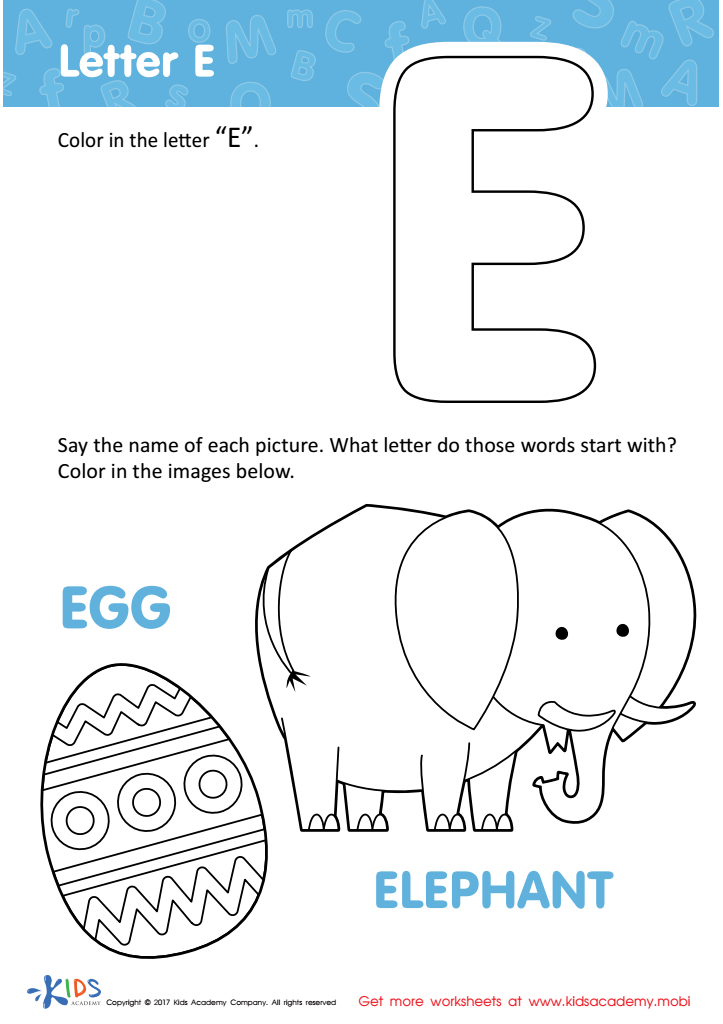
Letter E Coloring Sheet
Coloring pages are great for teaching kids the alphabet and words! This "E" page features a cute elephant and Easter egg. Kids will love it and learn the letter "E" at the same time. 80 words
Download (PDF)
 Assign to My Students
Assign to My Students
Letter E Coloring Sheet
Worksheet
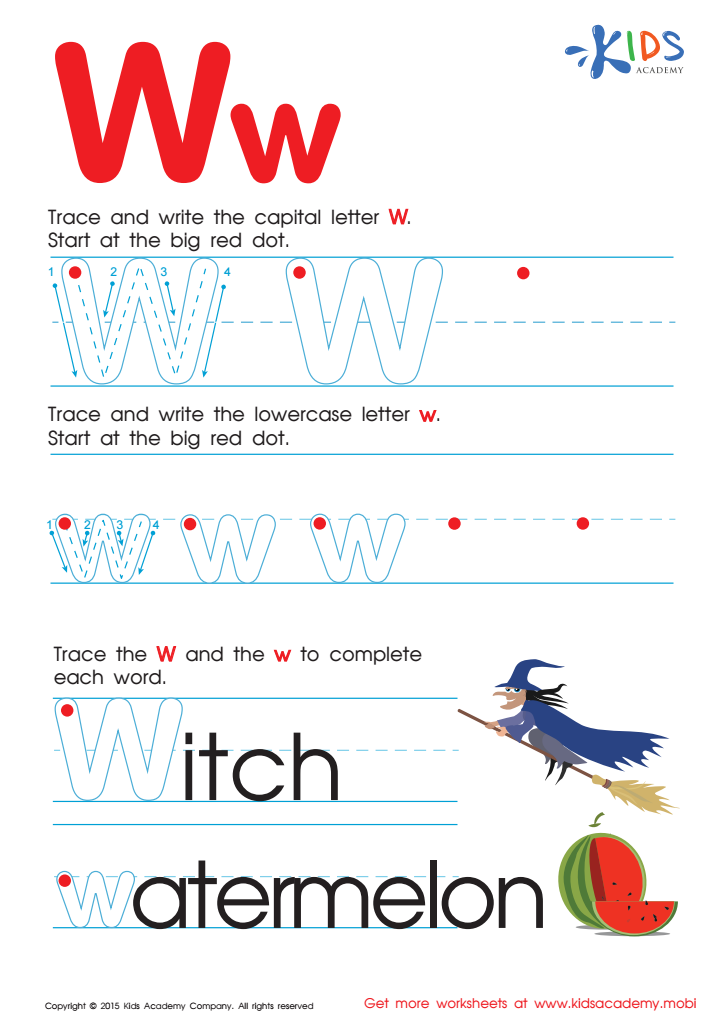
Letter W Tracing Page
Trace and write the capital and lowercase letter W with this free letter tracing worksheet by Kids Academy. Complete the words "Witch" (capital) and "watermelon" (lowercase). Check out our other kindergarten alphabet worksheets!
Letter W Tracing Page
Worksheet
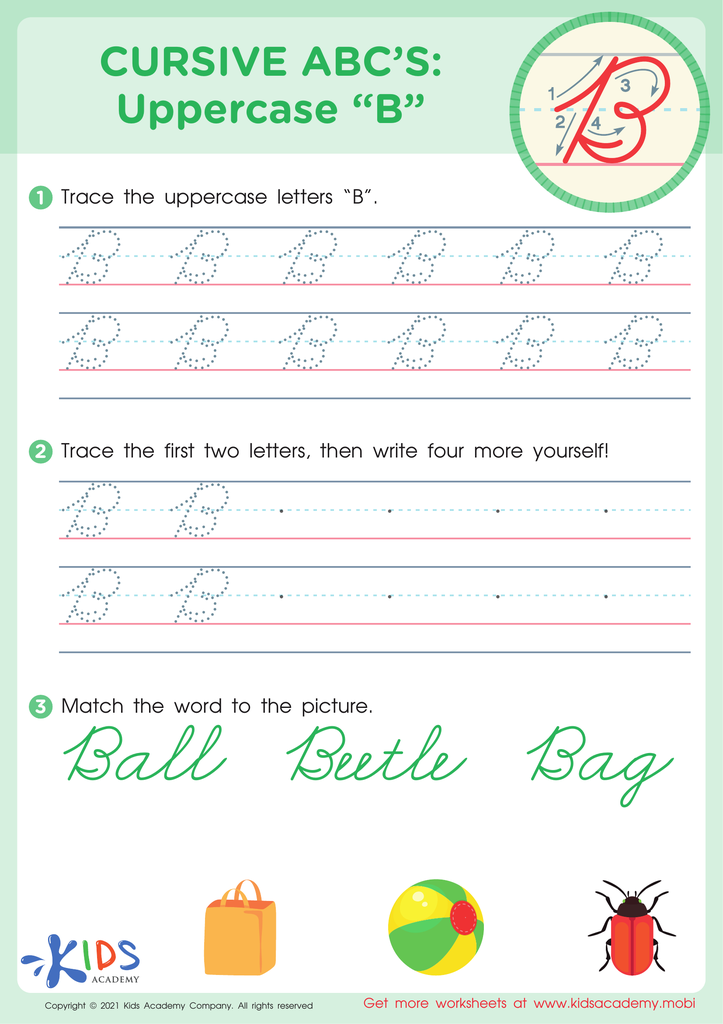
Cursive ABCs: Uppercase B
Help your kids learn the alphabet: have them identify, give examples and sound out letters, then use tracing worksheets to perfect cursive uppercase writing. Show them how to trace the letter ‘B’, then watch them write it on their own. This will give them the skills needed for further writing!
Cursive ABCs: Uppercase B
Worksheet
Join Kids Academy for Free
Who is primarily going to use this learning content?


.jpg)





Alphabetical understanding is crucial for children aged 7-9, as it forms the foundation for their reading and writing skills. At this age, children transition from learning to read to reading to learn. A strong grasp of the alphabet enables them to decode words, making reading a more accessible and enjoyable experience. This understanding fosters vocabulary development, essential for comprehension across subjects.
Furthermore, proficiency with the alphabet enhances spelling skills, leading to greater confidence in written communication. When children recognize letters' sounds and their respective positions, they become adept at forming words, contributing positively to their overall literacy development.
Educators and parents play a pivotal role in nurturing this understanding through engaging activities like games, songs, and storytelling. Encouraging children to explore the alphabet in fun and interactive ways deepens their connection to language. It makes learning enjoyable and enhances their critical thinking skills.
Moreover, mastering alphabetical order aids in skills like alphabetical sorting, essential in various school tasks. In summary, nurturing alphabetical understanding in children fosters lifelong reading and writing abilities, enriching their academic journey and developmental growth. Enhancing this skill now will yield benefits that resonate throughout their education and beyond.







