Cursive handwriting practice Alphabet Worksheets for Ages 7-9
4 filtered results
-
From - To
Enhance your child's cursive handwriting skills with our engaging Cursive Handwriting Practice Alphabet Worksheets, specially designed for ages 7-9. These worksheets provide a fun and interactive way for children to master the art of cursive writing, featuring structured exercises for each letter of the alphabet. Our engaging activities encourage fine motor skills development while promoting confidence in writing. Ideal for homeschooling or supplementary practice, these worksheets are perfect for fostering a love for writing. Download now to help your child join the ranks of fluent cursive writers, making their handwriting as beautiful as their thoughts!
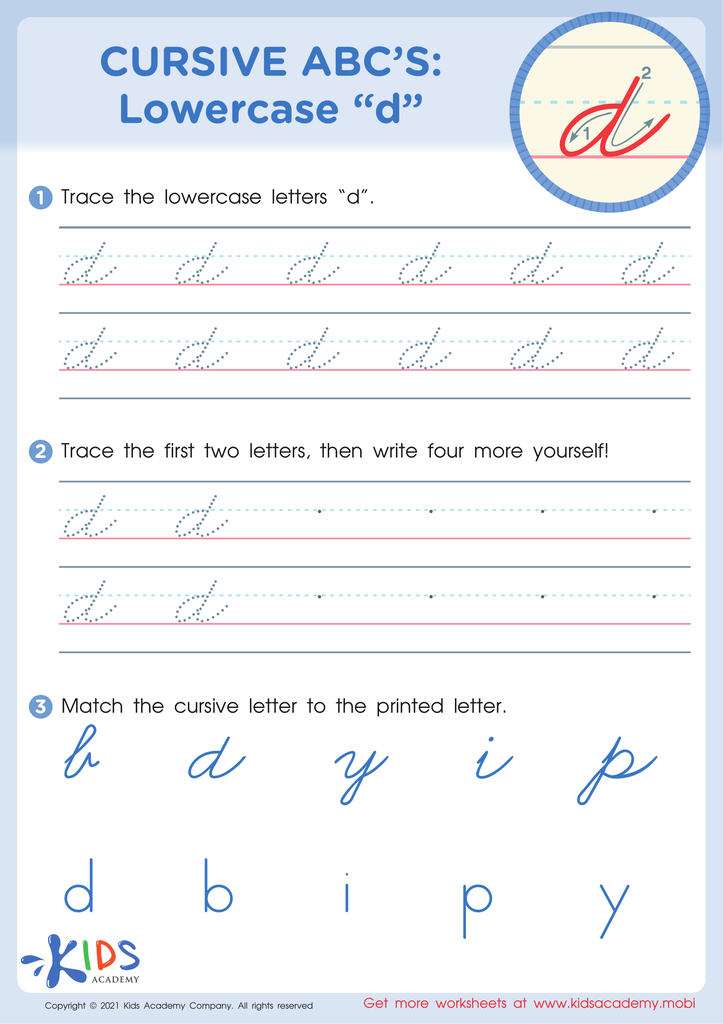
Cursive ABCs: Lowercase d
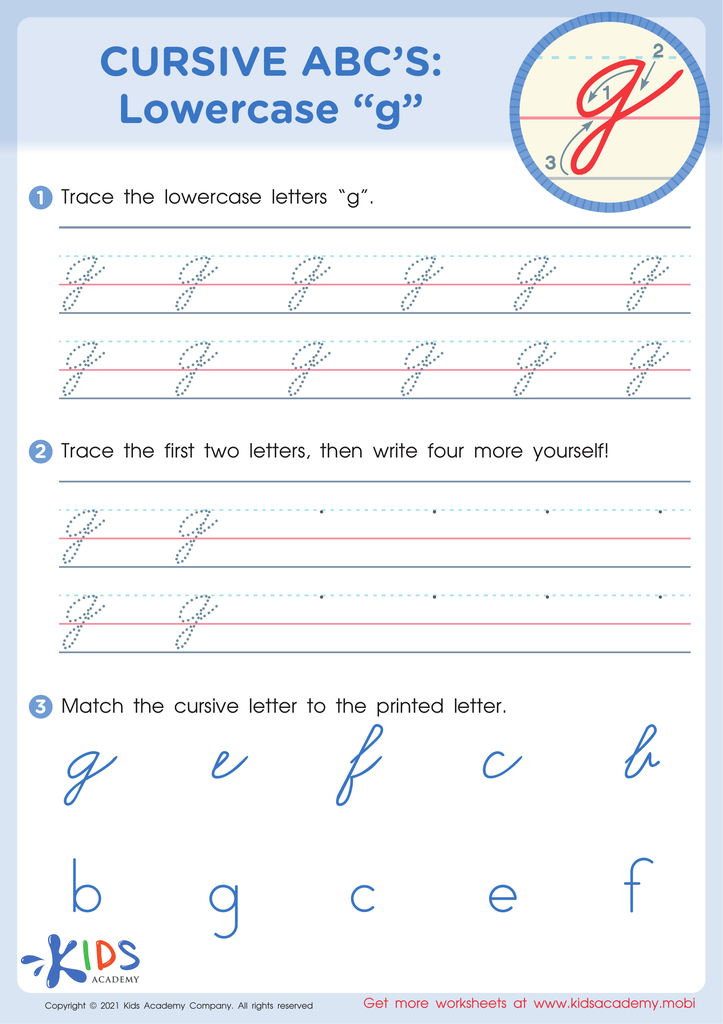
Cursive ABCs: Lowercase g
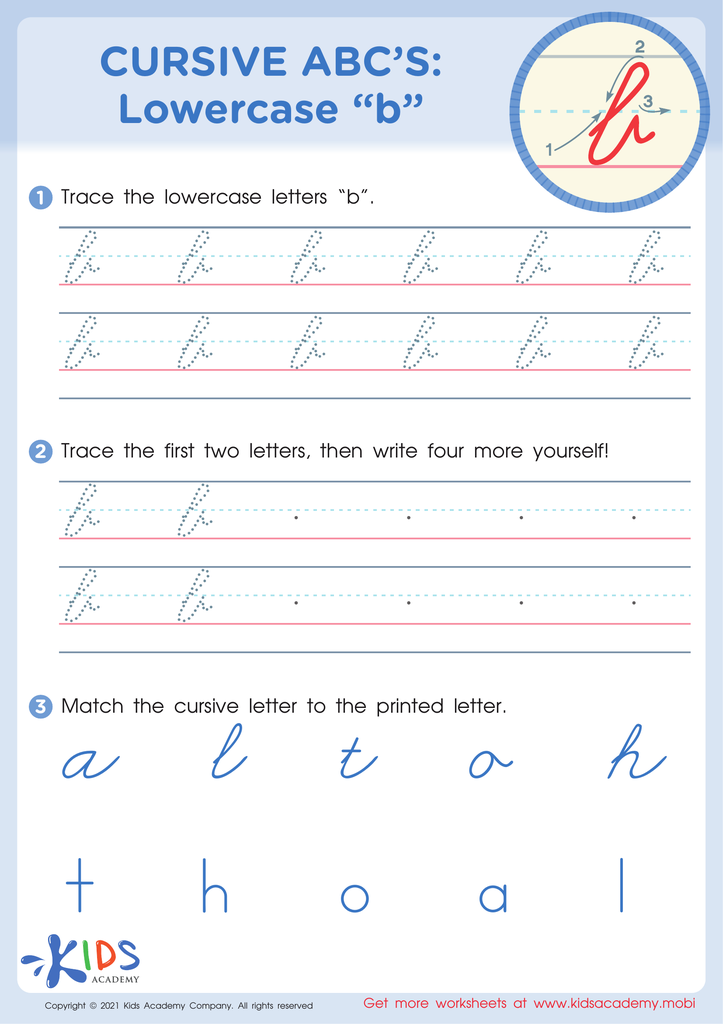
Cursive ABCs: Lowercase b
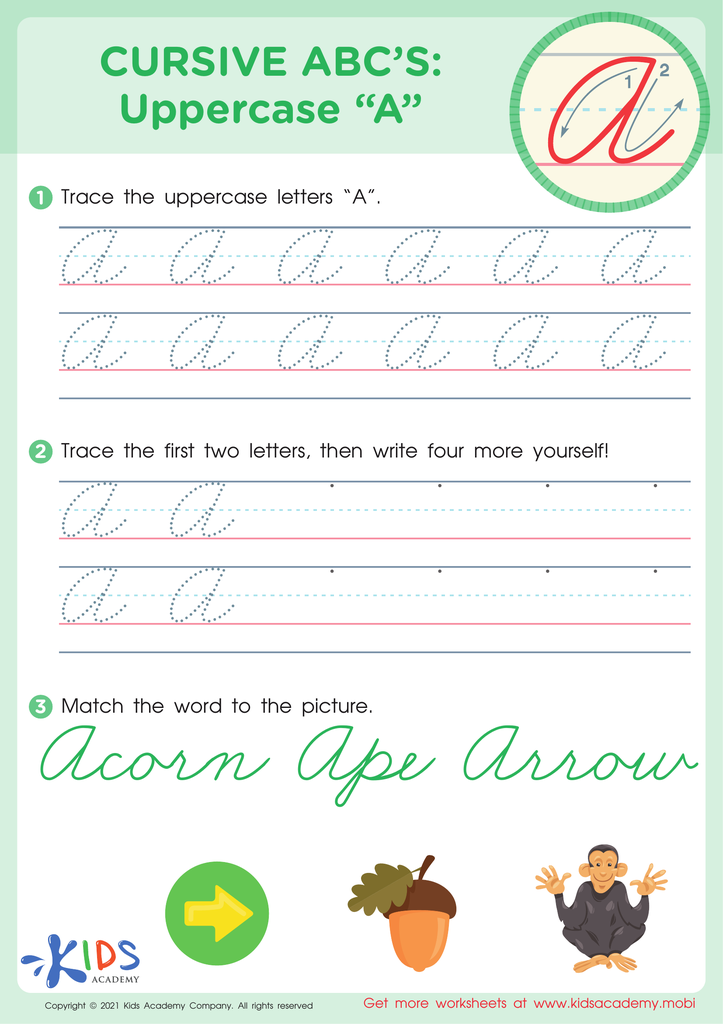
Cursive ABCs: Uppercase A








Cursive handwriting practice is essential for children aged 7-9 for several reasons. Firstly, it fosters fine motor skills, as the fluid movements required in cursive develop hand-eye coordination and dexterity, both of which are critical at this stage of fine motor development. Improved handwriting can build a child’s confidence as they gain the ability to produce writing that is more legible and aesthetically pleasing.
Cursive writing connects letters in a flowing manner, promoting faster writing speeds which is particularly beneficial for academic settings where efficiency can enhance focus on content rather than penmanship. Additionally, cursive writing can be critical for cognitive development, as its unique letter connections help children visualize the flow of letters and facilitate easier recall and spelling of words.
Moreover, cursive handwriting has historical significance and serves a cultural function—understanding how to read cursive equips children with skills to interact with various forms of written communication, including historical documents. In our increasingly digital world, preserving the ability to write in cursive retains an air of distinction and authenticity in personal correspondence, enriching children's writing repertoire. Overall, encouraging cursive handwriting practice in young children establishes a foundation for improved literacy skills, expression, and engagement with written language.







