Phonics practice Alphabet Worksheets for Ages 7-9
11 filtered results
-
From - To
Unlock your child's reading potential with our Phonics Practice Alphabet Worksheets, specially designed for children aged 7-9. These engaging and interactive worksheets promote phonemic awareness, helping kids connect sounds with letters through fun exercises. Our carefully crafted activities not only enhance letter recognition but also strengthen spelling and decoding skills, ensuring a solid foundation in literacy. Parents and educators can use these resources to make learning phonics exciting and effective. Explore a variety of worksheets that transform practicing phonics into a delightful adventure, setting your child on the path to reading success with confidence and enthusiasm!
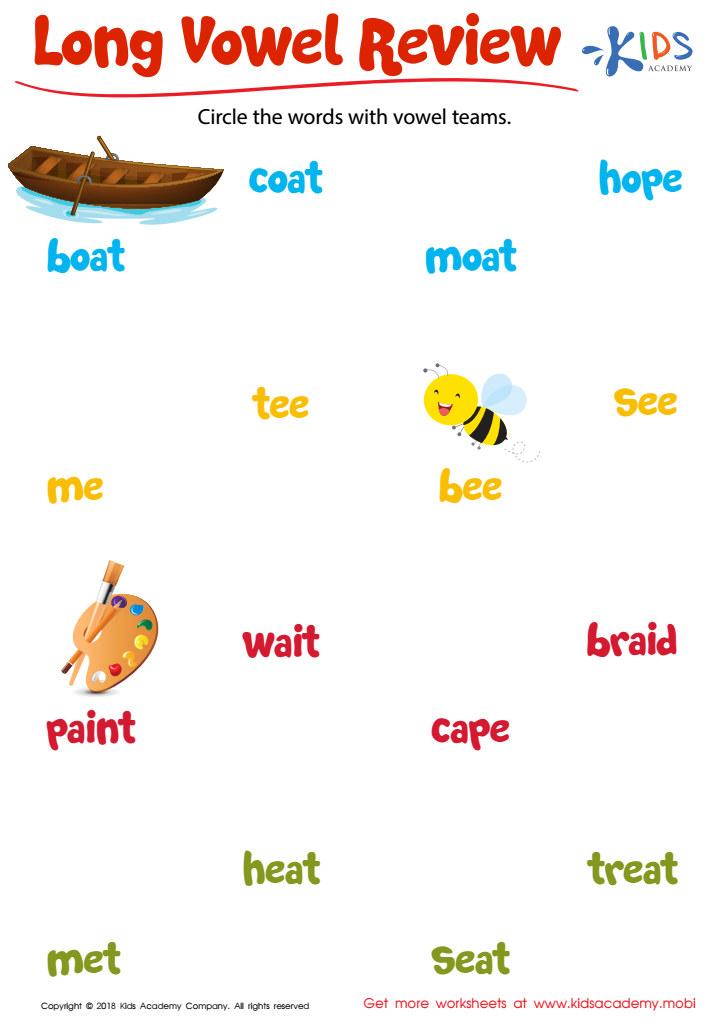
Long Vowel Review Worksheet
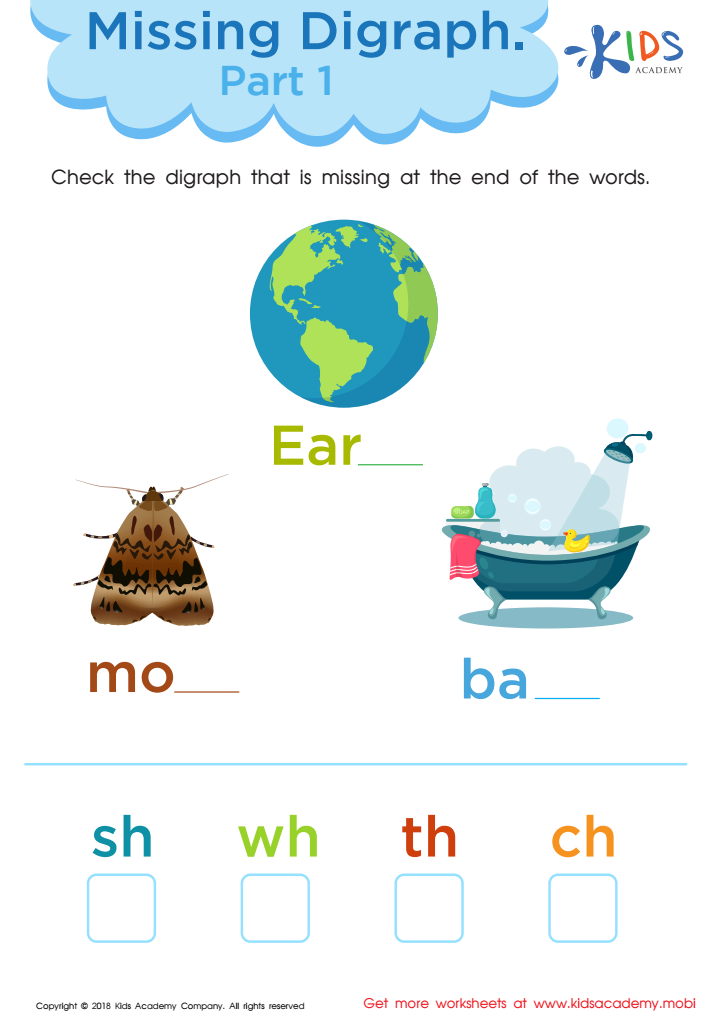
Missing Digraph: Part 1 Worksheet
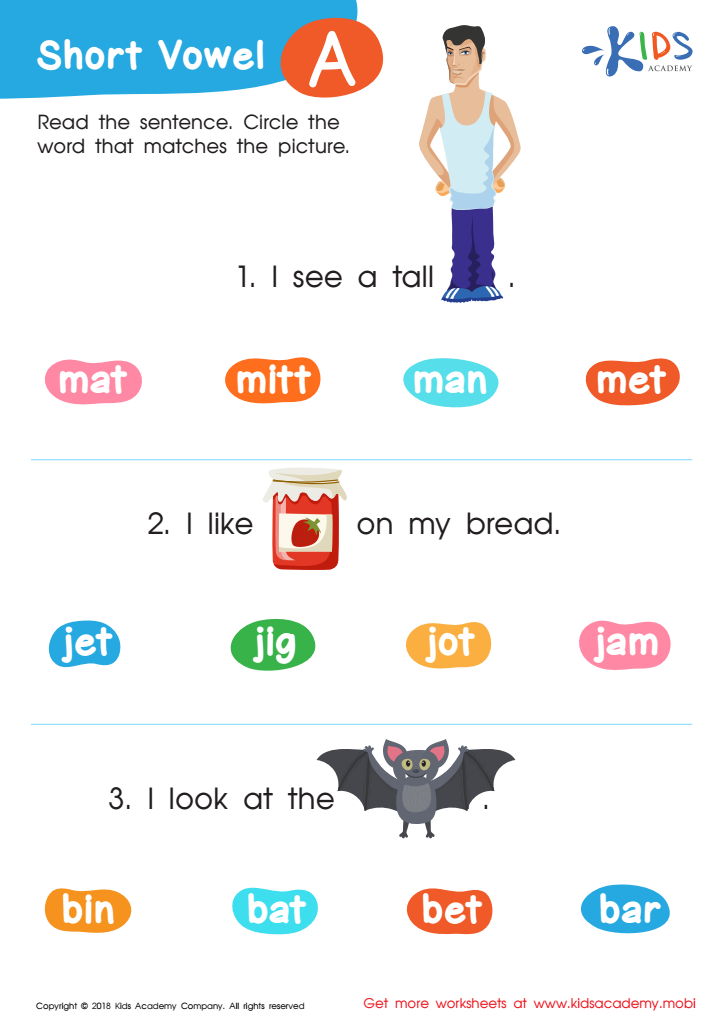
Short Vowel /a/ Worksheet
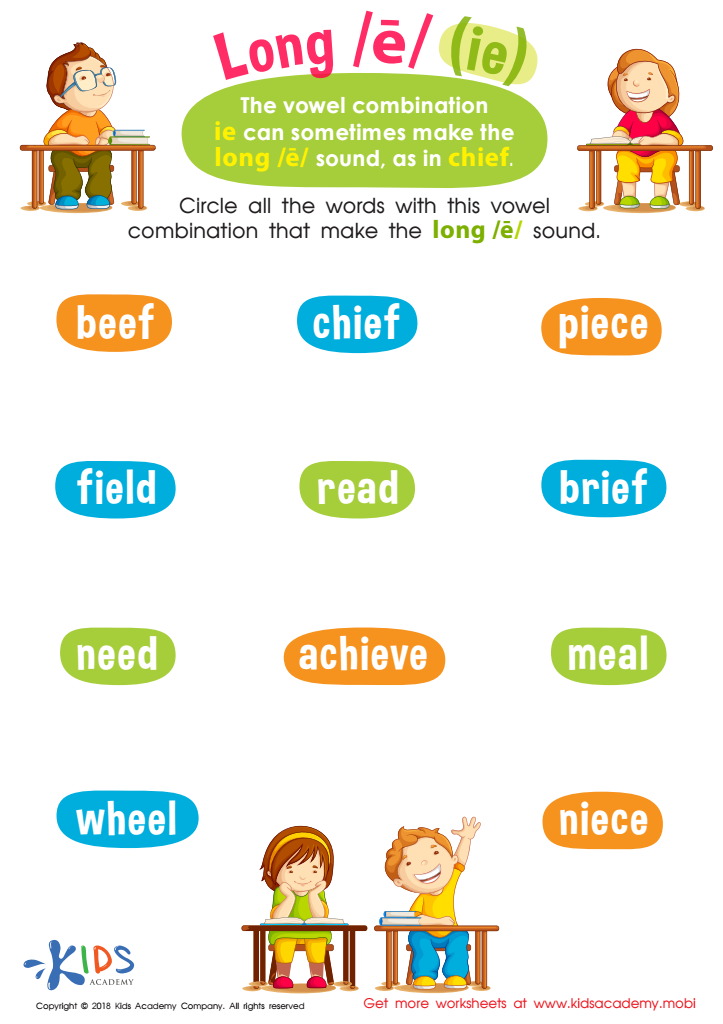
Reading: Long E and IE Worksheet
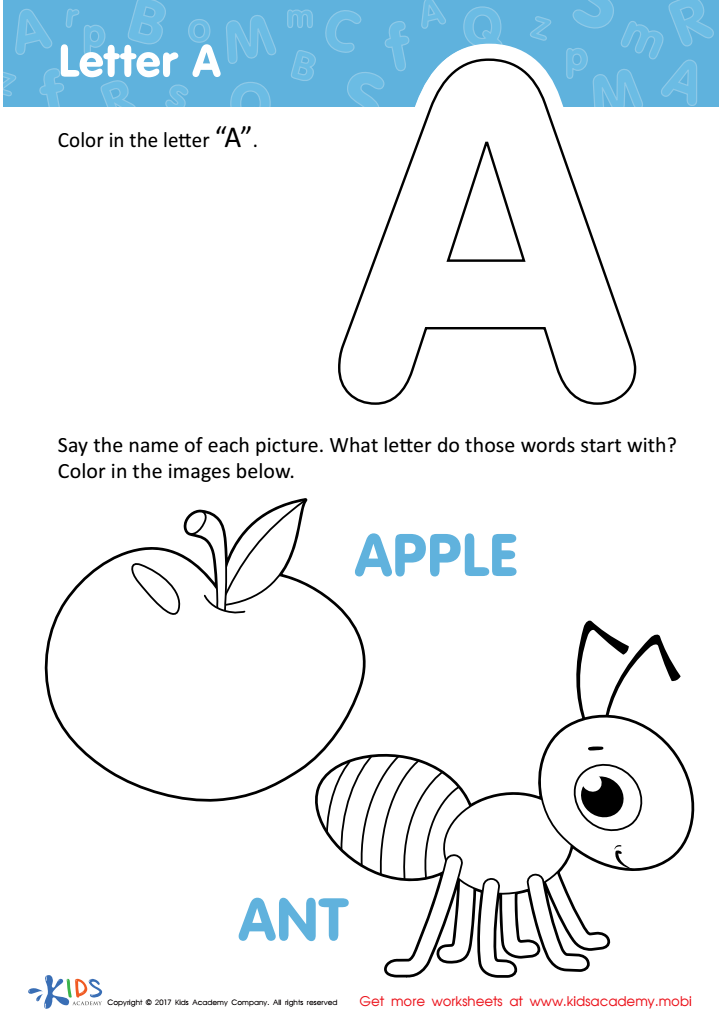
Letter A Coloring Sheet
 Assign to My Students
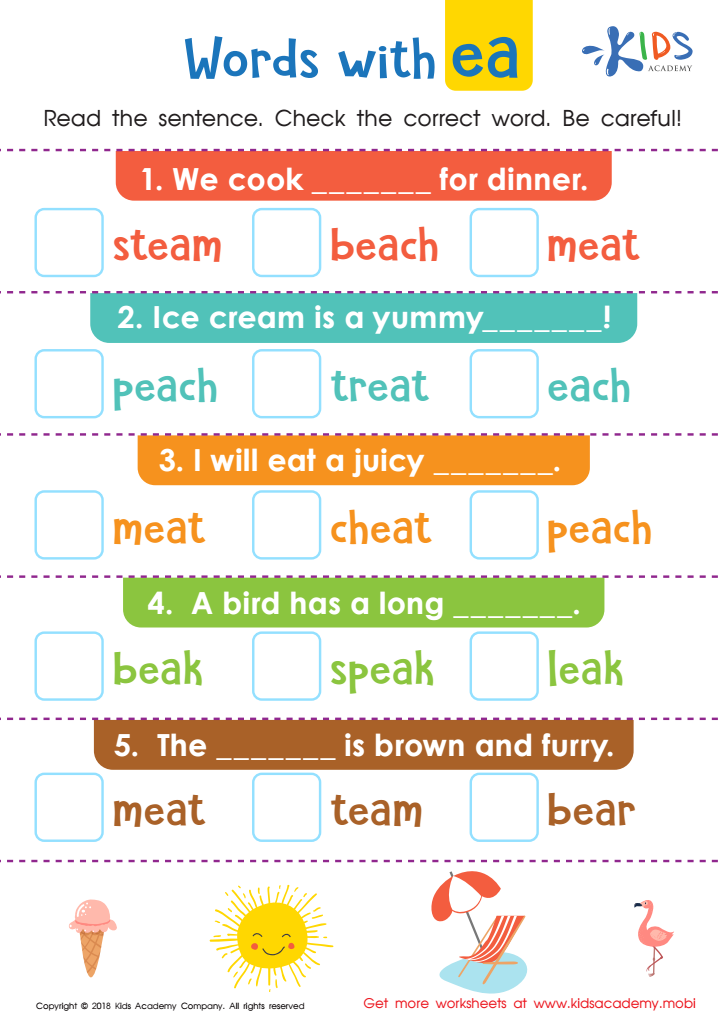
Words with ea Worksheet
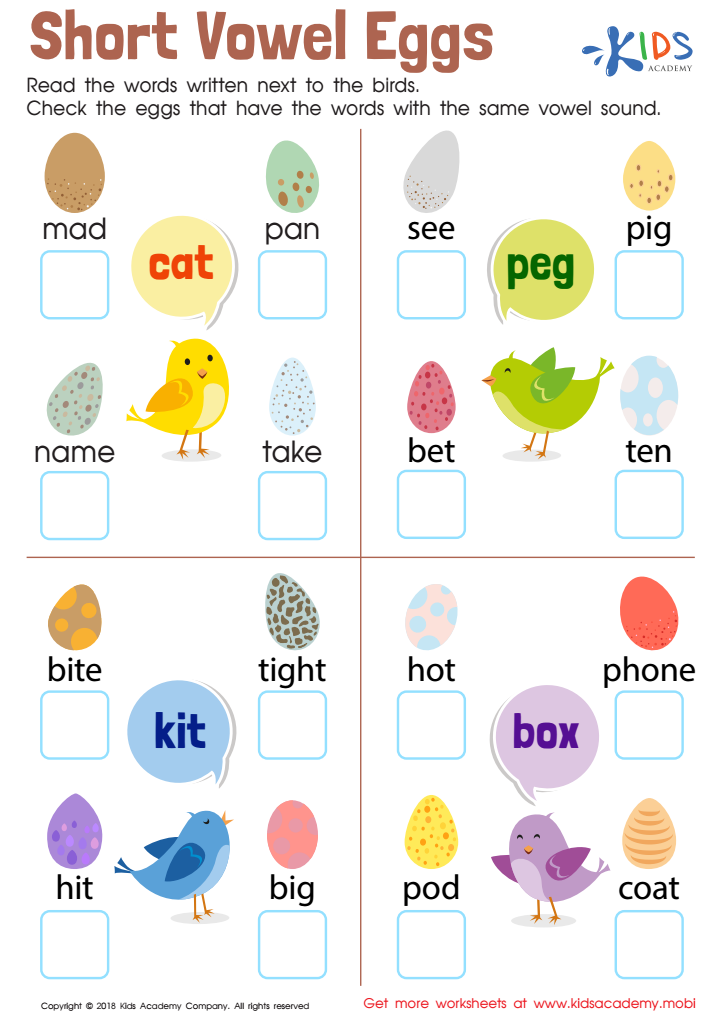
Short Vowel Eggs Worksheet
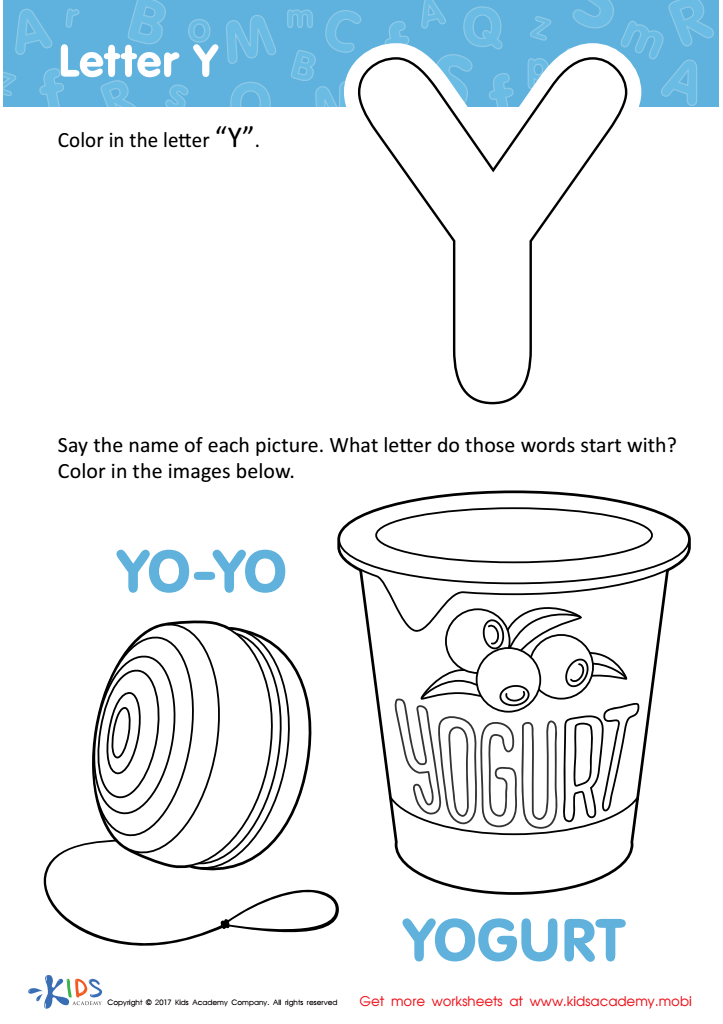
Letter Y Coloring Sheet
Assign to My Students
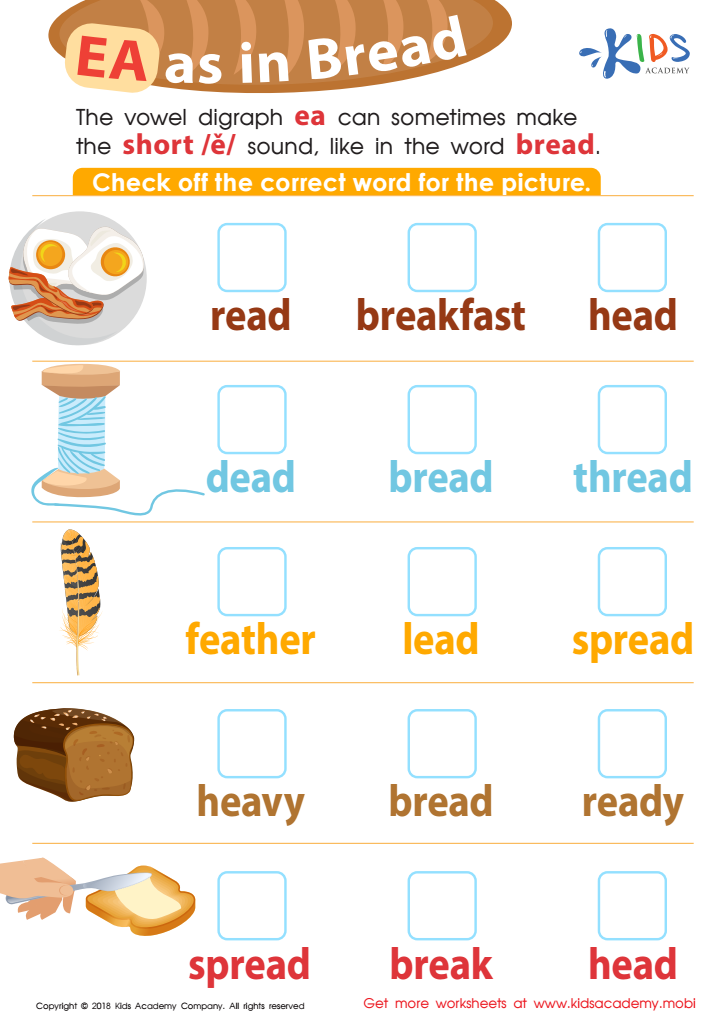
Reading: EA as in Bread Worksheet
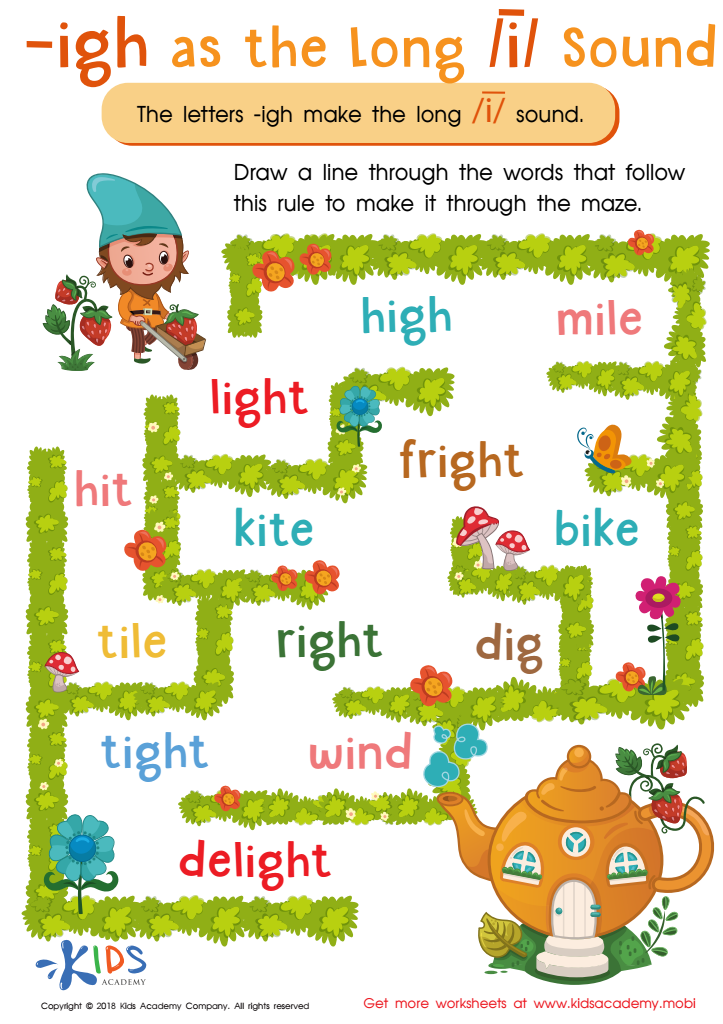
Reading: IGH as Long I Worksheet
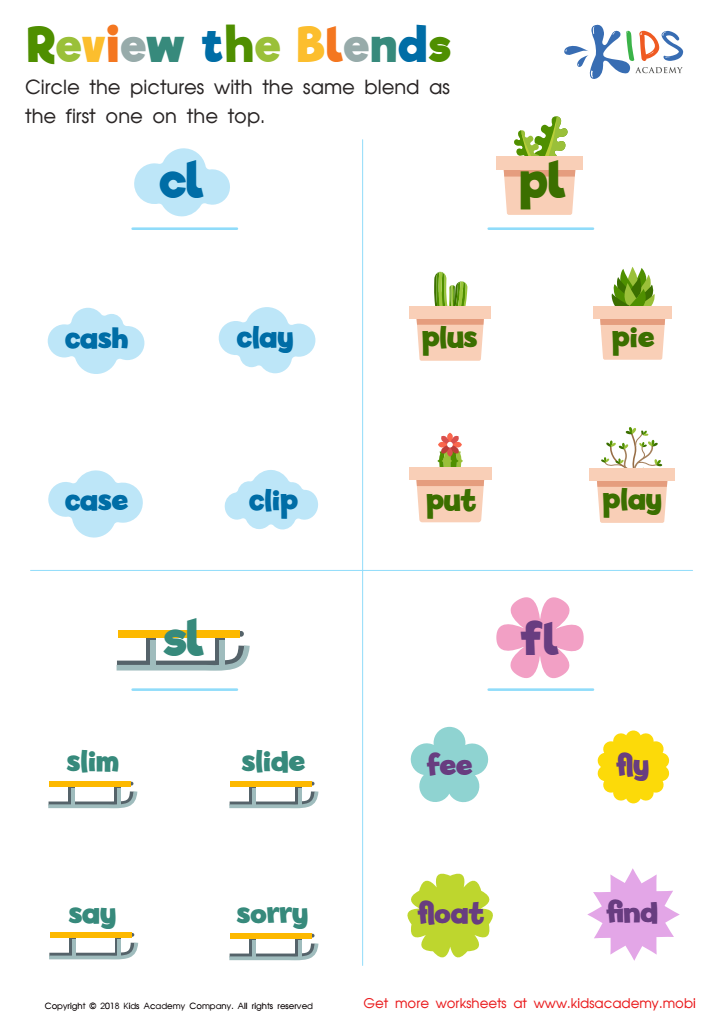
Review the Blends Worksheet







.jpg)
Phonics practice for children aged 7-9 is crucial because it establishes a foundation for fluent reading and writing. During these formative years, learners transition from decoding text to more complex reading comprehension, making strong phonics skills essential. Phonics instruction aids in understanding the relationship between sounds and letters, enabling children to approach unfamiliar words with confidence.
Moreover, children who master phonics often exhibit enhanced vocabulary development and better spelling. This early proficiency boosts overall literacy skills, allowing students to engage more effectively with diverse texts across subjects. As they encounter increasingly sophisticated literature and academic material, a solid grasp of phonics empowers students to dissect complex words easily, improving their comprehension.
Both parents and teachers play vital roles in fostering phonics practice. Home reading activities and targeted phonics games can significantly reinforce what children learn in school. Teachers, meanwhile, can implement diverse instructional strategies to meet each child's unique learning needs.
Ultimately, prioritizing phonics practice helps mitigate reading difficulties and promotes a positive outlook on literacy, encouraging a lifelong love for reading. Therefore, investing time in phonics during these critical years yields long-lasting benefits in academic achievement and personal development.







