Reading skills improvement Alphabet Worksheets for Ages 7-9
5 filtered results
-
From - To
Boost your child's reading skills with our engaging Alphabet Worksheets designed specifically for kids aged 7-9! These worksheets offer a fun and interactive approach to learning letters, sounds, and vocabulary through various activities tailored to enhance comprehension and fluency. As children practice identification, writing, and phonics, they improve their language skills in an enjoyable way. Perfect for home or classroom use, our printable resources provide valuable reinforcement of letter recognition and word formation. Help your child build a strong reading foundation while having fun—explore our comprehensive collection of worksheets that cater to young learners’ needs!
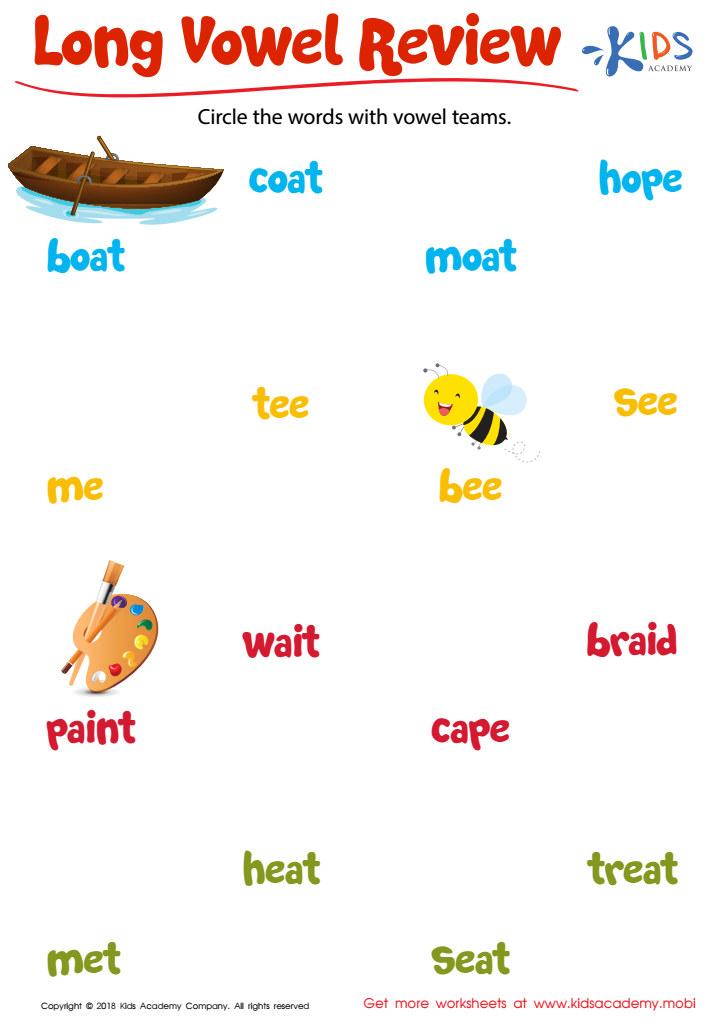
Long Vowel Review Worksheet
 Assign to My Students
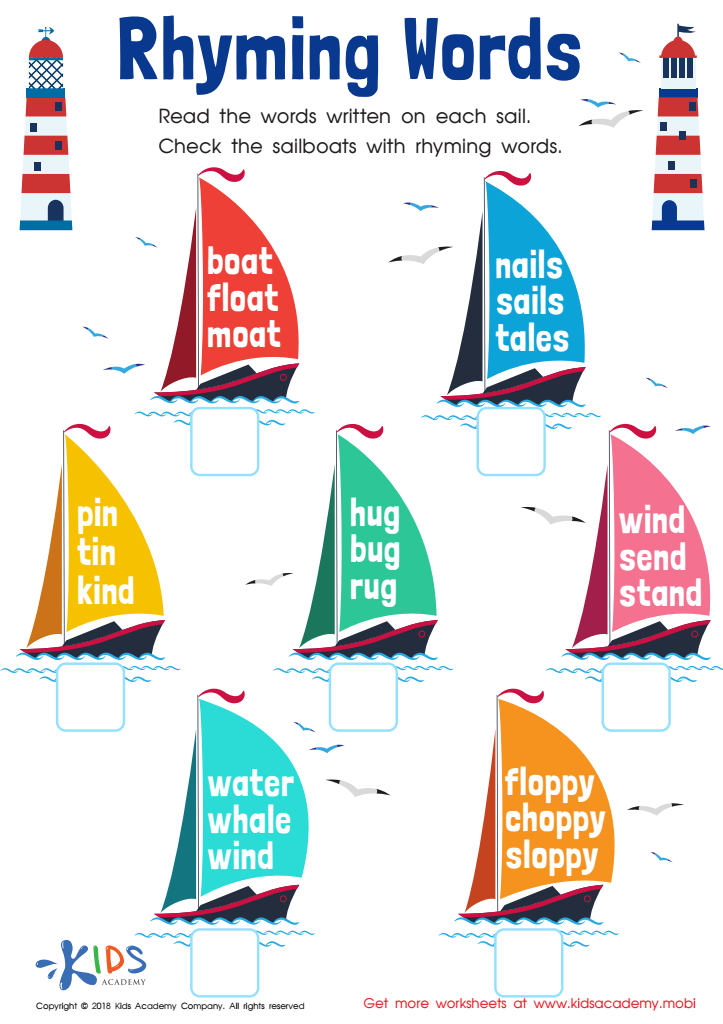
Rhyming Words Worksheet
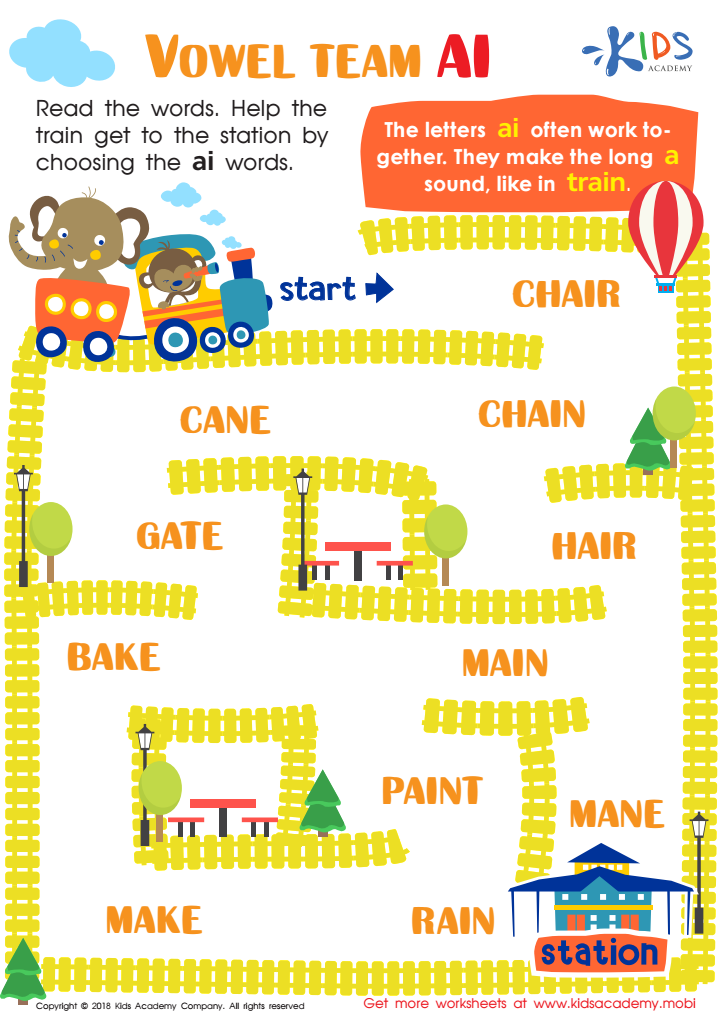
Vowel team ai Worksheet
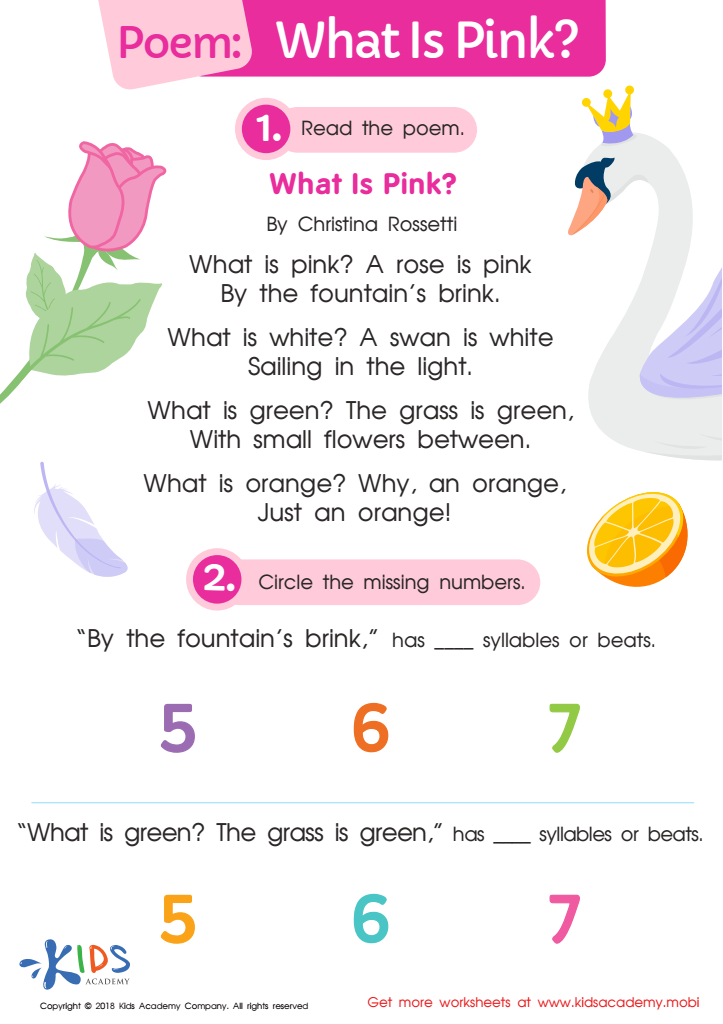
Poem: What Is Pink? Worksheet
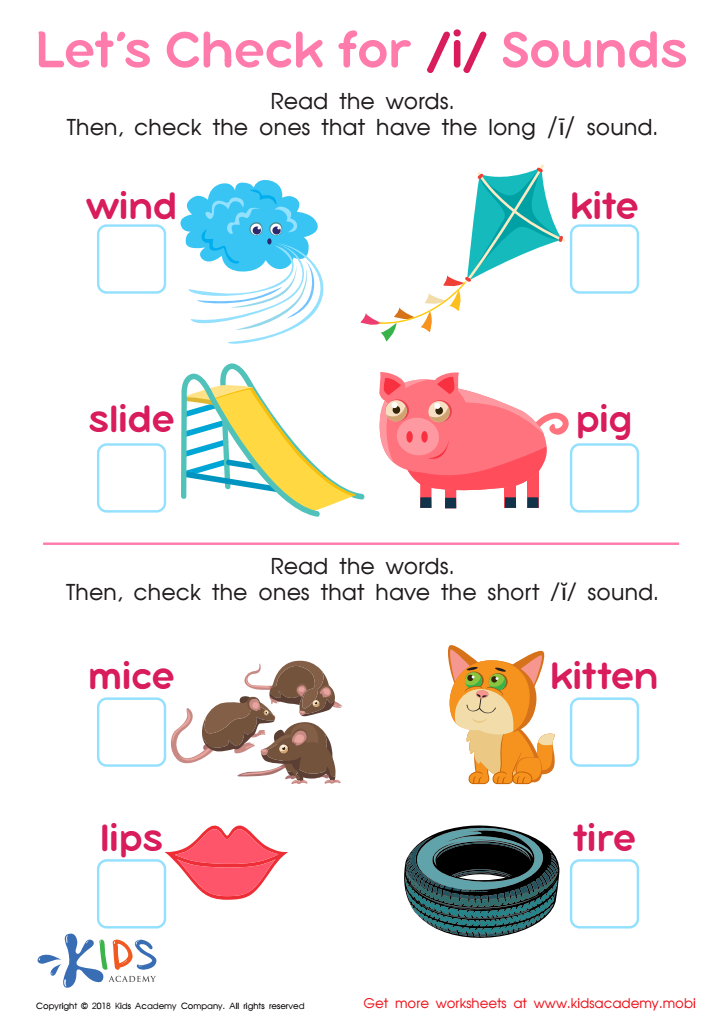
Let's Check for «i» Sounds Worksheet






Reading skills are foundational for children aged 7-9, as this stage marks a critical transition from learning to read to reading to learn. Parents and teachers should prioritize enhancing these skills because strong reading abilities significantly influence academic success and overall cognitive development. Mastery of the alphabet and phonics equips children with the tools to decode words, understand meaning, and engage with various subjects in school.
At this age, children are increasingly exposed to complex texts across the curriculum, making proficient reading essential for grasping new concepts in areas like science, mathematics, and social studies. Furthermore, improving reading skills fosters curiosity and creativity; children develop a love for stories, encouraging independent reading and critical thinking.
Additionally, strong reading skills bolster children’s self-esteem and confidence. When children can read well, they participate more actively in class discussions and are more willing to contribute, enhancing their social skills.
Ultimately, investing time and resources in reading skills improvement yields long-term benefits, reinforcing a solid foundation for lifelong learning. Thus, it is vital for parents and teachers to collaborate in supporting children’s reading development during these formative years.







