Vowel Recognition Long And Short Vowel Worksheets for Ages 7-9
4 filtered results
-
From - To
Our "Vowel Recognition Long and Short Vowel Worksheets" are designed specifically for children aged 7-9 to enhance their understanding of vowel sounds. These worksheets provide a fun and engaging way for young learners to differentiate between long and short vowels, crucial for developing their reading and writing skills. Each worksheet is filled with colorful illustrations and interactive activities, ensuring that children stay motivated while they practice. Your child will master vowel recognition through phonics games, word sorting, and fill-in-the-blank exercises. Explore our plethora of thoughtfully crafted resources that make learning enjoyable and effective, setting the foundation for literacy success!
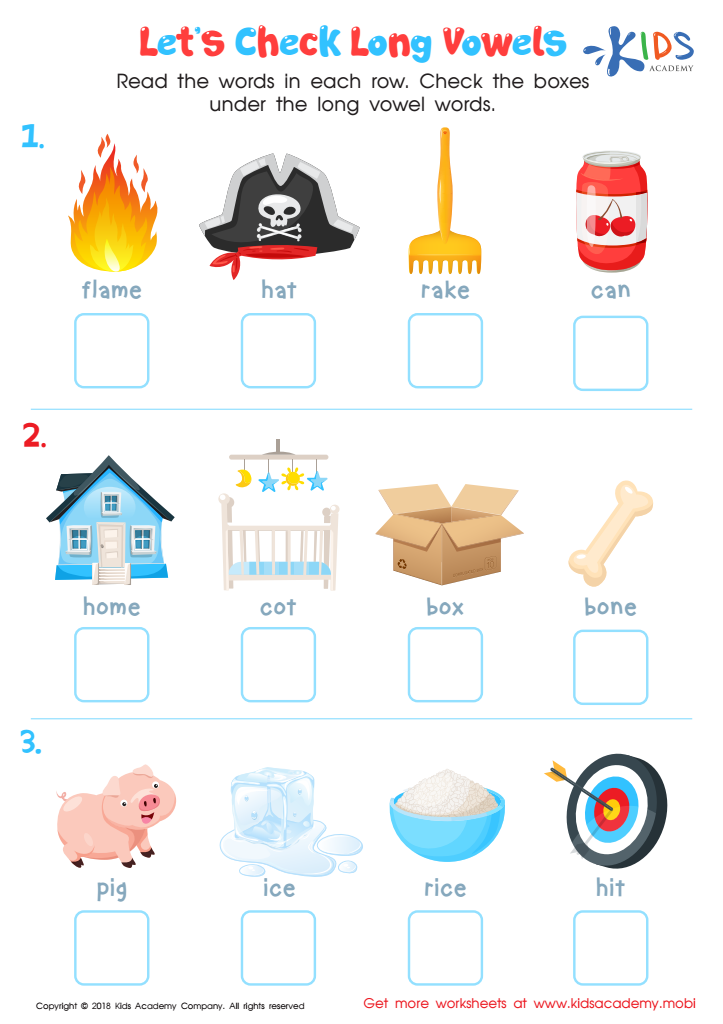
Let's Check Long Vowels: Assessment Worksheet
 Assign to My Students
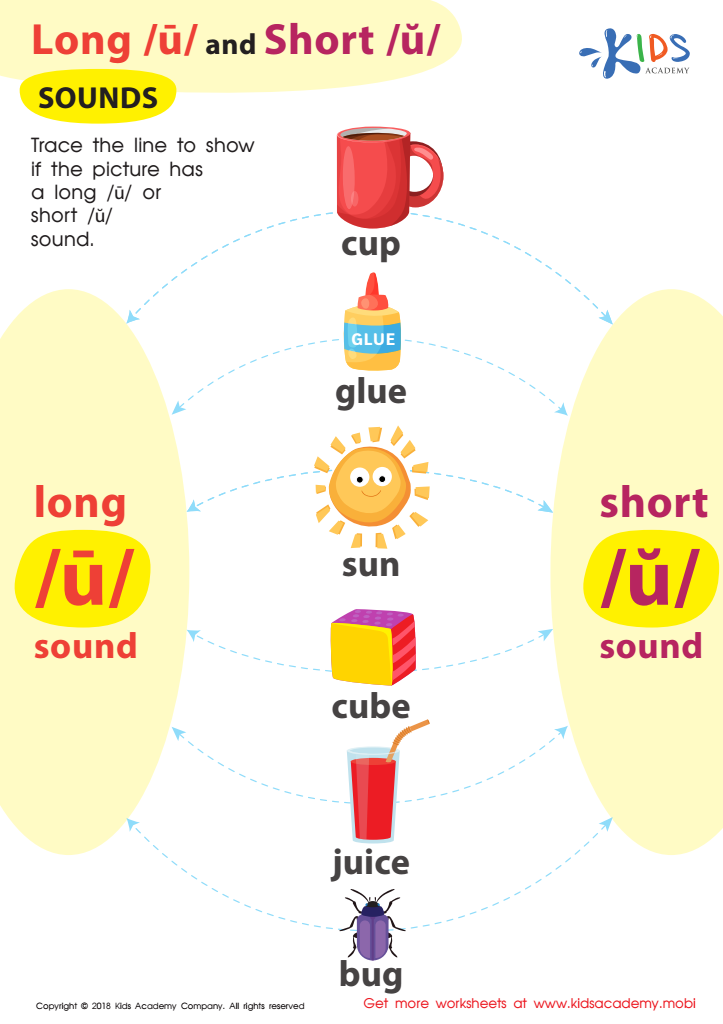
Reading: Long U and Short U Sounds Worksheet
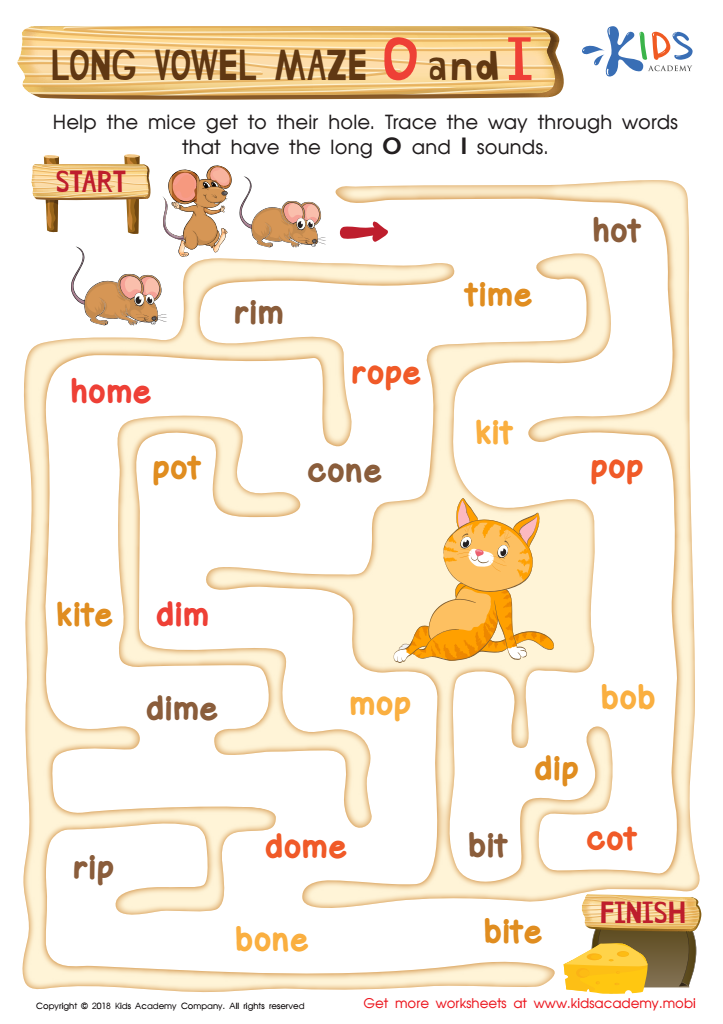
Long Vowel Maze /o/ and /i/ Worksheet
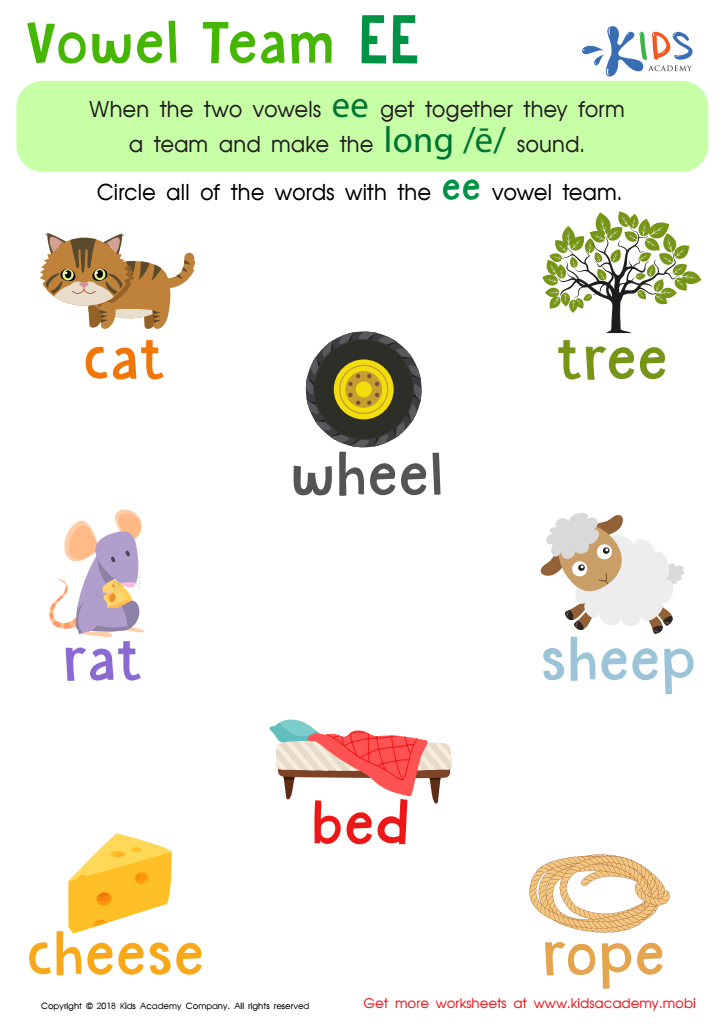
Reading: Vowel Team EE Worksheet




Vowel recognition, particularly the understanding of long and short vowels, is crucial for children aged 7-9. At this developmental stage, children are refining their reading and writing skills, making it essential for educators and parents to emphasize these concepts. Recognizing long and short vowel sounds helps children decode words accurately, leading to improved reading fluency. As these readers encounter increasingly complex texts, the ability to distinguish between vowel sounds significantly influences their comprehension and vocabulary development.
Moreover, mastering vowel sounds fosters phonemic awareness, which is fundamental for spelling. Children with strong vowel recognition skills can better analyze word structures, enhancing their ability to write and construct sentences effectively. This foundation supports overall literacy, setting the stage for more advanced language skills.
Parents and teachers play a vital role in reinforcing vowel recognition through engaging activities, word games, and reading exercises. By prioritizing this aspect of phonics, they can also build children’s confidence in their language abilities. Ultimately, a solid understanding of long and short vowels not only contributes to academic success but also encourages a lifelong love for reading, writing, and language exploration. Therefore, it is essential for adults involved in a child’s education to actively support and promote vowel recognition.