Phonics practice Long Vowels Worksheets for Ages 7-9
3 filtered results
-
From - To
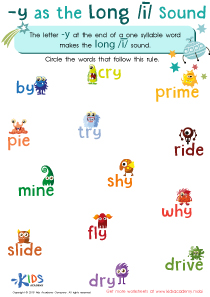
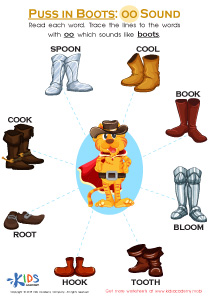
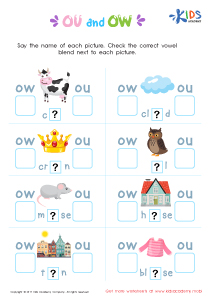
Enhance your child’s reading skills with our Phonics Practice Long Vowels Worksheets designed for ages 7-9. These engaging and interactive worksheets provide an effective way to help young learners master long vowel sounds. Covering a variety of activities, including word recognition, matching exercises, and sentence completion, our resources make phonics practice fun and enjoyable. Perfect for classroom use or at-home learning, these worksheets promote literacy development and reinforce phonemic awareness. With colorful illustrations and age-appropriate content, children will improve their reading proficiency while building confidence in their abilities. Download our worksheets today and support your child’s journey to becoming fluent readers!
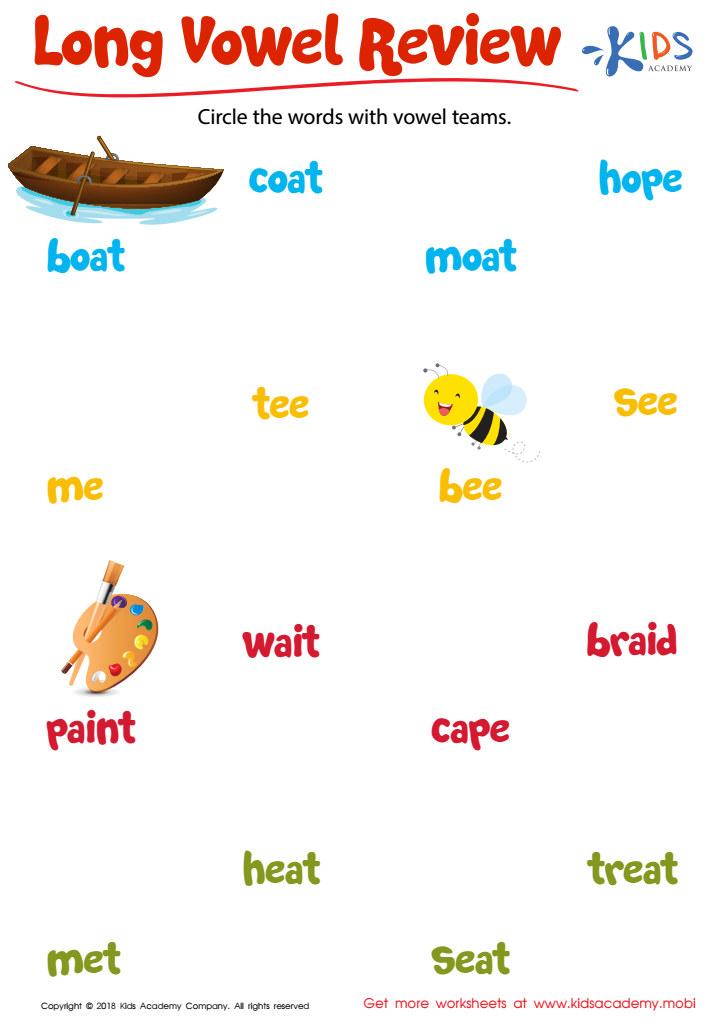
Long Vowel Review Worksheet
 Assign to My Students
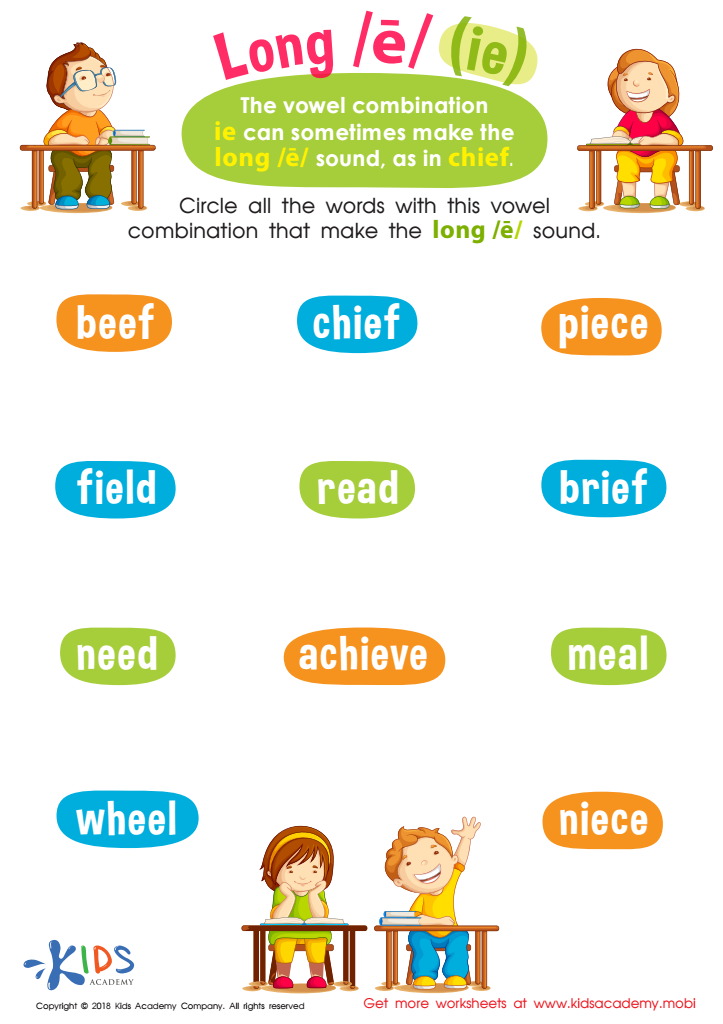
Reading: Long E and IE Worksheet
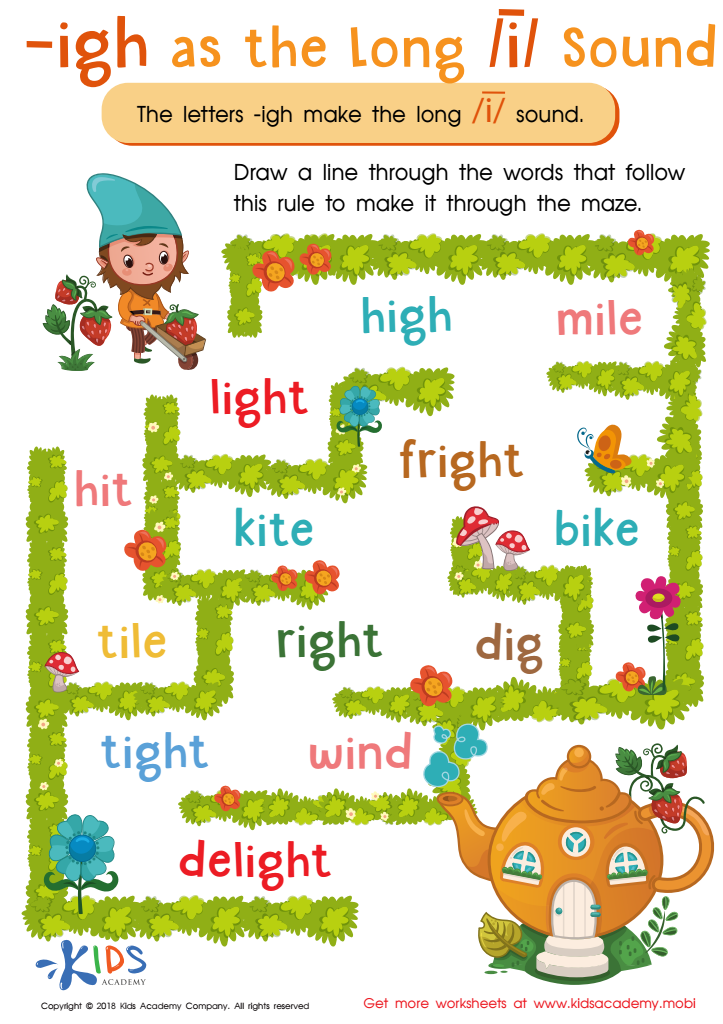
Reading: IGH as Long I Worksheet



Phonics practice, particularly focusing on long vowels, is crucial for children aged 7-9 as they are reaching an important transitional phase in their reading development. Mastering long vowels helps children understand the relationships between sounds and letters, enhancing their ability to decode and encode words. At this stage, children are increasingly exposed to more complex texts, making phonics knowledge vital for improving their reading fluency and comprehension.
Regular practice with long vowel sounds—such as the various ways to spell these sounds (e.g., "ai," "ay," "ee," "ea")—supports children in becoming more confident readers and writers. Without a solid foundation in phonics, children may struggle with unfamiliar words and become frustrated, impairing their overall literacy experience.
Moreover, phonics practice fosters essential cognitive skills, including critical thinking and auditory discrimination. By engaging with long vowels through interactive games, songs, and reading activities, teachers and parents can create a supportive and stimulating environment for literacy development. When children can confidently tackle texts, they're more likely to develop a love for reading, paving the way for lifelong learning. Therefore, investing time in phonics practice isn't just beneficial; it's essential for enabling children to succeed in their academic journey.