Reading fluency Long Vowels Worksheets for Ages 7-9
3 filtered results
-
From - To
Enhance your child's reading fluency with our Long Vowels Worksheets designed for ages 7-9. These engaging and educational worksheets focus on the long vowel sounds, crucial for developing reading proficiency. Each worksheet features fun activities, colorful illustrations, and age-appropriate content to keep young learners motivated. By practicing with these worksheets, children will become more confident readers, improve their pronunciation, and better understand word patterns. Perfect for both classroom and at-home learning, our Long Vowels Worksheets provide the tools needed for children to master reading fluency while enjoying the learning process. Start boosting your child’s reading skills today!
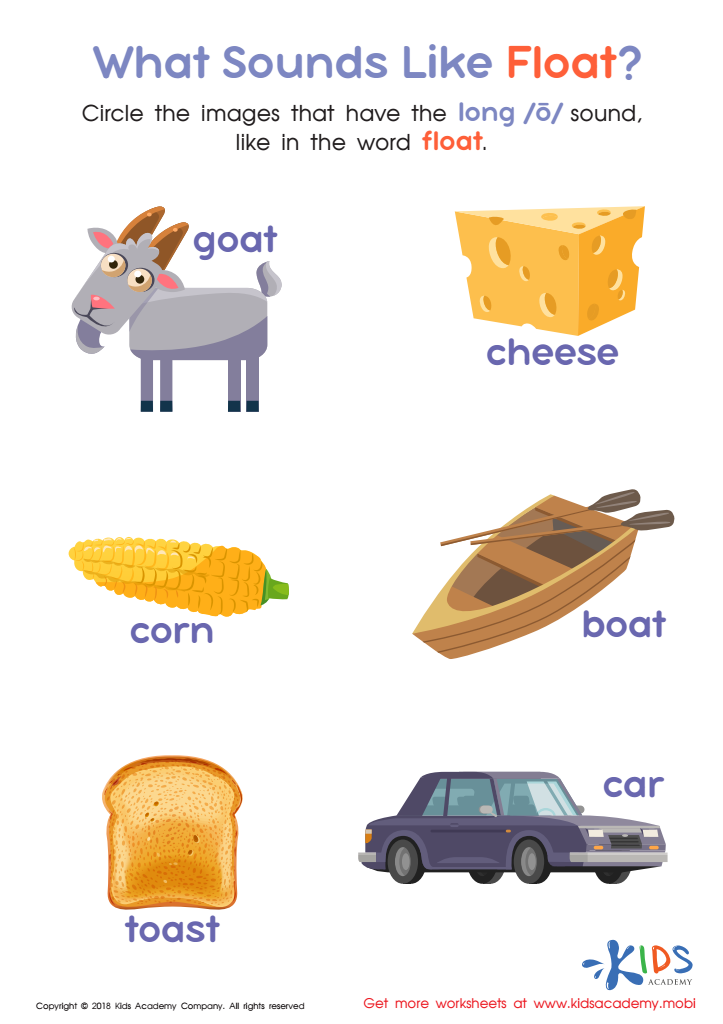
What Sounds Like Float? Worksheet
 Assign to My Students
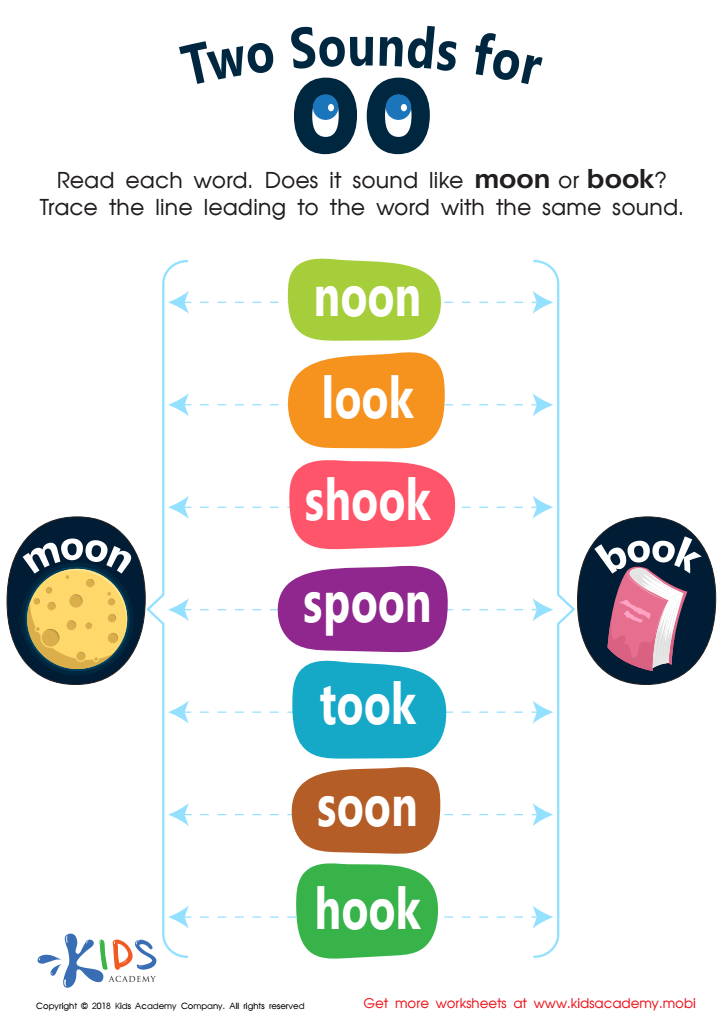
Two Sounds for OO Worksheet
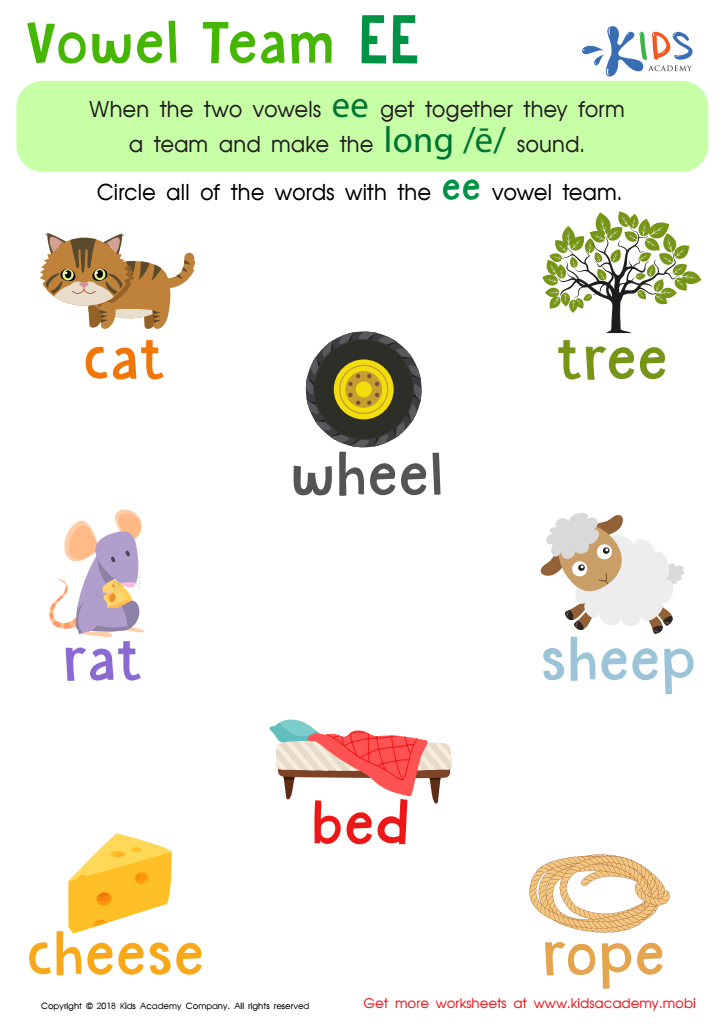
Reading: Vowel Team EE Worksheet



Reading fluency and long vowel mastery are critical for children aged 7-9 because these skills form fundamental building blocks for advanced literacy and academic success.
Firstly, reading fluency relates to the ability to read with speed, accuracy, and proper expression. This is essential for comprehension; if a child is struggling to decode individual words, their ability to understand the text as a whole suffers. Mastery of long vowels (such as the sounds in "make," "peach," "kite," "cone," and "mule") often forms part of this essential reading skill. Properly understanding long vowels helps children to decode a wide range of words they'll encounter, fostering both their reading speed and accuracy.
Moreover, early proficiency in reading fluency, including long vowels, sets a solid foundation for their future educational journey. As children progress through school, the complexity of reading materials increases. If they are fluent readers by age 9, they are more likely to engage with and comprehend these more challenging texts, which in turn significantly benefits their overall learning and academic performance.
Additionally, reading fluently with an understanding of long vowels nurtures a child's confidence and motivation. Children who struggle with reading may develop frustration and negative attitudes toward education. Conversely, fluency and decoding success build a positive association with reading, encouraging lifelong literacy and a love of learning.
For parents and teachers, prioritizing these skills means empowering children with the tools they need to thrive both in their current education and future academic pursuits.