
Reading enhancement Phonics Worksheets for Ages 7-9
4 filtered results
Difficulty Level
Grade
Age
-
From - To
Subject
Activity
Standards
Discover our engaging collection of Reading Enhancement Phonics Worksheets designed for children aged 7-9. These interactive resources aim to build essential reading skills, helping young learners master phonics through fun activities and exercises. Each worksheet focuses on key phonetic concepts, improving their ability to decode words and enhance fluency. With colorful illustrations and varied learning approaches, these worksheets make reading enjoyable and effective. Ideal for both classroom use and at-home practice, our phonics worksheets support educators and parents in fostering a love for reading. Empower your child’s literacy journey today with these thoughtfully crafted educational tools!
Favorites
With answer key
Interactive
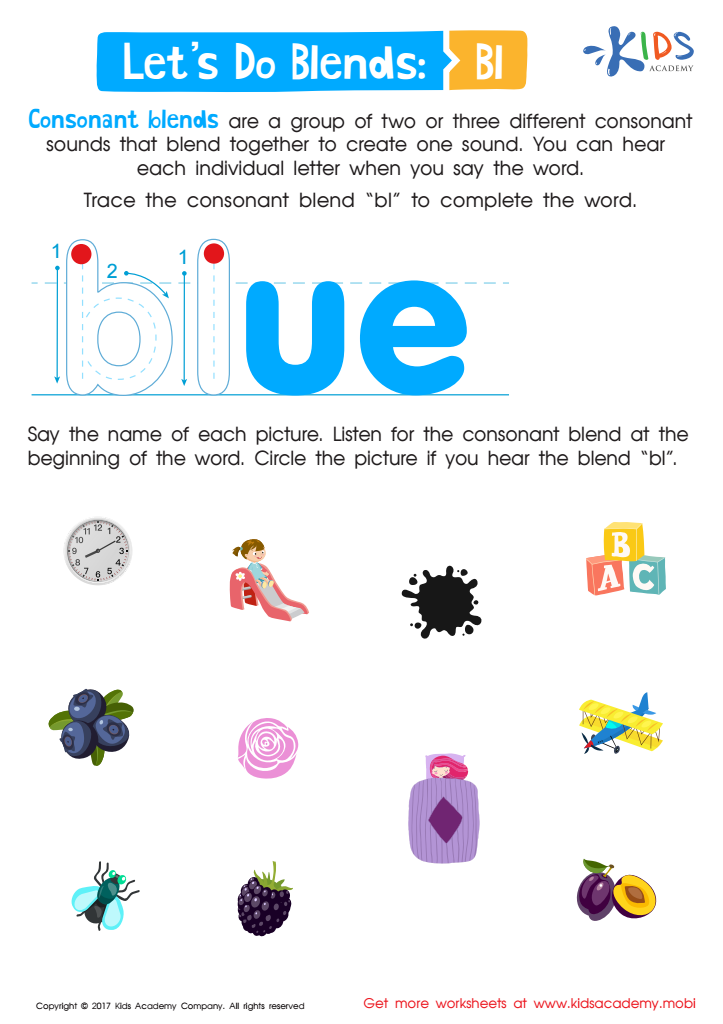
Beginning Blends: "Bl" Words Worksheet
Help your child master their phonics skills with this fun, focused consonant blend worksheet! They'll practice spelling, reading, and sounding out the words, which will help their speech and other skills. The worksheet focuses on "Bl" but extend your child's learning by finding other blends on the page. After completion, they'll be closer to phonics mastery!
 Assign to My Students
Beginning Blends: "Bl" Words Worksheet
Worksheet
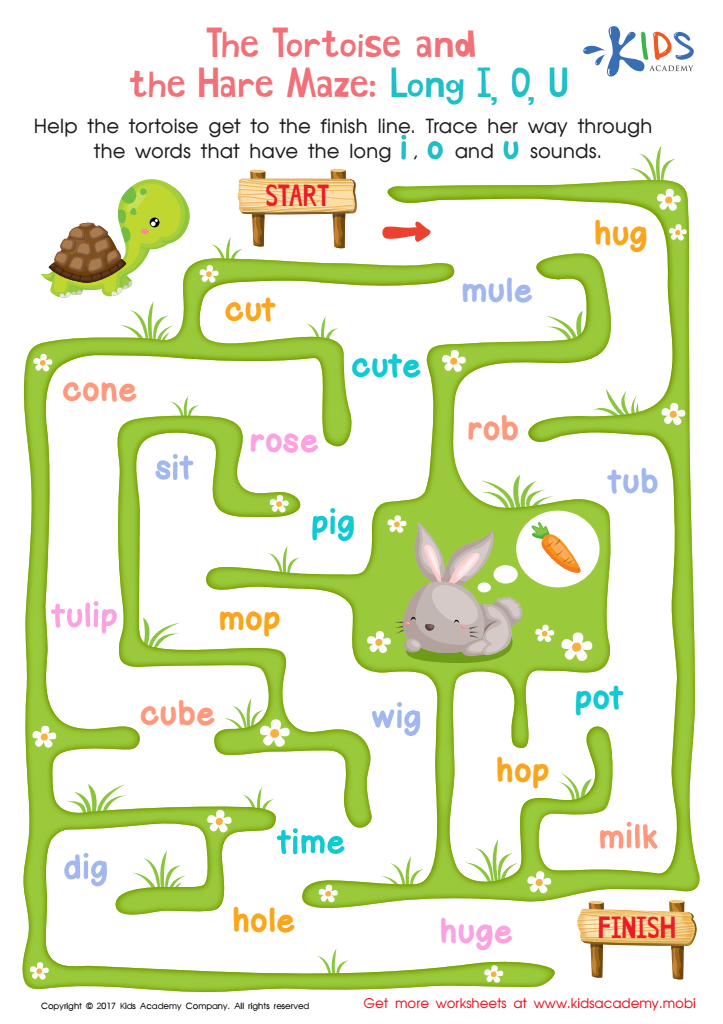
Long I, O, U Words Worksheet
This fun phonics worksheet has your child race the tortoise and hare to the finish line. Find all the long vowel sounds to win! It'll help your child's recognition of long I, O, and U words without him realizing it!
Long I, O, U Words Worksheet
Worksheet
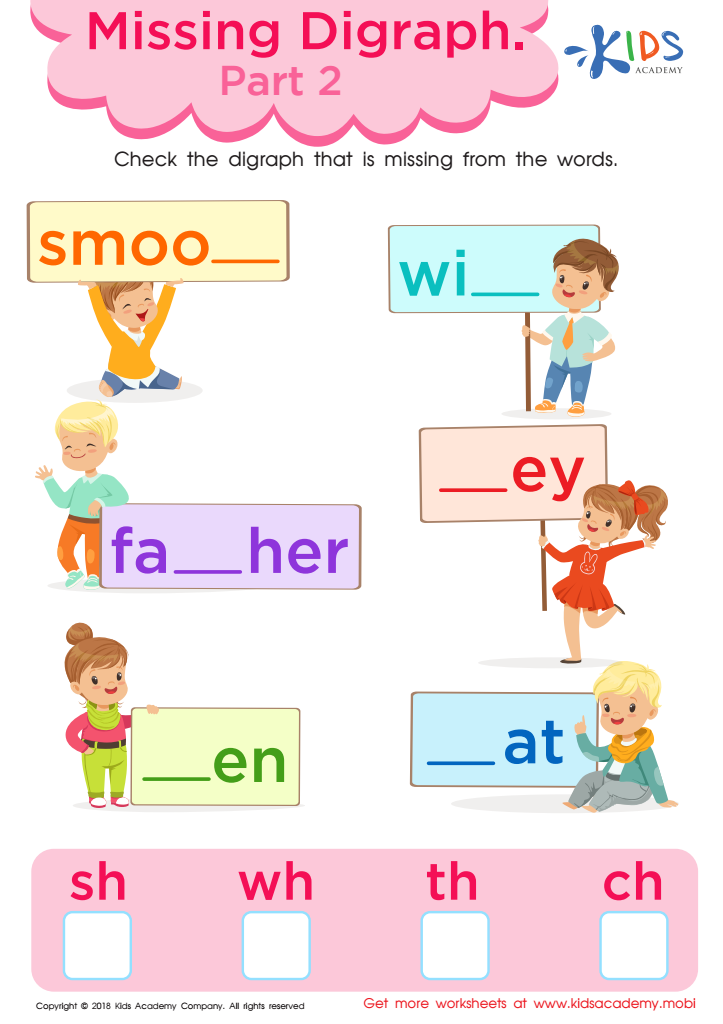
Missing Digraph: Part 2 Worksheet
Practice the "th" digraph with this fun worksheet from Kids Academy! See how it appears at the beginning, middle, or end of words and help learners fill in the blanks. Check if they got it right by finding the th digraph at the bottom!
Missing Digraph: Part 2 Worksheet
Worksheet
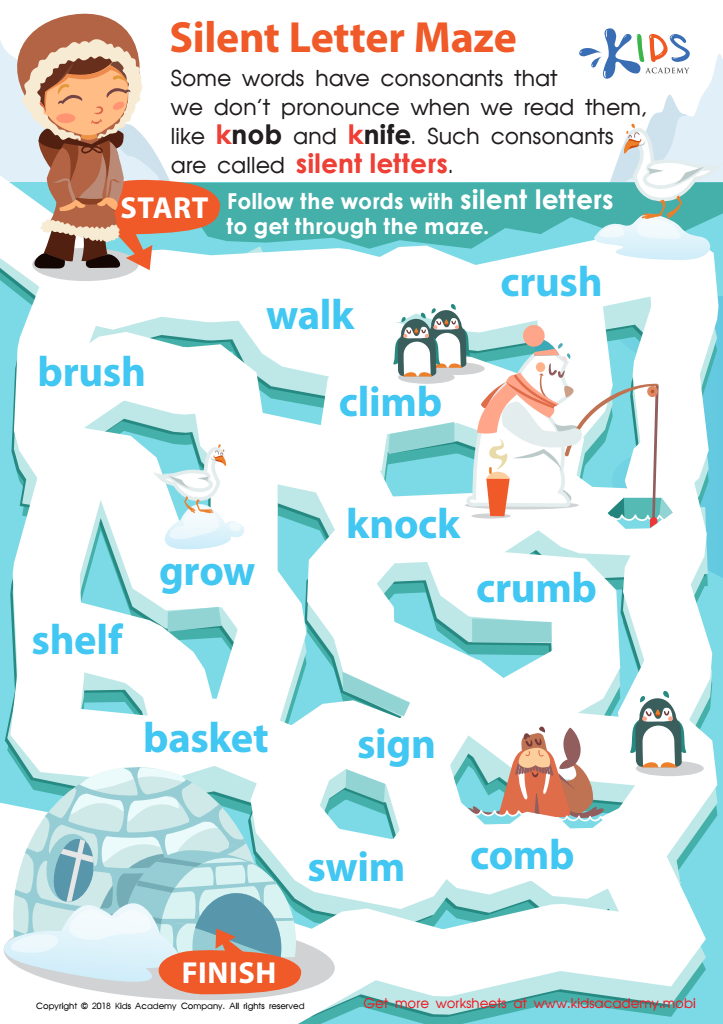
Silent Letter Maze Worksheet
Learning to read can be tricky, especially with words with irregular pronunciations. Explain to your child that some words have consonants we do not pronounce when reading. Ask them for examples like 'knife' and 'knob'. These consonants are called silent letters. Download this pdf to practice words with silent letters and complete the maze.
Silent Letter Maze Worksheet
Worksheet
Join Kids Academy for Free
Who is primarily going to use this learning content?








Reading enhancement through phonics for children aged 7-9 is crucial for developing strong literacy skills, laying the foundation for lifelong learning. At this age, children transition from learning to read to reading to learn, making phonics instruction vital. Phonics teaches students the relationship between letters and sounds, enabling them to decode unfamiliar words, spell correctly, and improve their overall reading fluency.
For parents and teachers, investing in phonics education can significantly boost a child’s confidence and motivation in reading. Effective phonics instruction can prevent reading difficulties and help children catch up if they are struggling. Clear understanding and application of phonics can foster independent reading skills, allowing children to engage with diverse texts and cultivate a love for reading.
Additionally, strong reading skills support success in all academic subjects. Many critical thinking and comprehension skills develop as children become proficient readers. Supporting phonics education means providing children with essential tools to excel academically and socially. Understanding the importance of phonics in early education helps parents and teachers shape a well-rounded literacy experience, resulting in better educational outcomes and a brighter future for children. Optimal reading development at a young age also reduces the risk of later academic challenges, thereby benefiting society as a whole.







