
Reading skills improvement Phonics Worksheets for Ages 7-9
5 filtered results
Difficulty Level
Grade
Age
-
From - To
Subject
Activity
Standards
Unlock exceptional reading skills for your child with our Phonics Worksheets for Ages 7-9! Specifically designed to enhance phonemic awareness and decoding abilities, these engaging worksheets make learning fun and effective. Featuring a variety of activities such as sound matching, word blending, and phonics games, each worksheet aims to bolster confidence and solidify essential reading foundations. Perfect for supplementing schoolwork or home practice, our resources, created by education experts, ensure your child progresses smoothly from sounding out words to fluent reading. Foster a love for reading and set your child on the path to academic success with our expertly crafted phonics worksheets!
Favorites
With answer key
Interactive
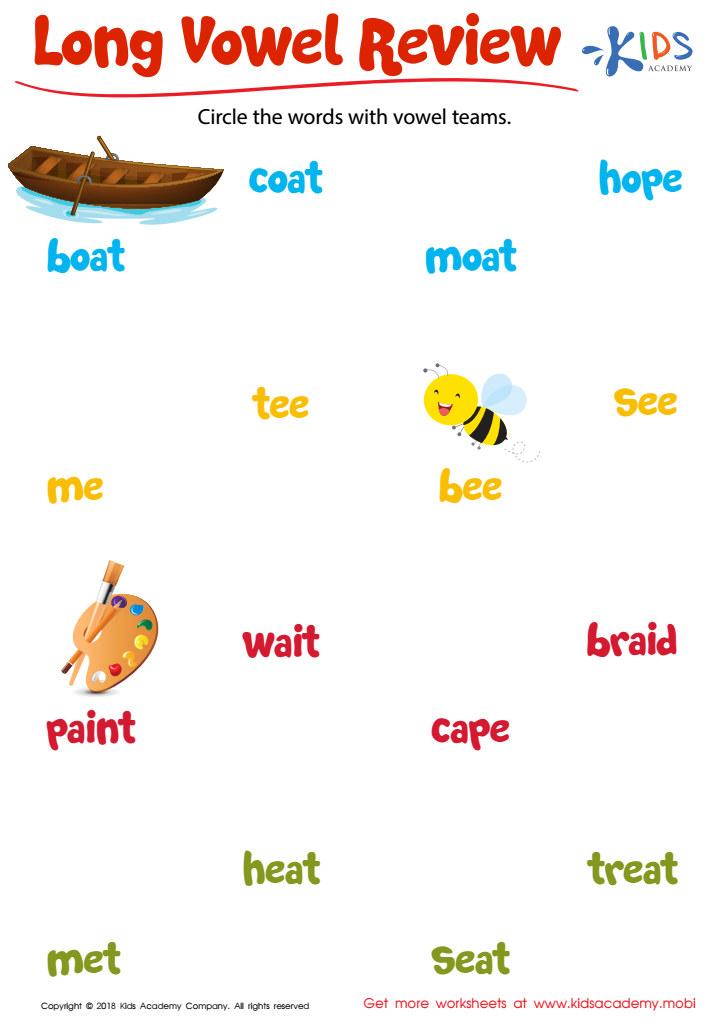
Long Vowel Review Worksheet
Vowel teams like "ea" and "ai" help us make words, and understanding these patterns aids emerging readers in becoming more fluent. This review worksheet has students finding words with vowel teams that make the long vowel sound, and helps them recognize high-frequency words.
 Assign to My Students
Long Vowel Review Worksheet
Worksheet
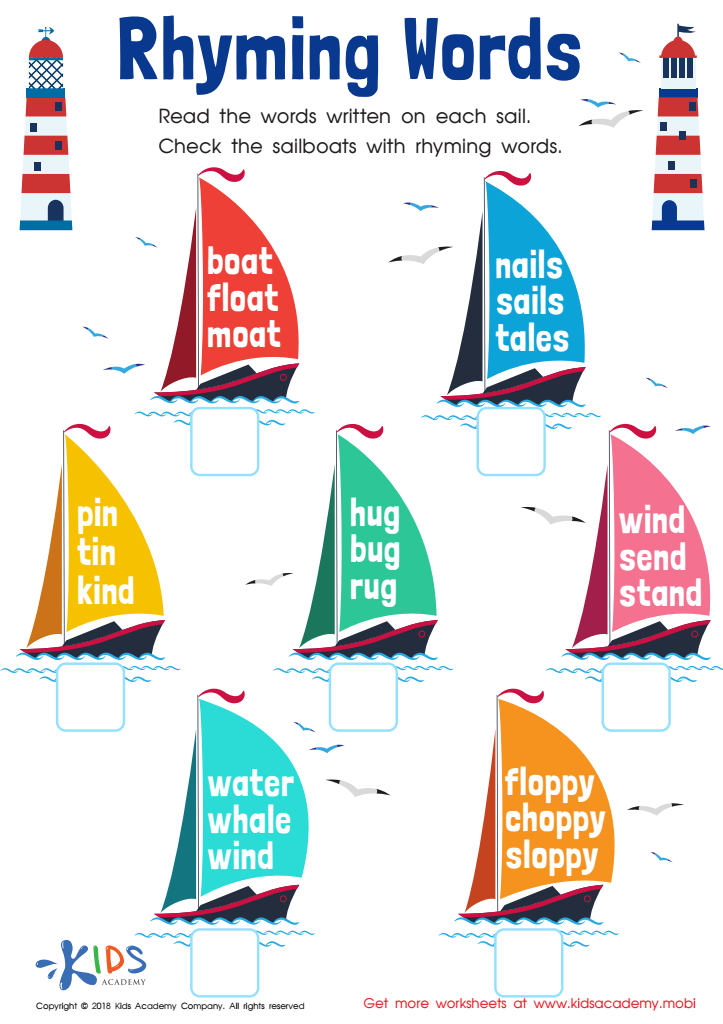
Rhyming Words Worksheet
Does your child know about rhyming words? Get them interested in poetry and explain that these words have similar sounds when pronounced. Read the words on each sailboat to your child and ask them to identify the rhyming pairs. Guide them to check the sailboats.
Rhyming Words Worksheet
Worksheet
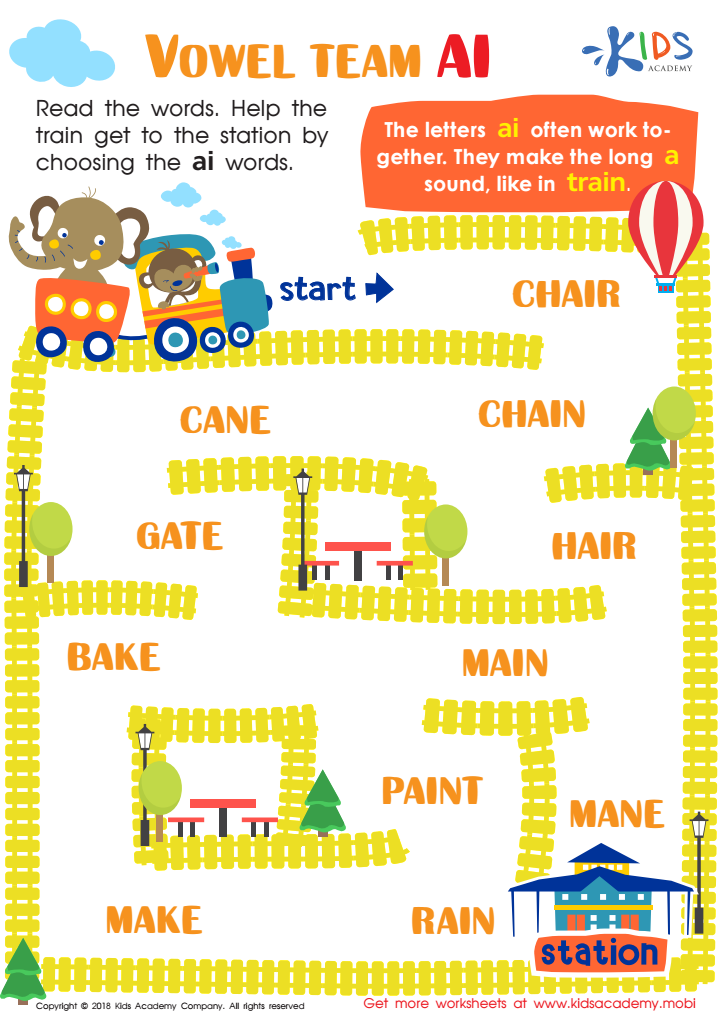
Vowel team ai Worksheet
Kids will have a blast learning about the -ai digraph with this fun worksheet. They'll read words with it and practice their motor skills as they help the animal duo get back to the train station. With success, they'll smile and enjoy the activity!
Vowel team ai Worksheet
Worksheet
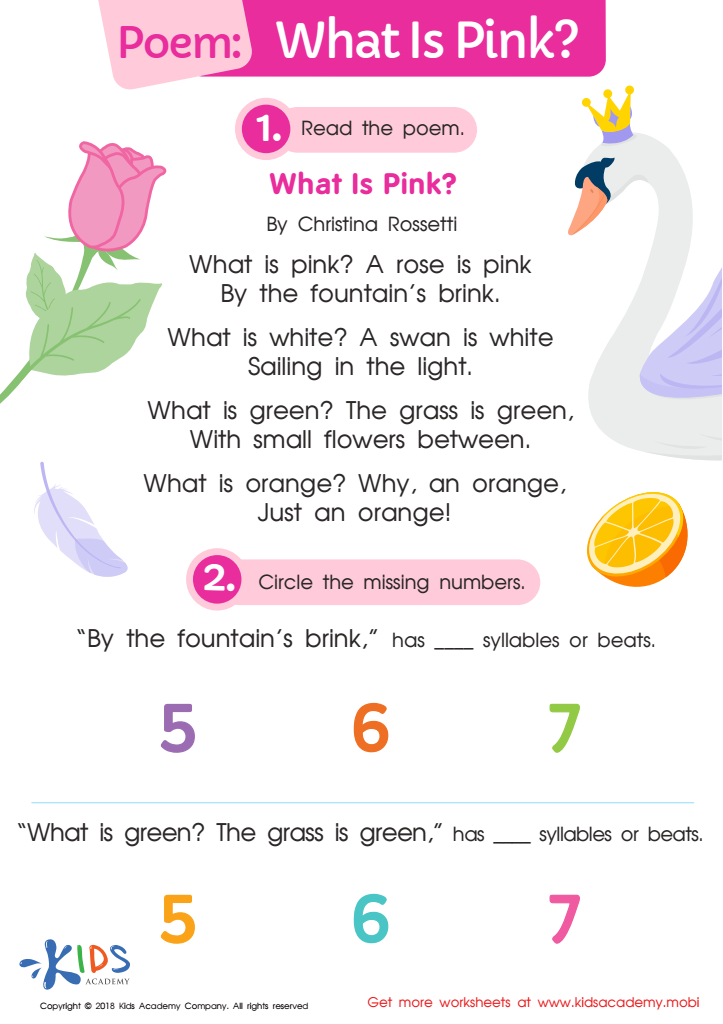
Poem: What Is Pink? Worksheet
Help your kids learn with short, fun, interesting poems! Read it aloud to them and point out the rhyme patterns. Have them circle the missing numbers to answer two questions. Show examples of objects with the colors in the poem. This will help them learn to read, and also understand colors better.
Poem: What Is Pink? Worksheet
Worksheet
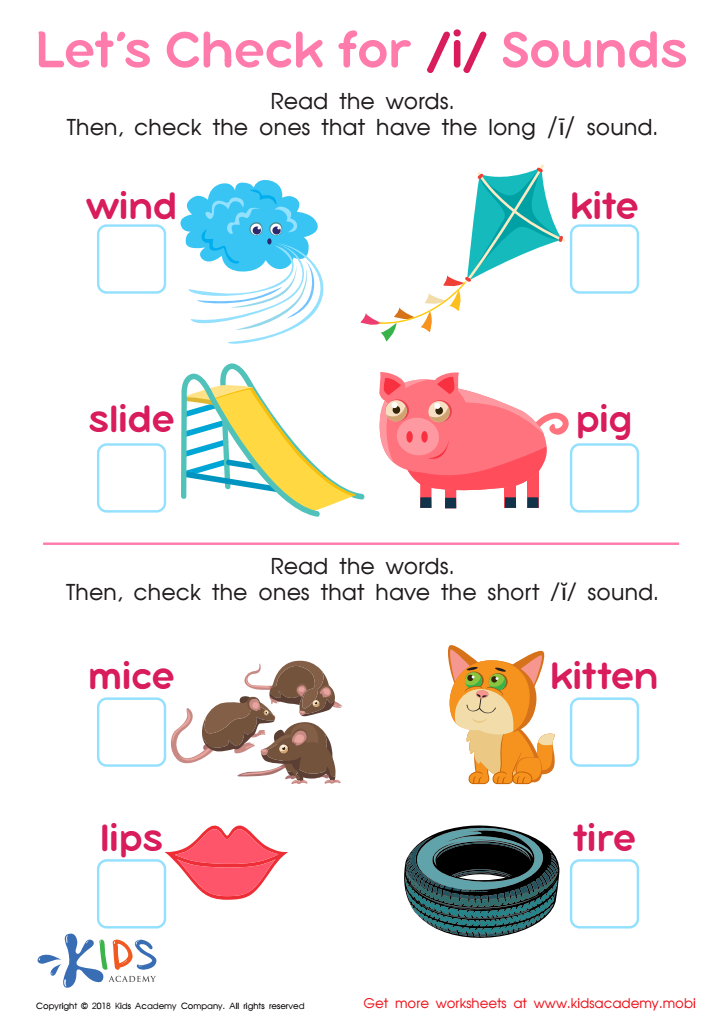
Let's Check for «i» Sounds Worksheet
This fun worksheet with pictures boosts phonics skills - differentiating between long «ī» and short «i» sounds in 1- and 2-syllable words. Kids use picture clues to read words, then check off the correct ones. It's a great way for new readers to practice early reading skills and find success on their own.
Let's Check for «i» Sounds Worksheet
Worksheet
Join Kids Academy for Free
Who is primarily going to use this learning content?








Investing in the improvement of reading skills through phonics for children aged 7-9 is crucial for several reasons. At this age, children transition from "learning to read" to "reading to learn." Mastering phonics, which involves understanding the relationships between letters and sounds, forms the foundation for fluent reading. When children develop strong phonetic skills, they become better at decoding unfamiliar words, enhancing both their reading accuracy and speed.
Improved reading skills significantly impact a child's academic performance across all subjects. As reading is fundamental to learning, children who read well can better grasp concepts in science, math, and social studies. Moreover, strong reading proficiency fosters a love for reading, sparking curiosity and encouraging lifelong learning.
Beyond academics, good reading skills through phonics contribute to the development of critical thinking and communication abilities. Children who read fluently can comprehend and analyze texts more effectively, enabling them to express their ideas clearly and confidently. Enhanced reading capability also bolsters a child's self-esteem, contributing to better classroom participation and social interactions.
In essence, parents and teachers should prioritize reading skills improvement through phonics to provide children with the key tools they need for educational success and personal growth. This investment lays a supportive foundation, allowing children to thrive both academically and socially.







