Letter recognition Tracing Letters Worksheets for Ages 7-9 - Page 2
26 filtered results
-
From - To
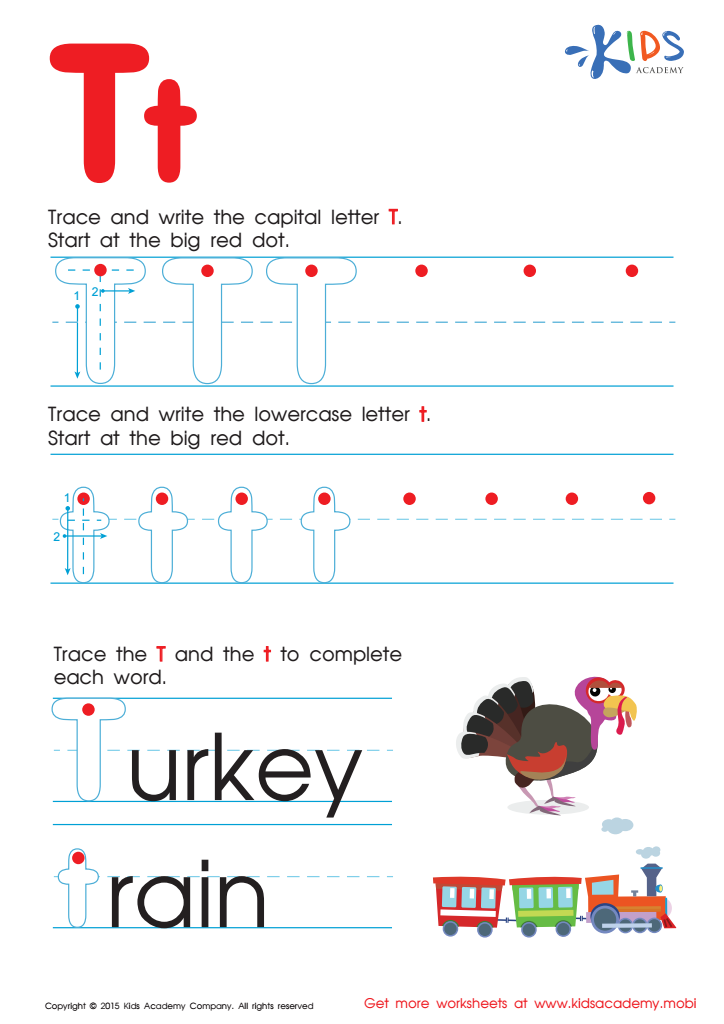
Letter T Tracing Page
 Assign to My Students

Letter D Tracing Page








Parents and teachers should prioritize letter recognition and tracing for children ages 7-9 because this foundational skill is crucial for literacy development. At this age, children are typically transitioning from learning letters to reading and writing independently. By reinforcing letter recognition, children can improve their ability to decode words, which is essential for effective reading comprehension.
Tracing letters not only helps children memorize their shapes, but it also supports fine motor skills development, which is vital for writing. As children trace letters, they develop hand-eye coordination and muscle strength in their hands, making writing easier and more legible. Furthermore, tracing incorporates multisensory learning, allowing children to engage visually, tactilely, and kinesthetically, enhancing retention and recall of letter forms.
Additionally, building confidence in letter recognition and writing can positively impact children's overall literacy journey. As they gain mastery, they become more eager to read and write, fostering a love for literature. Ultimately, investing time in letter recognition and tracing lays the groundwork for academic success and a lifetime appreciation for reading and written expression.








