Phonics Skills Vowels Worksheets for Ages 7-9 - Page 2
25 filtered results
-
From - To
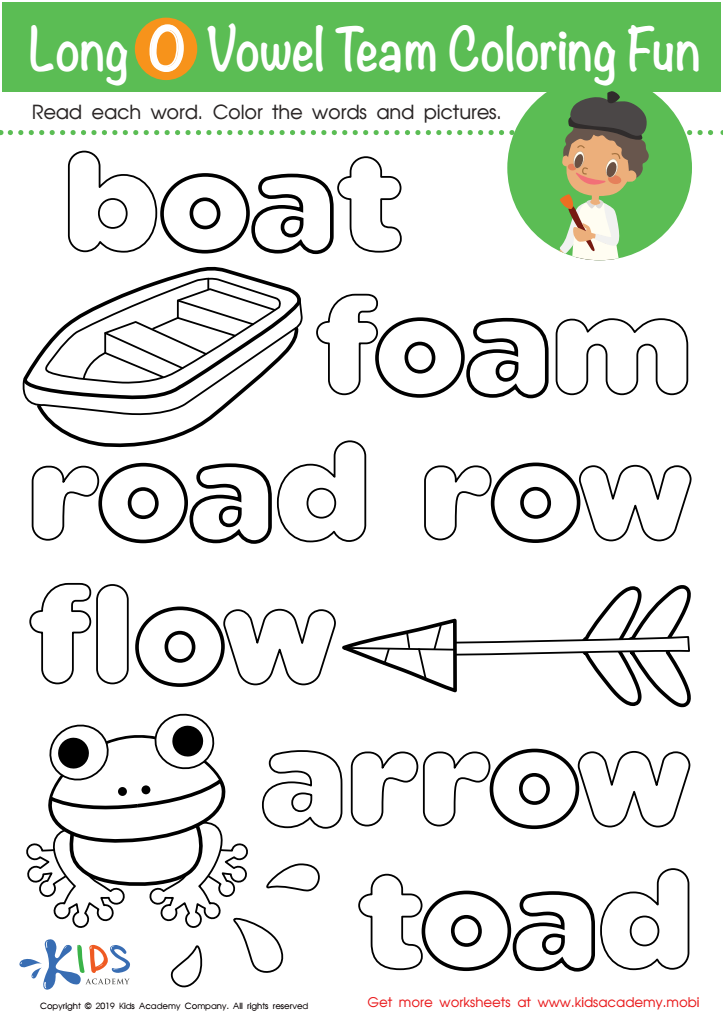
Long O Vowel Team Coloring Worksheet
 Assign to My Students





Phonics skills, particularly with respect to vowels, are crucial for children aged 7 to 9 as they form the foundation for reading and writing proficiency. During these formative years, students progress from early reading strategies to more advanced literacy skills that require a deep understanding of vowel sounds and their patterns. Mastery of phonics helps children decode new words, increases their reading fluency, and enhances comprehension by allowing for smoother reading experiences.
Vowels play a significant role because they help differentiate word meanings and contribute to a child's ability to spell accurately. For example, understanding short and long vowel sounds can alter the meaning of words significantly, as seen with “cap” versus “cape.” Moreover, through systematic phonics instruction, students develop confidence in using language, which aids in their communication skills.
Furthermore, strong phonics skills contribute to overall academic success. Children who struggle with reading often fall behind in other subjects. Hence, parents and teachers should focus on strengthening phonics abilities in this age group, as it supports not just literacy, but also self-esteem and a love for learning. Ultimately, phonics is a vital part of a child's educational journey that lays the groundwork for lifelong literacy and learning.







