Logical thinking development Chess Worksheets for Ages 7-9
3 filtered results
Difficulty Level
Grade
Age
-
From - To
Subject
Activity
Standards
Boost your child's logical thinking skills with our engaging Chess Worksheets designed specifically for ages 7-9. These worksheets combine the excitement of chess with essential problem-solving activities, encouraging young learners to think critically and strategically. Each printable worksheet is crafted to enhance cognitive abilities while nurturing a love for the game. From developing patterns to understanding decision-making processes, your child will gain valuable skills that extend beyond the chessboard. Perfect for home or classroom use, these resources deliver educational fun, promoting creativity and confidence in young minds. Start your child's journey to mastering logical thinking through the art of chess today!
Favorites
With answer key
Interactive
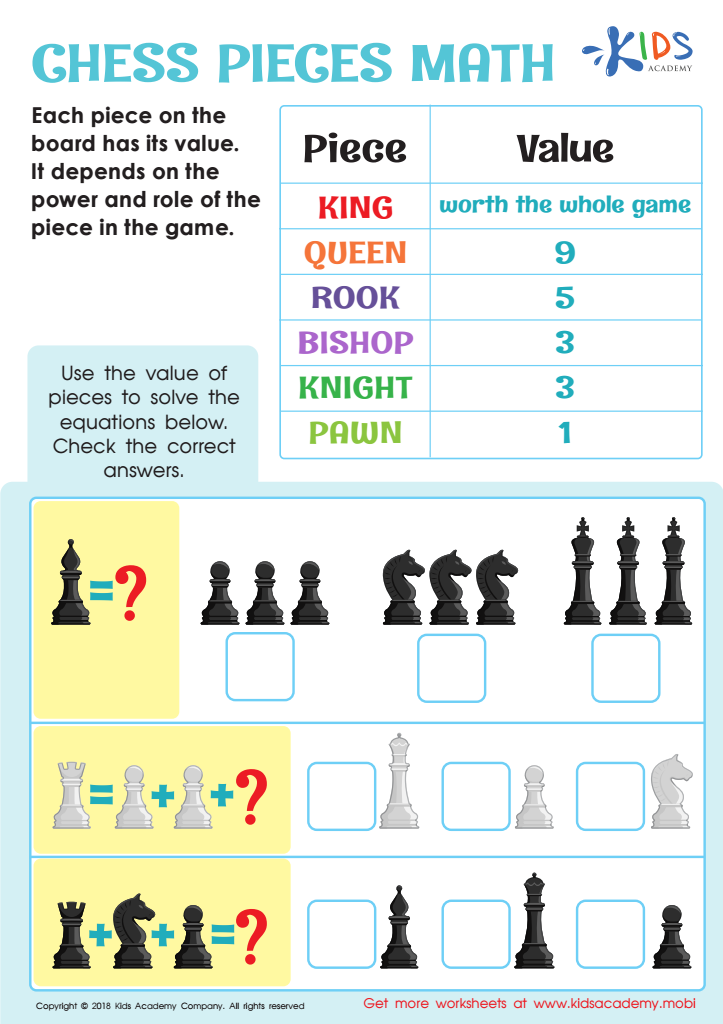
Chess Pieces Math Worksheet
Chess involves math! Each piece has its own value, from the king (worth the entire game) to the queen (9 points), varying according to their power and role. In the worksheet, your child must use these values to solve the equations at the bottom.
 Assign to My Students
Chess Pieces Math Worksheet
Worksheet
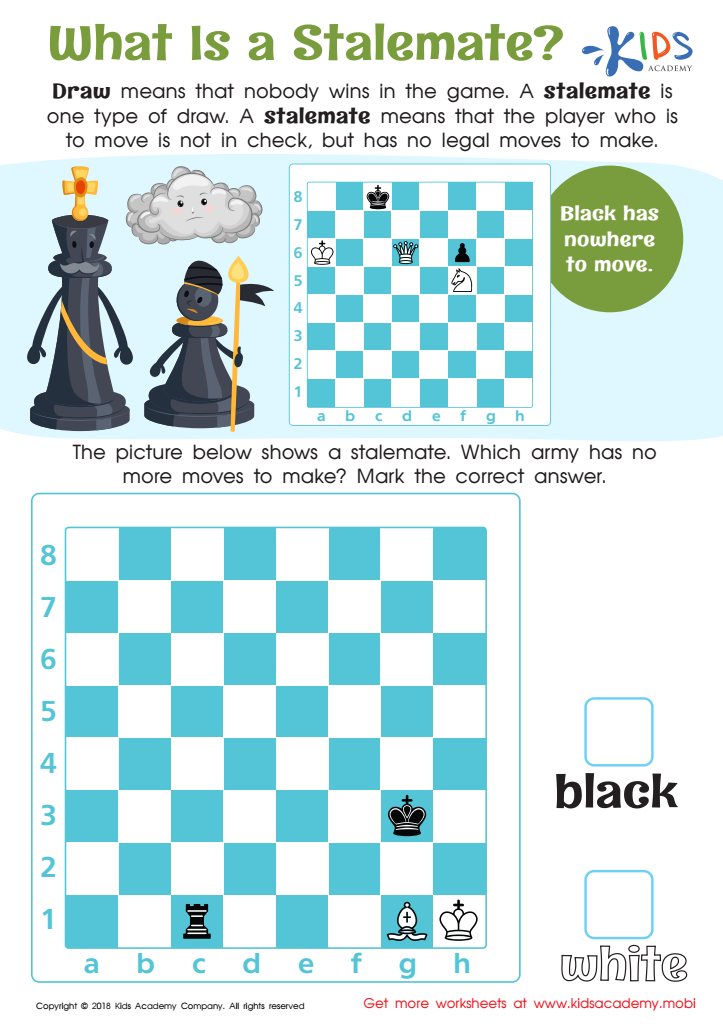
What Is a Stalemate? Worksheet
Chess is an ideal way to develop logic, strategizing, problem-solving and more! Even kids can learn it. With this worksheet, children can learn about draws and stalemates. Sample boards will help them decide which team, black or white, is at a stalemate.
What Is a Stalemate? Worksheet
Worksheet
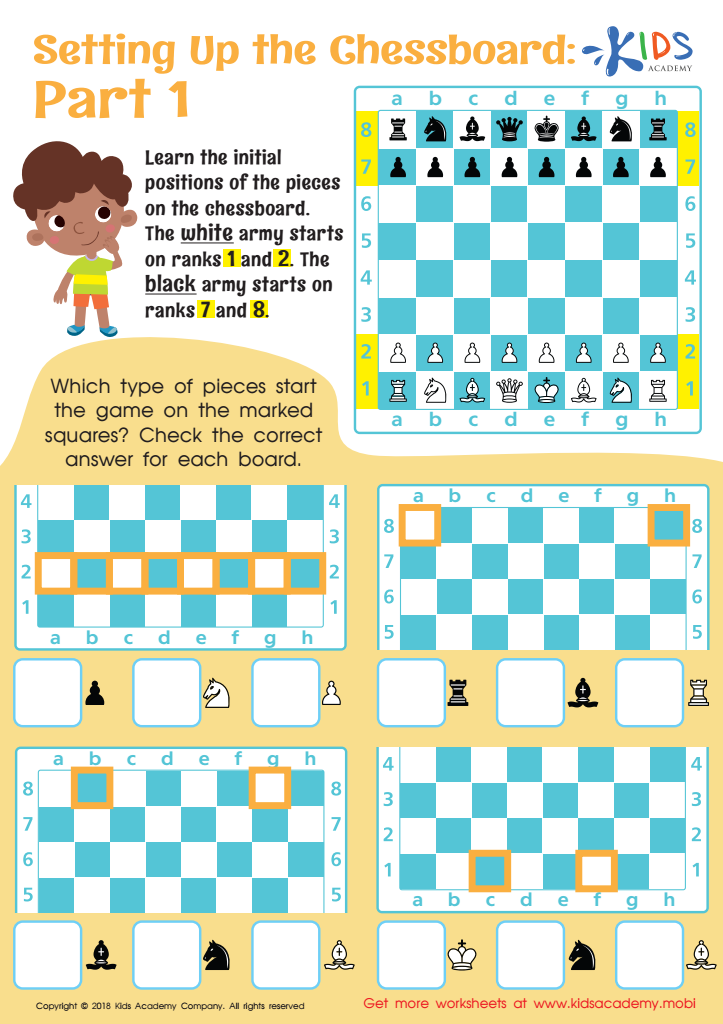
Setting up the Chessboard: Part 1 Worksheet
Teach your child the starting positions of the black and white armies on the chessboard. Black pieces are placed on ranks 7 and 8, and white pieces on ranks 1 and 2. Have them check the highlighted boxes on the chessboard to make sure they know the correct pieces to start with.
Setting up the Chessboard: Part 1 Worksheet
Worksheet
Join Kids Academy for Free
Who is primarily going to use this learning content?






Parents and teachers should prioritize the development of logical thinking skills in children aged 7-9, and introducing them to chess can be an excellent method. During these formative years, children are developing critical cognitive skills, and chess offers a unique platform for honing logical reasoning and problem-solving abilities. The game requires players to think ahead, anticipate their opponent's moves, and strategize accordingly. This not only enhances their analytical skills but also encourages patience and concentration, as children learn that each move has significant consequences.
Moreover, chess fosters creativity and decision-making under pressure. Recognizing patterns, evaluating options, and executing plans are essential skills that can extend beyond the chessboard into academic and real-life situations. Teaching chess can also promote emotional intelligence, as children learn to cope with losses and develop resilience by analyzing and reflecting on their games.
Beyond the intellectual benefits, chess cultivates social skills through interactive play, enabling children to communicate and interact with peers effectively. Overall, by supporting logical thinking through chess, parents and teachers can equip children with vital skills that will serve them well throughout their education and personal growth. This early investment not only enriches their intellectual capacities but also encourages lifelong critical thinking.