Logical thinking improvement Chess Worksheets for Ages 7-9
3 filtered results
-
From - To
Enhance your child's logical thinking skills with our engaging Chess Worksheets designed specifically for ages 7-9. These thoughtfully crafted activities introduce young learners to chess concepts while fostering critical thinking, problem-solving, and strategic planning. Each worksheet guides children through essential chess principles through fun puzzles and challenges, encouraging them to analyze situations and predict outcomes. Perfect for classroom or home use, our worksheets empower kids to develop patience and focus as they improve their logical reasoning abilities. Start your child's journey in mastering chess and cultivating vital cognitive skills today with our logical thinking improvement resources!
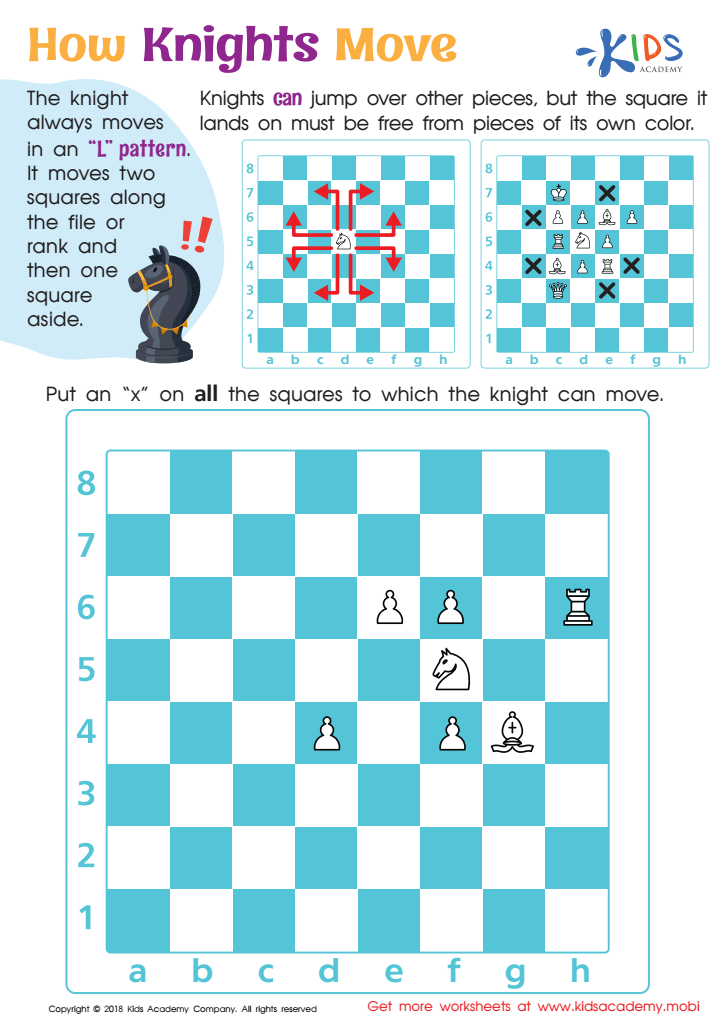
How Knights Move Worksheet
 Assign to My Students
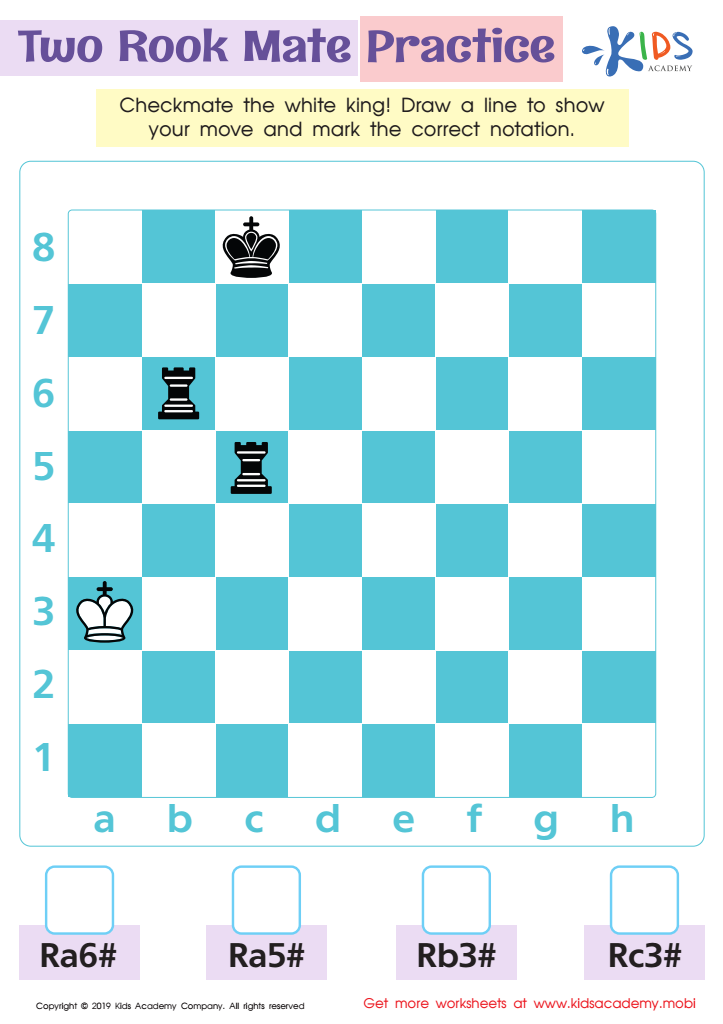
Two Rook Mate Practice Worksheet
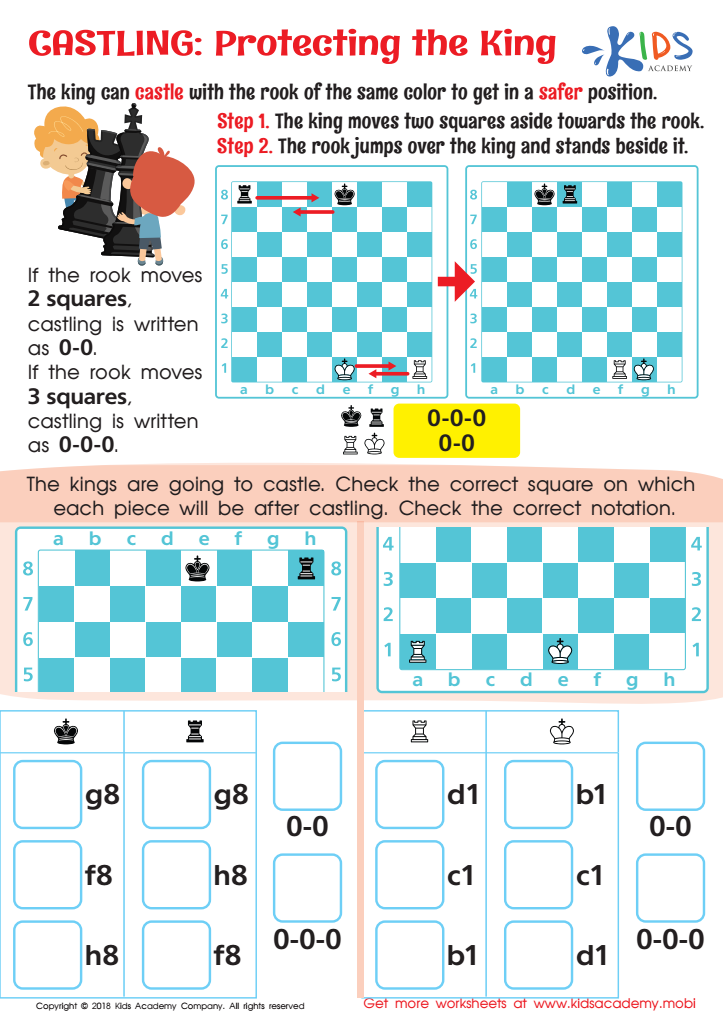
Castling: Protecting the King Worksheet







Parents and teachers should prioritize the improvement of logical thinking in children aged 7-9 through chess for several compelling reasons. First, chess is a strategic game that encourages critical thinking and problem-solving skills. As children learn to analyze their options and predict their opponent's moves, they develop an ability to think several steps ahead, which is fundamental for both academic success and daily decision-making.
Furthermore, chess helps improve concentration and focus, essential qualities in today’s fast-paced world filled with distractions. Engaging in chess fosters patience and perseverance, as children learn that not every game is won quickly; success often comes from both strategy and practice.
Socially, chess promotes healthy competition and sportsmanship. Interactions during gameplay teach children how to gracefully handle wins and losses, enhancing emotional intelligence. Through group chess activities, kids also learn to collaborate and communicate effectively, skills vital in both personal and professional settings.
Ultimately, enhancing logical thinking through chess equips young learners with the tools they need to excel in various life aspects, setting the foundation for lifelong learning and cognitive development. By embracing chess, parents and educators can enrich children's learning experiences in engaging and impactful ways.